๐ŸŒฒ Conservation Easement Community โ€ข Native Canopy Care

Tree Service Centerville Conservation Tallahassee โ€” Easement-Compliant Care for a Conservation-Focused Community

Centerville Conservation Community is one of Tallahassee’s most distinctive estate neighborhoods — a deed-restricted community along the Centerville Road corridor where conservation easements protect natural canopy and the residents actively chose preservation-first land stewardship. The community combines large-lot estate living with conservation values that distinguish it from the broader northeast Tallahassee estate corridor: native species emphasis, ecologically sensitive operations, easement-compliant work scope, and the kind of preservation-first arborist relationship that conservation-minded homeowners actually want. Our tree service Centerville Conservation Tallahassee crews handle easement-compliant tree work, native species care, hazard assessment within preservation framework, and replanting that aligns with the community’s ecological standards. ISA-Certified arborists oversee all work.

๐ŸŒฒ
Conservation Easement Community
5+
Acre Typical Lot Size
ISA
Certified Arborists
7-Day
Standard Scheduling
๐ŸŒฒEasement-Compliant Work ๐ŸŒฟNative Species Specialty ๐Ÿฆ‰Ecologically Sensitive ๐Ÿ—๏ธCrane Access ๐Ÿ“‹Permit & HOA Coordination

Centerville Conservation — A Distinctive Conservation-Focused Estate Community

Centerville Conservation Community operates under a different framework than typical HOA-controlled neighborhoods. Understanding the conservation easement structure explains why specialty arborist work matters here.

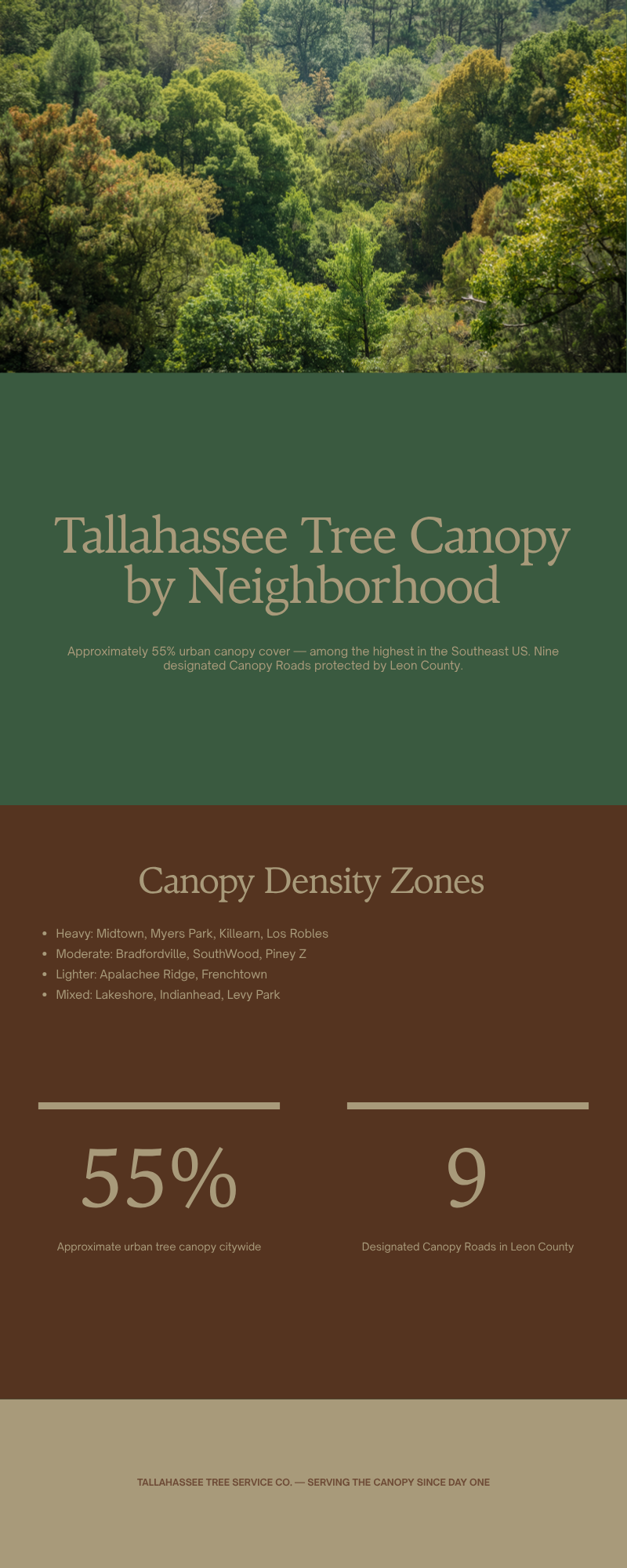
Centerville Conservation Community sits along the Centerville Road corridor in northeast Tallahassee, between the more conventional estate neighborhoods of Buck Lake and Ox Bottom Manor. The community was deliberately designed and platted with conservation values at the center: deed restrictions limit clearing, conservation easements protect natural canopy across substantial portions of each lot, and resident expectations emphasize preservation-first land stewardship rather than the design-control aesthetic that anchors typical HOA communities. Lots are typically 5+ acres — substantially larger than most northeast Tallahassee estate communities — with much of each lot maintained as preserved natural canopy rather than landscaped lawn.

The community attracts homeowners who actively chose conservation values. Many residents work in environmental fields, wildlife biology, ecology research, conservation policy, or related areas. Others are simply homeowners who wanted estate-property quality of life combined with the natural-character preservation that the deed-restricted framework enforces. The community character runs noticeably different from country-club golf communities (Summerbrooke, Golden Eagle) where design-control aesthetic dominates — Centerville Conservation prioritizes ecological function over manicured appearance.

Tree service Centerville Conservation Tallahassee work accordingly emphasizes preservation-first approach: minimal removal where alternatives exist, native species replanting using species sourced from regional conservation nurseries, ecologically sensitive operations that protect understory and wildlife habitat, and the kind of arborist relationship where preservation arguments carry weight rather than reflexive removal recommendations. The work mix reflects the community’s values — more risk assessment and structural cabling, less reactive removal; more native species replanting, less ornamental landscape installation.

Conservation Easements & Tree Work — What Applies

Conservation easements differ structurally from HOA design controls. Understanding the framework explains why tree work scoping in Centerville Conservation requires different documentation than work in conventional estate communities.

What conservation easements protect

Conservation easements on Centerville Conservation properties typically protect natural canopy areas, native vegetation, wildlife habitat features, and the ecological character of the property as a whole. The specific terms vary by property — original deed restrictions, easement-holder requirements (often Tall Timbers Research Station or comparable conservation organizations), and individual lot circumstances all factor in. What the easements share is a structural emphasis on preservation rather than design control: removing healthy native trees may require easement-holder approval beyond ordinary city permit processes; removal of invasive non-native species is often encouraged or even required; and replacement plantings typically must be native species sourced from regional providers.

What documentation requirements apply

Tree work on conservation easement properties typically requires more documentation than standard residential tree work. ISA-Certified arborist letters justifying any removal proposal need to address ecological factors as well as structural ones — whether the tree contributes to wildlife habitat, whether the species is native or non-native, whether removal is consistent with easement preservation goals. Easement-holder review may be required before work begins on substantial trees. We prepare documentation that addresses both city permit requirements and easement-specific considerations.

What hazard tree work looks like under easements

Hazard trees can be removed even on conservation easement properties — safety concerns generally override preservation goals when public safety or structural protection is at stake. However, the case for removal needs to be documented clearly. ISA-Certified risk assessment becomes the foundation: documented structural defects, target proximity, and reasonable alternatives considered (cabling, partial removal, monitoring) all support the removal case. Conservation-minded homeowners typically prefer this rigorous approach because it confirms removal is actually warranted rather than reflexive.

What native species replanting requires

Replanting after removal on conservation easement properties typically requires native species. Specifically — species native to the Tallahassee/Big Bend ecological region rather than just commercially-available landscape stock. Regional conservation nurseries (FNPS-affiliated nurseries, native plant specialty growers) source the appropriate stock. Common appropriate replacements include longleaf pine, live oak, southern magnolia, hickory species, native dogwoods, native redbuds, and other regional natives. We work with native species suppliers regularly and build replanting recommendations around what’s actually appropriate rather than what’s convenient.

For Centerville Conservation property owners with easement-related tree work questions, an ISA-Certified arborist visit develops the property-specific approach including any necessary easement-holder coordination. Call (850) 555-0123 for conservation-context scheduling.

Why Conservation-Community Tree Care Is Different

Several characteristics of Centerville Conservation properties drive tree management approaches that conventional estate neighborhoods don’t face the same way.

Preservation-First Default

Default approach is preservation rather than removal. Tree showing signs of decline gets risk assessment and consideration of cabling, partial removal, or monitoring before removal becomes the recommendation. Conservation-minded homeowners want preservation arguments engaged seriously rather than dismissed in favor of fast-removal-fast-revenue dynamics.

Native Species Knowledge

Tree work crews need substantive knowledge of native vs. non-native species, regional ecological relationships, and appropriate replacement choices. This goes beyond standard ISA arborist training into ecological context that conservation residents expect their service providers to understand.

Wildlife Habitat Considerations

Cavity-bearing trees provide habitat for woodpeckers, owls, flying squirrels, and other native wildlife. Snags (standing dead trees) provide habitat that healthy trees don’t. Conservation residents may want to preserve dead trees in safe locations specifically for wildlife value. Understanding these considerations rather than treating all dead/declining trees as removal candidates matters.

Invasive Species Management

Removing invasive non-native species (Chinese tallow, camphor tree, mimosa, Bradford pear, Chinese privet, others) is typically welcome and sometimes required under easement terms. Conservation-minded homeowners actively want these species removed and replaced with natives. Different from conventional estate communities where any tree removal triggers HOA review friction.

Ecological Operational Sensitivity

Operations that conventional crews don’t think about: avoiding bird nesting season for major work where possible (March–August on most species), minimizing soil compaction in protected understory areas, preserving fallen logs as habitat features in non-hazard locations, and similar ecological consideration. Conservation residents notice and value the difference.

Multi-Decade Conservation Programs

Conservation-minded homeowners typically think in multi-decade horizons. Annual canopy management programs that incorporate native species replanting, invasive removal, and ongoing ecological stewardship build accumulated property knowledge that supports the conservation values of the community across long ownership tenures.

Tree Services for Centerville Conservation Properties

Full-spectrum work calibrated to conservation easement framework with the ecological depth that preservation-focused properties require.

๐Ÿ”

Conservation Risk Assessment

ISA-Certified arborist comprehensive walkthrough emphasizing preservation-first analysis. Identifies actual hazards from cosmetic concerns, evaluates alternatives to removal, and supports easement-compliant decision-making. See risk assessment.

๐Ÿชจ

Tree Cabling & Bracing

Structural support extending the life of mature native specimens with correctable defects. Higher leverage on conservation properties where preservation is the default. See tree cabling.

๐ŸŒฟ

Invasive Species Removal

Removal of Chinese tallow, camphor, mimosa, Bradford pear, and other invasive non-natives. Often welcome under easement terms. See Chinese tallow, camphor, and mimosa.

๐Ÿชต

Hazard Tree Removal

Removal of structurally compromised trees where preservation alternatives have been considered and ruled out. ISA-Certified documentation supports easement-compliant decision-making. See hazardous tree removal.

๐ŸŒฑ

Native Species Replanting

Replacement plantings using regional native species sourced from FNPS-affiliated and conservation nurseries. Longleaf pine, live oak, magnolia, hickory, native dogwoods, redbuds, others. See tree planting.

๐ŸŒช๏ธ

Hurricane Tree Prep

Pre-season prep tailored to large-lot conservation properties. Selective intervention preserving canopy character while reducing acute hazard. See hurricane tree prep.

โœ‚๏ธ

Selective Tree Trimming

Deadwood removal and minimal structural pruning preserving natural form. Avoids aggressive shaping that conflicts with conservation aesthetic. See tree trimming.

๐Ÿฉบ

Tree Disease Treatment

Diagnosis and treatment of fungal infections, beetle pressure, and decline pathogens. Treatable conditions caught early support preservation goals. See disease treatment.

๐Ÿ“‹

Easement & Permit Coordination

Easement-holder coordination when required, City of Tallahassee ยง5-83 permit applications, and Leon County coordination for unincorporated properties. See permit guide.

How a Centerville Conservation Tree Service Visit Works

The on-site workflow incorporates preservation-first analysis and easement-compliant documentation rather than the design-review framework that anchors conventional HOA community work.

Easement Context Review

Initial conversation captures the property’s specific easement context, the homeowner’s conservation values, ownership tenure, and any concerns about specific trees or canopy areas. Easement terms vary by property and inform scoping.

Comprehensive Property Walk

ISA-Certified arborist conducts thorough walkthrough of the lot — typically 2–4 hours given large-lot scale and detailed canopy assessment. Identifies native vs. non-native species, evaluates structural condition, notes wildlife habitat features, photographs key specimens.

Preservation-First Analysis

For any tree showing concerns, evaluation considers preservation alternatives: cabling for structural defects, partial removal for hazard limbs only, monitoring for slow-progressing decline. Removal is recommended only when alternatives are inadequate.

Native Species Replanting Plan

For any removal scope, replacement plantings planned using regional native species. Sourcing identified through FNPS-affiliated and conservation nurseries. Mature size appropriate for site conditions and ecological context.

Easement-Holder Coordination

If easement terms require easement-holder review for the proposed work, we prepare documentation supporting that review. ISA-Certified arborist letters address ecological factors as well as structural ones.

Permit Verification

City of Tallahassee ยง5-83 permits for properties within city limits, or county-level requirements for unincorporated properties. Permit fees ($273 reported FY2026 for city permits) factored into transparent quoting.

Ecologically-Sensitive Execution

Operations planned to minimize understory disturbance, avoid bird nesting season for major work where possible, preserve fallen logs as habitat features in safe locations, and respect the natural character that defines the community.

Documentation & Annual Continuation

Photo records, ISA-Certified arborist sign-offs, before/after documentation. For multi-year programs, next visit scheduled. Conservation-focused annual programs accumulate property knowledge that supports long-horizon stewardship goals.

Conservation Property Worth a Conservation-First Approach.

ISA-Certified arborist comprehensive property walkthrough. Preservation-first analysis. Native species expertise. The kind of service conservation-minded homeowners actually want.

Tree Service Pricing in Centerville Conservation

Pricing reflects large-lot scope and the additional documentation depth that conservation easement compliance requires. Multi-tree programs offer significant per-tree savings.

ServiceTypical RangeNotes
Conservation property assessment$300 – $7502–4 hour walkthrough; ecological context included
Annual conservation management program$3,000 – $10,000/yrIncludes native replanting integration
Hurricane prep package$2,500 – $15,000+Property-scale dependent
Hazard tree removal (with easement docs)$1,200 – $8,500+Includes easement-compliant documentation
Pine removal (60–90′)$1,500 – $4,500Common conservation property size
Mature pine (90–110′)$3,000 – $7,500+Crane required
Hardwood removal (40–80′)$1,000 – $5,500Native hardwoods
Heritage tree removal (36″+ DBH)$3,500 – $15,000+Documentation + crane work
Invasive species removal$400 – $3,500Chinese tallow, camphor, mimosa, Bradford pear
Native species replanting$300 – $2,500/treeTree cost + installation; native nursery sourcing
Tree cabling installation$300 – $1,500/cablePer cable; preservation-first work
Crane access fee (when needed)$800 – $2,500/dayStandard on mature tree work
Multi-tree property scope (5+ trees)20–30% per-tree discountSame-week coordinated scheduling
City ยง5-83 permit fee$273Reported FY2026; per tree over 4″ DBH
๐Ÿ’ฐ Conservation property programs often emphasize different services than conventional estate programs — more cabling and risk assessment, less preemptive removal; more invasive species work, less native species removal; more native replanting, less ornamental landscape installation. The total annual spend is often comparable to conventional estate programs, but allocated differently. Conservation-minded homeowners typically find this allocation matches their stewardship priorities better than reflexive removal-and-replace approaches.

Why Centerville Conservation Properties Choose Our Crews

Conservation-community tree work requires specific competencies that conventional estate-focused operators don’t typically maintain.

  • Preservation-first analytical framework. Risk assessment defaults to considering preservation alternatives before recommending removal. ISA-Certified arborists who engage preservation arguments seriously rather than dismissing them in favor of faster-revenue removal work.
  • Native species expertise. Substantive knowledge of regional native species, their ecological relationships, and appropriate replacement choices. Beyond standard ISA training into ecological context.
  • Invasive species identification & removal. Confident identification and removal of Chinese tallow, camphor, mimosa, Bradford pear, Chinese privet, and other invasive non-natives that conservation residents actively want removed.
  • Easement-aware documentation. ISA-Certified arborist letters that address ecological factors as well as structural ones. Documentation that supports easement-holder review when required.
  • Wildlife habitat sensitivity. Crews that understand cavity trees, snags, fallen logs, and other habitat features. Operations that preserve habitat where safe rather than treating all dead/declining wood as removal candidates.
  • Native nursery sourcing relationships. Established relationships with FNPS-affiliated and conservation nurseries for native species replanting. Sources stock that’s actually appropriate rather than what’s commercially convenient.
  • ISA-Certified arborists. All assessments, easement coordination, hazard decisions supervised by ISA-Certified arborists. Documentation that holds up for easement-holder review and city permit processes.
  • Multi-decade program structure. Annual conservation management programs designed for the multi-decade horizons that conservation-minded property ownership typically involves. Accumulated property knowledge supports long-horizon stewardship.

Conservation Values. Conservation-Aligned Crews.

ISA-Certified arborists, preservation-first analysis, native species expertise, easement-aware documentation, multi-decade program continuity. Tree service Centerville Conservation Tallahassee work that meets the community’s ecological standards.

Tree Service Centerville Conservation Tallahassee FAQs

How does conservation easement compliance work for tree removal?

Conservation easements typically protect natural canopy and may require easement-holder review before removal of substantial trees. Specific terms vary by property and easement holder. We prepare ISA-Certified arborist documentation that addresses ecological factors as well as structural ones, supporting easement-holder review when required. Hazard trees can typically be removed even on easement properties when safety justifies it, but the case needs documentation. Call (850) 555-0123 for property-specific scoping.

Do you handle invasive species removal?

Yes — invasive species removal is a substantial part of our Centerville Conservation work. Common removals include Chinese tallow, camphor tree, mimosa, Bradford pear, Chinese privet, and other regionally invasive non-natives. Easement terms often actively encourage or require invasive species removal. Costs are typically lower than removal of similar-sized natives ($400–$3,500 depending on size and access) because invasive species are usually smaller and the removal is welcomed rather than scrutinized.

What native species do you work with for replanting?

Regional natives appropriate for the Tallahassee/Big Bend ecological region: longleaf pine, live oak, southern magnolia, hickory species (mockernut, pignut, water hickory), native dogwoods (Cornus florida), eastern redbud, fringetree, native hollies, sweetbay magnolia, and others. Sourcing through FNPS-affiliated and conservation nurseries that specialize in regional natives rather than commercial landscape stock. See our best trees to plant page.

What about preserving dead trees for wildlife habitat?

Standing dead trees (snags) provide habitat for cavity-nesting birds, bats, flying squirrels, and other native wildlife that conservation residents often actively want to support. Snags in safe locations — away from structures, vehicles, and high-traffic areas — can be preserved deliberately rather than reflexively removed. We assess each declining or dead tree individually for safety vs. habitat value and discuss the options with homeowners rather than defaulting to removal.

Can mature trees with structural defects be saved with cabling?

Often yes for trees with correctable structural defects. Trees with co-dominant trunks at narrow angles can often be cabled to extend life by 20–50+ years. Conservation-minded homeowners often value cabling investment even more than conventional homeowners because the preservation outcome aligns with their stewardship values. ISA-Certified evaluation determines candidacy. See tree cabling.

How much does it cost to manage a Centerville Conservation property?

Conservation property assessment runs $300–$750 for a comprehensive 2–4 hour walkthrough. Annual conservation management programs run $3,000–$10,000/year. Hurricane prep packages run $2,500–$15,000+ depending on scope. Reactive hazard removal runs $1,200–$8,500+ per tree. Multi-tree coordinated scope saves 20–30% per tree vs. one-off callouts.

When should I schedule hurricane prep?

April through May is optimal — before Atlantic hurricane season starts in June. Conservation properties benefit from preservation-first hurricane prep that emphasizes structural cabling and selective intervention rather than aggressive preemptive removal. Last-minute prep during active hurricane forecasts is dramatically more expensive and less effective.

Do I need a city permit if my property is in unincorporated Leon County?

Property within Tallahassee city limits requires ยง5-83 permits for trees over 4″ DBH. Property in unincorporated Leon County operates under county-level requirements rather than city permits. Centerville Conservation properties span both jurisdictions depending on specific lot location. We verify the applicable permit framework as part of every scope. See our permit guide.

How fast can you respond to an emergency?

Same-day for hazard situations — trees on structures, blocking driveways, threatening utilities, or in active storm distress. Standard non-emergency scheduling is 7-day window. Conservation property emergencies often involve multi-acre access logistics that we’re equipped to handle. Call (850) 555-0123 for urgent situations.

Do you serve the entire Centerville Conservation area?

Yes — throughout Centerville Conservation Community along the Centerville Road corridor in northeast Tallahassee, including properties in both city limits and unincorporated Leon County jurisdictions. ISA-Certified tree service Centerville Conservation Tallahassee crews work the area regularly and understand the easement framework, native species context, and multi-acre property logistics. Call (850) 555-0123.

Centerville Conservation & the Surrounding Tallahassee Estate Areas

Centerville Conservation sits within the constellation of northeast Tallahassee estate-scale neighborhoods, distinguished from the others by its conservation easement framework.

Centerville Conservation’s neighbors along the Centerville Road corridor include Buck Lake (multi-acre rural-residential without conservation framework), Ox Bottom Manor (long-tenure estate community), Summerbrooke (golf-community estate with HOA design controls), and Golden Eagle (premier country-club estate within Killearn Estates Plantation). All share the northeast Tallahassee estate-property profile but with distinct frameworks. Centerville Conservation is uniquely positioned as the conservation-easement community where ecological values structure tree management rather than HOA design controls.

For property owners with multiple Tallahassee locations across the northeast estate corridor, our crews maintain consistent ISA-Certified standards while adjusting framework appropriately for each community’s specific governance structure. Multi-property programs covering Centerville Conservation, neighboring estate communities, and the broader area can be coordinated on annual visit cycles.

Beyond the immediate northeast estate area, the broader Tallahassee tree management context spans Killearn Estates, Killearn Lakes, Bradfordville, Myers Park & Betton Hills, Northwest Tallahassee, Southwood, and the post-tornado neighborhoods (Lafayette Park, Indianhead Acres, Levy Park) — each with distinct canopy character. Centerville Conservation is operationally distinct from any of these. Call (850) 555-0123 for any Tallahassee tree service needs.

Related Services & Areas

Most relevant pages for Centerville Conservation property owners.

Conservation Values. Conservation-First Service.

Tree service Centerville Conservation Tallahassee work meets the community’s distinctive character — preservation-first analytical framework, native species expertise, easement-aware documentation, invasive species removal, multi-decade program continuity. ISA-Certified arborists, fair pricing, ecologically-aligned approach.

Call Now โ€“ Free Estimate