Tree Service in Thomasville, GA
The Rose City runs on old wood — live oaks older than the county, longleaf pines that survived a century of fire, and pecans that were planted when the plantations were still working farms. Call now and we’ll connect you with a vetted, licensed and insured Thomasville-area arborist who knows what those trees need.
📞 Call Now — (858) 319-0022Storm limb hanging over the porch at midnight? Call now — we route requests any hour.Thomasville is a tree town in a way most of South Georgia is not. The city has held Tree City USA status for decades, the historic districts are shaded by canopies that predate every house under them, and the Big Oak at the corner of Crawford and Monroe — a live oak pushing three centuries, with a limb spread wider than the street — is genuinely a civic landmark. That canopy is an asset. It is also, once a year or so, a liability with a hundred tons of leverage over somebody’s roof.
We are not a tree company. Tallahassee Tree Service is a free referral service: you tell us what the tree is doing, we connect you with an independent, licensed and insured pro working the Thomas County area, and the quote and the work happen between you and them. No sign-up, no obligation, no cost to use it. What we can do is make sure the person who shows up actually understands Red Hills soil and Georgia rules rather than treating your 200-year-old live oak like a suburban maple.
Does the dispatch network cover Thomasville, GA?
Yes — removal, trimming, stump grinding and storm cleanup across Thomas County, matched to vetted, insured local pros. Call now to get matched, or start with tree removal to see how jobs are scoped.
Why Thomasville trees behave differently
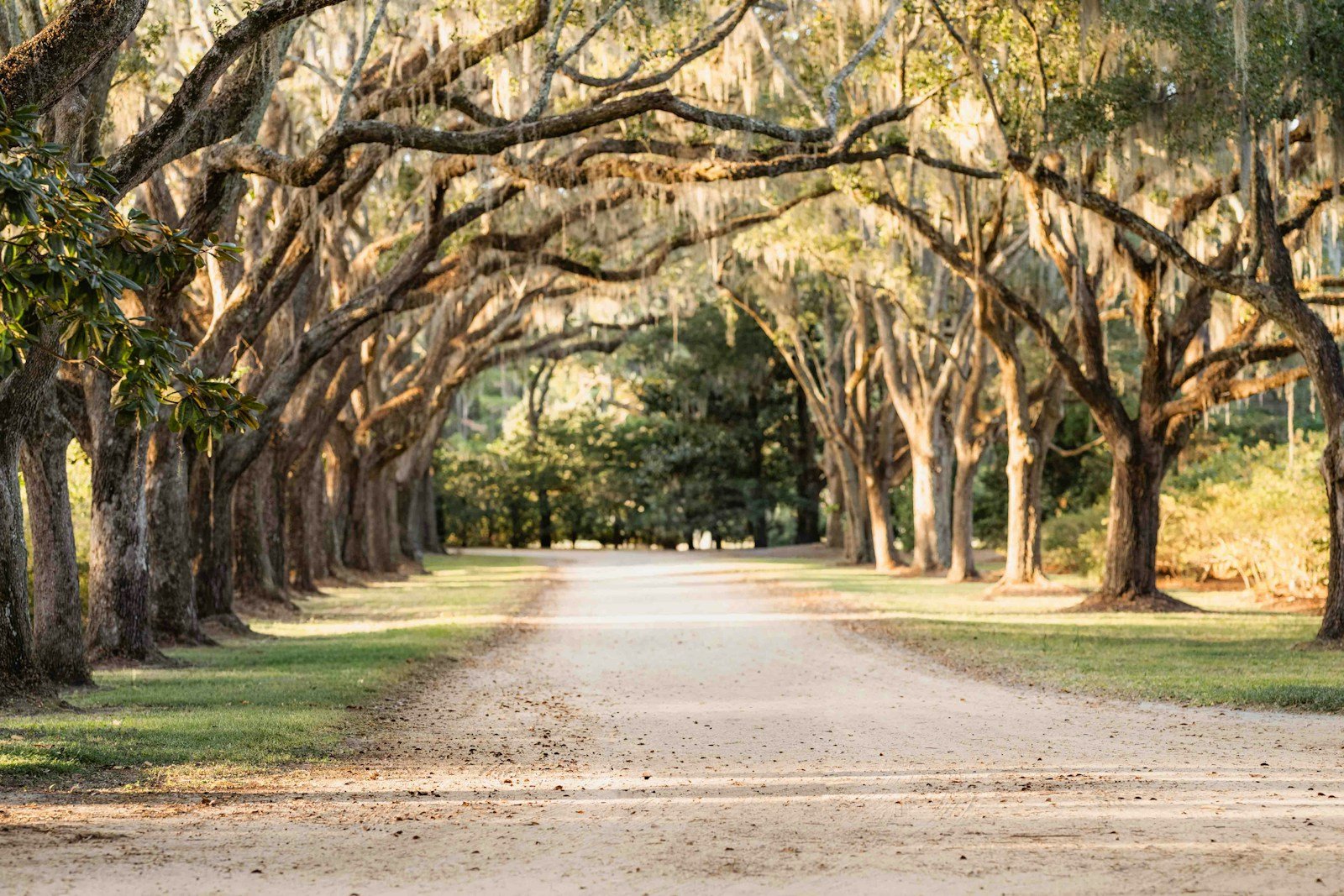
Thomasville sits in the Red Hills, the rolling belt between the Fall Line and the Gulf Coastal Plain that runs roughly from here down toward Tallahassee. That means deep, red, clay-heavy soils on the ridges — good drainage, good anchorage, and the reason the live oaks here grow to a size you simply do not see in sandier country. Drop into the creek bottoms and the flatwoods toward the Ochlockonee and Aucilla drainages and it changes: wetter, sandier, more water oak and sweetgum, less reliable root plate.
Layer on the history. The Red Hills plantation belt around Thomasville — tens of thousands of acres of longleaf pine kept open by prescribed fire for over a century — means the pine here is often old-growth-adjacent longleaf, not the loblolly plantation stock you find on cutover land. Longleaf is a fundamentally different tree to work: deep taproot, high fire tolerance, dense wood, and it responds badly to the kind of casual pruning that a loblolly shrugs off. And in town, generations of pecan planting left mature pecans in yards all over the historic districts — beautiful, productive, and structurally weak at the codominant unions when nobody has pruned them in thirty years.
USDA Zone 8b, hot humid summers, a real (if short) winter, and a thunderstorm season that starts in June and does not quit until September. That is the operating environment. It rewards trees that are pruned on the right calendar and punishes the ones that are not.
The trees you actually have
| Species | Where it shows up in Thomas County | What it needs |
|---|---|---|
| Southern live oak | Historic districts, downtown, plantation avenues, Glen Arven, old Dawson Street corridor. | Dormant-season structural pruning. End-weight reduction on limbs over structures. Never topping. |
| Laurel & water oak | Post-war neighborhoods, creek bottoms, fencerows. | The problem children. Fast, brittle, decay-prone, and many are hitting the end of their span now. Deadwood and inspect before June. |
| Longleaf pine | The Red Hills plantation belt, rural Thomas and Grady County. | Deadwood and hazard limbs only. Over-pruning stresses it and invites bark beetles. |
| Loblolly & slash pine | Cutover land, planted stands, subdivision buffers. | Watch for pine beetle. Storm-snap risk is real — they break rather than uproot. |
| Pecan | Old yards across town, former orchards, rural homesteads. | Codominant leaders and included bark fail catastrophically. Cabling, structural pruning, and honest limb-load assessment. |
| Southern magnolia | Historic yards, church grounds, downtown plantings. | Light shaping only. Shallow roots — protect the root zone during any construction. |
| Crape myrtle | Everywhere, and topped nearly everywhere. | Late-winter shaping. Stop the annual butchery; restorative pruning can rebuild the structure. |
| Dogwood & redbud | Understory in the older shaded yards. | Minimal pruning. They resent it. Manage the overstory instead. |
What the pros in the network handle in Thomasville
Tree removal
The honest starting point is that not every tree needs to come down. A good arborist in the Red Hills will talk you out of removing a healthy live oak more often than they will talk you into it — the tree is worth more standing, to you and to the resale value of the house. But dead is dead, and a hollow water oak leaning over a child’s bedroom is not a philosophy question. Removals here mean climbing and rigging far more often than they mean a straight felling, because the trees are big, the historic lots are tight, and there is almost always a roof, a fence, a power drop, or a neighbor’s camellia inside the fall zone. See the tree removal and dead tree removal pages for how the call gets made.
Trimming and structural pruning
This is the highest-value tree work most Thomasville homeowners never schedule. End-weight reduction on the long horizontal live-oak limbs, deadwood out of the laurel oaks before storm season, clearance off the roof line and the service drop, and crown cleaning that lets wind through the canopy instead of catching it like a sail. Done right, it is invisible — the tree looks like nobody touched it, and it stays up through the next storm. Done wrong — topped, lion-tailed, hacked to stubs — it produces weak regrowth and a more dangerous tree within five years. See tree trimming and why topping is not pruning.
Storm response and cleanup
Thomas County is inland, which used to feel like protection. Hurricane Michael in October 2018 ended that illusion — it came through South Georgia still carrying hurricane-force wind, took out enormous stretches of pecan and pine across Thomas, Grady, Mitchell and Decatur counties, and left agricultural losses that people here still talk about. Idalia in 2023 and Helene in 2024 reinforced the lesson. Inland does not mean immune; it means the trees that fall are bigger and the crews are farther away. See storm cleanup and storm damage tree removal.
Stump grinding
A ground stump is not the same as a removed stump. Grinding takes the visible stump and the flare down below grade so you can sod or plant over it; the root system stays and decays over years. On a mature live oak the grinding volume is substantial and the chip pile is real. See stump grinding.
Land and lot clearing
Rural Thomas County, Grady County, and the acreage tracts out toward Metcalf, Boston, Ochlocknee, Coolidge, Pavo and Meigs generate a steady stream of clearing work — building sites, pasture reclamation, food plots, fence lines. This is machine work, not climbing work, and it is a different crew and a different quote. See land clearing and lot clearing.
Emergency and hazard work
Tree on the house, limb through the roof, trunk across the driveway, anything touching a power line. Life-safety calls are triaged ahead of scheduled work. Never approach a tree in contact with a conductor — that is a utility call first, an arborist call second. See emergency tree service.
Tree down on a structure, or a limb hanging over where people sleep? That is a life-safety situation, and those get triaged first. Say so when you submit.
📞 Call Now — (858) 319-0022Vetted local pros — availability depends on independent provider schedules and demand.*Georgia rules are not Florida rules
If you have read about the Florida hazard-tree statute, set it aside — it does not apply here. Thomasville is a Georgia municipality with its own tree ordinance, its own protected-tree provisions, and a City tree board that takes the Tree City USA designation seriously. Trees in the public right-of-way and street trees are City-managed, not yours to cut. Historic district properties can carry additional review, and significant trees on private property may require review before removal depending on species and size.
Outside city limits, Thomas County rules govern, and out on the plantation and timber tracts you are into agricultural and silvicultural exemptions that are a different world again. The practical advice is simple and it will save you a fine: before you remove anything of size, ask the City of Thomasville’s planning department (or the County, if you are outside the limits) whether the tree is protected. A local arborist who works here every week will usually know the answer before you finish the sentence — and a crew that just drove up from out of state after a storm will not.
What drives the scope of a Thomasville tree job
Nobody can price a tree from a street view. These are the factors that move the number, so you can describe the job accurately and get a quote that holds:
| Factor | Why it matters here |
|---|---|
| Size and species | A 200-year-old live oak with a 90-foot spread is a multi-day rigging operation. A dead pine in an open field is a morning. |
| Access | The historic districts are the hard ones — narrow lots, brick walks, old camellias, wrought iron, and no path for a bucket truck or a crane. Everything gets climbed and hand-lowered. |
| Proximity to structures | A limb that can be free-dropped is cheap. A limb that has to be roped down piece by piece over a slate roof is not. |
| Power lines | Anything near a service drop or primary changes the whole plan and may require the utility before anyone climbs. |
| Condition | A structurally sound tree is safe to climb. A hollow, decayed, or storm-damaged one is not — that pushes the job toward a crane or a lift, which is a different cost class. |
| Debris and disposal | Chipped on site, hauled out, or milled. A mature pecan or live oak produces a startling volume of wood. |
| Urgency | Scheduled work and post-storm triage are different queues. Demand after a named storm is brutal and nobody can promise a window. |
Any dollar figures you see published for this work are typical local-market ranges, not our prices. We do not perform tree work and we do not set pricing. The pro you are matched with looks at the actual tree and gives you the binding written quote. For how the factors stack up, see the tree removal cost guide.
The pecan problem
Thomasville has a lot of old pecans, and old pecans fail in a specific, predictable, expensive way. The classic pecan grows two or three codominant leaders out of a single point, with bark pinched between them — an included-bark union that gets weaker every year as the limbs get heavier. Nothing looks wrong. Then one August afternoon a thunderstorm loads one side of the canopy with water and wind and half the tree splits out and lands on the garage.
The fix is unglamorous and it works: get the tree looked at before it fails, reduce the end weight on the heavy leaders, and where the union is worth saving, install a proper cable and brace system to ANSI A300 Part 3. That is a fraction of what a failed pecan and a caved-in roof costs. See pecan tree care and cabling and bracing.
The laurel oak wave
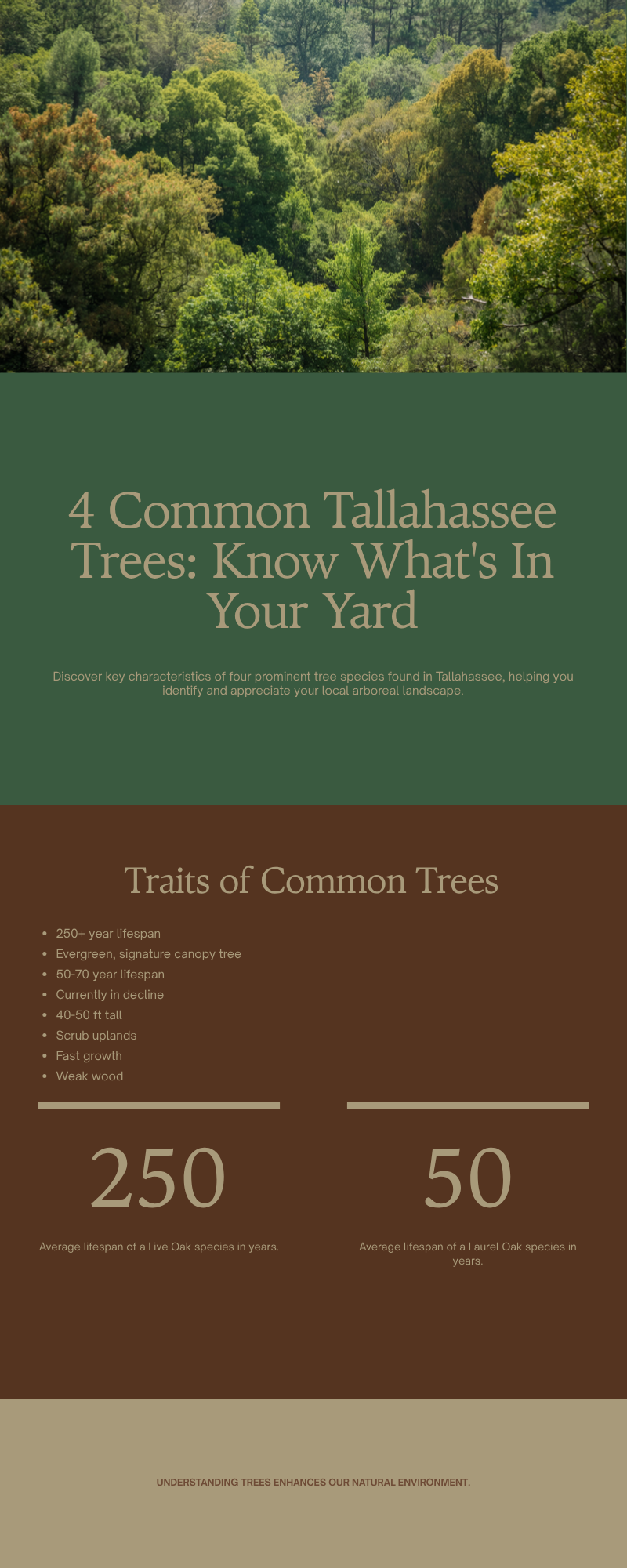
The other slow-motion problem across the region: laurel oaks planted in the mid-twentieth century are now at the end of their natural span. Laurel oak is fast, cheap, and short-lived — roughly a 50-to-70-year tree in practice — and it hollows from the inside while the canopy still looks green and healthy. Whole streets of them went in at once, which means whole streets of them are failing at once. If you have a big oak with peeling bark, mushrooms at the base, or a canopy that has thinned in the last two seasons, get eyes on it before hurricane season, not after. See laurel oak problems and tree risk assessment.
The Thomasville tree calendar
| Window | What to do |
|---|---|
| December–February | The main event. Dormant-season structural pruning on live oaks and hardwoods. Crape myrtle shaping (shaping, not topping). Cabling installs. Planting. |
| March–May | Pre-season risk inspections. Deadwood out of laurel and water oaks. Fertilization and root-zone work where it is warranted. Get the hazard trees dealt with now. |
| June–September | Storm season. Emergency and hazard work dominates. Avoid major elective pruning on oaks — growing-season wounds and oak wilt risk. |
| October–November | Post-season cleanup, damage assessment, planning the winter work. Pecan harvest means limb-load is at its peak — a good time to notice a sagging leader. |
Before you submit — how to describe your tree
You will get a sharper answer and a tighter quote if you can tell the arborist four things:
- What it is, roughly. “The big oak with the moss” and “a pine” lead to completely different plans. A photo settles it instantly.
- How big, honestly. Can two people join hands around the trunk? Is it taller than the house? Those two answers do most of the work.
- What is underneath it. Roof, driveway, power drop, fence, pool, the neighbor’s greenhouse. The target list determines the rigging.
- What is wrong. Leaning? Cracked? Dropping limbs? Mushrooms at the base? Soil lifting on one side? A canopy that leafed out thin this spring? Each of those means something different.
And if the soil is heaving on the opposite side of a lean, stop reading and get people away from the fall zone — that is a root plate failing in real time.
How getting matched works
Verify the pro yourself
Whoever you hire, from any source: get the certificate of insurance showing general liability and workers’ compensation, and call the agent named on it directly. Ask which individual on the crew holds ISA Certified Arborist status and look the name up in the ISA’s public directory — certification belongs to people, not companies. Ask about the Georgia business registration. This takes five minutes and it is the difference between a professional operation and a pickup truck with a ladder. After every storm, out-of-area crews flood this region; some are excellent and some carry no insurance at all, and if an uninsured climber gets hurt in your live oak, it is your homeowners policy that finds out.
Frequently asked questions
Do you serve Thomasville, or just Tallahassee?
Thomasville, Thomas County, and the surrounding Georgia communities are inside the dispatch area — Metcalf, Boston, Ochlocknee, Coolidge, Meigs, Pavo, and over into Grady and Brooks counties. Call now and we route to a pro who actually covers your address. We are a referral service, not the crew.
Do I need a permit to remove a tree in Thomasville?
Possibly. Thomasville has its own tree ordinance and protected-tree provisions, right-of-way and street trees are the City’s, and historic districts can carry extra review. Georgia rules apply, not Florida’s. Check with the City’s planning office (or Thomas County, outside the limits) before removing anything of size — a local arborist will usually know the answer already.
How much does tree service cost in Thomasville?
It is scoped to the specific tree — size, species, access, condition, what is underneath it, and how the debris is handled. There is no honest flat figure, and any range you see online is a typical local-market number, not our price. The pro you are matched with walks the tree and gives you the binding written quote.
When should I prune my live oak?
The dormant season — roughly December through February — for anything structural. It lowers stress on the tree and reduces oak wilt risk compared with growing-season cuts. Light deadwood removal can happen any time. Do not let anyone top it, ever.
My pecan split in a storm. Can it be saved?
Sometimes. It depends on how much of the trunk circumference is compromised and whether the remaining leaders have a viable structure. A bad split at a codominant union is usually terminal; a torn limb from a sound trunk often is not. Get it assessed before the wound has a season to decay, and ask specifically about cabling the remaining leaders.
How fast can someone get out here after a storm?
Nobody honest will give you a time. After a named storm the demand across Thomas, Grady, and Leon counties spikes far past what the local crews can absorb, and availability depends entirely on the independent providers’ schedules. What we can tell you is that life-safety situations — a tree on a structure, a limb over a bedroom, anything on a power line — are triaged ahead of routine cleanup.
Tree services in Thomasville
Other crews and services that cover Thomasville specifically.
Related tree services
Tree Removal
Tree Trimming
Stump Grinding
Emergency Tree Service
Storm Cleanup
Pecan Tree Care
Live Oak Care
Land Clearing
Arborist Services
Hurricane Tree Prep
Get matched with a Thomasville-area tree pro
Call now and we’ll connect you with a vetted, licensed and insured local arborist. Free to use, no obligation, no sign-up.
📞 Call Now — (858) 319-0022Tallahassee Tree Service is a free referral service. Tallahassee Tree Service is not a licensed tree service provider and does not directly provide tree care services. All work is performed by independent, licensed and insured third-party providers in your area. Calls and form submissions placed through this site may be connected with a participating provider, and you may be contacted by that provider regarding your request. Same-day, emergency, and 24/7 availability are not guaranteed and depend on provider schedules, location, and demand. Service availability, pricing, licensing, and final response times are determined solely by the providers. It is the responsibility of the homeowner to verify that the hired contractor furnishes the necessary license and insurance required for the work being performed. All persons depicted in a photo or video are actors or models and not contractors listed on Tallahassee Tree Service.