Palm Tree Trimming in Tallahassee, FL
Sabal palmetto, Washingtonia, queen, pindo — four very different palms, four very different trimming rules, and one very common way to ruin all of them. Call now and we’ll connect you with a vetted, licensed and insured local pro who takes dead fronds, not green ones.
📞 Call Now — (858) 319-0022Not sure what species you have? Call now and we’ll connect you any hour.Tallahassee sits at the northern edge of palm country. We are USDA Zone 8b, which means the palms that thrive in Naples merely survive here — and the ones that were never suited to a Big Bend winter die slowly while their owners keep paying to have them trimmed. Getting palm work right in Leon County starts with knowing which palm you actually own, because the trimming rules are not the same across species, and they are not the same as the rules for oaks and pines.
The most expensive mistake in Tallahassee palm care is not neglect. It is over-trimming — the “hurricane cut” that strips a palm to a feather duster. It looks tidy. It is slow starvation, and it makes the palm more likely to fail in a storm, not less.
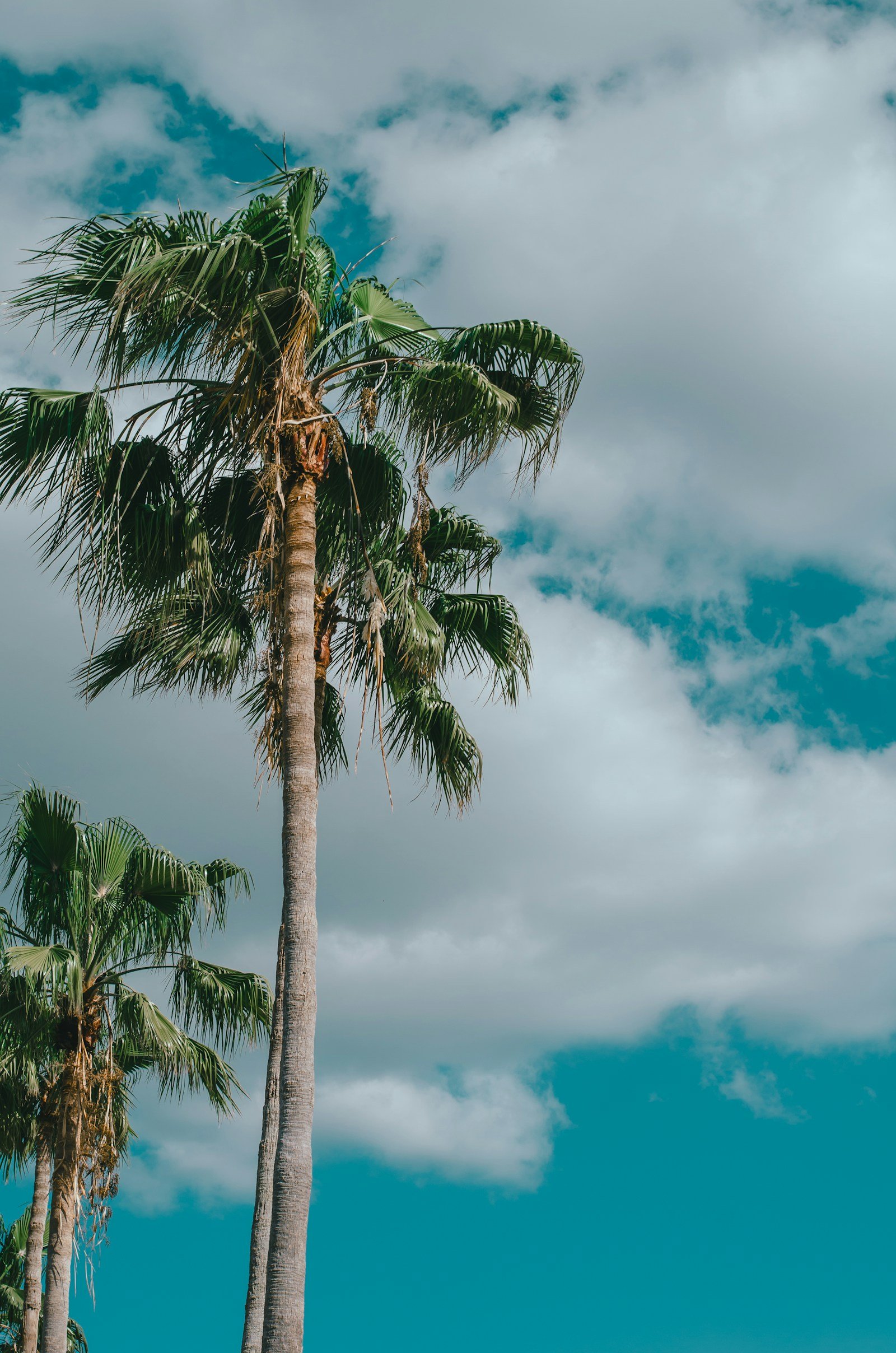
The four palms you actually see in a Tallahassee yard
Sabal palmetto (cabbage palm) — the state tree
Native, tough, cold-hardy well past anything Tallahassee throws at it, and the palm most likely to be growing where nobody planted it. Sabals hold a full round crown of costapalmate fronds and self-clean slowly — old fronds hang down in a “skirt” before dropping. Trimming a sabal means taking fully dead brown fronds and, if you want, the seed stalks. That is it. Green fronds are the palm’s food factory and its hurricane armor. Sabals routinely survive winds that snap the oaks next to them precisely because the crown flexes and sheds wind.
Washingtonia (Mexican fan palm) — the tall one with the beard
The skinny giants along commercial corridors and in older Tallahassee yards. They hold an enormous shag of dead fronds — the beard — which is a genuine rodent and fire consideration close to a structure, and the main legitimate reason to trim them. They also grow tall fast, which turns a routine job into a climbing or lift job within a few years. Washingtonias are marginal here: a hard Big Bend freeze can burn them badly, and cold-damaged Washingtonias are the ones that fail.
Queen palm (Syagrus romanzoffiana) — the pretty, fragile one
Feathery, tropical-looking, and genuinely out of its range in Tallahassee. Queens are cold-sensitive, prone to nutrient deficiencies in our soils (especially potassium and manganese), and they are the palm most often disfigured by over-trimming because owners keep cutting off the yellowing fronds that a potassium deficiency causes. Cutting those fronds makes the deficiency worse — the palm was pulling nutrients out of them to feed the new growth.
Pindo palm (Butia capitata) — the blue-gray survivor
Arching silver-blue fronds, edible orange fruit, genuinely cold-hardy, and well suited to Tallahassee. Pindos are slow, tough, and need very little: dead fronds and the messy fruit stalks if you would rather not have jelly-making material all over the driveway. They are the palm we most often tell people to just leave alone.
Why palm trimming is not tree trimming
This is the piece that trips up even good landscapers, and it is worth two minutes of your time.
A palm is not a tree in the botanical sense. It is a monocot — more closely related to grass than to a live oak. It has no cambium, no bark, no branches, and no ability to heal a wound. An oak compartmentalizes damage and grows over it. A palm cannot. Every cut into a palm’s trunk is permanent and is a permanent entry point for pathogens.
A palm also has exactly one growing point: the apical meristem, the bud at the very top center of the crown. Damage that bud and the palm dies. There is no second chance, no resprouting, no recovery. This is why climbing spikes are unacceptable on a palm you intend to keep — every spike hole is a permanent wound that will not close, and spike wounds are a known infection route for lethal disease. If a contractor shows up and starts strapping on gaffs for a palm trim, stop them.
And a palm feeds itself with its fronds. Strip the green ones and you have removed the food supply and the nutrient reserves at the same moment you removed the flexible canopy that protects the bud in a windstorm.
The 9-and-3 rule — and the “hurricane cut” that kills
Picture the crown as a clock face. Never cut above the 9-and-3 line — that is, never remove a frond that is growing horizontally or above horizontal. Dead, brown, and hanging-below-horizontal fronds can come off. Everything at or above the 3 o’clock and 9 o’clock positions stays.
The “hurricane cut” violates this on purpose. Everything but a vertical tuft comes off, leaving what people call a feather duster or a rooster tail. It is sold as storm preparation. It is the opposite:
- It starves the palm. Green fronds are the food supply. Removing them forces the palm to pull stored nutrients out of its trunk to push new growth.
- It makes storm failure more likely. A full crown dissipates wind. A tuft on a bare stick concentrates load at the bud and gives the palm nothing to flex with. Post-hurricane surveys in Florida have repeatedly found over-pruned palms failing at higher rates than untouched ones.
- It exposes the bud. The very thing you cannot afford to damage is now naked to wind, sun, and rain-driven pathogens.
- It causes “pencil-pointing.” Chronic over-trimming narrows the trunk at the top as the palm runs out of reserves — a permanent, visible record of the abuse, and a structural weak point forever.
The right storm prep for a palm is genuinely boring: remove dead fronds and heavy fruit stalks, make sure the palm is not nutrient-starved, and leave the crown alone. Real hurricane prep money is better spent on the oaks and pines around it — see hurricane tree prep.
Someone quoted you a “hurricane cut” on your palms? Get a second opinion before the saw comes out. Call now and we’ll connect you with a pro who prunes to standard.
📞 Call Now — (858) 319-0022Vetted local pros — availability depends on independent provider schedules and demand.*When to trim a palm in Tallahassee
Timing here is about disease, not aesthetics. The Big Bend gets most of its rain from June through September, and wet weather plus fresh cuts is how pathogens move.
| Window | What it means for palms |
|---|---|
| Late spring, before the rains (best) | Cuts dry quickly, disease pressure is lower, and the palm has a full growing season to recover. This is the window most local pros prefer. |
| Fall, after the rains taper | A workable second window — clean up the season’s dead fronds and fruit stalks before winter. |
| Deep summer (July–September) | Wet, humid, and the highest-risk time for pathogen entry through fresh cuts. Do genuinely necessary work only. |
| Right before a freeze | Avoid. Even dead fronds provide some insulation to the bud. Trim marginal palms like queens and Washingtonias after the cold has passed, not before. |
| After a freeze | Wait. Cold-burned fronds look terrible but keep protecting the bud. Give the palm until spring to show you what is actually dead. |
Frequency, honestly, is lower than most people think: a sabal or pindo may need attention once a year or less. A Washingtonia with a big beard near a house may want annual attention for fire and rodent reasons. A queen struggling with nutrient deficiency needs a soil and fertility fix far more than it needs a saw.
What drives the scope of a palm job
Palm work is scoped to the palm and the access, and there is no honest flat figure — the pro you’re matched with gives the binding written quote. What moves it:
| Factor | Why it matters |
|---|---|
| Height & access method | A 12-foot sabal is pole-saw work from the ground. A 45-foot Washingtonia needs a lift or a climber on a rope — not spikes. |
| Species | A dense Washingtonia beard is far more material than a sabal’s handful of dead fronds. |
| How long since the last trim | Years of accumulated fronds and seed stalks is a bigger haul than annual maintenance. |
| Debris | Fronds are bulky and awkward. Haul-off is a real line item. |
| Number of palms | Several palms in one visit is usually more efficient than separate trips. |
| Sanitation | Tools should be sterilized between palms to avoid moving disease. Any pro who skips it is a risk to your whole landscape. |
Three palm diseases that mean “remove,” not “trim”
Lethal bronzing (formerly Texas Phoenix palm decline)
A phytoplasma spread by planthopper insects, and it has been moving through North Florida. The pattern: fruit and flowers drop prematurely, then the oldest (lowest) fronds bronze and die, working upward, and the spear leaf collapses. Once the spear leaf dies, the palm is finished. Sabals are susceptible — which matters enormously here, given how many we have. There is a preventive antibiotic protocol used on high-value palms, but there is no cure once symptoms are advanced. If a palm shows this pattern, it needs removal, and the contaminated tools story matters: dirty pruning equipment is a documented transmission route.
Ganoderma butt rot
A shelf-like conk (a bracket fungus) appearing on the lower trunk. By the time you see the conk, the internal decay is extensive. There is no treatment, no fungicide, and no saving the palm. The palm should come down before it fails, and the stump and roots should be handled carefully — the pathogen persists in the soil, so replanting another palm in the same hole is asking for a repeat.
Fusarium wilt
Spread almost entirely by contaminated pruning tools — which is exactly why the sanitation question above is not pedantic. The signature is one-sided frond death: leaflets die on one half of a frond while the other half stays green. It is fatal, and a single unsterilized chainsaw can carry it from one yard to the next.
If your palm shows any of these patterns, the honest answer is a health assessment and, usually, removal — not another trim.
How getting matched works
Palm work by Tallahassee neighborhood
SouthWood. Heavy landscape palm plantings from the original development — a lot of queens and sabals in a planned-community setting. Queens here are the ones most often showing potassium deficiency in our sandy amended soils. See SouthWood tree service.
Killearn Estates & Bradfordville. Big lots, mixed landscapes, and mature Washingtonias that have outgrown the ladder they were last trimmed from. This is where a lift starts being the honest answer. See Killearn tree service and Bradfordville tree service.
Midtown & Betton Hills. Older ornamental plantings, tight side yards, and palms that have been trimmed with spikes for years. Pencil-pointed trunks are common here.
Woodville & south Leon. Native sabals doing what sabals do, on sandier soil over karst. Most of these need less work than their owners think.
Before you call — how to describe your palm
- Frond shape. Fan-shaped (sabal, Washingtonia) or feather-shaped (queen, pindo)? That splits the field in half instantly.
- Height. Can you reach the crown from the ground, from a ladder, or not at all?
- What bothers you. Dead fronds, a rodent-friendly beard, fruit all over the driveway, or a palm that just looks sick.
- Color pattern. If fronds are yellowing, note whether it is the oldest lower fronds or the newest ones — that distinction is diagnostic.
- Spear leaf. Is the newest vertical spear at the center firm and green, or brown and pulling loose? A collapsing spear is urgent.
Frequently asked questions
How much does palm tree trimming cost in Tallahassee?
It is scoped to the palm — height, species, access method, how long since the last trim, and debris volume all move it, so there is no honest flat figure. The pro you’re matched with looks at the palm and gives a written quote first. For context on the local market see the tree service cost guide.
Is a hurricane cut good storm preparation?
No — it is counterproductive. Stripping the crown removes the palm’s food supply and the flexible canopy that dissipates wind, exposes the single growing bud, and leaves the trunk permanently narrowed. A full crown handles wind better than a feather duster. Take the dead fronds and heavy fruit stalks; leave the green.
Should climbing spikes be used on my palm?
Not on a palm you intend to keep. Palms cannot heal wounds, so every spike hole is permanent and is a documented entry point for disease. A palm should be trimmed from a ladder, a lift, or with a rope-and-saddle climb — never gaffed.
When should palms be trimmed in Tallahassee?
Late spring before the summer rains is the ideal window — cuts dry fast and disease pressure is lower. Fall works too. Avoid trimming right before a freeze, and wait until spring after a freeze before removing cold-burned fronds; they are still protecting the bud.
My palm’s lower fronds are yellow. Should I cut them off?
Usually not yet. Yellowing on the oldest fronds is often a potassium deficiency, and the palm is actively moving nutrients out of those fronds to feed new growth. Cutting them off makes the deficiency worse. The fix is soil and fertility, not the saw. If the pattern instead moves upward with bronzing and the spear collapses, that is a disease question and needs a look.
Can a palm be topped or reduced in height?
No. A palm has one growing point at the top of the crown — cut it and the palm dies. There is no such thing as reducing a palm’s height. If a palm has outgrown its spot, the only options are living with it or removing it.
Related Tallahassee tree services
Tree Trimming
Tree Pruning
Crepe Myrtle Trimming
Tree Health Assessment
Tree Disease Treatment
Hurricane Tree Prep
Tree Removal
Deep Root Fertilization
Palms trimmed the way palms should be
Call now and we’ll connect you with a vetted, licensed and insured Tallahassee-area palm pro. Free to use, no obligation, no sign-up.
📞 Call Now — (858) 319-0022Tallahassee Tree Service is a free referral service. Tallahassee Tree Service is not a licensed tree service provider and does not directly provide tree care services. All work is performed by independent, licensed and insured third-party providers in your area. Calls and form submissions placed through this site may be connected with a participating provider, and you may be contacted by that provider regarding your request. Same-day, emergency, and 24/7 availability are not guaranteed and depend on provider schedules, location, and demand. Service availability, pricing, licensing, and final response times are determined solely by the providers. It is the responsibility of the homeowner to verify that the hired contractor furnishes the necessary license and insurance required for the work being performed. All persons depicted in a photo or video are actors or models and not contractors listed on Tallahassee Tree Service.