Lot Clearing Tallahassee FL
Wooded Lots, Building Pads, Permit-Compliant Clearance
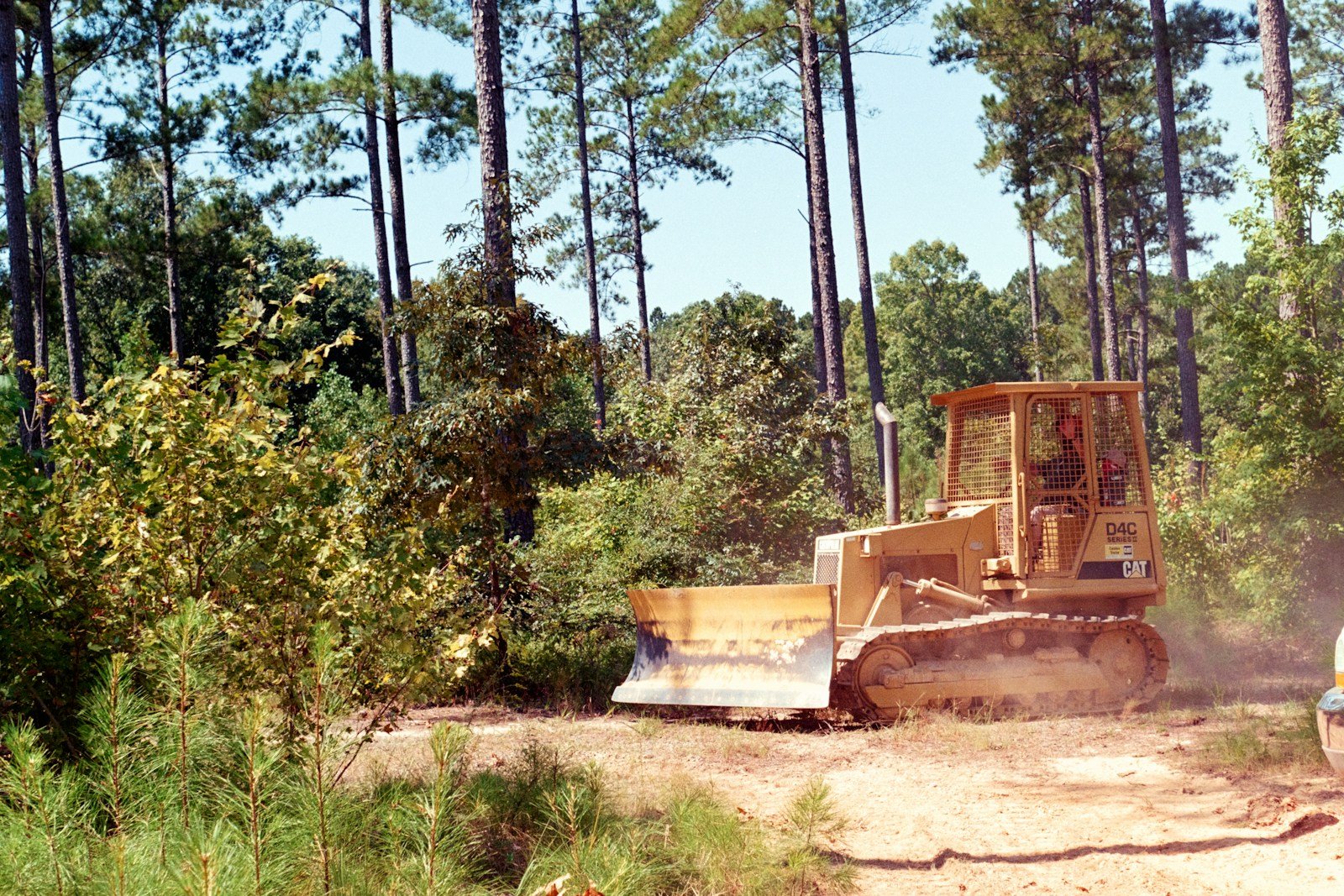
Lot clearing in Tallahassee is not just running a bulldozer through trees. The City of Tallahassee §5-83 tree protection ordinance regulates which trees can be removed, which require mitigation, and which need permits before a saw touches them. The arborists we dispatch handle the full project — initial tree survey, permit consultation, clearing, stump grinding, debris hauling, and final site prep. Whether you are prepping a 0.4-acre infill lot in Midtown for a new build or clearing a 5-acre wooded parcel in Bradfordville for development, lot clearing Tallahassee homeowners and builders book through us is coordinated to keep you compliant and on schedule.
📞 (850) 555-0123What Lot Clearing in Tallahassee Actually Covers
A coordinated project — not a single tree removal. Tree survey, permit consultation, clearing, stump grinding, debris hauling, and final grade.
Lot clearing Tallahassee builders and homeowners book is a different category of work than a one-tree call. Tree removal takes down a single tree or small cluster on an established property. Tree cutting is partial reduction work. Lot clearing is project-scale: a defined area of land cleared of all woody material — trees, brush, understory, stumps, root mass — and prepared for whatever comes next, whether that is foundation excavation, a driveway, a pool, an ADU, or a full housing development.
A typical lot clearing Tallahassee job includes the tree inventory and §5-83 permit consultation, the actual tree felling and brush clearing, stump grinding to grade or full extraction depending on the next-step plan, debris hauling off-site (or on-site grinding to mulch if the site can absorb it), and a final grade pass to leave a buildable surface. Some jobs add silt fencing for stormwater compliance. Some add tree-protection fencing around heritage trees that the §5-83 ordinance requires preserved.
The arborists we dispatch coordinate the full sequence. We connect homeowners and builders across Tallahassee, Killearn, Bradfordville, SouthWood, Lake Jackson, Crawfordville, Wakulla, Quincy, and the broader Big Bend with crews that own the equipment to do this work right — chippers, grinders, dump trucks, skid steers with mulching heads, and the climbing gear for the protected trees that have to stay. One coordinated quote, one coordinated schedule, one project lead from start to finish.
6 Types of Lot Clearing Tallahassee Projects
Most lot clearing Tallahassee jobs fall into one of these six project types. Each has its own scope, its own permit profile, and its own pricing pattern.
New-Build Building Pad Prep
The most common lot clearing Tallahassee project. Homeowner buys a wooded infill lot or rural acreage and needs a defined building pad cleared for foundation work. Includes tree inventory, §5-83 permit application, full clearance to grade, stump grinding, debris removal, and basic rough-grade. Coordinated with the builder's foundation schedule.
Selective Clearance (Partial Lot)
Owner wants to keep significant tree cover but clear specific zones — a pool footprint, an ADU pad, a larger driveway, a workshop site. The dispatched arborist marks trees to keep versus remove, builds the permit case for any heritage trees that must come out, and coordinates clearing without damaging the keepers. Higher per-square-foot cost than full clearance but lower total project cost.
Brush & Understory Clearance
The trees stay, the understory goes. Common on properties where the canopy is healthy but decades of unchecked brush, vines, invasive ligustrum, and saplings have made the site impassable. Often paired with a hurricane-prep pruning round on the trees that remain. Typically the lowest-cost lot clearing Tallahassee category.
Post-Storm Lot Clearance
Helene 2024, Idalia 2023, the May 2024 EF-2 tornadoes, and the January 2025 ice storm all left properties with mass tree failures requiring wholesale clearance rather than tree-by-tree removal. Storm-damage clearance qualifies as lot clearing when the scope crosses into clearing the entire footprint rather than salvaging individual trees.
Fence-Line & Boundary Clearance
Clearing a defined strip along property lines for fence installation, surveyor access, or a driveway extension. Usually short-duration work but the §5-83 ordinance still applies if the strip contains trees over the threshold size. The dispatched arborist files for the spot permit and coordinates with the fence contractor.
Multi-Acre Development Clearance
Larger development projects on 2+ acre parcels — subdivision build-out, commercial site prep, agricultural conversion. Different equipment scale (mulching heads, dozers, multiple chippers running) and different permit posture (often a full landscape plan, not a single-tree permit). The dispatched crew brings the equipment and the documentation.
Got a Wooded Lot You Need Cleared?
Free site walk, written quote, full §5-83 permit consultation. The arborists we dispatch handle the whole project from tree survey through final grade.
📞 (850) 555-0123Free site walks. ISA-Certified arborists only. No high-pressure quotes.
Tallahassee §5-83 Tree Protection Ordinance — What It Means for Lot Clearing
Most lot clearing Tallahassee surprises happen at the permit stage. Knowing the rules before the chainsaws start saves weeks and thousands of dollars.
The City of Tallahassee §5-83 tree protection ordinance regulates the removal of trees on private property within city limits. Unincorporated Leon County applies a similar but not identical framework. Both are designed to protect the canopy that defines the city — Canopy Roads, mature live oaks in established neighborhoods, and the broader urban forest. The full text is administered by City Growth Management, and the dispatched arborist will pull current rules at the time of your project. See the Tallahassee tree removal permit guide for the complete homeowner walkthrough.
For lot clearing Tallahassee work specifically, four points matter most:
1. Threshold size. Trees below the protected size threshold (varies by tree class — protected, heritage, exempt) can typically be removed without permit. Trees at or above the threshold usually require a permit application.
2. The 36-inch DBH heritage rule. §5-83 treats trees with a 36" or greater diameter at breast height as heritage trees. Removal of a heritage tree typically faces a stricter approval process and may trigger mitigation requirements (replacement plantings, in-lieu fees, or both). On a lot clearing project, identifying heritage trees during the initial site walk is critical — they shape the entire project budget.
3. The Florida §163.045 risk-tree exception. Florida Statute §163.045, amended in 2022 and confirmed in effect with no 2025–2026 amendments, allows a single-family residential property owner to remove a tree without a local permit when an ISA-Certified arborist documents the tree as posing an "unacceptable risk." This statute does not apply to commercial property, multi-family, or undeveloped land. For lot clearing on a single-family residential build, qualifying trees can sometimes be cleared under §163.045 documentation rather than the full §5-83 permit pathway.
4. The permit fee itself. The City of Tallahassee tree removal permit fee is reported at $273 for up to 10 trees (FY2026 confirmed). On larger lot clearing projects, the fee structure changes. Always confirm the current amount with City Growth Management at the time of permit submission.
What Gets Cleared, What Stays — The Tree Survey
Every lot clearing Tallahassee project starts with a tree-by-tree decision. The ones that stay shape the building plan. The ones that go shape the permit application.
A proper lot clearing tree survey marks every tree on the parcel with five pieces of information: species, diameter at breast height (DBH), health condition, location relative to the proposed build, and §5-83 classification. The output is a site map keyed to a remove-or-preserve list. The dispatched arborist provides this as part of the initial site walk.
Trees most often preserved: Mature live oaks, particularly any over 36" DBH (which trigger §5-83 heritage status and add significant value to the property). Healthy southern magnolias outside the building footprint. Specimen pines in good condition with no beetle damage. Established native canopy species that the permit ordinance specifically protects.
Trees most often removed: Declining laurel oaks (rapid decline species, often hollow at the base by middle age). Water oaks with heart rot. Beetle-killed pines (see the southern pine beetle guide). Sweetgums on the buildable footprint (notorious for surface roots that damage foundations). Any tree with structural defects identified during the survey.
Trees that require special handling: Heritage trees (36"+ DBH) within the building footprint that cannot be preserved trigger the full mitigation pathway. The dispatched arborist works with City Growth Management to define the mitigation plan — typically replacement plantings at a specified caliper-inch ratio, an in-lieu fee, or a combination. On a tight lot, heritage tree mitigation can add $2,000–$8,000 to project cost. Knowing this before purchase is the difference between a viable project and a money pit.
Authority source: The University of Florida IFAS Extension publishes the species-specific care, decline, and removal-justification documents the arborists we dispatch reference. For botanical and condition guidance, see edis.ifas.ufl.edu.
Lot Clearing Cost in Tallahassee — Real Ranges
Lot clearing pricing is project-based, not per-tree. The five inputs that drive the quote: parcel size, tree density, stump treatment plan, hauling distance, and §5-83 permit complexity.
| Project Scope | Lot Size | Typical Cost Range |
|---|---|---|
| Brush & understory clearance only | Per acre | $1,500 – $3,500 |
| Light clearance (under 10 trees, brush, basic grade) | Up to 0.25 acre | $2,500 – $5,500 |
| Standard infill lot clearance (building pad + stumps) | 0.25–0.5 acre | $5,000 – $12,000 |
| Full lot clearance with stump grinding to grade | 0.5–1 acre | $8,500 – $22,000 |
| Multi-acre clearance (development scale) | 1–3 acres | $15,000 – $55,000 |
| Multi-acre clearance with full stump extraction | 3+ acres | $40,000+ |
| Stump grinding (per stump add-on) | Variable | $95 – $385 each |
| Heritage tree mitigation (replacement + permit) | Per heritage tree | $2,000 – $8,000 |
| §5-83 permit fee | Up to 10 trees | ~$273 (FY2026, confirm with City) |
Pricing data referenced from HomeBlue Tallahassee market data (March 2025) and ProMatcher, cross-checked against the partner crew quotes the dispatch network sees in Leon County. Final price always quoted on-site after a free walk-through. The arborists we dispatch do not charge for site walks and do not pressure same-day decisions on multi-acre projects.
Site-Specific Considerations for Lot Clearing in Tallahassee
The geology, drainage, and tree species mix on a Tallahassee lot drive project decisions you do not see on a quote line item.
Cody Scarp Soil Distinction
Lots north of I-10 sit on red clay (Orangeburg series). Stump extraction in clay requires a larger excavator and longer hours. Lots south of I-10 sit on sandy coastal plain, where stump grinding to grade is faster and cheaper. Clay also slows post-clearing drainage. The dispatched crew adjusts equipment and pricing based on soil class.
Drainage & Stormwater
Larger lot clearing Tallahassee projects within city limits may require a stormwater management plan and silt fencing during clearance. Tree root systems hold a surprising amount of water — clearing a 1-acre wooded lot changes runoff patterns immediately. The dispatched arborist coordinates with the builder or civil engineer where required.
Equipment Access
Infill lots in established neighborhoods often have tight access (one-lane drives, low utility lines, mature canopy on adjacent lots that cannot be damaged). Equipment selection — full-size dozer versus skid steer with mulching head, large grapple truck versus smaller dump — adjusts to access constraints and shows up in the quote.
Invasive Species Removal
Many Tallahassee lots carry decades of invasive ligustrum, mimosa, Chinese tallow, and Japanese climbing fern. Lot clearing is the time to remove these — they multiply the moment the canopy opens. The dispatched crew identifies and removes invasives during understory clearance rather than letting them re-colonize the prepped pad.
Root System Considerations
Live oak root systems extend 2–3x the canopy radius. Sweetgum surface roots reach 30+ feet from the trunk. Clearing trees adjacent to a planned building footprint requires a root-zone protection plan to keep the cleared trees stable while preserving structural integrity for the kept trees.
Seasonal Timing
Dry season (October–May) is the optimal window for lot clearing Tallahassee work. Wet-season clearing (June–September) is feasible but adds tracking and ground-protection costs and pauses for thunderstorms. Hurricane season also closes the permit office on landfall days. Most multi-acre projects book 2–4 months in advance for a winter window.
The 5-Step Lot Clearing Process
From your first call through final grade. Same workflow on every lot clearing Tallahassee project we coordinate.
Call & Site Walk
Free walk-through with an ISA-Certified arborist. Tree survey, scope definition, written project quote within 48 hours.
Permit Coordination
§5-83 permit application filed with City Growth Management. Heritage tree mitigation plan defined if required. Builder coordination if applicable.
Mobilization
Equipment scheduled. Tree-protection fencing installed around any preserved trees. Silt fencing and stormwater protections set if required.
Clearing & Grinding
Tree felling, brush clearing, stump grinding or extraction per spec. Debris hauled or chipped to mulch on-site if the site can absorb it.
Final Grade & Walk
Rough grade pass to leave a buildable surface. Final walk with the homeowner or builder. Photo documentation for permit close-out.
Call for Lot Clearing Tallahassee — Free Site Walk
Most lot clearing projects book 2 to 6 weeks out depending on permit timing and equipment scheduling. Pre-construction season fills first.
📞 (850) 555-0123Lot Clearing Service Areas — Tallahassee & Big Bend
The dispatch network covers all of Leon County and most of the surrounding Big Bend region. Same project standards, same ordinance compliance, same ISA-Certified arborists.
Related Tree Services in Tallahassee
Lot clearing usually pairs with one or more of these services. The arborists we dispatch handle them all.
Tree Removal
Single-tree work
Dead Tree Removal
Hazard tree priority
Fallen Tree Removal
Storm cleanup
Storm Damage
Post-event clearance
Tree Cutting
Substantial limb work
Tree Pruning
ANSI A300 canopy work
Branch Removal
Single-limb hazards
Tree Trimming
Routine maintenance
Risk Assessment
Arborist evaluation
Permit Guide
§5-83 walkthrough
Trees to Plant
Mitigation species
Pricing Guide
What clearance costs
Lot Clearing Tallahassee — Frequently Asked Questions
Real questions Tallahassee homeowners and builders ask before booking a lot clearing project.
How much does lot clearing cost in Tallahassee?
A standard 0.25–0.5-acre infill lot clearance with stump grinding to grade typically runs $5,000–$12,000. A full 0.5–1-acre lot clearance runs $8,500–$22,000. Multi-acre development clearance runs $15,000–$55,000+. Brush-and-understory only is the lowest-cost category at $1,500–$3,500 per acre. Heritage tree mitigation can add $2,000–$8,000 per protected tree that must be removed. Final pricing always quoted on-site.
Do I need a permit to clear my lot in Tallahassee?
Almost always, yes. The City of Tallahassee §5-83 ordinance regulates removal of protected and heritage trees on private property within city limits. Unincorporated Leon County applies similar rules. Removing trees without a permit can trigger fines, replanting requirements, and stop-work orders. The dispatched arborist files the §5-83 permit application as part of the project. The current City permit fee is reported at $273 for up to 10 trees (FY2026, confirm with Growth Management).
What is a "heritage tree" under the §5-83 ordinance?
The §5-83 ordinance treats trees with a 36-inch or greater diameter at breast height (DBH) as heritage trees. Removing a heritage tree typically faces a stricter approval process and may require mitigation — replacement plantings at a specified caliper-inch ratio, an in-lieu fee, or a combination. Identifying heritage trees during the initial site walk is the most important step in lot clearing Tallahassee project budgeting.
Can I clear my own lot to save money?
Legally you may, on most residential parcels, with a valid permit. Practically, lot clearing involves chainsaw work at height, heavy equipment operation, stump grinding or extraction, hauling, and permit administration. The DIY math rarely works out — equipment rental, dump fees, lost work hours, and the §5-83 permit error rate (which can trigger fines exceeding the cost of professional clearance) usually make the dispatched-crew option cheaper net of risk. Plus the dispatched crew carries the insurance.
How long does a lot clearing project take?
A standard 0.25–0.5-acre infill lot clearance is typically a 2–4 day on-site project once the permit is approved. Permit approval timing varies — straightforward applications return in 7–14 business days, heritage tree mitigation cases run 3–6 weeks. Multi-acre projects run 1–3 weeks of on-site work plus the longer permit window. Most lot clearing Tallahassee projects book 2–6 weeks in advance.
Do you grind stumps or extract them?
Both, depending on the next-step plan for the lot. Stump grinding to 6–10 inches below grade is sufficient for most building pads, driveways, and landscaped surfaces. Full extraction is warranted only when a foundation will sit directly over the former stump location or when the species (sweetgum, water oak) has a root mass that will continue to send up suckers. Extraction roughly doubles the per-stump cost.
What happens to the cleared trees and brush?
Three options. Hauled off-site to a permitted disposal facility (most common, typically included in the project quote). Chipped to mulch and spread on-site if the property can absorb it (cheapest option, useful for landscaped properties). Logged for lumber where individual trees are valuable enough to justify a sawmill pull (rare on residential lot clearance, more common on multi-acre rural parcels). The dispatched arborist runs the math during the site walk.
Can you keep certain trees while clearing the rest?
Yes. Selective clearance is one of the most common lot clearing Tallahassee project types. The arborist marks trees to keep versus remove during the survey, installs tree-protection fencing around the keepers before equipment arrives, and coordinates clearance to avoid root-zone damage on the preserved trees. Selective clearance has a higher per-square-foot cost than full clearance but lower total project cost on most lots.
Are storm-damaged trees a separate service from lot clearing?
It depends on scope. Removing 1–3 storm-damaged trees on an established property is storm damage cleanup. Clearing the entire footprint of a lot where most trees failed in a storm crosses into lot clearing — wholesale clearance and grade work rather than tree-by-tree salvage. After Idalia 2023, Helene 2024, and the January 2025 ice storm, many Big Bend properties needed the second category, not the first.
Book Lot Clearing Tallahassee — Free Site Walk
Tree survey. §5-83 permit consultation. Full clearance, stump grinding, hauling, final grade. ISA-Certified arborists. Free quotes. Serving all of Leon County and the Big Bend.
📞 (850) 555-0123Serving Tallahassee, Killearn, Killearn Estates, Killearn Lakes, Bradfordville, Lake Jackson, Midtown, Myers Park, Betton Hills, SouthWood, Northwest Tallahassee, Woodville, Crawfordville, Monticello, Quincy, and all of Wakulla and Leon Counties.