Tree Pruning in Tallahassee, FL
Pruning is surgery, not a haircut. Call now and we’ll connect you with a vetted, insured local pro who prunes to ANSI A300 — proper cuts, the right dose, the right season for North Florida trees.
📞 Call Now — (858) 319-0022 Call now and we’ll connect you any hour — 24/7 dispatch line*Pruning is the most misunderstood tree service in Tallahassee. Done right, it removes deadwood, lifts the canopy, reduces end-weight on heavy limbs, and improves structure — all with clean cuts at the branch collar so the tree can seal the wound. Done wrong (flush cuts, lion-tailing, or topping) it invites decay and weak regrowth. Every pro we dispatch prunes to the ANSI A300 standard, the national benchmark for tree work.
What does ANSI A300 pruning actually mean?
It’s the standard that separates proper cuts from topping: collar cuts, weight reduction instead of heading, and no more than a quarter of live canopy in a cycle. The full explainer is below — call now for standards-based tree trimming in Tallahassee.
The four pruning objectives that actually matter
- Cleaning — removing dead, dying, diseased, or broken branches. The single highest-value cut before hurricane season.
- Thinning — selectively reducing density so wind passes through, not against, the canopy.
- Raising — lifting low limbs for clearance over roofs, drives, and sidewalks.
- Reduction — shortening limbs back to a sound lateral — the honest alternative to topping for managing size.
What a proper cut looks like
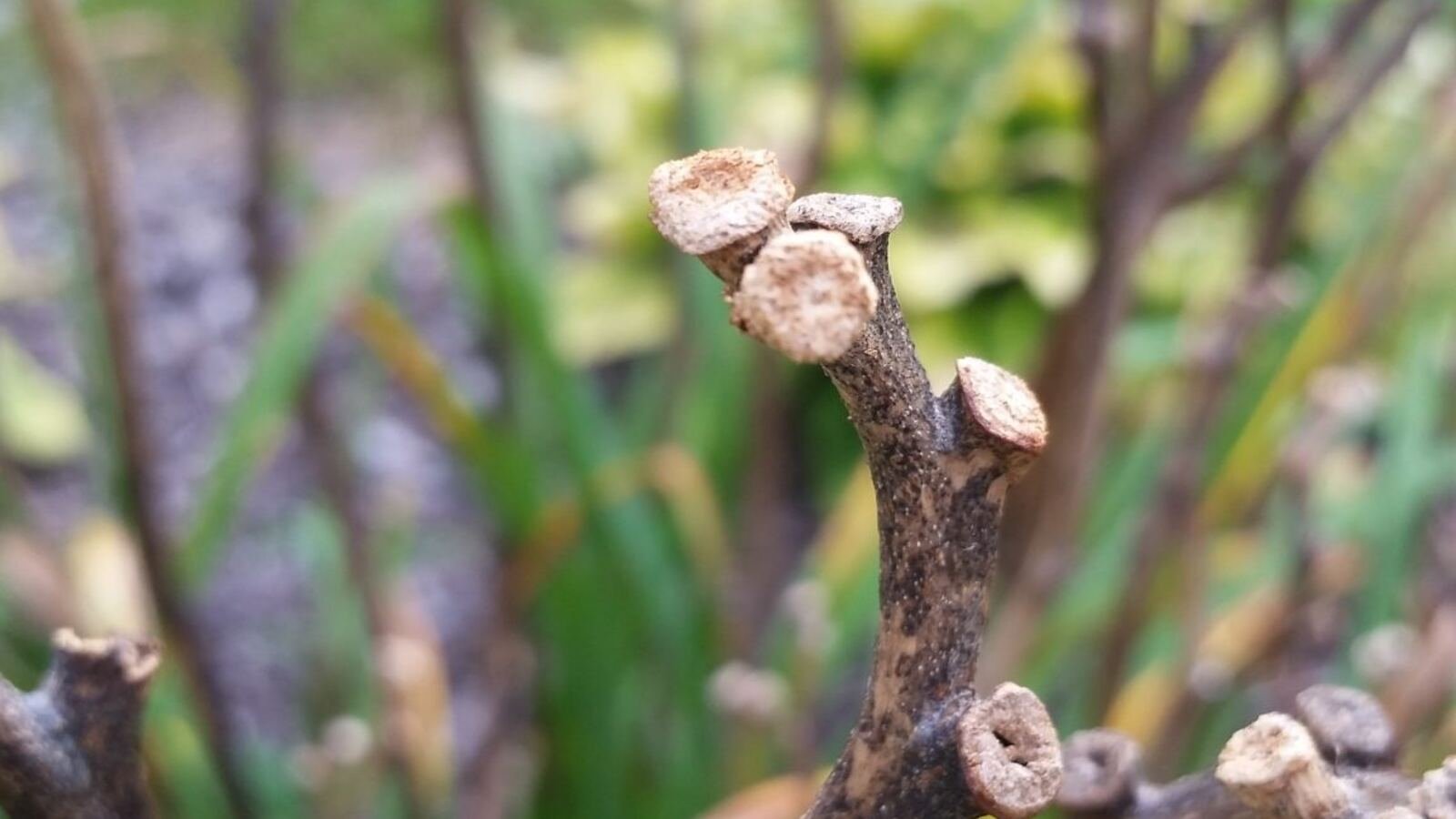
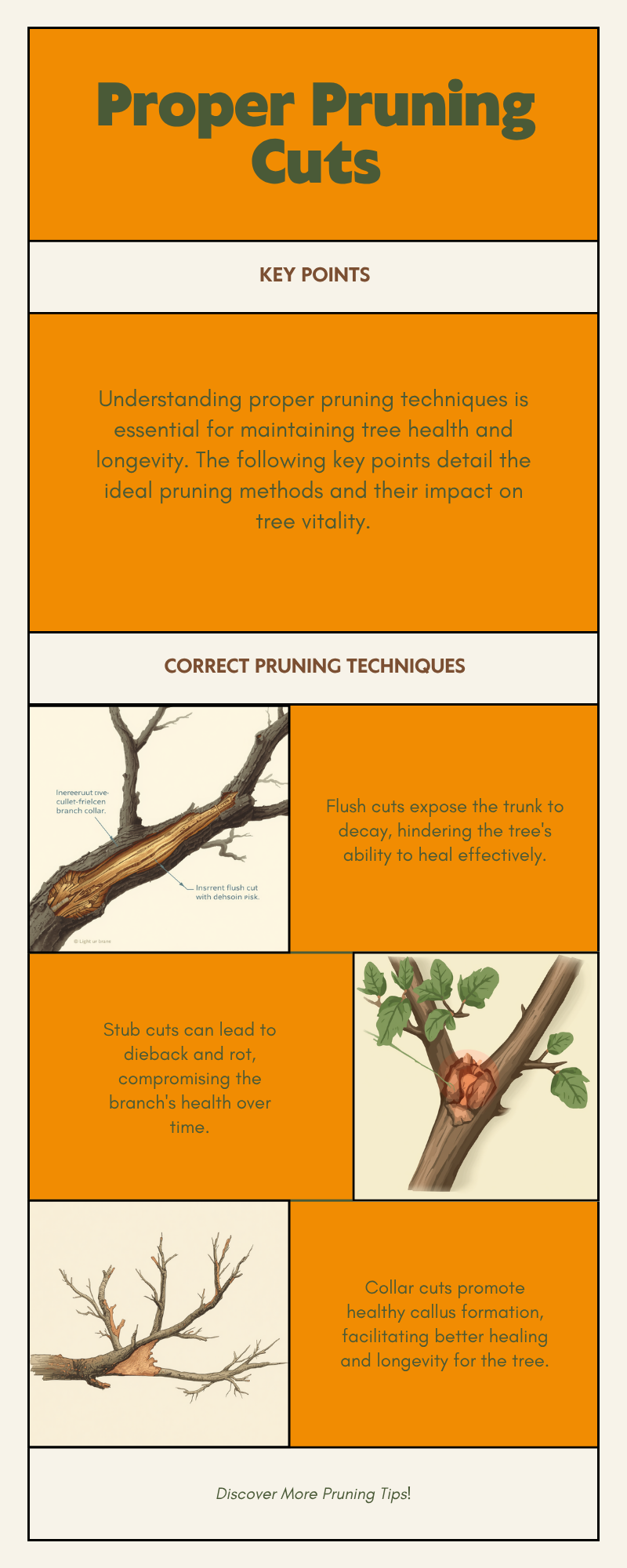
Every good pruning cut lands just outside the branch collar — the swollen ring of tissue where limb meets trunk. That collar is the tree’s wound-sealing machinery; cut through it (a flush cut) and the trunk itself is wounded, cut too far out (a stub cut) and the dead stub rots back into the trunk. On anything heavier than a wrist-thick limb, pros use the three-cut method: an undercut a foot out from the trunk, a top cut slightly further out to drop the limb’s weight without tearing bark, then a final clean cut at the collar. Bark tears from skipped undercuts are one of the most common decay entry points we see on Tallahassee oaks — usually from a well-meaning weekend job with a ladder and a bow saw.
Species-by-species: the right dose for Tallahassee trees
The 25% rule (never remove more than about a quarter of live canopy in a year) is the ceiling, not the target. In practice, the right dose varies by species — and Tallahassee’s mix is distinctive enough that a generic pruning playbook gets it wrong:
| Species | Season | What good pruning looks like |
|---|---|---|
| Live oak | Dormant (Nov–Feb) for structure | Reduction on over-extended horizontal limbs, deadwood out; never strip inner growth (lion-tailing shifts weight to the limb tips). |
| Laurel & water oak | Before June | End-weight reduction over targets; these brittle, shorter-lived oaks fail limb-first in storms. |
| Pines (longleaf, loblolly) | Winter–early spring | Deadwood and hazard limbs only — light hands; over-pruned pines invite Ips and southern pine beetle. |
| Southern magnolia | Late winter–spring | Minimal — magnolias hold their lower skirt naturally; heavy lifting ruins the form and sunscalds the bark. |
| Crape myrtle | Late winter | Pencil-thin crossing wood, suckers, seed heads. Structure stays. No knuckles. |
| Sabal palm | As needed | Dead, fully brown fronds only — the 9-to-3 rule; hurricane-cutting a palm weakens it. See sabal palm care. |
The Tallahassee oak-wilt myth
You’ll hear that you must never prune oaks in summer because of oak wilt. In Texas and the Midwest, that caution is real. In Florida it is not — oak wilt is not established here (per UF/IFAS). So in Tallahassee, the dormant-season pruning window for live and laurel oaks (late November through February) is about clean wound response and structure, not wilt. That said, dormant timing is still best for major structural work on oaks.
Got heavy limbs over the roof or a big pruning job ahead of hurricane season? When you call, describe the trees so the matched pro can plan the visit right.
📞 Call Now — (858) 319-002224/7 dispatch line — availability depends on independent provider schedules and demand.*Crape myrtle: shaping, not “crape murder”
Topping crape myrtles into knuckled stubs each winter — “crape murder” — is the most common pruning mistake in North Florida yards. It produces weak, whippy growth and ruins the tree’s natural form. Correct crape myrtle pruning is light: remove crossing branches, suckers, and spent seed heads, and let the structure show. See crape myrtle trimming done right.
Prune young, pay less forever
The cheapest structural pruning a Tallahassee homeowner will ever buy happens in a tree’s first 15 years. A young live oak trained to a single dominant leader with well-spaced scaffold limbs almost never develops the codominant, included-bark unions that later need cables — or a crane. Builders’ trees in newer subdivisions off Bannerman and Buck Lake Road are the usual offenders: planted, staked, and never touched again. One structural pass at year 3–5 and another around year 10 sets the canopy for decades, and it’s ladder work, not bucket-truck work, so it’s scoped accordingly.
Pruning as hurricane strategy
The end-of-May scramble is real: once a storm is named in the Gulf, every crew in Leon County books out. The smart sequence is winter structural pruning on oaks, then a pre-season pass (March–May) for deadwood and end-weight on anything over a roofline. Research out of UF after the 2004–05 hurricane seasons found thinned, well-structured canopies shed wind dramatically better than dense or lion-tailed ones — it’s the difference between the wind passing through the tree and the tree carrying the wind’s full load. The full timeline lives in the hurricane tree prep guide.
How getting matched works
Straight talk about what we are: a free referral line, not the crew. The pro who quotes your pruning carries their own license and insurance, and the quote is between you and them. Before anyone climbs your oak, it’s worth two minutes to verify credentials — our Florida license-verification guide shows exactly how, and you can confirm an ISA certification number on the ISA’s public registry.
Frequently asked questions
What’s the difference between pruning and trimming?
People use the words interchangeably. In practice, “pruning” emphasizes the health and structure of the tree (deadwood, thinning, reduction to ANSI A300), while “trimming” often refers to routine clearance and shaping. The pros we dispatch handle both — see tree trimming.
Can I prune my oak in summer in Tallahassee?
Light cleaning and clearance are fine year-round here because oak wilt is not established in Florida. For major structural pruning, the dormant season (late Nov–Feb) is still preferred for the cleanest wound response.
How much should you take off a tree at once?
Generally no more than about 25% of the live canopy in a single year, and far less on mature or stressed trees. Over-pruning starves a tree and triggers weak regrowth.
Is topping ever the right call?
No. Topping is not pruning. For size management, reduction cuts to sound laterals are the correct approach — see the topping alternative.
When should crape myrtles be pruned in Tallahassee?
Late winter, before the spring flush — and lightly. Remove crossing branches, suckers, and old seed heads. Cutting main stems back to knuckles (“crape murder”) forces weak growth and fewer, later blooms.
Should palms get a “hurricane cut”?
No. Stripping green fronds to a feather-duster weakens the palm, starves it, and can invite disease and nutrient deficiency. Remove only dead, fully brown fronds — a healthy sabal palm rides out hurricanes better with its canopy intact.
What happens to the branches after pruning?
Standard practice is chipping limbs on-site and either leaving the chips as mulch (if you want them) or hauling everything away. Confirm debris handling in the written quote — it’s part of the scope, not an extra surprise.
Related Tallahassee tree services
Tree Trimming
Topping Alternative
Crape Myrtle Trimming
Live Oak Care
Cabling & Bracing
Tree Removal
Hurricane Tree Prep
Palm Tree Trimming
Prune it right the first time
Call now and we’ll connect you with a vetted, insured ANSI A300 pruning pro. No obligation, no sign-up.
📞 Call Now — (858) 319-0022 Call now for a live match — 24/7 dispatch line*Tallahassee Tree Service Co. is a free dispatch and referral service. We are not a tree-service contractor and do not perform tree work ourselves. When you call, we connect you with an independent, licensed and insured local tree-care professional who carries their own license and insurance and provides any binding quote. Price information anywhere on this site is typical local-market information for planning only; people or scenes in images are illustrative.
References to “24/7,” “same-day,” or “emergency” describe call-handling and dispatch availability. Actual on-site response times depend on the independent professional’s schedule, crew availability, and weather, and are not guaranteed.