⚠️ §163.045 Risk-Tree Documentation Included

Hazardous Tree Removal Tallahassee FL
When the Tree Is Alive but Failing

Some trees are dead. Some trees are unwanted. And some trees are alive, leafed out, and actively failing — leaning toward the house, splitting at the union, heaving the soil at the root plate, growing mushrooms at the base. That last category is what hazardous tree removal Tallahassee homeowners book through us. The arborists we dispatch document the unacceptable risk under Florida Statute §163.045, which on single-family residential property bypasses the standard §5-83 permit pathway. Same-day site assessments. Rigging-grade removals. Insurance-friendly documentation. Serving all of Leon County and the Big Bend region.

📞 (850) 555-0123
ISA-Certified Arborists §163.045 Risk Documentation Same-Day Hazard Assessment Insurance-Friendly Reports Serving All of Leon County
Same-Day
Hazard Assessment
📜
§163.045
Risk-Tree Documentation
🌳
ISA
Certified Arborists
📋
Insurance
Friendly Reports

What Hazardous Tree Removal in Tallahassee Actually Means

An alive tree that is actively failing — not a dead tree, not an unwanted tree. The category with the highest urgency and the clearest legal pathway under Florida law.

Hazardous tree removal Tallahassee homeowners book sits at a specific intersection: the tree is still alive, the tree is still leafing out in spring, but something about the tree is actively dangerous. Maybe it leaned three degrees further in the last six months. Maybe a crack runs four feet down the trunk after the January 2025 ice storm. Maybe the root plate is heaving up turf on one side. Maybe mushroom conks have appeared at the base, signaling decay fungi inside the trunk. The tree has not failed yet. The tree is going to fail.

This is its own category of work because the response, the legal pathway, and the insurance posture all differ from standard tree removal (a healthy tree the owner does not want), dead tree removal (no question the tree is gone), or fallen tree removal (it already came down). Hazardous tree removal Tallahassee jobs require an ISA-Certified arborist on-site to document the unacceptable risk, which under Florida Statute §163.045 — confirmed in effect with no 2025–2026 amendments — allows removal on single-family residential property without the standard City of Tallahassee §5-83 permit. That documentation is the reason this service exists as a distinct line item.

The arborists we dispatch handle hazardous tree removal across Tallahassee, Killearn, Bradfordville, SouthWood, Lake Jackson, Midtown, Betton Hills, and the broader Big Bend region. Same-day site assessments for active hazards. Written §163.045 documentation included. Rigging-grade removals when the tree is too compromised to fell conventionally. Insurance-friendly reports when the homeowner's claim is going to depend on documented professional assessment.

Tallahassee context: Hermine 2016, Michael 2018, Idalia 2023, the May 2024 EF-2 tornadoes, Helene 2024, and the January 2025 ice storm have all left the local canopy carrying compromised trees that did not fail at the time but are now, years later, showing the warning signs. A laurel oak that took 40 mph gusts during Helene without dropping a limb may still have an internal crack at a major union — invisible from the ground, lethal eighteen months later. Hazardous tree removal Tallahassee work has been steady ever since.

📞 Call (850) 555-0123 for a Same-Day Hazard Assessment

7 Warning Signs of a Hazardous Tree

If your tree shows any of these, schedule a free assessment. The arborists we dispatch tell you straight whether removal is justified — or whether the tree can be saved.

1

Visible Lean (Especially New Lean)

Old lean is often stable. New lean — soil cracking on one side of the root plate, bark wrinkling on the lean side — signals active root failure. Sudden new lean during or after a storm is the highest-priority warning sign.

2

Soil Heaving at the Root Plate

Turf bulging up on one side of the trunk means the root plate is rotating. Soil cracks running in an arc around the trunk mean the same thing. A tree with heaving roots can fail with no further warning during the next windstorm.

3

Mushrooms or Conks at the Base

Fruiting bodies of decay fungi — usually orange, brown, or shelf-like growths near the trunk base. Visible decay fungi mean the heart of the trunk is already compromised. A common indicator on water oaks and laurel oaks past middle age.

4

Hollow Trunk

Sound the trunk with a hammer or mallet — a hollow ring versus a dull thud. Trunks can be substantially hollow before failure becomes visible. The arborist uses a sounding mallet and, where warranted, a resistograph drill to measure remaining sound wood.

5

Cracks Running Down the Trunk

Vertical cracks longer than two feet, especially after a storm event. The crack may be a single seam or paired (frost crack patterns). Either way, the trunk is structurally compromised. Internal cracks invisible from outside are the same problem worse.

6

Codominant Trunks with Included Bark

Two trunks of similar size growing from a single union with bark trapped inside the union. The classic failure mode for laurel oaks, Bradford pears, and water oaks. Splits often occur during wind events with no other warning.

7

Major Dead Branches in a Living Tree

Tree is leafed out, but multiple branches over four inches in diameter are bare. Often a sign of root system decline or vascular disease. The dead branches will fall on their own schedule, and the rest of the tree may not be far behind.

Authority source: The University of Florida IFAS Extension publishes the technical risk-tree assessment criteria the arborists we dispatch reference on every hazardous tree removal Tallahassee job. For botanical risk indicators by species, see edis.ifas.ufl.edu.

See Any of the 7 Warning Signs?

Free same-day site assessment. ISA-Certified arborist on the property. Written risk documentation included.

📞 (850) 555-0123

Honest assessment. We do not pressure removals on healthy trees.

6 Common Hazardous Tree Scenarios in Tallahassee

When Tallahassee homeowners book hazardous tree removal, it is almost always one of these six scenarios. Each maps to a specific failure mode and a specific rigging plan.

🏚️

Severe Lean Toward a Structure

Tree leaning toward a house, driveway, or detached structure. Even a modest lean on a 70-foot live oak puts thousands of pounds of canopy weight committed in one direction. New lean — versus a lean that has been stable for years — is the urgent category. Almost always a same-day call.

🪓

Split Trunk or Storm-Damaged Main Stem

Vertical crack extending two or more feet down the trunk. Often opens up after a wind event but the tree continues to leaf out. The crack is not going to heal. The next storm finishes the job. The dispatched arborist documents the split and recommends removal under §163.045 if the tree is on a single-family residential property.

🌱

Root Plate Failure / Soil Heaving

The most underestimated failure mode. The trunk looks fine, but the soil around the base is cracked or visibly raised on one side. The root plate is rotating. A tree with active root plate failure can come down in winds well below storm strength. Removal is non-negotiable once heaving is confirmed.

💀

Dead Crown / Top-Down Decline

Lower trunk and major branches are alive, but the upper crown is bare or substantially dead. Common in laurel oak decline and in beetle-stressed pines. The dead upper crown will shed branches randomly. Removal is usually faster and cheaper than annual crown cleaning on a tree that is going to need full removal anyway.

🕳️

Hollow Base / Heart Rot

Trunk hollow detected by sounding or resistograph testing. Common on mature water oaks (heart rot is endemic past age 40) and on any tree with old wounds at the base. Hollow trees can stand for decades or fail in a calm afternoon — there is no reliable way to predict from outside. The arborist documents remaining sound wood and makes the removal call.

Codominant Trunk Failure

Two trunks of similar size joined at a weak union with included bark. The classic failure mode for laurel oaks, Bradford pears, water oaks, and many fast-growing landscape species. When the union splits, half the tree comes down in seconds. Hazardous tree removal Tallahassee crews see this most often after wind events on properties built in the 1970s and 80s.

Florida §163.045 — How ISA-Certified Documentation Bypasses the §5-83 Permit

The single most important legal mechanism for hazardous tree removal Tallahassee homeowners. Most competitor pages do not address it. Here is how it works.

Florida Statute §163.045, originally enacted in 2019 and amended in 2022, was confirmed in effect with no 2025–2026 amendments at the time of this writing. The statute applies to single-family residential property only. It does not apply to multi-family, commercial, or undeveloped land. Within its scope, the statute does three things relevant to hazardous tree removal Tallahassee work:

1. It permits removal without a local permit. When an ISA-Certified arborist or licensed Florida landscape architect documents in writing that a tree on single-family residential property poses an "unacceptable risk," the homeowner may remove the tree without obtaining a permit from the City of Tallahassee or Leon County. The local §5-83 permit pathway is bypassed entirely.

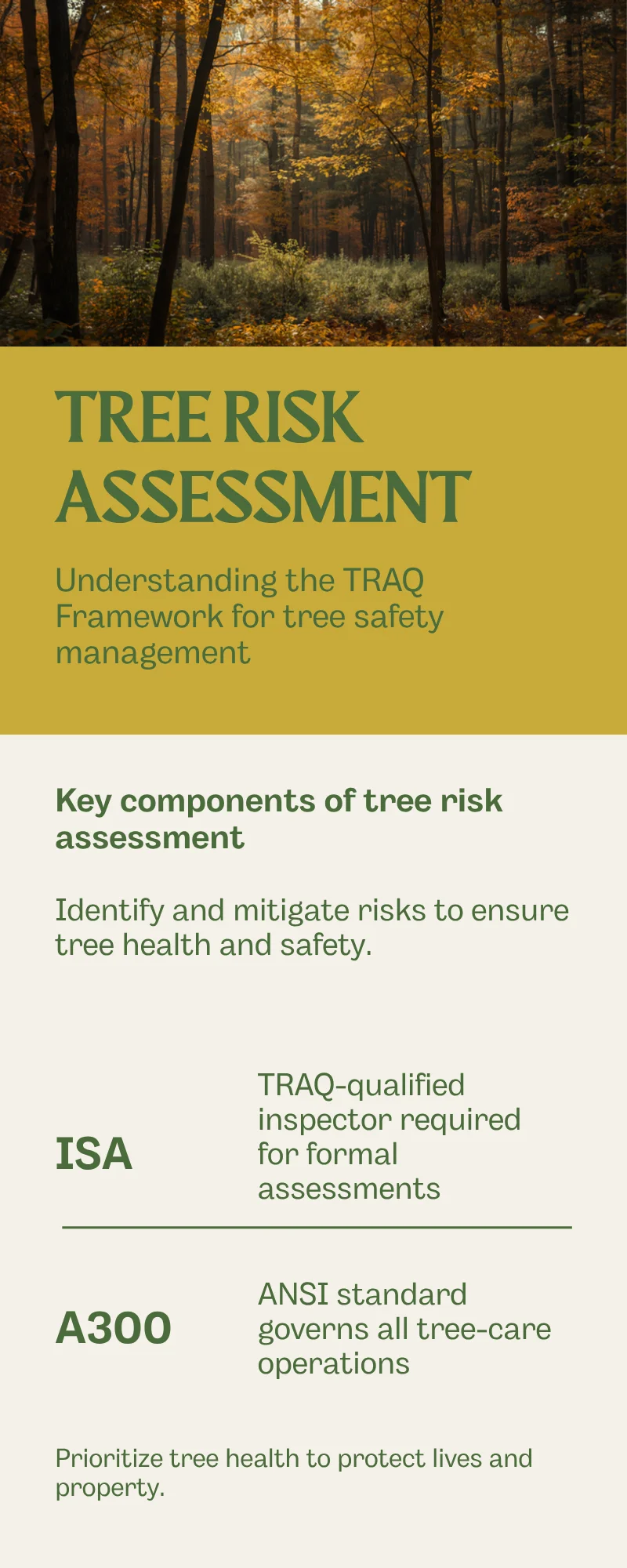
2. It defines "unacceptable risk" by reference to ISA standards. The statute uses the International Society of Arboriculture's Tree Risk Assessment Qualification (TRAQ) methodology as the professional standard. The dispatched arborist documents the failure mode, the target (what the tree threatens), and the consequence severity. The risk rating must reach the "extreme" or "high" tier on the TRAQ matrix to qualify under the statute.

3. It eliminates local mitigation requirements for qualifying trees. Under the standard §5-83 ordinance, removing a heritage tree (36"+ DBH) typically triggers replacement plantings or in-lieu fees. Under §163.045, qualifying hazardous tree removal Tallahassee jobs on single-family residential property are not subject to those mitigation requirements. The cost savings on a heritage-class hazardous tree can run $2,000–$8,000.

Important caveats: §163.045 documentation must be in writing, must be signed by an ISA-Certified arborist or licensed Florida landscape architect, and must be retained by the homeowner. The statute does NOT shield against civil liability if the tree fell and damaged neighboring property before removal was attempted. The statute does NOT apply to commercial, multi-family, or undeveloped land. The statute does NOT apply to trees that do not meet the unacceptable risk threshold — the ISA-Certified arborist makes the professional call, and they will not stamp documentation on a tree that does not qualify.

The arborists we dispatch carry current ISA Certified Arborist credentials and TRAQ qualification where applicable. Written §163.045 documentation is included on every hazardous tree removal Tallahassee job that qualifies under the statute. You keep the documentation; we keep a copy for our files. If a future buyer, neighbor, or insurance company ever asks why the tree came down, the paper trail is in place.

📞 Call (850) 555-0123 — Free §163.045 Assessment

Tallahassee's Most Hazardous Tree Species

Some species fail predictably. Others fail rarely. The arborists we dispatch see these six come up most often in hazardous tree removal Tallahassee work.

🍃

Laurel Oak (Quercus laurifolia)

The single most common species in hazardous tree removal Tallahassee jobs. Lifespan 50–70 years versus 200+ for live oak. Decline is rapid once it begins — green to brown to dead crown over a few seasons. Codominant unions with included bark are common. See laurel oak problems for the full diagnosis.

💧

Water Oak (Quercus nigra)

Heart rot is endemic past age 40. Many mature water oaks in Tallahassee are substantially hollow inside an apparently sound exterior. Failures are sudden — calm afternoons, no wind. The dispatched arborist sounds the trunk and uses resistograph testing where warranted before recommending removal under §163.045.

🌳

Sweetgum (Liquidambar styraciflua)

Surface root systems extend 30+ feet from the trunk. Slow decline that often goes unnoticed until the tree is well past the warning-sign threshold. Common in Tallahassee yards built out in the 1960s–80s. Hazardous tree removal Tallahassee crews remove sweetgums regularly because of their tendency toward asymmetric root failure.

🌲

Leaning Pines (Loblolly, Slash, Longleaf)

Pines fail through three pathways: lightning strike damage (a single hit weakens the trunk for years), beetle-killed branch death progressing into the main stem (see the southern pine beetle guide), and wind-induced lean from canopy gaps opened by storm losses on neighboring trees. All three are removal-justifying.

🌰

Pecan

Heavy lateral limbs prone to summer branch drop — a phenomenon where seemingly healthy limbs fall on calm hot afternoons due to internal moisture stress. Mature pecans on residential property often qualify as hazardous when the canopy overlies a structure. The dispatched arborist documents the limb-drop history and applies §163.045 where the criteria are met.

🌸

Bradford Pear

Notorious for codominant union failure. The species was sold across north Florida in the 1990s and early 2000s as a fast-growing ornamental. Most Bradford pears reach failure age between 15 and 25 years. The trunk splits down the middle during a wind event with little prior warning. Almost always a hazardous tree removal call.

Hazardous Tree Removal Cost in Tallahassee — Real Ranges

Hazardous tree removal generally runs 25–50% above standard tree removal pricing because of rigging complexity, urgency, and the §163.045 documentation included.

Tree ProfileHazard TypeTypical Cost Range
Small (under 30 ft)Lean, split, dead crown$485 – $1,100
Medium (30–60 ft)Lean, split, root plate failure$1,100 – $2,400
Large (60–80 ft)Multiple hazard indicators$2,400 – $4,800
Very large (80+ ft)Hollow base, codominant failure, severe lean$4,200 – $8,500
Crane-assisted removal (any size)Inaccessible or extreme hazard$3,500 – $9,500
§163.045 documentationIncluded with removal
Stand-alone risk assessment (no removal)$185 – $385
Same-day emergency surcharge+25%–50%
Stump grinding (per stump add-on)$95 – $385

Pricing data referenced from HomeBlue Tallahassee market data (March 2025) and ProMatcher, cross-checked against the partner crew quotes the dispatch network sees in Leon County. Final price always quoted on-site after a free assessment. The arborists we dispatch do not charge for risk assessments tied to a removal job and do not pressure removal on trees that do not meet the §163.045 threshold.

Why hazardous tree removal Tallahassee jobs cost more than standard removal: A healthy tree can be felled conventionally — tag the lean, drop it in one piece, cut it up on the ground. A hazardous tree often cannot be felled conventionally because the homeowner does not want a 4,000-pound failure event near the structure they were trying to protect. Rigging the tree down piece by piece using climbing ropes, lowering devices, and a dedicated ground crew is slower, requires more equipment, and carries more risk for the climber. The pricing reflects the work, not the urgency.

Insurance Documentation — What Adjusters Need

When a hazardous tree fails and damages a covered structure, the documentation timeline matters as much as the damage itself. Here is what insurance adjusters actually look for.

Most Florida homeowner's insurance policies cover hazardous tree removal cost only when one of two conditions is met: the tree caused covered damage to a covered structure (the house, an attached garage, sometimes a fence, sometimes a vehicle in a covered structure), OR the tree was identified as a hazard prior to the failure event and the documented removal was already in process. The §163.045 documentation the dispatched arborist provides supports both pathways.

Practically: if a hazardous tree on your property fell on your house during a storm, your insurance carrier will pay for the removal as part of the structural repair claim. If a hazardous tree on your property fell on your neighbor's house during a storm, the answer depends on whether you knew the tree was hazardous. Documented prior knowledge — including but not limited to a §163.045 assessment from an ISA-Certified arborist — can shift liability dramatically. Most homeowners discover this the hard way, during the deposition.

The arborists we dispatch provide written assessment reports on every hazardous tree removal Tallahassee job. The report includes the tree species, DBH measurement, photographic documentation of the hazard indicators, the ISA TRAQ risk rating, the §163.045 statutory citation, the removal recommendation, and the date of assessment. Adjusters and attorneys recognize this format because it is the industry standard. We do not file claims on your behalf, but the paper trail is in place.

Critical timing note: If you have a hazardous tree that you know about and you delay action, your insurance posture weakens with every passing month. Carriers can argue (and have successfully argued) that documented inaction on a known hazard transfers liability from a covered weather event to homeowner negligence. The cheapest insurance move is the fastest one — get the assessment, document the hazard, schedule the removal.

The 5-Step Hazardous Tree Removal Process

From your first call through final cleanup. Same workflow on every hazardous tree removal Tallahassee job we coordinate.

1

Call & Site Visit

Phone consult. ISA-Certified arborist on the property within 24 hours for active hazards, 48–72 hours for non-urgent assessments.

2

Risk Assessment & Documentation

Tree sounded, root plate inspected, ISA TRAQ rating recorded, §163.045 documentation drafted on-site. Free with removal job.

3

Quote & Schedule

Written fixed-price quote. Active hazards scheduled within 1–3 days. Documentation copied to homeowner before work begins.

4

Rigged Removal

Tree removed piece by piece with climbing ropes, lowering devices, and dedicated ground crew. No conventional felling on hazardous trees over structures.

5

Cleanup & Final Walk

Debris hauled or chipped on-site. Stump grinding scheduled separately if required. Final walk with homeowner. Documentation copies for insurance file.

Call for Hazardous Tree Removal — Same-Day Service Available

§163.045 documentation included. ISA-Certified arborists. Insurance-friendly reports. Active hazards prioritized.

📞 (850) 555-0123

Hazardous Tree Removal Service Areas

The dispatch network covers all of Leon County and most of the surrounding Big Bend region. Same standards, same §163.045 documentation, same ISA-Certified arborists.

Hazardous Tree Removal Tallahassee — Frequently Asked Questions

Real questions Tallahassee homeowners ask before booking a hazardous tree removal job.

How do I know if my tree is "hazardous" versus just unwanted?

A hazardous tree shows physical warning signs — visible lean, soil heaving at the base, mushrooms or conks at the trunk, hollow sound when struck, vertical cracks running two or more feet, codominant trunks with included bark, or a substantially dead crown on a still-living tree. An unwanted tree is healthy but inconvenient. The category matters because hazardous tree removal Tallahassee jobs qualify for §163.045 documentation that bypasses the standard §5-83 permit pathway. Standard tree removal does not.

Do I need a permit to remove a hazardous tree in Tallahassee?

Often, no. Florida Statute §163.045 — confirmed in effect with no 2025–2026 amendments — allows removal of hazardous trees on single-family residential property without a local permit when an ISA-Certified arborist documents the tree as posing an unacceptable risk. The dispatched arborist provides the documentation as part of the removal job. The statute does not apply to commercial, multi-family, or undeveloped land. See the Tallahassee tree removal permit guide for the full §5-83 framework.

How much does hazardous tree removal cost in Tallahassee?

Pricing runs 25–50% above standard tree removal because of rigging complexity and urgency. A small hazardous tree (under 30 ft) runs $485–$1,100. Medium (30–60 ft) runs $1,100–$2,400. Large (60–80 ft) runs $2,400–$4,800. Very large with hollow base or severe lean runs $4,200–$8,500. Crane-assisted removals run $3,500–$9,500. §163.045 documentation is included with the removal job at no separate charge.

Will my homeowner's insurance cover hazardous tree removal?

It depends. Insurance typically covers removal cost only when the tree caused covered damage to a covered structure, OR the tree was documented as hazardous prior to the failure and the removal was already in process. Most policies do not pay for proactive removal of a hazardous tree before it fails. The §163.045 documentation supports both pathways and is essential evidence in any subsequent claim or liability discussion.

How fast can a hazardous tree be assessed and removed?

For an active hazard — visible new lean, fresh trunk crack, root plate heaving — the dispatched arborist can usually be on the property within 24 hours. Removal scheduling depends on rigging requirements and equipment availability, typically 1–3 days from assessment for urgent cases. Same-day removal is possible when the network has a crew nearby. Documentation can be completed and signed during the initial assessment.

What is the §163.045 statute and who qualifies?

Florida Statute §163.045 allows single-family residential property owners to remove a tree without a local permit when an ISA-Certified arborist or licensed Florida landscape architect documents the tree as posing an "unacceptable risk." The statute references the ISA Tree Risk Assessment Qualification methodology and requires a high or extreme risk rating. The statute does not apply to commercial, multi-family, or undeveloped land. The documentation must be in writing and signed.

Can a hazardous tree be saved instead of removed?

Sometimes. A tree with a single failing branch may be salvageable through targeted branch removal and ANSI A300 restoration pruning. A tree with active root plate failure, severe lean toward a structure, or substantial heart rot generally cannot be saved — the underlying failure is structural. The dispatched arborist tells you straight which category your tree is in. We do not pressure removal on trees that can be saved.

What species are most likely to be hazardous in Tallahassee?

Laurel oak by a wide margin — fast decline, codominant unions, lifespan well below live oak. Water oak — heart rot endemic past age 40. Sweetgum — surface root systems prone to asymmetric failure. Bradford pear — codominant union failure between ages 15 and 25. Leaning pines stressed by storms or beetle damage. Pecans with summer branch drop history. The Tallahassee canopy carries a high proportion of these species because of the species mix planted during the 1960s–80s development boom.

Can the dispatched crew do the removal the same day as the assessment?

Sometimes, when the network has a rigging-equipped crew already in your area and the hazard is severe enough to justify same-day work. More commonly, the assessment happens day one and the rigged removal happens within 1–3 days. Same-day removal carries a 25%–50% surcharge over scheduled pricing. Honest assessment first — we do not push same-day work on trees that can safely wait until the regularly scheduled appointment.

Book Hazardous Tree Removal Tallahassee Today

ISA-Certified arborists. §163.045 risk-tree documentation included. Same-day assessments for active hazards. Insurance-friendly reports. All of Leon County and the Big Bend region.

📞 (850) 555-0123

Serving Tallahassee, Killearn, Killearn Estates, Killearn Lakes, Bradfordville, Lake Jackson, Midtown, Myers Park, Betton Hills, SouthWood, Northwest Tallahassee, Woodville, Crawfordville, Monticello, Quincy, and all of Wakulla and Leon Counties.

Call Now – Free Estimate