Tree Cutting in Tallahassee, FL
A laurel oak limb resting on the shingles, a pine leaning harder after every storm, or a whole tree that needs to come down in pieces — call now and we’ll connect you with a vetted, insured Tallahassee tree cutting pro who works to ANSI Z133 safety standards.
📞 Call Now — (858) 319-0022Storm limb hanging over the driveway right now? Call now — hazard cuts are triaged first.“Tree cutting” is the phrase Tallahassee homeowners actually type when something needs a chainsaw — and it can mean four very different jobs. Cutting one dead limb off a live oak over the lanai is a two-hour climb. Sectioning a 90-foot loblolly pine out of a backyard off Thomasville Road is a rigging operation with ropes, friction devices, and sometimes a crane. The first thing a good arborist does is figure out which job you really have, because the equipment, the risk, and the price drivers are completely different.
Geography decides a lot of it here. North of the Cody Scarp — Killearn, Ox Bottom, Betton Hills, Midtown — deep red Orangeburg clay grows massive, wide-crowned live and laurel oaks whose limbs run long and heavy over rooflines. South and east of the scarp, in Woodville, Apalachee Ridge, and toward Wakulla, sandier soil over karst limestone favors tall pines and water oaks that snap or uproot rather than shed limbs. The cut that’s routine on one side of town is a hazard job on the other, and the pros we match you with scope it that way.
Cutting, trimming, pruning, removal — which one do you actually need?
The trade uses these words precisely even though search engines don’t. Here’s the fast translation so you can describe the job accurately when you’re matched:
| What you say | What the arborist hears | Typical Tallahassee scenario |
|---|---|---|
| “Cut some limbs” | Selective limb removal / clearance cutting | Laurel oak limbs over the roof in Killearn; pine limbs into the service drop |
| “Cut the tree back” | Crown reduction (trimming/pruning) | End-weight reduction before hurricane season |
| “Cut the tree down” | Full tree removal, usually sectional | Declining water oak between two houses in Midtown |
| “Cut up a fallen tree” | Storm bucking & debris hauling | Pine across the fence after a Gulf storm rolls up the Big Bend |
Why it matters: a company that shows up expecting a limb job and finds a full takedown either reschedules or improvises. Neither is good. Say exactly what’s happening — the matching gets sharper and the quote gets tighter.
The cutting jobs Tallahassee calls about most
Overhanging limb cutting
Live oaks and laurel oaks in older neighborhoods carry horizontal limbs 40+ feet long. Over a roof, a limb doesn’t have to fall to cost you money — constant abrasion strips shingles and the shade load feeds algae. Proper clearance cutting takes the limb back to a lateral branch collar so it seals, never a flush cut, never a stub.
Sectional takedowns in tight yards
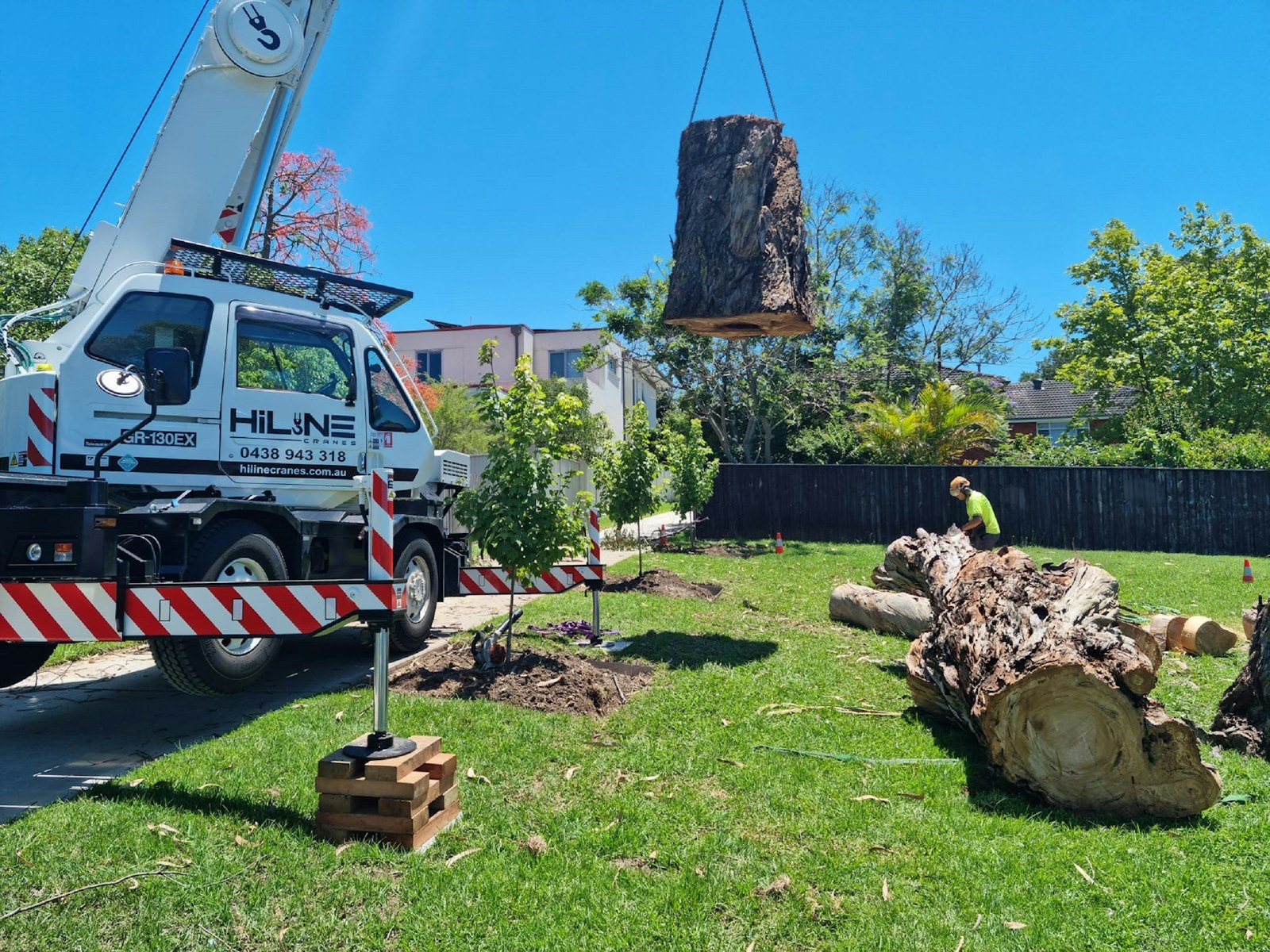
Most Tallahassee removals can’t be felled whole — there’s a house, a pool cage, or a neighbor’s fence in every direction. The tree comes down in pieces: a climber rigs each section to a lowering line, a ground crew controls the descent, and nothing free-falls. On big pines and pecans, a crane over the house is often the safer and faster play.
Storm-damage cutting
After a tropical system, the dangerous work isn’t the tree on the ground — it’s the half-fallen one loaded like a spring. Bent trunks and hung limbs (“widow-makers”) store enormous tension, and a wrong cut releases it instantly. This is chainsaw work that injures experienced homeowners every storm season; it belongs with a pro who reads compression and tension wood for a living. Our hazardous tree removal page covers how those jobs get triaged.
Clearance and line-of-sight cutting
Driveway clearance, garden sunlight, security sight-lines around entries — smaller cuts, but on protected species and along canopy roads they can still trigger permit questions (more below).
Limb on the roof, or a trunk cracked after a storm? That’s a priority-dispatch situation — describe it that way and it gets triaged first.
📞 Call Now — (858) 319-0022Vetted local pros — availability depends on independent provider schedules and demand.*How getting matched works
Permits: check before the saw starts
Tallahassee is serious about its canopy. Inside city limits, Land Development Code §5-83 protects trees above certain size thresholds, and the rules tighten dramatically for patriarch-class live oaks and anything within a canopy road protection zone (Miccosukee, Centerville, Meridian, Old Bainbridge, Old St. Augustine, and Sunny Hill). Unincorporated Leon County runs its own process. Florida Statute §163.045 creates a documented-hazard pathway when a qualified arborist letter says the tree is a danger — but the paperwork has to exist before the cutting does. The full breakdown, thresholds, and application steps live in our Tallahassee tree permit guide. A reputable pro handles this conversation up front; if someone offers to “just take it down quietly,” that’s your cue to hang up.
Why DIY chainsaw cutting goes wrong here
Every storm season, emergency rooms across North Florida see a spike in chainsaw and ladder injuries — overwhelmingly homeowners, not professionals. The physics are unforgiving: a modest 12-inch-diameter green oak limb can weigh several hundred pounds, ladders and running saws are a terrible combination, and storm-bent wood releases stored tension in unpredictable directions. Add Tallahassee-specific hazards — energized service drops hidden in foliage, brittle dead laurel oaks that shatter mid-cut — and the honest advice is simple: ground-level bucking of a small fallen limb, fine. Anything overhead, anything under tension, anything near a line — get it matched to a pro.

What moves the price of tree cutting in Tallahassee
There’s no honest flat number — the pros quote after a walk-through — but these are the drivers that move it, so you can see your own job in them:
- Height and diameter. A 30-foot dogwood limb and a 90-foot loblolly section are different sports.
- Access. Backyard trees behind pool cages or fences mean hand-carrying gear or a crane over the house.
- Targets underneath. Roofs, AC condensers, fences, and septic fields all slow the rigging down — deliberately.
- Condition of the wood. Dead and storm-damaged wood is brittle and unpredictable, so it’s rigged more conservatively. See dead tree removal for why.
- Debris handling. Chip-and-haul versus leave-it-stacked changes crew time meaningfully.
- Timing. Post-storm demand spikes; scheduled dormant-season work books calmer.
FAQ — tree cutting in Tallahassee
Can a tree cutting pro remove just one limb?
Yes — single-limb clearance cuts are one of the most common jobs in Tallahassee, especially oaks over roofs. The cut is made at the branch collar so the tree seals properly, and the limb is rigged down in pieces if there’s anything underneath it.
Do I need a permit to cut down a tree in Tallahassee?
Often, yes. City code (LDC §5-83) protects trees above size thresholds, with stricter rules for patriarch live oaks and canopy road zones; unincorporated Leon County has its own process. A documented hazard can qualify for the Florida §163.045 pathway. Verify before cutting — fines and mitigation plantings are real.
How fast can someone come after a storm?
It depends on demand and independent provider schedules — after a named storm, every crew in the Big Bend is working. Hazard situations (tree on structure, hung limbs over walkways) are triaged ahead of routine work, so describe the danger clearly when you’re matched.
How much does tree cutting cost in Tallahassee?
It’s scoped per tree. Height, access, what’s underneath, wood condition, and debris handling all move the number, so there’s no honest flat figure. The local pro walks the job and gives a written quote before any saw starts — the quote is between you and them.
Is it safe to cut a leaning pine myself?
No. A leaner is loaded — the trunk fibers are in tension on one side and compression on the other, and a wrong cut releases that energy instantly. Leaners, hung limbs, and anything near power lines are professional jobs, full stop.
Will the stump be included?
Cutting a tree down and grinding the stump are usually separate line items. Ask for both in the quote if you want the stump gone — our stump grinding page explains grind depth and what happens to the chips.
Related tree services in Tallahassee
Tree Removal
Tree Trimming
Tree Pruning
Hazardous Tree Removal
Dead Tree Removal
Stump Grinding
Hurricane Tree Prep
Tree Permit Guide
Ready to get that tree handled safely?
Call now and we’ll connect you with a vetted, insured Tallahassee tree cutting pro. Free to use, no obligation, no sign-up.
📞 Call Now — (858) 319-0022Tallahassee Tree Service is a free referral service. Tallahassee Tree Service is not a licensed tree service provider and does not directly provide tree care services. All work is performed by independent, licensed and insured third-party providers in your area. Calls and form submissions placed through this site may be connected with a participating provider, and you may be contacted by that provider regarding your request. Same-day, emergency, and 24/7 availability are not guaranteed and depend on provider schedules, location, and demand. Service availability, pricing, licensing, and final response times are determined solely by the providers. It is the responsibility of the homeowner to verify that the hired contractor furnishes the necessary license and insurance required for the work being performed. All persons depicted in a photo or video are actors or models and not contractors listed on Tallahassee Tree Service.