Land Clearing in Tallahassee, FL
Selective lot clearing for new construction, fence lines, pasture, and firebreaks — without scalping the trees worth keeping. Call now and we’ll connect you with a vetted, insured local clearing pro.
📞 Call Now — (858) 319-0022 Prefer to talk it through first? Call now and we’ll connect you any hour.Quick answer
Land and lot clearing in Tallahassee ranges from selective brush removal to full clearing for new construction, and pricing depends on acreage, density, and debris hauling. Call now to get matched with a local pro who can walk the site, flag any permit requirements, and scope the job before work starts.
Land clearing in Leon County is rarely “take everything down.” The smart approach is selective: open the building envelope, drive, or pasture while preserving the heritage live oaks and healthy hardwoods that add value and shade. The pros we dispatch scope the job around what stays — root protection zones, §5-83 protected species, and Canopy Road buffers all factor in before a machine moves.
What land clearing covers
- New-construction lots in Bradfordville, Ox Bottom, Summerbrooke, and outlying Leon parcels — clearing the envelope while protecting specimen trees.
- Underbrush & invasives — removing Chinese tallow, privet, and brush choking the understory. See brush removal.
- Fence lines, trails & firebreaks — narrow selective clearing on acreage.
- Forestry mulching — grinding brush and small trees into mulch in place, minimizing soil disturbance and hauling. See forestry mulching.
- Lot cleanup after a storm — clearing downed material across larger parcels. See storm cleanup.
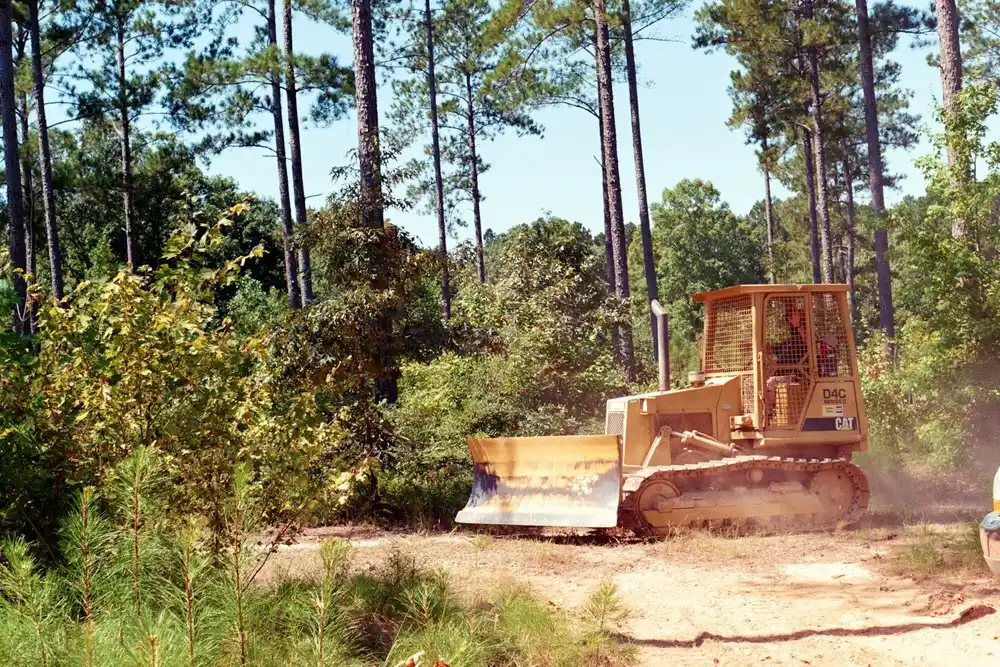
Three ways to clear a parcel — and when each is right
| Method | How it works | Best for |
|---|---|---|
| Forestry mulching | A drum mulcher grinds brush and small trees in place; the mulch layer stays as erosion control | Underbrush, invasives, trails, firebreaks, view corridors — lowest soil disturbance, no debris piles |
| Conventional (dozer & excavator) | Push, pile, and haul or process; roots and stumps can come out too | Building pads, driveways, pasture conversion — anywhere the ground must end up clean and gradable |
| Hand-crew selective | Chainsaw crews fell and chip individual stems between keepers | Tight lots, work inside root zones of specimen oaks, steep or wet ground machines would rut |
Most real Tallahassee jobs mix methods: a mulcher for the understory, a hand crew around the keeper oaks, an excavator only where the slab goes. That mix — not a one-machine-fits-all pass — is what a good walk-through produces.
Local note: Land-clearing projects in unincorporated Leon County typically move through the county’s permitting process before heavy equipment shows up on site. Checking Leon County’s Permits & Inspections portal early — before a contract is signed — can save a project from a schedule delay later.
What moves the scope on a clearing job
| Factor | Why it matters here |
|---|---|
| Acreage & density | An underbrushed pine acre and a hardwood-choked acre are entirely different days of work. |
| Stump handling | Mulching leaves stumps at grade; build sites need them ground or pulled. See stump grinding. |
| Debris disposal | Mulch-in-place is cheapest; hauling chips and logs off-site adds trucking; burning needs authorization (see FAQ). |
| Ground conditions | Wet-season work on flatwoods soil ruts badly; some parcels are winter-only jobs. |
| Keepers & protected trees | Working around specimen oaks slows machines — and is worth it. |
Lot to clear before a build date or fence-line deadline? When you call, describe the parcel size and goal so the matched pro can plan equipment access.
📞 Call Now — (858) 319-0022Vetted local pros — availability depends on independent provider schedules and demand.*Soil and water: the two sides of the Cody Scarp
Where your parcel sits changes how it clears. North of the Cody Scarp — Bradfordville, Centerville, Miccosukee corridor — red Orangeburg clay holds equipment well when dry but slicks and ruts after rain, and it grows the big hardwoods that deserve selective treatment. South of the scarp, sandy flatwoods over karst drain fast but hide wet-season water tables, cypress strands, and sinkhole features; parcels toward Woodville and Wakulla routinely brush up against jurisdictional wetlands, where clearing can trigger Northwest Florida Water Management District review before a machine touches the line. A local pro walks the parcel with the soil map in mind — and stakes the wet edge instead of guessing at it.
Keeping the keepers alive: root protection
The most common way a “saved” oak dies is the year after clearing — killed by compaction, not a saw. A live oak’s critical root zone extends roughly a foot of radius per inch of trunk diameter; parking a loaded dozer inside it, grading its soil, or trenching utilities through it does slow, invisible damage. The pros we match fence keeper root zones before work starts, route equipment paths outside driplines, and mulch travel lanes where crossing is unavoidable. If a specimen oak matters to your site plan, say so at the walk-through — it changes the machine plan, and that’s the point.
Permits & protected trees still apply
Clearing a lot does not waive Tallahassee’s tree rules. Inside city limits, patriarch trees and anything over 36 inches DBH need a §5-83 permit; in unincorporated Leon County, live oak and longleaf pine at 12+ inches DBH are protected, and Canopy Road buffers carry extra review. A clearing pro who works locally builds these into the plan rather than discovering them mid-job. See the permit guide and the canopy road rules.
How getting matched works
And to be plain about our role: we’re a free referral service, not the contractor. The clearing pro you’re matched with carries their own license and insurance and gives the binding quote. Clearing involves heavy machines near property lines — verify credentials first; our Florida license-verification guide takes two minutes.
Frequently asked questions
How much does land clearing cost in Tallahassee?
It varies widely by acreage, density, terrain, and disposal method — light selective clearing of an underbrushed lot is far cheaper than clearing dense woods with large hardwoods. Your matched pro quotes by the parcel after walking it.
Do I need a permit to clear my lot?
Often, yes — protected species, large trees, and Canopy Road buffers trigger §5-83 or county review even during clearing. A local pro plans around current requirements; confirm with Growth Management before work begins.
What’s forestry mulching?
A machine grinds brush and small trees into mulch where they stand, leaving a clean, stabilized surface with minimal soil disturbance and no burn piles or hauling — ideal for trails, firebreaks, and underbrush.
Can you save specific trees?
Yes — selective clearing is built around keepers. Mark the trees you want preserved and the pro plans equipment paths and root protection accordingly.
Can we just burn the debris piles?
Only with authorization. Open burning of land-clearing debris in Florida is regulated by the Florida Forest Service and local rules — setbacks, hours, and weather conditions apply, and inside the city it’s generally off the table. Most residential jobs are cleaner with mulch-in-place or haul-off; your pro prices both options.
What about gopher tortoises?
Gopher tortoises are protected in Florida, and their burrows (sandy aprons, half-moon entrances) are common on the sandhill parcels south and west of town. Clearing over an active burrow without an FWC relocation permit is a legal problem — a local pro spots burrows at the walk-through and pauses the plan until permitting is handled.
Do the stumps come out during clearing?
Depends on the goal. Forestry mulching leaves stumps cut at grade; building pads and pasture usually need stumps ground or excavated, quoted as part of the scope. Grinding after mulching is a common, economical combination.
Related Tallahassee tree services
Lot Clearing
Brush Removal
Forestry Mulching
Debris Removal
Stump Grinding
Tree Removal
Storm Cleanup
Wakulla County Tree Service
Got a lot to clear?
Call now and we’ll connect you with a vetted, insured local clearing pro who keeps the trees worth keeping.
📞 Call Now — (858) 319-0022Tallahassee Tree Service Co. is a free dispatch and referral service. We are not a tree-service contractor and do not perform tree work ourselves. When you call, we connect you with an independent, licensed and insured local tree-care professional who carries their own license and insurance and provides any binding quote. Price information anywhere on this site is typical local-market information for planning only; people or scenes in images are illustrative.
References to “24/7,” “same-day,” or “emergency” describe call-handling and dispatch availability. Actual on-site response times depend on the independent professional’s schedule, crew availability, and weather, and are not guaranteed.