🌿 Plant Health Care • Diagnosis • Targeted Treatment

Tree Disease Treatment Tallahassee — Diagnose, Treat & Save Mature Trees

A struggling oak doesn’t always need to come down. Many tree diseases in North Florida are treatable when caught early — and a $300–$800 treatment is a lot cheaper than a $2,500 removal plus replacement. Our tree disease treatment Tallahassee crews diagnose what’s actually wrong with your tree and recommend the right course of action: targeted treatment, supportive care, or honest answer that the tree is past saving. ISA-Certified arborists, evidence-based treatment, no upselling unnecessary work.

12+
Common Tallahassee Tree Diseases
ISA
Certified Arborists Diagnose
UF/IFAS
Research-Backed Protocols
7-Day
Diagnostic Visit Window
🔬On-Site Diagnosis 💉Trunk Injection & Soil Drench 🪲Pine Beetle & Insect Control 🌴Palm Disease Treatment 🌳Mature-Tree Specialists

When a Sick Tree Can Be Saved — and When It Can’t

Most homeowners call when they’ve noticed something off — thinning canopy, branch dieback, mushrooms at the base, sticky residue on leaves — and they want to know: is this tree worth saving, or are we wasting money?

Honest answer: it depends on the species, the disease, the stage, and the value of the tree to your property. A 15-year-old laurel oak with advanced heart rot is rarely worth treating — the species decays poorly and the tree is already past its prime. A 60-year-old live oak with early-stage canker disease is almost always worth saving because live oak responds well to treatment and a mature live oak is essentially irreplaceable. Tree disease treatment Tallahassee work isn’t about treating every tree — it’s about making the right call on which trees benefit from intervention.

The diagnosis comes first. An ISA-Certified arborist walks the property, identifies the species, examines the canopy, trunk, and root flare, and looks for the specific symptoms tied to the diseases that show up in this region. Sometimes the answer is “this isn’t actually disease — it’s soil compaction” or “this is normal late-summer leaf drop, not a problem.” Sometimes the answer is “we caught this early enough that targeted treatment will work.” And sometimes the answer is “this tree is too far gone — let’s plan removal and replacement.” All three are legitimate outcomes. We don’t treat trees that won’t respond, and we don’t recommend removal on trees that can be saved.

Common Tree Diseases in Tallahassee

North Florida’s warm, humid climate hosts a specific set of tree diseases. Here are the ones we encounter most often, with symptoms and treatment paths.

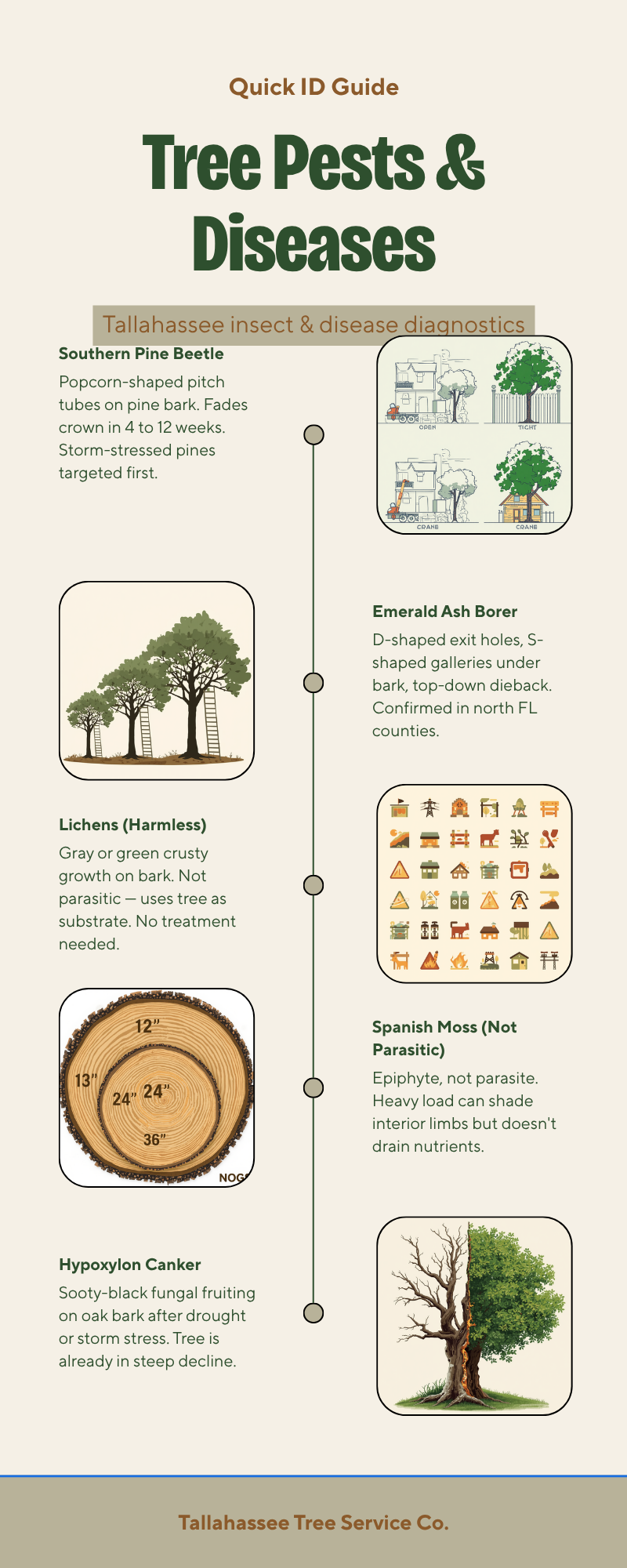
Hypoxylon Canker (Oak)

Biscogniauxia atropunctata

SymptomsBark falls off in sheets revealing a black or silvery-gray fungal mat. Crown thinning, branch dieback. Most common on stressed water and laurel oaks.

TreatmentBy the time symptoms are visible, the tree is usually past saving — this is a stress-secondary pathogen. Removal often the right call. Prevention through stress reduction is the real intervention.

Southern Pine Beetle

Dendroctonus frontalis

SymptomsPopcorn-like pitch tubes on bark, fine sawdust at trunk base, fading needle color from upper canopy down. Time-critical — can kill a pine in 4–8 weeks.

TreatmentOnce active in the tree, treatment options are very limited. Surrounding pines may benefit from preventive bark spray. See southern pine beetle page for full protocol.

Armillaria Root Rot (Oak Root Fungus)

Armillaria spp.

SymptomsHoney-colored mushrooms at the base in fall, white fungal mat under bark at the root flare, gradual canopy decline over 2–5 years.

TreatmentTreatment is mostly cultural — soil decompaction, root-zone improvement, watering during droughts. Affected trees rarely recover fully but can stabilize.

Ganoderma Butt Rot

Ganoderma zonatum (palms), Ganoderma lucidum (hardwoods)

SymptomsShelf-like fungal conks at the base of trunk. On palms, lower fronds drooping while upper crown still looks normal. Critical structural failure indicator.

TreatmentNo effective treatment exists. Once Ganoderma fruiting bodies appear, structural failure is imminent. Remove the tree before it falls. Common in Tallahassee palms.

Lethal Bronzing (Palm)

Phytoplasma infection (formerly TPPD)

SymptomsLower fronds turn bronze/brown from tip inward, premature fruit drop, spear leaf dies last. Affects sabal palms, Canary Island date palms, and several others.

TreatmentAntibiotic trunk injections (oxytetracycline) every 3–4 months can extend life on early-detected cases. Confirmed cases on prized palms warrant treatment; advanced cases don’t.

Sooty Mold (Aphid/Scale Secondary)

Various fungi on insect honeydew

SymptomsBlack coating on leaves and bark, sticky residue dripping under canopy, ant trails up the trunk. Common on crape myrtles, magnolias, and live oaks.

TreatmentSooty mold itself is harmless — the underlying insect infestation is the real problem. Targeted insect control (systemic injection or soil drench) clears both.

Crepe Myrtle Bark Scale

Acanthococcus lagerstroemiae

SymptomsWhite or grayish felt-like patches on trunk and branches, black sooty mold below, reduced flowering. Spreading aggressively in Tallahassee since 2018.

TreatmentSystemic soil drench (imidacloprid) in spring. Highly treatable when caught early. Multi-year program needed for established infestations. See crepe myrtle.

Anthracnose (Spring Leaf Disease)

Various fungi (Apiognomonia, Discula, etc.)

SymptomsBrown irregular blotches on emerging spring leaves, premature leaf drop, twig dieback in cool wet springs. Common on sycamore, dogwood, oak.

TreatmentUsually cosmetic on healthy trees — rarely warrants treatment. Stress-reduction and proper sanitation (raking and disposing fallen leaves) usually sufficient.

Phytophthora Root Rot

Phytophthora spp.

SymptomsWilting on hot days even with adequate water, yellowing canopy, dark sunken cankers near soil line, dieback starting at branch tips. Common after wet seasons.

TreatmentFungicide trunk injection or soil drench (phosphorous acid products). Drainage improvement essential. Caught early, recovery is possible; advanced cases rarely respond.

Bacterial Leaf Scorch

Xylella fastidiosa

SymptomsBrowning leaf margins with yellow halo, symptoms worsen each year, primarily affects oak, sycamore, elm. Mistaken for drought stress.

TreatmentAnnual oxytetracycline trunk injections suppress symptoms but don’t cure. Most useful on high-value mature trees worth multi-year management.

Pine Pitch Canker

Fusarium circinatum

SymptomsResin-soaked sunken cankers on branches and trunk, branch tip dieback, abundant pitch flow. Affects loblolly and slash pines — common Tallahassee species.

TreatmentNo effective curative treatment. Pruning out infected branches can slow spread. Stress reduction (proper watering, avoid root damage) is the main intervention.

Magnolia Scale

Neolecanium cornuparvum

SymptomsLarge brown bumps on twigs and small branches, heavy honeydew dripping, sooty mold buildup, branch dieback over 2–3 years if untreated.

TreatmentSystemic soil drench (imidacloprid) or trunk injection in late summer when crawlers are active. Treatable; full recovery typical with one or two annual treatments.

For deeper research-grade information on any of these diseases, the UF/IFAS EDIS plant database publishes peer-reviewed extension publications maintained by University of Florida plant pathologists. It’s the best non-commercial reference for North Florida tree disease identification and management.

Tree Looking Sick? Get a Real Diagnosis.

Same-week diagnostic visits. ISA-Certified arborist examines the tree, identifies what’s actually wrong, and tells you whether treatment makes sense.

How a Tree Disease Diagnosis Works

Diagnosis is the foundation. Treatment without diagnosis wastes money on the wrong intervention — or worse, masks the real problem until the tree fails.

Initial Phone Intake

Quick description of symptoms and species. We confirm scheduling and tell you whether the issue sounds urgent (active pine beetle attack, structural failure risk) or routine (cosmetic leaf issue).

On-Site Visual Exam

ISA-Certified arborist examines crown, trunk, root flare. Looks at neighboring trees for related issues. Notes site conditions: drainage, soil compaction, recent construction, irrigation patterns.

Symptom Identification

Cross-references observed symptoms against known diseases for the species. Some diseases are diagnosable visually; others require knowing the symptom progression over multiple visits.

Lab Confirmation if Needed

For ambiguous cases, samples sent to Florida pathology lab (UF/IFAS Plant Diagnostic Center, $35–$100 per sample). Confirms pathogen identity before committing to treatment.

Treatment Plan Development

If treatment is warranted, we write a specific plan: products used, application method, frequency, expected results, and what we’ll watch for over the following season.

Honest Removal Recommendation

If the tree is past saving, we say so. We don’t sell ineffective treatments. If removal is the answer, we provide a written quote and discuss replacement species.

Treatment Application

Trunk injection, soil drench, foliar spray, or cultural practice changes — whatever the pathogen and species require. Documentation of products, dosage, and conditions for each application.

Follow-Up Monitoring

Multi-year treatments include scheduled follow-ups. We track tree response, adjust treatment intensity as needed, and document progression for your records.

Treatment Methods We Use

Different diseases require different delivery methods. Tree disease treatment Tallahassee work isn’t spray-and-pray — it’s species-specific, pathogen-specific, and method-specific.

💉

Trunk Injection

Direct injection into the tree’s vascular system. Best for systemic diseases (lethal bronzing, bacterial leaf scorch). Minimal pesticide exposure to environment. Lasts 1–3 years per treatment.

💧

Soil Drench

Liquid product applied to root zone for uptake through roots. Best for systemic insecticides (crape myrtle bark scale, magnolia scale). Lower cost than injection; affected by soil conditions.

🌿

Foliar Spray

Direct application to leaves and bark. Best for surface fungi and contact insecticides. Less common in mature-tree treatment because reaching upper canopy requires significant equipment.

🪨

Soil Decompaction

Air-spade or vertical-mulching of compacted root zones. Often the most effective “treatment” for declining urban trees — soil compaction is a top hidden killer. Non-chemical intervention.

🌱

Deep Root Fertilization

Injected liquid fertilizer into root zone for stressed trees. Supportive care, not curative — helps trees recover from environmental stress. See deep root fertilization.

✂️

Sanitary Pruning

Strategic removal of infected branches to slow disease spread. Tools sterilized between cuts to avoid pathogen transfer. Combined with other treatments for canker diseases. See tree pruning.

Warning Signs Your Tree Needs a Diagnostic Visit

Most tree diseases are far cheaper to treat early. These are the signs that warrant a same-week diagnostic visit.

Crown thinning

Visible reduction in leaf density compared to last year or compared to similar nearby trees.

Branch dieback

Multiple dead branches in upper canopy, especially >2" diameter. Sign of vascular disease.

Mushrooms at base

Conks or shelf fungi on the trunk or root flare. Active wood decay; structural concern.

Bark sloughing

Sheets of bark falling off, especially on pine. Possible beetle attack; act fast.

Sticky leaves/bark

Honeydew dripping from canopy. Insect infestation likely — aphids, scale, or whitefly.

Leaf scorching

Brown leaf margins on multiple leaves. Could be bacterial leaf scorch or environmental stress.

Premature leaf drop

Leaves falling well before fall season. Significant stress signal worth diagnosing.

Sap-soaked cankers

Resin-bleeding sunken areas on branches or trunk. Possible canker disease.

Fading needle color

Pine needles turning yellow or red-brown from upper canopy down. Pine beetle indicator.

📌 Multiple of these signs together — or any one of the urgent ones (mushrooms, bark sloughing on pine, fading pine needles) — warrants calling immediately rather than waiting.

Catch Disease Early. Save the Tree.

Tree disease treatment Tallahassee outcomes depend almost entirely on early intervention. The longer you wait, the fewer options remain.

Tree Disease Treatment Pricing in Tallahassee

Treatment pricing depends on tree size, disease, and number of trees treated together. Most homeowners are surprised that treatment is far cheaper than removal — when it works.

ServiceTypical RangeNotes
Diagnostic visit (single tree)$95 – $175Often free with treatment scheduling
Multi-tree property diagnostic$200 – $500Acreage or 5+ trees of concern
Lab pathology test (per sample)$35 – $100UF/IFAS or private lab
Trunk injection (per tree)$150 – $600Size and product dependent
Soil drench (per tree)$80 – $300Less expensive than injection
Multi-year treatment program$400 – $1,800/yearBacterial leaf scorch, lethal bronzing
Soil decompaction (root zone)$300 – $1,200Air-spade or vertical mulch
Pine bark protective spray$80 – $250 per pinePreventive against pine beetle
💡 Comparison: full removal of a 50-foot mature oak in Tallahassee runs $1,500–$4,500. A successful disease treatment program runs $300–$1,800 over 1–3 years. When treatment works, it’s the better economic choice by a wide margin — but it has to be the right diagnosis first. Call (850) 555-0123 to schedule the diagnostic visit.

Prevention — The Best Tree Disease Treatment

Most Tallahassee tree diseases are stress-secondary — the pathogens are already in the environment, but they only succeed against trees that are already weakened. Reducing stress is the highest-leverage intervention.

  • Don’t damage roots. Construction trenching, fill dirt over root zone, paving the dripline area, and compaction from heavy equipment all kill mature trees over 1–7 years. The single biggest preventable killer of urban Tallahassee trees.
  • Mulch properly. 2–4 inches of mulch over the root zone, kept off the trunk (no “mulch volcanoes”). Conserves moisture, moderates soil temperature, prevents lawnmower trunk damage.
  • Water during droughts. Mature trees suffer in extended droughts even when grass looks fine. Slow deep watering once every 2–3 weeks during summer drought maintains tree health on landscapes without irrigation reaching the dripline.
  • Avoid topping. Topping is one of the largest contributors to tree disease in Tallahassee — massive wounds become decay entry points within 18–24 months. See our tree topping alternative page.
  • Schedule structural pruning while trees are young. Correcting co-dominant leaders, included bark, and crossing branches at 5–15 years old prevents the major wounds that become disease entry points later.
  • Don’t fertilize sick trees with high-nitrogen lawn fertilizer. Counterintuitive but real — nitrogen promotes weak rapid growth that pathogens exploit. Stressed trees benefit from deep root fertilization with balanced micronutrients, not turf fertilizer.
  • Inspect annually before storm season. Catching disease early dramatically improves outcomes. See our tree inspection page for what an annual visual health check looks like.

Tree Disease Treatment Tallahassee FAQs

How do I know if my tree is sick or just stressed?

Early-stage disease and environmental stress can look identical — thinning canopy, premature leaf drop, branch dieback. The diagnostic visit is what separates the two. ISA-Certified arborists know which symptom patterns indicate which conditions. If multiple distinctive symptoms appear together (mushrooms, bark sloughing, sticky leaves), it’s usually disease.

Can every tree disease be treated?

No. Several common Tallahassee tree diseases (Hypoxylon canker, advanced Ganoderma, advanced southern pine beetle, pine pitch canker) have no effective curative treatment. The honest answer in those cases is removal and replacement. We don’t sell ineffective treatments — if your tree can’t be saved, we’ll tell you.

How long does treatment take to work?

Depends on the disease and the method. Insect-related issues (crape myrtle bark scale, magnolia scale) often show visible improvement within 4–8 weeks. Systemic diseases (bacterial leaf scorch, lethal bronzing) show stabilization rather than reversal — you’ll see less decline over the following 1–3 years. Soil decompaction effects are visible over 2–5 years.

Is trunk injection safe for the tree?

Yes when done properly. Modern injection systems use small drill points that heal cleanly. The alternative — not treating — is far more damaging. ISA-Certified arborists follow species-specific protocols on hole size, depth, and timing to minimize wound impact.

Do I need a permit for tree disease treatment?

No. Treatment falls under property maintenance, not tree removal. The City of Tallahassee §5-83 ordinance applies to tree removal, not treatment. If treatment is unsuccessful and removal becomes necessary, then permit requirements may apply — see our permit guide.

What if multiple trees on my property are affected?

Common — tree diseases often spread between trees of the same species, especially when planted close together. Multi-tree treatment programs are typically priced as a package with per-tree pricing reductions. Common in Killearn Estates and other heavy-canopy neighborhoods.

Should I treat preventively even without symptoms?

Usually no. Preventive treatment is appropriate in specific situations: pine bark spray when neighboring pines are under southern pine beetle attack, or systemic injection for crape myrtles in neighborhoods with active crape myrtle bark scale. Routine preventive treatment of healthy trees isn’t recommended.

Can you treat trees on commercial property or HOA common areas?

Yes. Tree disease treatment is part of our commercial tree service and HOA tree service portfolios. Multi-property property managers can roll treatment into existing master vendor agreements. Call (850) 555-0123 to set up.

What about palm tree diseases specifically?

Palms are a special case — they have different vascular anatomy and respond differently to treatment than hardwoods. Lethal bronzing and Ganoderma butt rot are the two most common palm diseases in Tallahassee. Lethal bronzing has antibiotic injection treatment options for early-stage cases; Ganoderma does not. See palm tree trimming for related care.

Do you treat trees outside Leon County?

Yes — ISA-Certified arborists dispatch throughout Leon, Wakulla, Gadsden, and Jefferson Counties for diagnosis and treatment. Rural-property multi-tree programs are common in Crawfordville, Monticello, and Quincy.

Seasonal Timing for Tree Disease Treatment

North Florida’s long growing season gives us flexibility on timing — but specific diseases respond best to specific seasonal windows. Knowing when to treat improves outcomes and reduces cost.

For systemic insecticides targeting scale insects (crape myrtle bark scale, magnolia scale), the right window is late spring through early summer when crawler stages are active and trees are actively translocating water and nutrients up the trunk. Soil drenches applied in late February through April have time to be taken up before peak insect pressure hits in July. Tree disease treatment Tallahassee programs that miss this window often need a second-year treatment to fully suppress the population.

For palm diseases (lethal bronzing, especially), antibiotic injections are typically scheduled on a 3-to-4-month rotation regardless of season — the goal is maintaining therapeutic blood-level concentrations in the palm tissue rather than hitting a particular biological window. Confirmed cases on prized palms warrant year-round treatment commitment; unconfirmed cases warrant lab testing first before committing to the multi-year cost. Call (850) 555-0123 if you have a Sabal palm or Canary Island date palm showing decline patterns.

For preventive pine bark spray against southern pine beetle, timing depends on neighborhood risk — spray windows open when active SPB attacks are confirmed within a half-mile radius. The City of Tallahassee Urban Forestry team and FDACS publish regional alerts; we monitor these and can advise whether your specific property is in an active threat zone.

Related Tallahassee Tree Services

Tree disease treatment connects to a network of plant-health and tree-care services. Most relevant pages below.

Diagnose First. Treat Second. Remove Only If Necessary.

Tree disease treatment Tallahassee work starts with an honest diagnosis from an ISA-Certified arborist. Same-week visits, evidence-based treatment protocols, and the discipline to recommend removal only when the tree truly can’t be saved.

Tallahassee Regulatory & Storm Context

Tallahassee tree services operate under the City's §5-83 protected-tree ordinance and Florida Statute §163.045's imminent-hazard pathway. Recent storms — Hurricane Helene (2024), the May 2024 tornado, and Hurricane Hermine (2016) — shaped the workload patterns and crew protocols our ISA-certified team uses across canopy-road and Cody Scarp neighborhoods.

Call Now – Free Estimate