Sabal Palm Care Tallahassee โ Pruning, Disease & Care for Florida’s State Tree
Sabal palm (also called cabbage palm) is Florida’s state tree and the iconic palm of North Florida landscapes. Sabals are tougher than most palms — cold-hardy, hurricane-resistant, and long-lived — but they have specific care needs most landscapers get wrong: over-pruning is the #1 cause of premature decline, and lethal bronzing disease is now spreading aggressively across the region. Our sabal palm care Tallahassee crews handle correct pruning, disease treatment, fertilization, removal, and replanting recommendations. ISA-Certified arborists oversee all work.
Why Sabal Palms Need Specialized Care
Sabals look bulletproof but they’re biologically very different from hardwood trees — and most landscape damage to Tallahassee sabals comes from people doing things that would be fine on oaks but are harmful on palms.
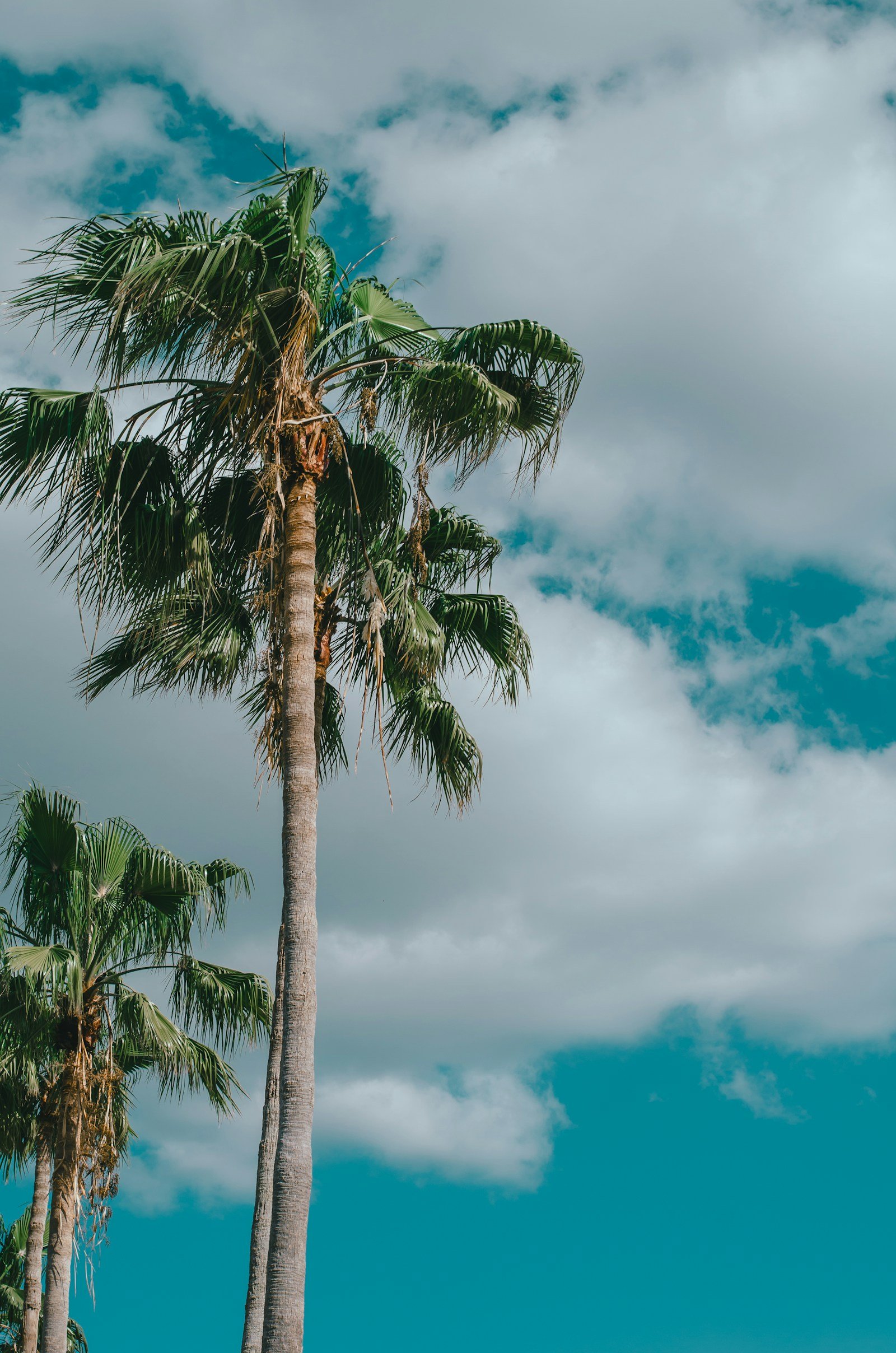
Sabal palm (Sabal palmetto) is native to the Southeast U.S. coastal plain and was designated Florida’s state tree in 1953. Mature specimens reach 40–60 feet tall with a single trunk topped by a rounded crown of fan-shaped fronds (each frond can be 4–7 feet across). The trunk is unbranched, the wood is fibrous rather than woody, and the entire growing point of the tree sits in a single bud at the top of the trunk — the “heart” or apical meristem. That biology drives almost everything about how sabal palms need to be cared for.
Sabals don’t have lateral branches, so removing fronds isn’t pruning in the way pruning works on oaks. Each frond is a major energy-collecting organ for the tree, and green fronds are critical for nutrient cycling — the palm pulls potassium and other nutrients out of older fronds before they brown naturally. Aggressive pruning that removes green fronds disrupts this nutrient cycle and starves the tree slowly. The “hurricane cut” or “9 and 3 cut” that’s common on residential sabals is one of the most damaging palm care practices in the industry.
Most sabal palm care Tallahassee calls fall into one of four categories: correct pruning to remove only fully-brown fronds and seed stalks, lethal bronzing diagnosis and treatment (a fast-spreading phytoplasma disease that’s now widespread in North Florida), fertilization to address the potassium and magnesium deficiencies common in our soils, and removal of trees that have died from disease or have become liabilities. The good news: sabals on appropriate sites with correct care are essentially the toughest palm species available, ideal for North Florida’s mix of hot summers, cold snaps, and hurricane exposure.
Lethal Bronzing Disease: The #1 Threat to Tallahassee Sabals
Lethal bronzing is a phytoplasma disease that’s killed thousands of palms across Florida since first identified in Texas in 2001. It reached the Tallahassee region in the mid-2010s and is now actively spreading through Leon, Wakulla, and surrounding counties.
โ ๏ธ Lethal Bronzing โ What to Watch For
Lethal bronzing (formerly called Texas Phoenix Palm Decline or TPPD) is caused by a phytoplasma transmitted by tree-hopper insects. Once a sabal is infected, the disease progresses through predictable stages over 6–18 months. Catching it early is the only chance to save the tree.
- Stage 1: Premature fruit drop — immature fruits fall before ripening
- Stage 2: Inflorescence (flower stalk) tip browning — flower stalks die back
- Stage 3: Lower frond tips turn bronze/brown progressing inward (NOT yellow first — this distinguishes lethal bronzing from nutrient deficiency)
- Stage 4: Spear leaf (newest emerging frond at the very top) collapses and falls
- Stage 5: Crown collapse — tree dies within weeks
Treatment for lethal bronzing requires antibiotic trunk injection (oxytetracycline) every 3–4 months on a permanent basis — this suppresses but doesn’t cure the infection. Treatment is most effective in the early stages (Stages 1–3); palms in Stage 4 or 5 are typically beyond saving. For high-value specimen sabals, the treatment cost ($150–$300 per visit, 3–4 visits per year) extends life indefinitely. For low-value or already-advanced trees, the better answer is removal and replacement with resistant species.
Importantly, lab confirmation is recommended before committing to multi-year treatment programs. Symptoms can be confused with nutrient deficiency, lightning damage, or other decline causes. Call (850) 555-0123 for sabal palm diagnostic visits if your palm shows any of the warning signs above.
The Right Way to Trim a Sabal Palm (and the Wrong Way)
This is the most common mistake on Tallahassee sabal palms. The damage is cumulative and largely permanent.
What Most Landscapers Do
Aggressive over-pruning that leaves only the upright vertical fronds, removing all horizontal and lower fronds. Looks “tidy” but starves the tree slowly.
- Removes green photosynthetic fronds the tree still needs
- Disrupts potassium/magnesium nutrient cycling
- Forces tree to produce new fronds from already-stressed reserves
- Causes “pencil-pointing” (narrowing trunk top) over years
- Increases lethal bronzing susceptibility through stress
- Doesn’t actually improve hurricane survival
- Often kills sabal over 5–10 years of repeated cuts
What ISA-Certified Crews Do
Remove only fully-brown dead fronds, seed stalks if desired, and any storm-damaged fronds. Leave all green fronds in place. Looks slightly fuller than over-pruned palms but stays healthy long-term.
- Only fully-brown fronds removed
- Seed stalks (boots) optionally removed
- All green fronds preserved
- Trunk diameter stays consistent over years
- Nutrient cycling stays intact
- Tree stays vigorous for 100+ years
- Same hurricane survival as over-pruned palms
Sabal Palm Care Services We Provide
From routine trimming to full removal, the work spectrum a Tallahassee sabal owner is likely to need.
Correct Sabal Trimming
Selective removal of only fully-brown fronds and seed stalks. Green fronds preserved. Opposite of the harmful “hurricane cut.” Annual or every-other-year scheduling. See palm tree trimming.
Lethal Bronzing Treatment
Oxytetracycline trunk injection every 3–4 months for high-value specimens. Most effective in early disease stages. Lab confirmation recommended before starting multi-year program.
Diagnosis & Disease Identification
ISA-Certified arborist distinguishes between lethal bronzing, Ganoderma butt rot, nutrient deficiency, lightning damage, and other decline causes. Treatment depends on accurate diagnosis. See tree disease treatment.
Palm Fertilization
Tallahassee soils are widely deficient in potassium and magnesium — both critical for sabal health. Specific palm fertilizer formulations (different from hardwood fertilizers) address these deficiencies. See fertilization.
Hurricane & Storm Response
Sabals are among the most hurricane-resistant trees in Florida, but post-storm cleanup of broken fronds and damaged inflorescences is sometimes needed. Same-week response. See storm-damaged trees.
Boot Removal & Skinning
Old leaf bases (“boots”) on the trunk can be removed for a smoother trunk appearance. Optional cosmetic work; not necessary for tree health. Done with hand tools to avoid trunk damage.
Sabal Removal
Removal of dead, declining, or relocated palms. Sabal trunks are fibrous — different cutting technique than hardwoods. Crane access often used for large specimens near structures. See tree removal.
Sabal Transplanting
Sabals transplant well at any size due to fibrous root system. Often relocated during construction projects or moved between properties. ISA-Certified technique with proper post-transplant care.
Stump Removal
Sabal stumps are fibrous and decay slowly. Grinding or excavation depending on site needs. Common after lethal bronzing removal. See stump grinding.
Sabal Looking Off? Get a Real Diagnosis.
ISA-Certified arborist visits same-week, identifies whether your palm is showing lethal bronzing, nutrient deficiency, or stress — and recommends the right intervention before the tree is past saving.
Common Sabal Palm Problems in Tallahassee
Most issues fall into one of these categories. Diagnosis matters — the right treatment depends on identifying the actual cause.
Lethal Bronzing Disease
SymptomsPremature fruit drop, then inflorescence tip browning, then bronze/brown frond tips progressing inward (not yellow first), then spear leaf collapse, then crown failure. Death within 6–18 months of first symptoms if untreated.
TreatmentOxytetracycline trunk injection every 3–4 months on a permanent basis. Most effective in early stages (1–3). Stage 4–5 trees rarely recoverable. Lab confirmation recommended before treatment commitment.
Ganoderma Butt Rot
SymptomsShelf-like fungal conks (Ganoderma zonatum) emerging at the base of the trunk. Lower fronds drooping while upper crown still appears normal. Trunk weakness leading to sudden failure. Common in older Tallahassee sabals.
TreatmentNo effective treatment exists. Once Ganoderma fruiting bodies appear, structural failure is imminent. Remove the tree before it falls. Avoid replanting palms in the same location — the fungus persists in soil.
Potassium Deficiency
SymptomsYellow-orange spotting on older fronds progressing to necrotic frond margins. Fronds appear “frizzled” or scorched at the edges. Common across Tallahassee’s sandy soils. Confused with disease but is purely nutritional.
TreatmentSlow-release potassium sulfate applied to root zone, typically combined with magnesium sulfate. Multi-year correction; symptoms persist on already-affected fronds (which won’t recover) but new fronds emerge healthy.
Magnesium Deficiency
SymptomsYellow bands on older fronds while center stays green. Like potassium deficiency, common in Tallahassee due to soil chemistry. Often paired with potassium deficiency on the same tree.
TreatmentMagnesium sulfate applications to root zone. Same multi-year correction pattern — existing affected fronds don’t recover; new fronds emerge healthy. Combined palm fertilizer formulations address both potassium and magnesium together.
Lightning Strike Damage
SymptomsTall sabal palms attract lightning. Damage ranges from cosmetic frond burning (often survivable) to complete vascular destruction. Spear leaf collapse and trunk splitting indicate severe damage.
TreatmentWait 6–12 months before deciding on action. Many lightning-struck sabals survive with cosmetic damage only. Severe cases (spear leaf collapse, trunk damage) typically require removal. Lightning protection systems available for high-value specimens.
Cold Damage
SymptomsFrond browning after hard freezes (mid-20s °F or colder). Sabals are among the most cold-hardy palms but extreme freezes can damage fronds. The January 2025 Tallahassee freezes caused widespread cold damage on younger sabals.
TreatmentWait 6–9 months for full recovery before pruning damaged fronds — the tree can re-translocate nutrients from cold-damaged tissue if you don’t cut it off too soon. Most healthy sabals recover fully from cold events within a season.
Trunk Damage from Equipment
SymptomsBark damage at trunk base from string trimmers and lawnmowers. Sabal trunks are fibrous and don’t heal the way hardwood trunks do — damage becomes permanent entry point for boring insects and decay fungi.
TreatmentEstablish proper mulch ring 3–4 feet diameter around base. Existing wounds rarely benefit from intervention — sealants and pruning paint don’t help on palms. Prevent future damage with the mulch ring.
Construction Impact Decline
SymptomsDecline beginning 1–3 years after nearby construction. Sabals are more tolerant of root disturbance than most hardwoods but not immune. Fill dirt over the root zone is particularly damaging.
TreatmentMulching, supportive fertilization with palm-specific blends, monitoring for opportunistic pathogens. Most sabals eventually recover from moderate construction impact — the root system regenerates well. Severe damage may be unrecoverable.
For research-grade information on palm diseases and nutrition specific to Florida, the UF/IFAS EDIS plant database publishes peer-reviewed extension publications. Sabal palm and other Florida palms have been heavily studied at UF’s palm research programs in Davie and Fort Lauderdale.
How a Sabal Palm Care Visit Works
Whether the work is trimming, treatment, fertilization, or removal, the on-site workflow follows a consistent structure.
On-Site Walkthrough
ISA-Certified arborist examines the palm. Species identification (sabal vs. other palms), age estimate, frond canopy assessment, signs of disease or nutrient deficiency, root zone condition, surrounding site conditions.
Symptom Identification
If decline signs are present, the diagnosis distinguishes between lethal bronzing, Ganoderma, nutrient deficiency, lightning damage, cold damage, or general stress. Different problems require different responses.
Lab Confirmation If Needed
For suspected lethal bronzing, lab confirmation through UF/IFAS Plant Diagnostic Center ($35–$100 per sample) is recommended before committing to a multi-year antibiotic treatment program. Avoids treating something that isn’t actually lethal bronzing.
Written Quote
Itemized scope, products used (for treatments), expected outcome timeline, and price. Same-day for simpler scopes; 1–3 business days for multi-tree or treatment program scopes.
Schedule Within Right Window
Trimming gets scheduled in cooler months when possible. Lethal bronzing treatment continues year-round on quarterly cycles. Fertilization timed for active growing season. Storm cleanup goes immediately regardless of season.
Execute With Palm-Specific Technique
Climbing spurs are NOT used on healthy palms (they damage trunk tissue permanently). Crews use ladders, lifts, or rope-only techniques. Cutting tools sterilized between palms to prevent disease transmission.
Cleanup & Documentation
Frond debris hauled off (sabal fronds don’t chip well due to fibrous structure). Pathways cleared. Treatment record provided. Photos for the records on multi-year programs. Final walkthrough with homeowner.
Follow-Up Plan
For multi-year programs (lethal bronzing treatment, nutrient correction), next visit scheduled before crews leave. Most successful sabal preservation involves 2–3 year care commitment for problem trees.
Florida’s State Tree Deserves Better Than the Hurricane Cut.
Most of what passes for “palm pruning” in Tallahassee is slow damage. ISA-Certified sabal palm care Tallahassee crews do it the way it should be done.
Sabal Palm Care Pricing in Tallahassee
Pricing varies based on palm height, scope, and whether the work is one-time maintenance or an ongoing treatment program.
| Service | Typical Range | Notes |
|---|---|---|
| Diagnostic visit | Free with treatment / $95–$175 standalone | ISA-Certified arborist walkthrough |
| Annual sabal trimming (mature, 30–50′) | $150 – $400 | Brown fronds + seed stalks only |
| Multi-palm property trim | 10–20% per-tree discount | Same-day visit efficiency |
| Lethal bronzing treatment (per visit) | $150 – $300 | Trunk injection; quarterly cycle |
| Lethal bronzing program (per year) | $600 – $1,200/palm | 3–4 visits per year, ongoing |
| Lab pathology test (per sample) | $35 – $100 | UF/IFAS or private lab |
| Palm fertilization (per palm) | $80 – $200 | K and Mg supplementation |
| Boot removal / skinning (per palm) | $200 – $600 | Cosmetic; tree-height dependent |
| Sabal removal (mature, 30–50′) | $700 – $2,500 | Including disposal of fibrous trunk |
| Sabal transplanting (per palm) | $500 – $1,800 | Excavation + relocation + replant |
Common Sabal Palm Care Mistakes to Avoid
A few patterns we see repeatedly. Each one shortens sabal palm lifespan or actively kills the tree.
- Hurricane cut / 9 and 3 / over-pruning. The single most damaging sabal palm care practice in Tallahassee. Removes green photosynthetic fronds, disrupts nutrient cycling, narrows the trunk over years (“pencil-pointing”), and kills the tree slowly. Provides zero hurricane protection. Skip aggressive pruning permanently.
- Climbing spurs on healthy palms. Climbing spurs (used for tree work on hardwoods) make permanent puncture wounds in sabal trunks that don’t heal and become disease entry points. Properly-trained palm crews use ladders, lifts, or rope-only techniques.
- Lawn fertilizer near sabals. Standard high-nitrogen lawn fertilizer drives weak rapid growth and worsens the potassium/magnesium imbalance that’s already common in Tallahassee soils. Use palm-specific fertilizer (8-2-12-4 with micronutrients) or skip fertilizing entirely.
- Treating “yellow” fronds with fungicide. Yellow fronds on sabals are almost always nutrient deficiency (potassium or magnesium), not fungal disease. Fungicide does nothing for nutrient deficiency. Fertilization with palm-specific blends is the actual fix.
- Cutting cold-damaged fronds too soon. After freezes, brown fronds still contain nutrients the tree can re-translocate as it recovers. Wait 6–9 months before pruning cold-damaged tissue. Premature pruning starves the recovering palm.
- Replanting in a Ganoderma-affected location. Ganoderma zonatum persists in soil for years. Replanting any palm species in the same spot where a sabal died from Ganoderma usually results in another infected tree. Plant a hardwood tree there instead, or plant the new palm at least 20 feet away.
- Ignoring early lethal bronzing signs. Premature fruit drop and inflorescence tip browning are stage-1 symptoms with treatment options. Waiting until fronds are bronzing or the spear leaf collapses means the tree is unsavable. Catch it early or accept removal.
- Painting trunk wounds. Pruning paint and sealants do not work on palms. The fibrous trunk tissue heals (when it heals at all) without sealants, and applied paints often trap moisture against the wound, accelerating decay. Skip the paint.
Sabal Palm Care Tallahassee FAQs
How often should I trim my sabal palms?
Once a year or every other year is plenty. Remove only fully-brown fronds and seed stalks if desired. Skip the “hurricane cut” that aggressive landscapers push — it provides zero hurricane benefit and slowly kills the tree. Call (850) 555-0123 for correct sabal palm care Tallahassee trimming.
What does lethal bronzing look like in early stages?
Stage 1 is premature fruit drop — immature fruits falling before ripening. Stage 2 is inflorescence (flower stalk) tip browning. Stage 3 is bronze/brown lower frond tips progressing inward. Critically, lethal bronzing browning starts bronze, not yellow — this distinguishes it from nutrient deficiency. Spear leaf collapse and crown failure follow within months if untreated.
Can lethal bronzing be cured?
No, but it can be suppressed. Oxytetracycline trunk injection every 3–4 months on a permanent basis keeps the disease from progressing. Treatment is most effective in early stages (1–3); palms in stage 4 or 5 are typically beyond saving. Treatment cost runs $600–$1,200 per palm per year on an ongoing basis.
Why are my sabal fronds turning yellow?
Most likely potassium or magnesium deficiency, both common in Tallahassee’s sandy soils. Yellow-orange spotting on older fronds with frizzled/scorched edges is potassium deficiency. Yellow bands on older fronds with green centers is magnesium deficiency. Treatment is palm-specific fertilization — not fungicide. Do NOT confuse yellow with the bronze color of lethal bronzing.
Are sabal palms hurricane-proof?
Not bulletproof but exceptionally hurricane-resistant. Sabals are among the most storm-tolerant trees in Florida due to their flexible fibrous trunks, deep root systems, and ability to fold fronds into the wind. Helene, Idalia, Michael, and Hermine took down very few healthy sabals across Tallahassee. Aggressive pre-storm pruning provides zero benefit and may actually reduce storm survival by stressing the tree.
Can I transplant a mature sabal palm?
Yes — sabals transplant exceptionally well at any size due to their fibrous root system. Mature 30–50′ sabals are routinely moved during construction or between properties. Survival rate is high with proper technique. Transplant cost runs $500–$1,800 per palm depending on size and access.
Do I need a permit to remove a sabal palm in Tallahassee?
Possibly. Sabal palm is a protected native species in some contexts, and tree removal permits may apply under City of Tallahassee ยง5-83 depending on size and location. Sabals are sometimes treated differently than hardwoods under local ordinances given their state-tree status. Always verify before removal — see our permit guide for current requirements.
How tall do sabal palms get?
Most Tallahassee sabals reach 40–50 feet in their lifetime. Some specimens in protected coastal sites exceed 60 feet. Growth is slow — expect 6–12 inches of trunk height per year on a healthy palm. The mature size is reached over 60–100+ years.
Do sabal palms drop seeds and become a mess?
They produce seed stalks (panicles) annually with small black fruits that drop in late summer through fall. The seeds germinate readily, so volunteer sabal seedlings appear in beds and lawns near mature trees. Removing seed stalks before fruiting prevents the mess if it bothers you. Otherwise, sabals are otherwise low-mess trees compared to most species.
Do you serve areas outside Tallahassee city limits?
Yes — ISA-Certified sabal palm care Tallahassee crews dispatch throughout Leon County and into Wakulla, Gadsden, and Jefferson Counties. Sabal palms are widespread throughout the rural Big Bend region, particularly in coastal and river-adjacent properties. Call (850) 555-0123.
Sabal Palms Across Tallahassee Neighborhoods
Sabal palms appear throughout the Tallahassee region in distinct settings. Where they’re planted tells you something about both the property and the care needs to expect.
In the historic neighborhoods — Myers Park & Betton Hills, Midtown, Killearn Estates — mature sabal palms 60–100+ years old anchor classic Florida landscape designs. These specimens have weathered every hurricane since Donna in 1960 and still stand. Care work in these neighborhoods focuses on lethal bronzing monitoring (the disease is increasingly active in Leon County) and correcting decades of accumulated over-pruning damage where landscape contractors did the “hurricane cut” for years.
In suburban-era neighborhoods — Killearn Lakes, Bradfordville, parts of Northwest Tallahassee — sabals were planted heavily in the 1970s through 2000s as accent trees and landscape signatures. Most of these are now 25–50 years old and entering their long mid-life prime. Care focus is on correct pruning practices, palm-specific fertilization, and watching for lethal bronzing as the disease spreads northward.
Newer developments — Southwood and similar 2000s+ neighborhoods — have heavy sabal plantings as builder-installed landscape signatures. These trees are typically 5–20 years old and in active growth. Establishing correct pruning practices and palm-specific fertilization early sets these trees up for the next century. Avoiding the over-pruning trap is the single highest-leverage care decision for newer sabals.
Out in the rural Big Bend — Wakulla County, Crawfordville, coastal areas of Jefferson and Wakulla counties — wild sabal palms are common in their natural coastal-plain habitat. Properties near St. Marks, Wakulla Beach, and the Gulf coastal margins often have native sabal stands that essentially manage themselves. Rural sabal care work usually involves selective removal of dead palms after disease or storm events, plus occasional trimming around structures. Call (850) 555-0123 for both residential and rural sabal palm care Tallahassee work.
Related Tallahassee Tree Services
Sabal palm care intersects with multiple adjacent services. Most relevant pages below.
Care for Florida’s State Tree the Right Way.
Sabal palm care Tallahassee work is about correct pruning (skip the hurricane cut), early lethal bronzing detection, palm-specific fertilization, and the discipline to leave green fronds in place. ISA-Certified arborists oversee all work, same-week scheduling, fair pricing on pruning, treatment, and removal.
Tallahassee Canopy & Storm Context
Tallahassee's canopy-road system includes many of these trees, putting them under the City's ยง5-83 protected-tree ordinance. Hurricane Hermine (2016), Hurricane Helene (2024), and the May 2024 tornado each affected the species differently โ survival and decline patterns now inform how our ISA-certified crews assess and prune across Cody Scarp uplands and protected zones.