Chinese Tallow Removal in Tallahassee, FL
The popcorn tree does not politely stay in one spot. It seeds by the hundred thousand, the birds carry it, and a cut stump answers with a fistful of new stems. Call now and we’ll connect you with a vetted, licensed and insured local pro who treats the stump at the cut — the only step that makes it permanent.
📞 Call Now — (858) 319-0022One volunteer sapling or five acres of thicket — call now any hour and describe what you’re standing in.Chinese tallow — Triadica sebifera, formerly Sapium sebiferum, and known around here as the popcorn tree or candleberry tree — is the invasive that most Tallahassee homeowners tolerate for years without knowing what it is. It has pretty heart-shaped leaves, it turns a hard scarlet-and-purple in November when almost nothing else in a Leon County yard does, and it grows so fast that people assume any tree that vigorous must be doing something right.
It is doing something, and the something is taking over. The Florida Invasive Species Council lists tallow as Category I — a species documented to alter native plant communities, not merely spread. The state prohibits its sale and propagation. And the City of Tallahassee, which will make you file paperwork to touch a protected hardwood, will not lift a finger to defend a tallow tree.
This page covers what makes tallow behave the way it does, how to identify it in any season, which removal method holds and which ones quietly multiply the problem, what the seed bank means for the two years after the saw leaves, and how thicket clearing works on rural Big Bend acreage.
What makes tallow different from an ordinary nuisance tree
Plenty of trees are inconvenient. Tallow is structurally invasive — it has several biological advantages working at once, which is why hand-to-hand removal so often loses.
The seed volume is the whole story
A single mature tallow can set well over a hundred thousand seeds in a season. They ride out in the guts of birds, which is a delivery system with a range measured in miles, not feet. That is why you find tallow along fence lines and ditch banks nowhere near a house that ever planted one. Remove the mature seed-source tree in an old Tallahassee neighborhood and you are not just cleaning up your yard — you are shutting off a dispenser that has been seeding the surrounding blocks for decades.
It leafs out early and drops late
Tallow holds a longer growing season than most of the natives it competes with, which lets it shade out the understory beneath it. Give a mixed hardwood edge two decades of unchecked tallow and it converts toward a tallow monoculture — a stand where almost nothing native regenerates underneath.
The leaf litter poisons the ground behind it
Tallow litter is allelopathic: it releases compounds that suppress the germination of nearby native seedlings. This has a practical consequence most homeowners never hear — the soil under a long-standing tallow can stay hostile to new plantings for a season or more after the tree is gone. Rushing a replacement native into that spot the week after removal is a common way to lose the replacement.
The wood is brittle and the lifespan is short
Tallow puts on height fast, and it pays for it with weak wood. Limbs shed in ordinary Big Bend thunderstorm gusts, and a stand that has been growing along a rural fence line for twenty years will lose multiple stems in a single tropical system. The tree rarely holds structure past fifty or sixty years anyway — against a live oak measured in centuries, tallow occupies canopy space it never pays back.
It feeds almost nothing that lives here
Native pollinators largely ignore tallow’s catkins. Some birds eat the waxy white seed, which is precisely the mechanism that spreads it. Net-net, a tallow occupies a canopy slot while doing a fraction of the ecological work a native of the same size would do in the same square footage.
Florida law is already on your side
Tallow sits on the Florida noxious weed list — sale, transport and propagation are prohibited. Every tallow standing in Leon County today is either a pre-restriction planting or a bird-delivered volunteer. Nobody is legally putting new ones in the ground.
How to identify Chinese tallow in any season
Tallow is one of the easier invasives to name with confidence, because it gives you a different tell in every season. Before you call, walk out and check these — being able to say “it’s tallow, three of them, biggest is about thirty feet” makes the whole conversation sharper.
| Feature | What you’re looking for |
|---|---|
| Leaves | Heart-shaped to rhombus-shaped, smooth-edged, drawn out to a fine point, roughly 1.5–3 inches across. They tremble on long stalks in the slightest breeze. |
| Fall color | Brilliant red, orange and purple — often the loudest color in a Tallahassee November. This is exactly why it got planted in the first place. |
| Flowers | Drooping yellow-green catkin spikes, 4–8 inches long, in late spring. |
| The popcorn seed | The signature. Three-lobed brown capsules split open in fall to show three waxy white seeds that look exactly like popcorn kernels, and they hang on bare branches into winter. |
| Bark | Smooth pale gray on young stems, lightly fissured with age. Nothing like sweetgum’s corky ridges. |
| Size & form | Round-headed, commonly 30–50 feet at maturity. Most local specimens are smaller because the species does not live long. |
| The confirmation | Look around it. Volunteer seedlings and root sprouts within fifty feet are close to guaranteed. Tallow almost never occurs alone. |
UF/IFAS extension materials and the Florida Invasive Species Council both publish photo-based identification resources if you want a second opinion before you commit to removal. The arborist you’re matched with confirms the species on site — ornamental look-alikes do occasionally get mistaken for tallow.
Every year that seed-source tallow stands, it reloads the soil and the neighborhood. Removal gets cheaper the smaller the problem is when you start.
📞 Call Now — (858) 319-0022Vetted local pros — availability depends on independent provider schedules and demand.*Removal methods — what holds, and what multiplies the problem
This is where tallow jobs are won or lost. Cutting a tallow down is not removing it. The root system survives the cut and answers within weeks by pushing several new stems where one tree stood. The method decides the outcome, so it is worth understanding what any bid is actually proposing.
| Method | How it works | Verdict |
|---|---|---|
| Cut + immediate stump treatment | The stem comes down and a concentrated systemic herbicide (typically triclopyr or glyphosate) goes onto the raw stump surface within a few minutes, while the tissue is still drawing. The chemical moves down into the roots. | The professional standard. The window is minutes — a surface that has begun to seal will not take it up. |
| Basal bark treatment | On smaller stems, roughly under six inches DBH, herbicide in an oil carrier goes onto the bottom 12–18 inches of bark on the standing tree and absorbs through it. Dormant season works well. | Strong on saplings and small stems. The tree dies standing, so cleanup comes later and the site stays tidy meanwhile. |
| Foliar spray | Direct treatment of leaves on seedlings and resprouts under about six feet, during active growth. | Useful for follow-up sucker control. Not appropriate near plants you want to keep, and useless on a mature trunk. |
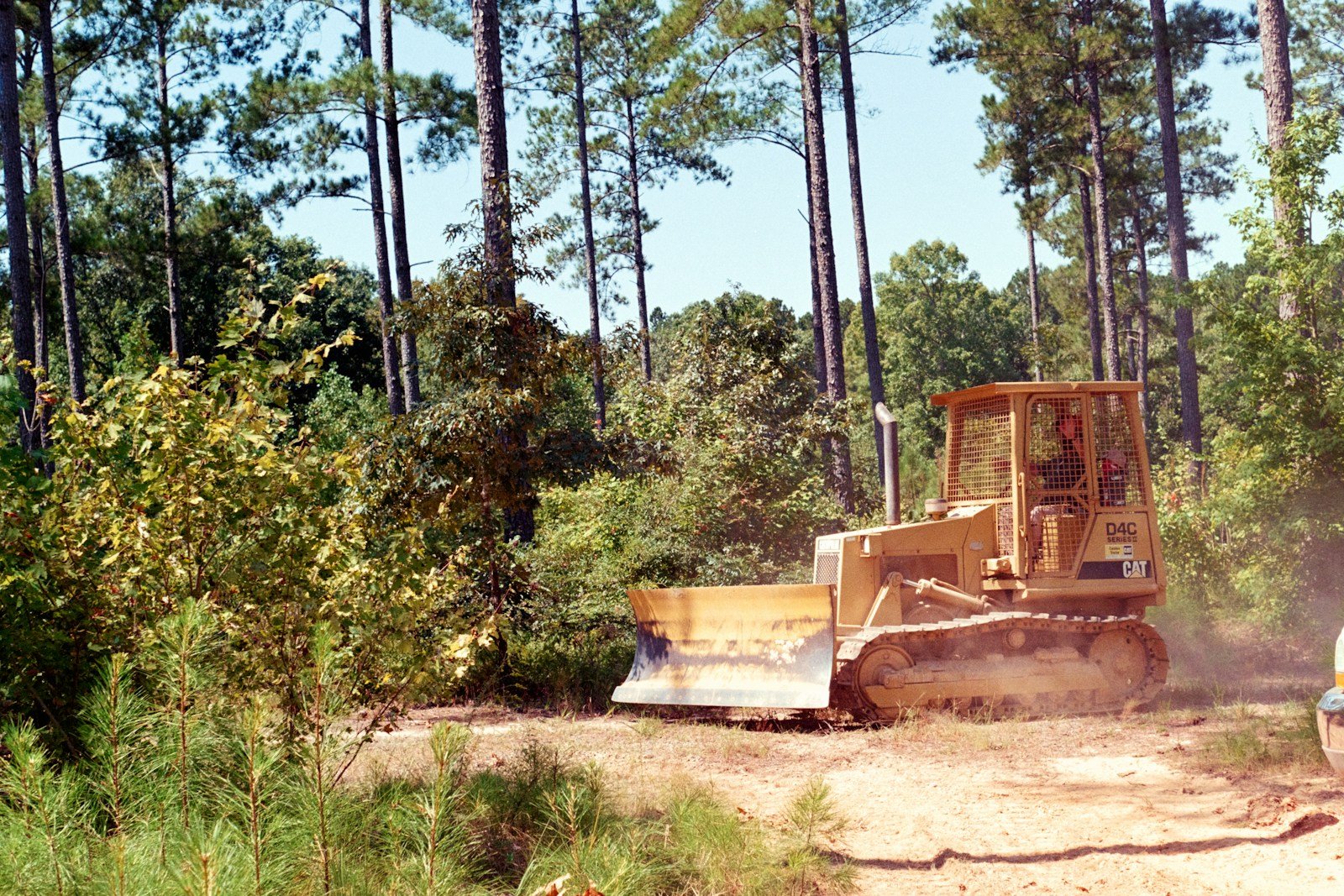
| Mechanical excavation | Excavator or dozer pulls the stems and most of the root plate on dense thicket ground where soil disturbance is acceptable. | The efficient path per acre on rural stands — but root fragments still resprout, so herbicide follow-up is not optional. |
| Cut only, no herbicide | Fell the tree, haul the brush, walk away. | Counterproductive. Expect several stems next season where you had one tree. This is the single most common way homeowners multiply their tallow. |
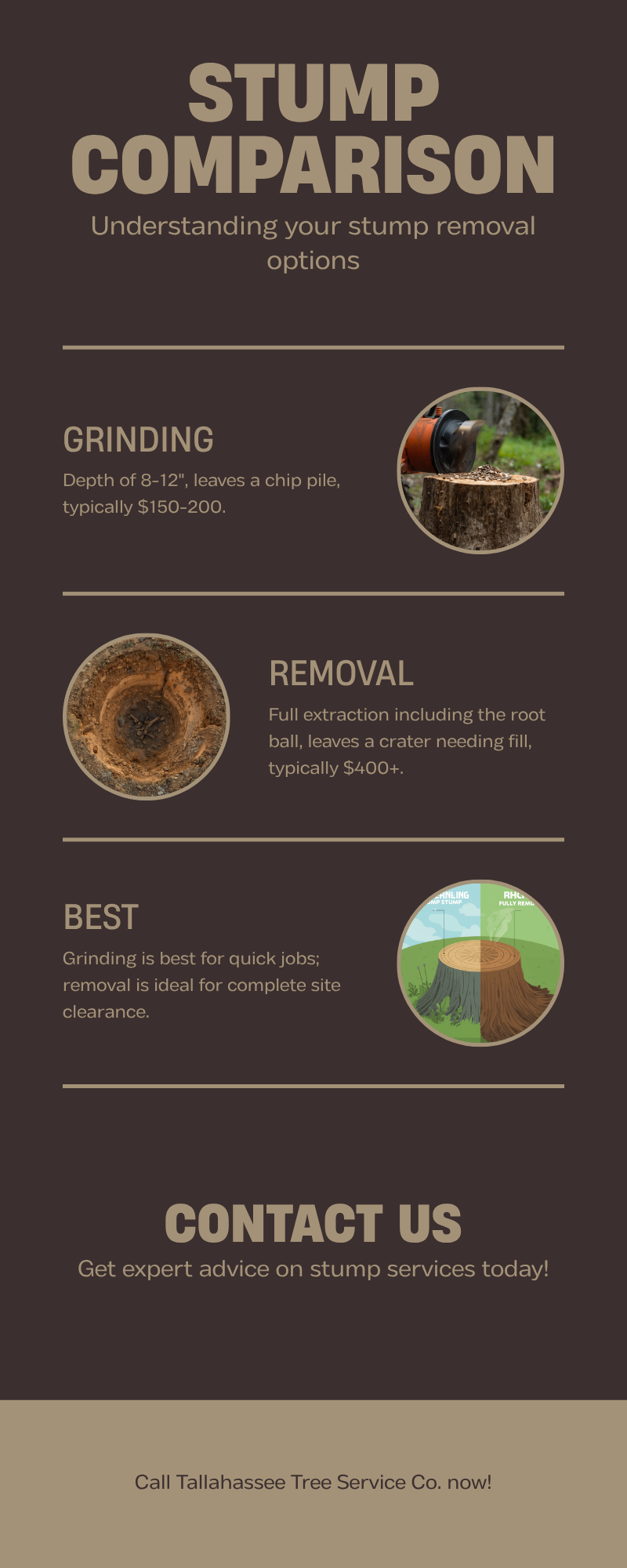
| Stump grinding alone | Grind the stump out with no chemical step first. | Does not solve it. Grinding removes the stump, not the lateral roots, and tallow sprouts from roots well outside the grind radius. |
If a bid on a live tallow proposes cut-and-grind with no stump-treatment line, the bid is missing the step that determines whether you do this once or every year. That is a fair question to ask out loud before you sign anything.
The seed bank — why tallow is a two-year project, not a one-day job
Even a textbook cut-and-treat leaves something behind: seed. Tallow seed stays viable in the soil for years, which means the ground under a tree you removed this winter will keep pushing seedlings next spring, and the spring after. That is not a sign the removal failed. It is the seed bank emptying itself.
The honest plan looks like this. Year one: remove the stems and treat every cut stump at the cut. Six to twelve months later: walk the site and hit any resprouts and new seedlings while they are small and soft — a foliar pass, or a shovel after a rain if there are only a few. Years two through five on a heavily infested property: keep an eye on it each spring and pull what comes up. Seedlings under a foot come out of moist soil root and all, and pulling costs nothing.
Skip the follow-up and you will be back to a thicket. Do the follow-up and tallow is genuinely finished on your property — which is more than can be said for most invasives.
The §5-83 exemption — the easiest permit conversation in Tallahassee
Chinese tallow is a designated nuisance species, and the City of Tallahassee’s tree provisions do not protect it. No permit application, no fee, no mitigation replanting owed, regardless of the trunk diameter. Compared with a regulated hardwood of the same size — which means paperwork, a fee and possibly a replacement tree — tallow is the simplest removal category on the books.
Two caveats worth knowing. Outside the city limits, Leon County’s environmental management rules apply instead, and the specifics should be confirmed for your address. And exemption status is not permission to be careless — herbicide near a wetland margin or a neighbor’s ornamentals still calls for the right application method. Our Tallahassee tree permit guide and the City tree removal page lay out the framework in full.
Clearing an established tallow thicket
Plenty of properties around the Big Bend — rural acreage, woodland edges, old pasture, floodplain margin — are not dealing with a tree. They are dealing with a stand: anywhere from fifty to several hundred stems across one to five acres, ranging from this year’s seedlings to twenty-year-old canopy trees.
Hand-cutting and treating every stem works and is the gentlest on the ground, but it is slow and scales badly past an acre. Mechanical clearing moves far faster per acre and is usually the sensible call on open ground, but it disturbs soil and leaves root fragments that will answer in the spring. In practice the approach that holds is phased: clear in the first pass, treat the resprouts about six months later, spray or pull whatever remains at twelve to eighteen months, then monitor for seedlings for a few springs while the seed bank drains.
Landowners in Wakulla, Gadsden and Jefferson counties often fold tallow clearing into a bigger goal — restoring pasture, reopening a fire-management buffer, prepping a build site, or bringing a native habitat edge back. Say so when you call; it changes which pro in the network is the right match. Related work often runs alongside it: lot clearing, brush removal, and land clearing.
What drives the scope of a tallow job
Tallow work is scoped to the property, and the drivers below are the ones that actually move a number. These are typical local-market considerations, not our prices — the pro you are matched with walks the site and gives the binding written quote.
| Factor | Why it moves the scope |
|---|---|
| Single tree, cluster, or stand | One 30-foot tallow in a lawn is a morning. Two acres of mixed-age thicket is a phased program. |
| Stem count and DBH | Every stem is its own fell-and-treat sequence, and tallow is frequently multi-stemmed from a single root plate. |
| What the canopy overhangs | Brittle wood over a roof, a fence or a septic field means rigging and controlled lowering rather than free-felling. |
| Access for equipment | A back-lot stand with no gate wide enough for a chipper means hand-carrying every piece out. |
| Seedling and sucker load | Treating the volunteers is part of doing the job properly, and it scales with how long the seed source has stood there. |
| Follow-up passes | The six-to-twelve-month return is what makes the removal permanent. It is usually quoted as its own line — ask for it. |
| Disposal | Tallow wood is poor firewood and cut sections can root in moist ground, so material should leave the site or be chipped — not stacked in a pile at the tree line. |
For the broader picture of what moves removal pricing in this market, see the Tallahassee tree removal cost guide.
The mistakes that bring tallow back
- Cutting without treating. The stump is the tree. Fell it and walk away and you have pruned an invasive, not removed it.
- Treating the stump later. The surface seals within minutes. Herbicide applied half an hour after the cut absorbs poorly — cut and treat have to be one continuous motion.
- Diluted hardware-store concentrate. Consumer-grade product at one or two percent routinely fails on tallow stumps. Effective cut-surface treatment uses concentrated formulations, applied correctly — which is also why drift and off-target damage are real risks in untrained hands.
- Grinding instead of treating. A ground stump looks finished. The lateral roots twenty feet out do not care.
- Skipping the follow-up season. Dormant root sprouts surface six to twelve months later. Left alone, they are new trees within two years.
- Leaving cut wood on the ground. Tallow sections can root in wet soil. A brush pile at the property line is a nursery.
- Replanting into the litter zone too soon. Allelopathic residue can linger a season or more. Give it time, amend with organic matter, and the replacement establishes far better.
- Broadcast spraying near keepers. Drift onto native ornamentals is the most common collateral damage on DIY tallow jobs. Targeted methods — cut-and-treat, basal bark, low-volume foliar — exist for a reason.
Where tallow shows up around Tallahassee
Tallow distribution tracks two things: where it was once planted on purpose, and where the birds have taken it since.
In older neighborhoods — Myers Park, Betton Hills, Midtown, pockets of northwest Tallahassee — mature specimens survive from mid-century landscaping, planted for that fall color long before the invasive status was formally recognized. Those trees are now decades old and pumping seed into every block around them. Taking out a mature seed-source tallow in an old neighborhood is the highest-leverage removal on this entire page.
In the suburban belt — Killearn Estates, Killearn Lakes, Bradfordville — tallow shows up mostly as volunteers: one to five stems of assorted ages that arrived by bird and got tolerated because nobody knew what they were. These come out in one visit plus a follow-up.
Newer construction like Southwood postdates the sale ban, so tallow there is nearly always a volunteer that turned up in a bed or along a wooded lot edge within a decade of the house being built. Caught at sapling stage, it is a shovel job.
Out in the rural Big Bend — Wakulla County, Crawfordville, Monticello, Quincy, and the floodplain corridors — tallow has had forty to sixty years to build genuine thickets in old pasture and along wet woodland margins. Some acreage out there is functionally tallow-dominated. That is multi-phase work, and it is also where removal does the most ecological good.
How getting matched works
What to plant once the tallow is gone
Give the ground a season to shed the allelopathic residue, work in some organic matter, and then plant something that belongs here. Live oak and southern magnolia if you have the room and the patience; sweetgum for fast native canopy; eastern redbud, fringetree or a disease-resistant dogwood hybrid if what you actually liked about the tallow was the show it put on. Any of them will outlive it, feed something, and stay where you put them.
Frequently asked questions
Do I need a permit to remove Chinese tallow in Tallahassee?
No. Tallow is a designated nuisance species and is not a protected tree under the City’s §5-83 provisions — no application, no fee, no mitigation planting, at any trunk diameter. Outside the city limits, Leon County rules apply; the arborist you are matched with confirms the specifics for your address.
Why does my tallow keep coming back after I cut it?
Because cutting does not kill it. Tallow resprouts from the cut stump and from lateral roots within weeks, often throwing several stems where one tree stood. Permanent removal means treating the raw stump surface with a concentrated systemic herbicide within minutes of the cut — the cut-and-treat method. Without that step, you have made more tallow, not less.
How do I know it is actually Chinese tallow?
The white waxy “popcorn” seeds hanging on bare winter branches are the giveaway. Add heart-shaped, smooth-edged leaves on trembling stalks, loud red-purple fall color, smooth gray bark, and volunteer seedlings scattered within fifty feet, and you have it. The pro you are matched with confirms the species on site if you are unsure.
Will stump grinding stop it from resprouting?
Not on its own. Grinding takes out the stump but not the lateral root system, and tallow sprouts from roots well beyond the grind radius. Grinding is a finishing step for appearance and replanting; the herbicide applied at the moment of the cut is what actually ends the tree.
What does Chinese tallow removal cost in Tallahassee?
It is scoped to the property. Stem count, trunk size, what the canopy overhangs, equipment access, the seedling load, and whether follow-up passes are included all move the number, so there is no honest flat figure — and no permit fee applies, which helps. The pro you are matched with walks the site and gives a binding written quote before any work begins.
Can I remove a small tallow myself?
Seedlings under a foot pull out of moist soil root and all — do that after a rain and get the whole root. Anything with real caliper needs the herbicide step done correctly and promptly, and concentrated product near desirable plants or water is where DIY tallow jobs go wrong. Above sapling size, matching with a pro who does invasive work is the reliable path.
Do you cover thicket clearing on rural property?
Yes — the network includes pros who clear multi-acre tallow stands across Leon, Wakulla, Gadsden and Jefferson counties, usually as a phased program with mechanical clearing followed by herbicide passes on the resprouts. Mention the acreage and the end goal when you call.
Related Tallahassee tree services
Tree Removal
Stump Grinding
Lot Clearing
Brush Removal
Land Clearing
Mimosa Removal
Camphor Removal
Bradford Pear Removal
End the tallow — not just this year’s stems
Call now and we’ll connect you with a vetted, licensed and insured Big Bend pro who treats the stump at the cut and comes back for the sprouts. Free to use, no obligation, no sign-up.
📞 Call Now — (858) 319-0022Tallahassee Tree Service is a free referral service. Tallahassee Tree Service is not a licensed tree service provider and does not directly provide tree care services. All work is performed by independent, licensed and insured third-party providers in your area. Calls and form submissions placed through this site may be connected with a participating provider, and you may be contacted by that provider regarding your request. Same-day, emergency, and 24/7 availability are not guaranteed and depend on provider schedules, location, and demand. Service availability, pricing, licensing, and final response times are determined solely by the providers. It is the responsibility of the homeowner to verify that the hired contractor furnishes the necessary license and insurance required for the work being performed. All persons depicted in a photo or video are actors or models and not contractors listed on Tallahassee Tree Service.