Looking for a professional tree planting service in Tallahassee? Call now and we’ll connect you with an ISA-certified local arborist who plants native and adapted tree species across Leon County, selecting the right species for your soil, sun exposure, and long-term goals. Priority dispatch site evaluations available — just call now.
What Is Professional Tree Planting Service?
Professional tree planting goes far beyond digging a hole and dropping in a sapling. A certified arborist evaluates your soil composition, drainage patterns, sun exposure, mature canopy spread, root architecture, and proximity to structures or utility lines before recommending a species. In Tallahassee’s red-clay-over-sand soil profile, planting depth and root flare exposure are the two single biggest predictors of a tree’s 20-year survival.
A thorough planting service includes species selection, soil amendment, root-collar excavation, planting at the correct depth, mulching with a proper 3-inch ring (never volcano-mulched), and a 12-month establishment follow-up. Arborists in our network typically source from regional nurseries that grow Florida-hardy stock acclimated to zone 8b/9a conditions — not big-box stock trucked from out of state.
Storm damage or a tree on your house? Call now.
Stay out of rooms under the tree and keep clear of downed lines — report those to the power company first. Then call and we’ll connect you with a local tree crew that handles storm work.
📞 Call (858) 319-0022Free 24/7 dispatch line · availability varies by storm volume
When You Need a Professional Tree Planting Service
A professional planter is worth calling when you’re replacing a tree lost to hurricane, lightning, or disease; starting a new landscape and want meaningful shade in 5 years instead of 20; meeting code-compliant replacement requirements after a tree removal permit was issued; building screening, windbreaks, or property-value enhancement; or planting fruit trees, hardwoods, or specialty cultivars that need professional handling.
DIY plantings often fail within 3 years because of common mistakes: planting too deep, leaving the burlap on, mulching against the trunk, or selecting a species that won’t tolerate Tallahassee’s heat and humidity. A failed planting is roughly twice the cost of doing it right the first time, because you pay for the original tree, removal, and replacement.
What a Tallahassee Tree Planting Job Typically Involves
A survival-focused planting job typically follows seven steps:
- Site visit — soil sample, sun exposure mapping, and root-zone obstruction check using a probe to locate buried utilities and old root systems.
- Species recommendation — typically 2-4 options presented with mature size, growth rate, and maintenance profile so you can pick based on long-term vision, not just nursery-tag appeal.
- Sourcing — regional nurseries that grow Florida-hardy stock; reputable providers avoid planting out-of-region container stock without acclimation.
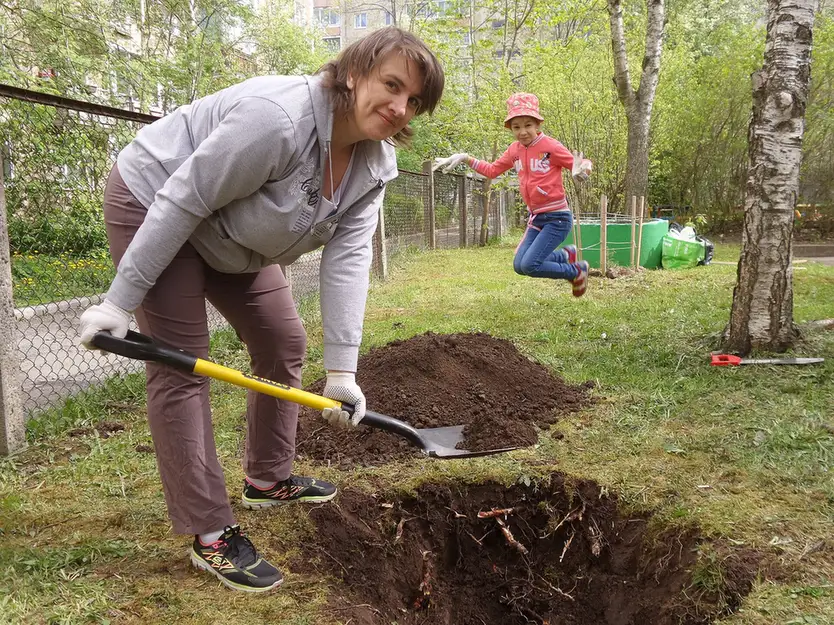
- Planting — root flare exposed, hole 2x the rootball width, native backfill, deep water-in. The backfill is not amended with potting soil, which creates a perched water table.
- Mulch ring — 3″ deep, 6″ off the trunk, 3′ diameter. Wood chips, never rubber or dyed mulch near the trunk.
- Stake only if required — most trees establish faster without staking; if needed, two-stake systems with removable webbing.
- 12-month follow-up — watering schedule, second-year fertilization plan, structural pruning if needed.
Tallahassee-Specific Planting Factors
Leon County’s climate and soil create planting conditions you won’t find in central or south Florida. The urban tree canopy here is dominated by live oak, laurel oak, longleaf pine, and southern magnolia — all of which need careful spacing because their mature canopies easily exceed 60 feet. Plant them too close to a house or driveway, and you’re setting up a future removal job that the tree permit office may decline to approve.
Red-clay subsoil in this area drains slowly, which means trees planted in low spots often die from root rot within 18 months. Conversely, the sand caps on north-side lots dry out fast in summer — these soils need amendment and a more aggressive first-year watering schedule. Soil drainage is typically tested before specifying a tree, because some species (bald cypress, river birch) tolerate wet feet while others (live oak, magnolia) absolutely do not.
Hurricane wind loading matters too. A live oak planted within 15 feet of a roofline becomes a six-figure liability when a Category 2 system makes landfall. Plantings are typically oriented to minimize lean toward structures, favoring species with strong cabling and bracing potential for legacy specimens — a 30-year horizon, not a 3-year nursery sticker.
What Drives Tree Planting Cost in Tallahassee
Planting is priced off stock size and how hard it is to get that stock into the ground. Here is what changes the number at each tier:
- 15-gallon container tree — two people can carry and set it; cost is mostly the stock plus an hour of labour and backfill
- 30-gallon container tree — needs a cart or two-wheeler and a wider path to the planting hole; gate width starts to matter
- Field-grown 2″ caliper — heavier root ball, machine-dug hole, and staking; establishment watering is part of the scope
- Field-grown 4″ caliper — a skid steer or tree spade has to reach the spot, which rules out many fenced Tallahassee back yards
- Mature ball-and-burlap specimen — root ball weight is the constraint; crane assist is often required, and the crane needs frontage and a stable pad
Multi-tree discounts often kick in at 3+ trees on the same site visit. Replacement plantings tied to a removal permit may qualify for fee waivers under Tallahassee’s tree protection ordinance — ask the arborist you’re matched with when scheduling.
Frequently Asked Questions
What’s the best time of year to plant trees in Tallahassee?
October through February. Cool-season planting lets root systems establish before summer heat and humidity stress the tree. Avoid June-August plantings unless you can commit to daily hand-watering for 60 days.
What trees grow best in Tallahassee?
Live oak, southern magnolia, longleaf pine, bald cypress, American holly, eastern red cedar, redbud, and Chickasaw plum all thrive in our climate. Avoid Bradford pear, silver maple, and Chinese tallow — short-lived, invasive, or both.
How long until a planted tree provides shade?
Container-grown shade trees typically provide meaningful canopy in 5-8 years. Caliper-sized field-grown trees deliver shade in 2-4 years. Mature ball-and-burlap specimens give nearly instant shade.
Do the arborists you connect me with guarantee planted trees?
Many providers offer a 12-month replacement guarantee on trees they plant, provided the homeowner follows the watering schedule left at the time of planting — confirm the specific terms with the arborist you’re matched with.
Can you plant near power lines?
Yes, but arborists typically select dwarf or short-mature-height species (crepe myrtle, redbud, dogwood) within 25 feet of overhead lines. Planting tall species near power lines almost always results in aggressive utility pruning later.
Do I need a permit to plant a tree in Tallahassee?
No — planting is permit-exempt. Removal of a protected tree at 8″ DBH or larger is what triggers Tallahassee’s permitting process.
What about HOA restrictions?
Arborists in our network routinely work within HOA architectural review processes and can provide species documentation, site plans, and arborist letters for submittal.
Can I plant my own tree and have a provider do structural pruning later?
Yes — many providers offer structural pruning packages on young trees to set up good long-term form, especially important for live oaks and laurel oaks.
Ready to plant? Call now for a site visit. Most planting jobs schedule within 5-7 business days.