Before you cut down a tree in Tallahassee, it is worth pausing on a question that catches a lot of homeowners off guard: do you actually need a permit first? Tallahassee takes its tree canopy seriously — it is part of what makes the city look the way it does — and that means some removals are perfectly fine to do on your own while others require city approval before a single limb comes down.
This guide explains how Tallahassee’s tree rules generally work, in plain English: the single-family exemption, patriarch trees, protected species, Canopy Road Protection Zones, and the special status of the live oak. Treat this as educational guidance for navigating the system, not legal advice. For any specific tree, the authoritative answer comes from the City of Tallahassee Growth Management department.
The Short Answer: It Depends on Species, Size, and Location
There is no blanket yes-or-no. Whether your tree needs a permit comes down to three things working together:
- Species — some trees, especially live oaks and other protected species, get extra protection regardless of size.
- Size — measured as diameter at breast height (DBH), the trunk diameter at about 4.5 feet off the ground. Bigger trees cross thresholds that smaller ones do not.
- Location — a tree along a designated canopy road is treated differently from one in the middle of a typical backyard.
A small, common tree in the center of a single-family lot is often exempt. A large oak, a designated patriarch tree, or any tree along a canopy road generally is not. The rest of this guide unpacks where those lines fall.
The reason the city draws these lines at all is worth understanding, because it explains why the rules feel stricter here than in many other places. Tallahassee’s tree canopy is not an accident — it is a defining feature of the city and a regulated public asset, shading streets, cooling neighborhoods, and managing stormwater across Leon County. Mature trees take decades to replace, so the ordinance is built to slow down the removal of the largest and most significant ones while leaving routine yard maintenance largely in the homeowner’s hands. Knowing that logic makes the thresholds easier to anticipate: the bigger, older, rarer, or more publicly visible a tree is, the more likely the city wants a say before it comes down.
Storm damage or a tree on your house? Call now.
Stay out of rooms under the tree and keep clear of downed lines — report those to the power company first. Then call and we’ll connect you with a local tree crew that handles storm work.
📞 Call (858) 319-0022Free 24/7 dispatch line · availability varies by storm volume
Tallahassee’s Tree Rules in Plain English
The city’s land development regulations are written to protect canopy while still letting homeowners maintain their own property. Here are the parts that matter most for a typical removal.
The single-family exemption up to 36″ DBH
On single-family detached residential lots, the rules are generally more relaxed. As a rule of thumb, a non-protected, non-patriarch tree up to 36 inches DBH on such a lot can typically be removed without a city permit. That covers a lot of routine situations — a common tree that has outgrown its spot, is too close to the house, or is in decline.
The thresholds matter, though. Once a tree is over 36 inches DBH, is a patriarch tree, or stands within a Canopy Road Protection Zone, a permit is generally required even on a single-family lot. The exemption is real, but it has clear edges, and the species can override it entirely.
Patriarch trees and protected species
Tallahassee designates certain large, significant trees as patriarch trees — these are the old, substantial specimens that anchor the canopy, and they carry heightened protection. Protected species are likewise singled out for their value to the urban forest. If your tree falls into either category, the single-family size exemption does not simply apply; a permit and city review generally come into play regardless of how the rest of the lot is treated.
Because it is not always obvious from the yard whether a tree is “just big” or actually meets a patriarch or protected-species definition, this is exactly the point where many homeowners bring in a professional to assess the tree before assuming anything. The distinction is not academic. A homeowner who measures a trunk by eye and decides it is “probably under the limit” can be wrong by a few inches in either direction, and a few inches is the difference between an exempt removal and one that needed approval. The same is true for species: a young live oak and several other common shade trees can look similar to an untrained eye, yet the rules treat them very differently.
Canopy Road Protection Zones
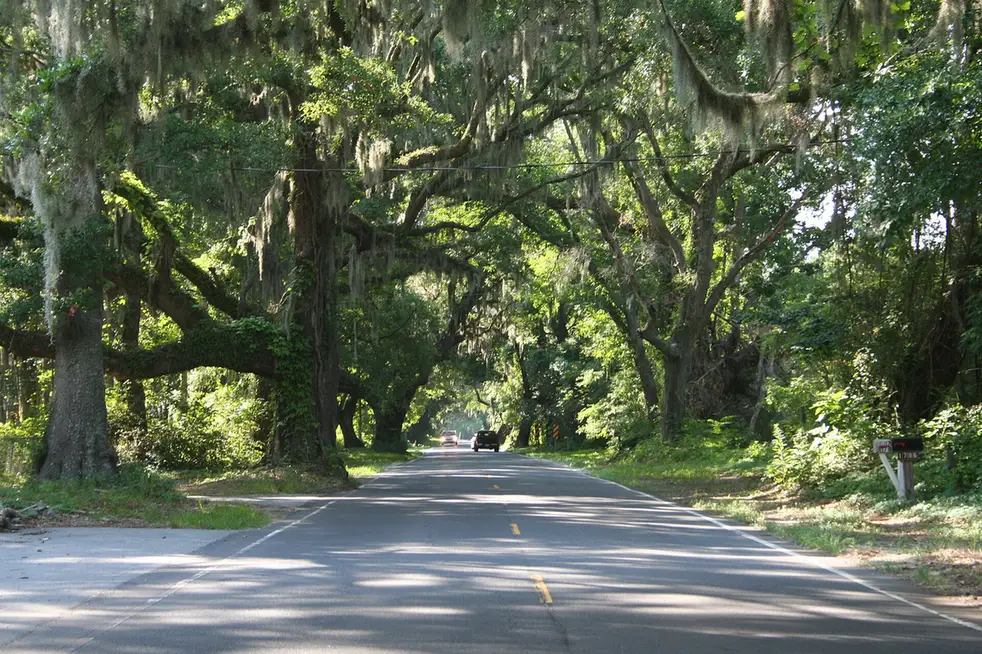
Tallahassee’s canopy roads — the iconic tree-arched corridors — have dedicated Canopy Road Protection Zones along them. Trees within these zones receive special protection because they form the canopy that defines those roads. A tree that would be exempt elsewhere on a single-family lot can still require a permit simply because of where it stands. If your property fronts or sits near one of the designated canopy roads, assume the protection zone may apply and verify before removing anything.
Live Oaks Get Special Protection
There is a reason live oaks come up again and again in Tallahassee tree discussions: the live oak (Quercus virginiana) is the official shade tree of the City of Tallahassee, and it is heavily protected. These are the broad, sprawling, Spanish-moss-draped trees that shade entire yards and streets across Leon County.
Practically speaking, a mature live oak is more likely than a typical tree to be treated as protected, to meet a patriarch designation, or otherwise to trigger city review — and a permit — before it can be removed. That does not mean a live oak can never come down; it means the path runs through the city’s process, and the assessment of whether the tree qualifies for protection should be done carefully. If a removal is not strictly necessary, the recommended outcome is sometimes structural pruning to keep the tree healthy and safe rather than taking it out. The arborists in our network also handle tree trimming in Tallahassee for exactly that kind of situation.
Not sure if your tree is protected? Get matched with a licensed Tallahassee arborist Call now code and our 24/7 dispatch line connects you with an ISA-certified, insured arborist in our network who serves Tallahassee and Leon County. A real person answers — describe your tree and its location, and you’ll be routed to a pro who can assess whether a permit applies. Any application is something you confirm with the City. → Call now to get connected
Permit Fees and What the Application Needs
When a permit is required, the City of Tallahassee handles it through Growth Management. The application fee has been reported at around the City of Tallahassee permit fee for up to 10 trees, which means a single-tree application and a small group of trees can fall under the same fee tier. Fees and requirements change over time, so treat that figure as a planning estimate and confirm the current amount when you apply.
A typical removal application asks you to identify the property, describe each tree — species and size (DBH) — and explain the reason for removal, such as the tree’s condition, its proximity to a structure, or a safety hazard. Documentation helps: clear photos of the tree, an accurate trunk measurement, and a short, honest description of why it needs to come down all make the review smoother. Larger and protected trees may invite closer review, and in some cases the city looks at whether the situation can be resolved without full removal — for example, through pruning or by removing a hazardous limb rather than the whole tree. In some circumstances, a replacement or mitigation expectation can also accompany the removal of a significant tree, which is one more reason to get the assessment right before you start. None of this is legal advice; the City of Tallahassee Growth Management department is the office that confirms what your specific tree requires and reviews the application.
It is also worth knowing that storm damage and genuine emergencies are handled differently from planned removals. When a tree has failed or is an imminent hazard after a storm, the priority is safety, and the process is not the same as a routine, scheduled takedown. If you are in that situation, the arborists in our network provide emergency tree service in Tallahassee — but even then, documenting the tree’s condition is wise, so confirm how the city wants emergency situations handled.
How an Arborist Helps You Navigate It
This is where a professional earns their keep before any cutting happens. A qualified arborist helps in several concrete ways:
- Measuring and identifying the tree correctly. Getting the species right and measuring DBH accurately is the foundation of knowing which rule applies. A 35-inch oak and a 37-inch oak are on opposite sides of a threshold.
- Flagging protected, patriarch, and canopy-road situations. An experienced local arborist recognizes the trees and locations that trigger city review, so you are not guessing.
- Recommending the right scope. Sometimes the answer to an overgrown or risky tree is targeted pruning rather than removal — which can keep both the tree and your permit situation simpler.
- Performing the work to professional standards. When removal is the right decision, ISA-certified, insured arborists do it safely and to code.
To be clear about how this works: the homeowner or their professional confirms permit requirements directly with the City, and any application is between you and the city. An arborist you are connected with can assess the tree and advise, but the permit itself is a city matter. For the removal once you have clarity, see tree removal in Tallahassee.
Get matched with a licensed Tallahassee arborist who knows the local tree rules Call now code and our 24/7 dispatch line connects you with an ISA-certified, insured arborist in our network serving Tallahassee and Leon County. A real person answers — describe your tree, and you’ll be routed to a pro who can assess whether it is protected and what your options are. Permit specifics are confirmed with the City of Tallahassee Growth Management.
Frequently Asked Questions
Do you need a permit to cut down a tree in Tallahassee? Sometimes. On a single-family lot, a non-protected, non-patriarch tree up to 36 inches DBH can generally be removed without a permit. A permit is generally required if the tree is over 36 inches DBH, is a patriarch tree, is a protected species, or stands within a Canopy Road Protection Zone. Confirm your specific tree with the City of Tallahassee Growth Management department.
What is the 36-inch DBH exemption? DBH means diameter at breast height — the trunk diameter measured about 4.5 feet above the ground. On single-family detached lots, non-protected, non-patriarch trees up to 36 inches DBH generally do not require a city permit to remove. Over that size, or for protected and patriarch trees, a permit typically applies.
Are live oaks protected in Tallahassee? Yes. The live oak is the official shade tree of the City of Tallahassee and is heavily protected. A mature live oak is more likely to be treated as protected or to meet a patriarch designation, which generally means city review and a permit before removal. It does not mean a live oak can never be removed, only that the city’s process applies.
What is a patriarch tree? A patriarch tree is a large, significant specimen the city designates for heightened protection because of its size and value to the canopy. Patriarch trees generally require a permit and city review to remove, regardless of the standard single-family size exemption.
What is a Canopy Road Protection Zone? It is a protected area along Tallahassee’s designated canopy roads, the tree-arched corridors the city is known for. Trees within these zones receive special protection, so a tree that might be exempt elsewhere can still require a permit because of where it stands. If your property is near a canopy road, verify before removing any tree.
How much does a tree removal permit cost in Tallahassee? The City application fee has been reported at around the City of Tallahassee permit fee for up to 10 trees, so a single tree and a small group can fall under the same tier. Fees can change, so treat that as a planning estimate and confirm the current amount and requirements with the City of Tallahassee Growth Management department.
What happens if I remove a protected tree without a permit? Removing a protected or regulated tree without required approval can expose you to penalties and complications under the city’s tree ordinance. Because the consequences and specifics are a city matter, confirm requirements before removal rather than assuming a tree is exempt.
Do storm-damaged or emergency tree removals need a permit? Emergencies and storm damage are generally handled differently from planned removals, with safety taking priority when a tree has failed or is an imminent hazard. Even so, it is wise to document the tree’s condition and to confirm how the City wants emergency situations handled.
How do I find out if my specific tree needs a permit? Identify the species and measure the DBH, then check whether the tree is protected, a patriarch tree, or within a Canopy Road Protection Zone. A local arborist can assess these factors, and the City of Tallahassee Growth Management department gives the authoritative answer and processes any application.
TallahasseeTreeService.co is a dispatch service. We connect callers with licensed Florida arborists. We are not a licensed tree service company. The disclaimer in our site footer and our 24/7 dispatch caveat apply to this page.