A storm rolls through Leon County, the power flickers, and you walk outside to find a live-oak limb resting on your roof — or a pine leaning toward the house at an angle it definitely was not at yesterday. Now what? Is this a “deal with this right now” situation, or something that can wait until business hours Monday?
Tallahassee’s dense live-oak and pine canopy is one of the reasons the city feels the way it does, but that same canopy is what turns a routine thunderstorm into a property emergency. After hurricanes and severe summer storms, the question is almost never whether trees came down somewhere in Leon County — it’s whether the one near you crossed the line from “damaged” to “dangerous.”
This guide walks through what actually qualifies as a tree emergency in Tallahassee, what to do in the first few minutes for your own safety, what to avoid, and how a ZIP-based dispatch line connects you with a licensed arborist when timing matters.
Get matched with a licensed Tallahassee arborist Call now code and our 24/7 dispatch line connects you with an ISA-certified, insured arborist in our network who serves Tallahassee and Leon County. A real person answers — describe what happened and you’ll be routed to the right pro. → Call now to get connected
What actually qualifies as an emergency (vs. what can wait)
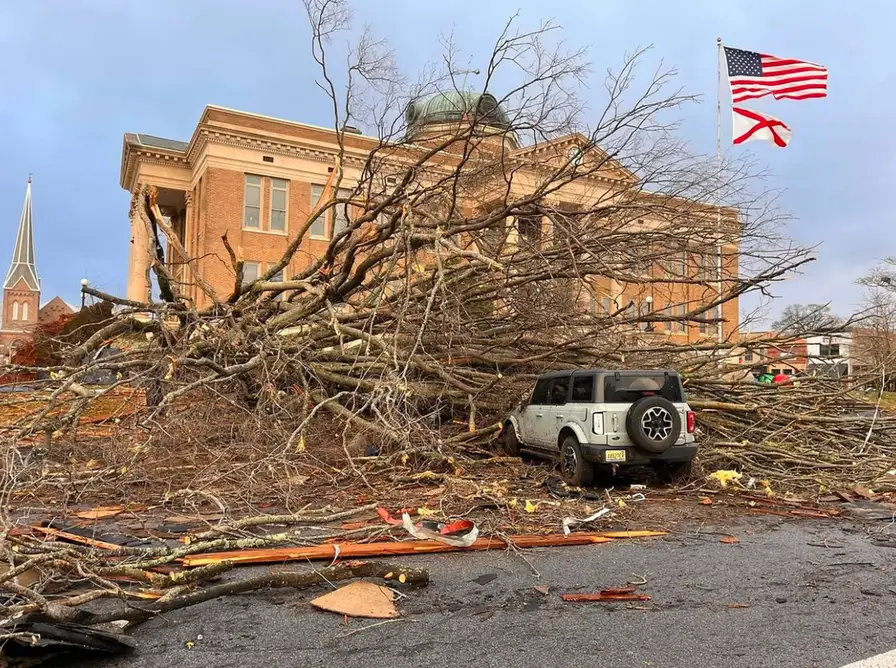
Not every fallen branch is an emergency. A small limb in the yard, a few snapped twigs, or a tree that dropped leaves and bark after a windy night is cleanup, not crisis. The dividing line is risk to people, structures, or utilities. If a tree or limb is currently threatening a person, a building, a vehicle, or a power line — or could shift and do so at any moment — you’re in emergency territory and time matters.
Here are the three situations that almost always qualify.
Tree or limb on a house, car, or power line
This is the clearest case. If a tree, trunk section, or large limb is resting on your roof, has punched through a structure, is pinning a vehicle, or is touching (or tangled in) electrical lines, treat it as an active emergency.
A limb on the roof is not just a cosmetic problem. The weight is dynamic — it can shift, slide, or drive further into the structure as wind picks up or as the wood settles. Water intrusion through a compromised roof can cause secondary damage within hours. And a tree against a power line is a life-safety hazard, not a tree problem: the line may still be energized even if your lights are out.
If anything is touching a power line, stay far away and contact your utility first. In the Tallahassee area that’s typically the City of Tallahassee electric utility or Talquin Electric Cooperative, depending on your address. The line has to be de-energized before any tree work can safely begin.
Leaning tree with root heave after a storm
A tree that is suddenly leaning — especially one that wasn’t leaning before the storm — is one of the more deceptive hazards. The signal to watch for is root heave: soil lifting, cracking, or mounding on one side of the trunk, often with roots visibly pulling out of the ground on the opposite side. That means the root plate has failed and the only thing holding the tree up is momentum and luck.
Tallahassee’s clay-heavy soils hold water during the rainy season, and saturated ground dramatically reduces a root system’s grip. A large laurel oak or pine that looks fine standing in dry soil can topple in saturated conditions with far less wind than you’d expect. If you see fresh soil heave, a new lean, or a gap opening at the base of the trunk, keep people and vehicles out of the fall zone and get a licensed arborist’s eyes on it promptly.
Split or hanging “widow-maker” limbs
A “widow-maker” is a broken or partially detached limb hung up in the canopy, held by nothing more than a strip of bark or a neighboring branch. The name is grimly literal — these limbs fall without warning, often straight down, and they cause a large share of injuries during post-storm cleanup.
Mature live oaks are especially prone to this because their long, heavy horizontal limbs can crack at the union and stay lodged overhead. If you spot a hanging or split limb above a walkway, driveway, patio, or anywhere people pass, rope off the area below it and stay out. Do not try to dislodge it yourself.
Storm damage or a tree on your house? Call now.
Stay out of rooms under the tree and keep clear of downed lines — report those to the power company first. Then call and we’ll connect you with a local tree crew that handles storm work.
📞 Call (858) 319-0022Free 24/7 dispatch line · availability varies by storm volume
What to do first: safety, utilities, and documentation
In the first few minutes after you discover tree damage, a calm sequence protects both your safety and your insurance claim.
- Get people and pets clear. Move everyone away from the tree, the structure it’s touching, and anything overhead that could still fall. Establish a wide perimeter.
- Assume every downed line is live. Stay at least 35 feet from any line on the ground or tangled in branches, and keep others back too. Don’t drive over downed lines.
- Contact your electric utility for anything involving power lines. Report the line and let them de-energize it. No tree work — and no DIY — happens near an energized line.
- Shut off utilities if a structure is breached and you can do so safely (for example, killing power to a flooded or compromised area at the breaker).
- Document everything for insurance. Before any cleanup, photograph the tree, the point of impact, interior damage, and wide context shots showing the whole scene. Note the date and time. Most Florida homeowners’ policies cover tree-removal and structural repair when a tree hits a covered structure, but your claim is far stronger with clear, timestamped photos taken before anyone touches the scene.
- Make safe, temporary mitigation only — like tarping an exposed roof opening — if it’s safe to do so without climbing near damage. Keep receipts; reasonable mitigation costs are often reimbursable.
Speed matters here, and not only for the obvious safety reasons. Industry data shows roughly 80% of storm-tree customers go with the first company that responds — so getting connected to the right pro quickly is genuinely valuable. That said, no honest dispatcher can promise an exact arrival time during an active storm event; conditions on the road dictate that.
What NOT to do
Post-storm injuries happen most often during cleanup, not during the storm itself. A few hard rules:
- Don’t touch, move, or go near anything contacting a power line. Not the tree, not the limb, not the fence the line is draped over. Wait for the utility.
- Don’t stand or work under a hung or split limb. Widow-makers drop without warning. No photo, no quick grab, no “I’ll just nudge it” is worth it.
- Don’t climb onto a damaged roof to inspect or tarp if a tree is still resting on it — the load can shift under you.
- Don’t run a chainsaw on a tree that’s under tension. A trunk or limb that’s bent, pinned, or partially supported stores enormous spring energy and can snap back violently when cut. This is skilled, dangerous work for trained crews with the right rigging.
- Don’t assume a leaning tree will “settle.” Once the root plate fails, it doesn’t heal — it waits.
When the situation involves structures, lines, tension, or height, it’s a job for the arborists in our network, not a Saturday DIY project.
Storm damage right now? Call now to reach the 24/7 arborist dispatch line. A real person answers, takes down what happened, and routes you to a licensed, insured arborist in our network serving Tallahassee and Leon County. → Call now to get connected
How the 24/7 dispatch line works
When a tree comes down at 2 a.m. during a tropical system, you don’t want a voicemail box. The dispatch model is built around a simple idea: call now code, and you’re connected to a 24/7 line where a real person picks up. You describe what happened — tree on the house, limb on the line, leaning pine — and the dispatcher routes your job to a licensed arborist in the network who serves your part of Leon County.
To be clear about what this is: TallahasseeTreeService.co is a dispatch and matching layer, not a tree crew. The role is to get your situation in front of the right ISA-certified, insured professional quickly, especially during the storm surges when local crews are slammed and hard to reach one by one. The pro dispatched to the job handles the assessment, the quote, and the work itself.
What to tell dispatch so the right crew and gear are sent
The more precise your description, the better the match — a leaning pine over a driveway needs different rigging than a limb resting on a second-story roofline. Have these details ready:
- Your ZIP code and address, including gate codes or access notes for properties off Centerville, Thomasville, or out toward Killearn and Bradfordville.
- What the tree is touching — roof, vehicle, fence, power line, or nothing yet.
- Species and size if you know it — a wide live oak versus a tall slash pine changes the equipment and approach.
- Whether a power line is involved, and whether you’ve already contacted the utility.
- Signs of root heave or a fresh lean, and which direction it’s leaning.
- Access constraints — narrow side yards, overhead lines on the property, soft saturated ground a truck might bog in.
- Photos, if you can safely take them, to share when asked.
Thinking ahead to storm season is its own kind of insurance. If you have large trees close to the house, our guide to hurricane tree prep in the Killearn area covers the pruning and risk-reduction steps that prevent many emergencies in the first place. And when a tree has to come down — emergency or planned — our overview of tree removal in Tallahassee explains how the network handles it.
FAQ
What counts as a tree emergency in Tallahassee?
A tree emergency is any situation where a tree, trunk, or limb threatens people, a structure, a vehicle, or a power line — or could at any moment. The clearest cases are a tree on a house or car, a tree touching a power line, a tree leaning with visible root heave after a storm, and split or hanging “widow-maker” limbs overhead. Routine fallen branches and yard debris are cleanup, not emergencies.
A tree fell on my house — who do I contact first?
If the tree is touching a power line, contact your electric utility first so the line can be de-energized. Otherwise, get everyone clear, photograph the damage for your insurance claim, and get connected to a licensed arborist. You can call now to reach the 24/7 dispatch line and be routed to an insured pro in the network.
A tree fell on my car — is that an emergency?
Yes, especially if the vehicle is pinned, if fluids are leaking, or if a power line is involved. Don’t try to move the car yourself if the tree is under tension or near a line. Document it with photos for both your auto and homeowners’ insurers, then get a licensed arborist on the job.
Is a leaning tree after a storm dangerous?
A new lean — particularly with soil heaving, cracking, or mounding at the base — usually means the root plate has failed. In Tallahassee’s saturated rainy-season soils, a heaved tree can fall with little additional wind. Keep people and vehicles out of the fall zone and have it assessed promptly.
What should I never do around storm-damaged trees?
Never touch anything contacting a power line, never stand under a hung or split limb, never climb a roof with a tree still on it, and never run a chainsaw on a trunk or limb under tension. These are the situations that cause most post-storm injuries.
Does homeowners insurance cover emergency tree removal in Florida?
Often yes, when a tree strikes a covered structure like your house, garage, or fence. Coverage and limits vary by policy, so photograph everything before cleanup and check your specifics with your insurer. Reasonable temporary mitigation, like tarping an exposed roof, is frequently reimbursable when you keep receipts.
What does 24/7 dispatch actually mean?
It means the dispatch line is staffed around the clock and a real person answers — you’re not leaving a message during a storm. You call now, describe the situation, and get routed to a licensed arborist in the network. Arrival timing depends on conditions and can’t be promised to the minute during active storms.
What information should I have ready when I get connected?
Your ZIP and address with access notes, what the tree is touching, its rough species and size, whether a power line is involved, any signs of root heave or a new lean, and access constraints like narrow yards or soft ground. Photos help when it’s safe to take them.
Who handles the actual tree work?
A licensed, insured, ISA-certified arborist in the network — dispatched to your job based on your location and situation. TallahasseeTreeService.co connects you with that professional; it does not perform the tree work itself.
TallahasseeTreeService.co is a dispatch service. We connect callers with licensed Florida arborists. We are not a licensed tree service company.
The disclaimer in our site footer and our 24/7 dispatch caveat apply to this page.