Palm Tree Removal in Tallahassee, FL
A palm that has lost its spear leaf is not sick — it is finished. Ganoderma at the base, bud rot after a hard freeze, lethal bronzing working down the fronds: palms fail in ways hardwoods never do. Call now and we’ll connect you with a vetted, licensed and insured local pro who knows the difference.
📞 Call Now — (858) 319-0022Not sure whether it’s dead or just cold-burned? Call now — the pro will tell you straight.Tallahassee sits at the northern edge of where palms can live. We are USDA Zone 8b, which is warm enough that people plant them and cold enough that we lose them. Every few winters a hard freeze rolls down through the Big Bend, and by March half the queen palms in town look like burnt umbrellas. Some of them recover. Some of them are already dead and just haven’t admitted it yet.
Knowing which is which is most of what a palm decision comes down to — because a palm is not a tree in any way that matters for care. Palms are monocots. They have no cambium, no branch collar, no compartmentalization response. A wound in a palm trunk never closes, never seals, and never grows over. Everything that palm will ever be, structurally, is already there. That single biological fact drives every rule below.
How to tell if a palm is actually dead
Palms grow from one point: a single apical bud at the very top, protected inside the crown. Everything the palm does comes out of that bud. If it dies, the palm dies — no exceptions, no recovery, no matter how green the lower fronds still look.
The spear-leaf test
The spear leaf is the newest frond, still tightly furled and pointing straight up out of the center. Grab it and pull gently. If it slides out easily — often with a foul smell and a soft, wet base — the bud is rotted and the palm is gone. The remaining green fronds are running on stored reserves and will brown out over the following months. This is the single most useful five-second diagnostic a homeowner can perform.
What it is not
Brown lower fronds by themselves mean nothing. Palms shed old fronds from the bottom constantly — that is normal aging, not decline. Cold-burned fronds after a January freeze also do not automatically mean death: if the spear is firm and the center is still pushing new growth in spring, the palm is likely to come back, ugly but alive. Resist the urge to cut everything off in February. Those damaged fronds are still feeding the plant.
What actually kills palms in the Big Bend
| Cause | What you see | Outcome |
|---|---|---|
| Ganoderma butt rot (Ganoderma zonatum) | A shelf-like conk — white when young, glossy reddish-brown on top when mature — emerging from the lower trunk, usually within a few feet of the ground. Fronds wilt and the canopy thins from the bottom. | Terminal. There is no treatment and no cure. The palm must come out, and the fungus persists in the soil — do not replant another palm in that spot. |
| Bud rot (Phytophthora, Thielaviopsis) | Spear leaf pulls free, wet and rotten. Often follows a hard freeze or a very wet stretch that damages the crown. | Terminal once the bud is gone. Frequently what finishes off a cold-damaged palm the season after the freeze. |
| Lethal bronzing (phytoplasma) | Fruit drops prematurely, the spear leaf dies, and fronds bronze from the oldest upward — a distinctive reddish-brown, not the gray-brown of drought. | Terminal. It is present in Florida and spreads by insect vector, so a confirmed palm is a risk to nearby palms and should be removed promptly. |
| Cold injury | Fronds burned brown after a freeze; trunk sometimes cracks. | Survivable if the bud held. Fatal if the crown took the freeze and bud rot follows. Queen palms and Washingtonias are the usual casualties here; sabals shrug most of it off. |
| Structural failure | Trunk leaning, splitting, or hollowed by rot near the base. | Palms do not heal wounds. A compromised trunk stays compromised, and a leaning palm over a driveway is a removal conversation, not a pruning one. |
Conk at the base of the trunk, or a spear leaf that pulled out in your hand? Both mean the palm is done — and a dead palm over a roof or a walkway is a hazard on a clock.
📞 Call Now — (858) 319-0022Vetted local pros — availability depends on independent provider schedules and demand.*Which palms Tallahassee actually plants — and which ones bite
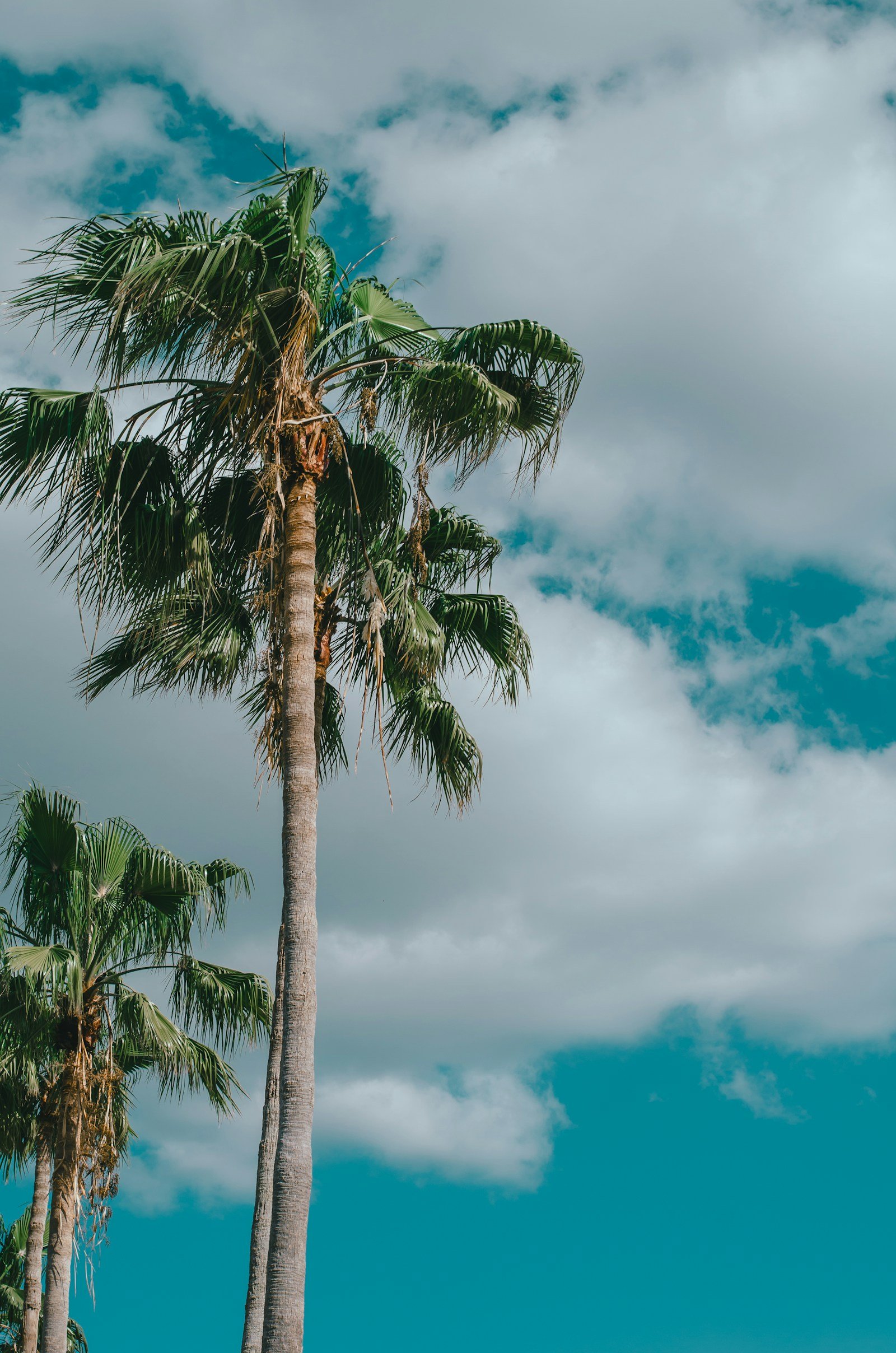
Sabal palm (Sabal palmetto), the Florida state tree, is the native and by far the most sensible choice here. It is genuinely cold-hardy for our winters, and UF/IFAS wind-resistance research after the 2004–2005 hurricane seasons put sabal palms at the top of the survivability rankings for Florida landscape plants. Sabals also transplant unusually well — where most trees resent being moved, a healthy sabal can often be dug and relocated rather than destroyed, which is a conversation worth having before you commit to removal.
Washingtonia (Mexican fan palm) grows fast and tall, which is exactly the problem. In Zone 8b it is a cold gamble, and a 40-foot Washingtonia leaning over a Midtown driveway with a dead crown is a removal that needs real rigging, not a ladder.
Queen palm (Syagrus romanzoffiana) is marginal here and everyone plants it anyway because it looks tropical. It is the palm most reliably wrecked by our hard freezes and it ranks poorly for wind resistance. If you lost one, you did not do anything wrong — it was planted north of where it wants to live.
Windmill and pindo palms are the cold-hardy alternatives that actually belong at this latitude, and they show up in the older Betton Hills and Los Robles landscapes accordingly.
Why palm removal is a different job
- The trunk is enormously heavy and full of water. A sabal trunk is dense fibrous tissue, not wood grain, and it dulls a chain fast. Nobody is bucking that into firewood — it does not burn well and it does not split.
- There is nothing to climb into. A hardwood gives a climber tie-in points. A palm gives you a pole with a bud on top. Tall palms near a structure typically mean a lift, a crane, or spike-and-rope work by someone who does it regularly.
- The root system is fibrous, not a taproot. Palm roots run out from a compact root initiation zone rather than driving a deep central anchor. That makes the stump side of the job comparatively clean — but it also means an undermined or rotted base has very little reserve strength.
- Ganoderma contaminates the site. If the palm came out because of butt rot, the spore load stays in the soil. Grinding the stump does not sterilize it. Plant something that is not a palm.
- Frond skirts are a fire and pest issue. A dead frond skirt hanging on a Washingtonia is dry fuel and rodent habitat. It is also what falls on cars.
How getting matched works
What drives the scope of a palm removal
Palm work is scoped to the tree — these are typical local-market drivers, not our prices. The pro you are matched with gives the binding written quote.
| Factor | Why it moves the number |
|---|---|
| Height | A 12-foot windmill palm is a morning. A 45-foot Washingtonia over a roofline is a rigging job with equipment. |
| Species and trunk mass | A mature sabal trunk is enormously heavy and saturated. Weight per foot is a real cost driver. |
| What it stands over | Open lawn means it can be felled. A palm between the house and the fence has to come down in controlled sections. |
| Access for a lift or crane | Narrow side yards in Midtown and Los Robles often rule out equipment, which pushes the work onto ropes. |
| Stump treatment | Grinding a palm stump is usually easier than a hardwood, but backfill and turf repair are separate line items. |
| Debris haul-off | Palm trunks and frond skirts are bulky and do not chip like hardwood. Disposal is its own cost. |
Permits, and when a palm is worth saving
Palms are handled differently from canopy hardwoods under the City’s tree provisions, and Leon County has its own rules outside the city limits. The arborist you are matched with should confirm whether a permit applies to your specific tree and location before scoping the work — particularly if you are on one of the designated Canopy Roads. Our Tallahassee tree permit guide covers the framework.
And be open to the answer being “don’t remove it.” A cold-burned sabal with a firm spear leaf is a palm that needs patience and a season, not a saw. A healthy sabal in the wrong spot may be transplantable rather than disposable. A palm with dead fronds and a living bud needs proper palm trimming — dead and hazardous fronds only, never a “hurricane cut” that strips the crown back to a pineapple. Over-trimmed palms are weaker, not safer.
Before you call — how to describe your palm
- Roughly how tall? Compare it to your roofline — that is enough.
- Did the spear leaf pull out? That one detail usually settles the diagnosis.
- Is there a mushroom-like shelf at the base? Say so — that is the Ganoderma question.
- What is underneath it? Roof, driveway, fence, walkway, power drop.
- Is it leaning? A leaning palm with a soft base is a hazard, not a project for next spring.
Frequently asked questions
My palm is brown after the freeze. Is it dead?
Not necessarily. Brown fronds after a hard Tallahassee freeze are common and often survivable. Pull gently on the spear leaf — the newest, still-furled frond in the center. If it holds firm, the bud is alive and the palm will likely push new growth in spring. If it slides out soft and foul-smelling, the bud has rotted and the palm will not recover.
There’s a shelf-like mushroom on the trunk. What is it?
Almost certainly Ganoderma butt rot. It is terminal, there is no treatment, and the palm should come out before it fails. Just as important: the fungus persists in the soil afterward, so do not plant another palm in the same location.
Can a damaged palm be cut back and saved like a tree?
No. Palms are monocots — they have no cambium and cannot compartmentalize a wound or regrow structure. Everything grows from a single bud at the top. If that bud is gone, the palm is gone. Cutting it back does not help.
What does palm removal cost in Tallahassee?
It is scoped to the palm — height, species and trunk mass, what it stands over, whether equipment can reach it, stump work, and debris haul-off all move the number, so there is no honest flat figure. The local pro you are matched with inspects it and gives a binding written quote. See our removal cost guide.
Are palms safer than oaks in a hurricane?
Sabal palms are genuinely among the most wind-resistant landscape plants in Florida — UF/IFAS research after the 2004–2005 storm seasons ranked them at the top. Queen palms and Washingtonias do considerably worse. Species matters more than the fact that it is a palm.
Can my palm be moved instead of removed?
Sometimes, and sabal palms in particular transplant far better than most trees. If the palm is healthy and simply in the wrong place, ask the arborist about relocation before you commit to taking it down.
Related Tallahassee tree services
Palm Tree Trimming
Tree Removal
Dead Tree Removal
Stump Grinding
Tree Disease Treatment
Tree Health Assessment
Tree Permit Guide
Hurricane Tree Prep
Get a straight answer on your palm
Call now and we’ll connect you with a vetted, licensed and insured Tallahassee-area pro who works palms. Free to use, no obligation, no sign-up.
📞 Call Now — (858) 319-0022Tallahassee Tree Service is a free referral service. Tallahassee Tree Service is not a licensed tree service provider and does not directly provide tree care services. All work is performed by independent, licensed and insured third-party providers in your area. Calls and form submissions placed through this site may be connected with a participating provider, and you may be contacted by that provider regarding your request. Same-day, emergency, and 24/7 availability are not guaranteed and depend on provider schedules, location, and demand. Service availability, pricing, licensing, and final response times are determined solely by the providers. It is the responsibility of the homeowner to verify that the hired contractor furnishes the necessary license and insurance required for the work being performed. All persons depicted in a photo or video are actors or models and not contractors listed on Tallahassee Tree Service.