Sweetgum Tree Removal in Tallahassee, FL
Spiked gumballs by the thousand, surface roots lifting the patio, suckers coming up in the St. Augustine — call now and we’ll connect you with a vetted, insured local pro who drops the sweetgum, grinds the stump and the surface roots, and ends the problem for good.
📞 Call Now — (858) 319-0022Not sure whether it has to come out at all? Call now and we’ll connect you any hour.Sweetgum (Liquidambar styraciflua) is not a dangerous tree, and that is what makes this page different from most of the removal pages on this site. Sweetgum wood is strong. It handles Big Bend wind better than a water oak or a laurel oak. The fall color — that deep red and purple that shows up along the Meridian Road corridor and out toward Miccosukee in late November — is genuinely the best fall color in Leon County.
People take them out anyway, and the reason is almost always the same: the gumballs. A mature sweetgum in Tallahassee throws down thousands of spiked seed pods every autumn. They roll under your shoes, they jam the mower deck, they hurt through flip-flops, they wash into the storm drain, and if the tree sits near a property line, half of them land in the neighbor’s grass and it becomes their problem too. Rake them, and there are more the next morning.
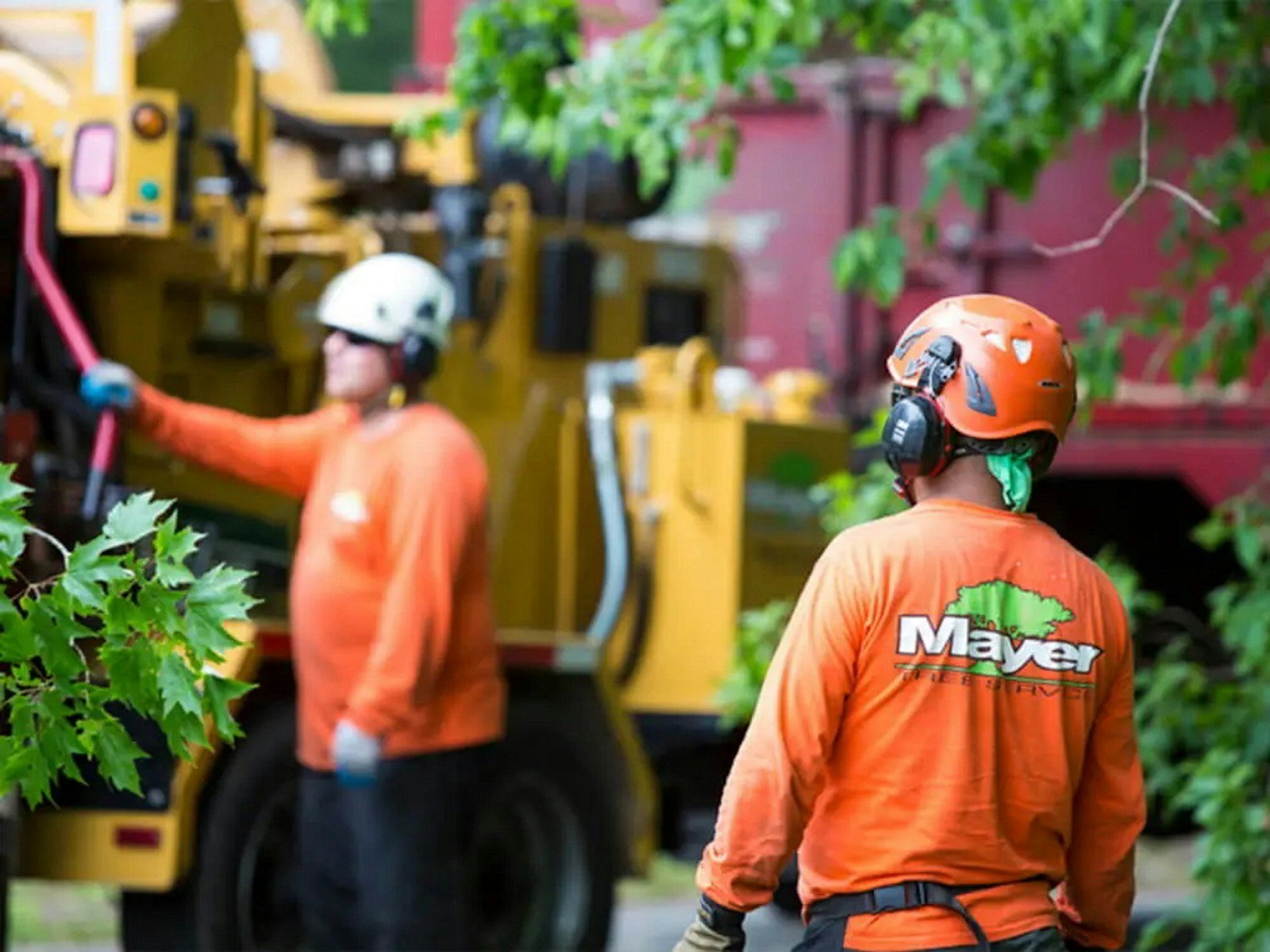
The four reasons sweetgums come out in Leon County
| Reason | What it actually looks like |
|---|---|
| Gumballs | Thousands of spiked pods every fall, year after year, across your lawn and the neighbor’s. The most common reason by a wide margin. |
| Surface roots | Sweetgum sends thick roots along the surface, especially in the compacted clay north of the Cody Scarp. They lift patios, crack driveways, and buckle walkways. |
| Real structural risk | Less common on this species, but a sweetgum with a hollow trunk, a fresh lean, or major storm damage over the roof is a hazard tree like any other. |
| The yard changed | Pool going in, garage addition, new drainage, or a full landscape redesign — and the sweetgum is standing right where the plan goes. |
Worth saying plainly: a healthy sweetgum that is not interfering with anything is a fine tree to keep. A good arborist will tell you that instead of selling you a removal. If yours is simply messy but sound, the honest conversation may be about clearance pruning over the driveway rather than taking it down — tree trimming is the cheaper path when it fits.
Why sweetgum removal usually scopes lighter than an oak
Compared with a heritage live oak of the same height, a sweetgum is a more straightforward tree to take down in a Tallahassee yard:
- It grows up, not out. The crown is narrower, so the drop corridor is narrower. Less rigging over the roof.
- Smaller laterals. No 40-foot horizontal limbs weighing as much as a car. Sections come down lighter.
- Predictable structure. Sweetgum has a central leader and a fairly regular branching habit, which makes the climb and the cut sequence easier to plan.
- Different regulatory weight. Live oak carries heritage status in this town. Sweetgum generally does not — though City §5-83 protected-size thresholds and Canopy Road Protection Zones still apply based on trunk diameter and location, not on how much anyone likes the species.
None of that makes it automatic. A 30-inch-diameter sweetgum leaning over a service drop in a fenced back yard off Miccosukee Road is still a rigging job that needs the right gear and the right insurance. Check the permit guide before you assume no paperwork is involved, and see City of Tallahassee tree removal rules if the tree is large or street-facing.
Sweetgum split, leaning, or dropping big limbs after a storm? That moves from a fall-cleanup problem to a priority-dispatch problem.
📞 Call Now — (858) 319-0022Vetted local pros — availability depends on independent provider schedules and demand.*How getting matched works
The part nobody warns you about: suckers
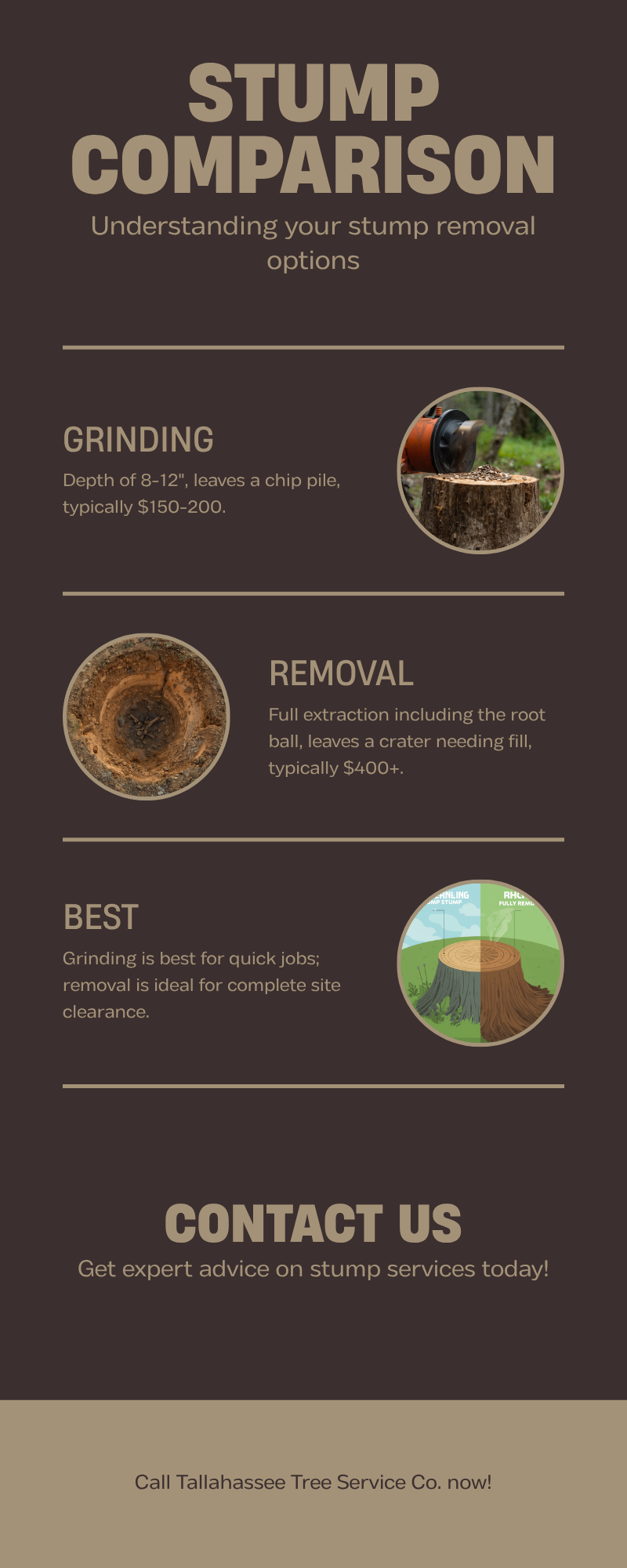
Here is the detail that separates a finished sweetgum job from a two-year annoyance. Sweetgum root systems sucker. Cut the tree, grind only the stump, and the surviving surface roots start throwing up little sweetgum shoots all over the lawn — sometimes twenty feet from where the trunk stood, for a year or two afterward.
The fix is in the scope, not in a follow-up visit. Grind the stump and the major surface roots in the same visit wherever access allows, then keep mowing the few shoots that still appear. Ask the pro directly whether surface-root grinding is included in the quote, because on a sweetgum it is the difference between done and not done. The stump grinding page covers depth, grindings, and backfill in detail.
What drives the scope of a sweetgum removal
| Factor | Why it matters here |
|---|---|
| Trunk diameter | Under 12 inches is a short job. Past 20 inches the wood volume, the haul-out, and often the permit question all change. |
| Height and drop corridor | A clear lane means a controlled fell. No lane means sectioning down from the climb. |
| Structures and lines | Anything over a roof, a fence, or a service drop gets rigged and lowered rather than dropped. |
| Stump + surface roots | Stump only, or stump plus the root runs that lift your patio? Big difference in machine time. |
| Hardscape damage | Roots under a slab or a driveway limit how close the grinder can safely work. |
| Access | Back yard behind a narrow gate means the wood walks out by hand or over a mat path. |
| Debris | Chipped on site, hauled off, or left stacked for firewood — each is a different day. |
Typical local-market ranges are laid out on the Tallahassee tree removal cost page — those are market ranges, not our prices, and the pro you are matched with gives the binding written quote after seeing the tree. Do not expect a wood-value credit: sweetgum is stringy, hard to split, and holds water, so it is mediocre firewood and there is rarely a market for it.
Before you call — how to describe it
- Trunk size. Wrap a tape around the trunk at chest height, or just tell them “about as thick as a trash can” — that alone tells the pro whether a permit question is coming.
- What is under it. Roof, driveway, pool cage, fence, power drop, the neighbor’s shed.
- What you want gone. Tree only, tree plus stump, or tree plus stump plus the roots that are lifting the patio.
- Access. Can a truck and a chipper get within thirty feet of the tree, or is everything coming through a side gate?
Frequently asked questions
Why are the gumballs such a problem?
A mature sweetgum drops thousands of spiked, woody seed pods each fall. They roll underfoot, jam mower decks, hurt bare feet, and are miserable to rake because more land the next day. In Tallahassee they usually start dropping in November and keep going into winter. It is the number-one reason this species comes out.
Will the roots keep sending up shoots after the tree is gone?
They can, for a year or two, if only the stump is ground. Sweetgum suckers from surviving surface roots. Grinding the stump plus the major surface roots in the same visit cuts that down sharply; mowing handles whatever still comes up. Ask whether surface-root grinding is included when you get the written quote.
Do I need a permit to remove a sweetgum in Tallahassee?
It depends on trunk diameter and where the tree sits. City of Tallahassee §5-83 protects trees above certain size thresholds, and Canopy Road Protection Zones and Leon County Chapter 10 rules add their own requirements. A documented hazard tree can qualify under Florida Statute 163.045. The pro you are matched with checks it before any cutting.
How big do sweetgums get here?
Commonly 60 to 100 feet tall with a trunk 18 to 36 inches across on an older Tallahassee lot. Because they grow upright rather than spreading, a tall sweetgum often takes a narrower drop corridor than an oak of the same height.
Is sweetgum any good as firewood?
It is mediocre. The grain is interlocked so it is stubborn to split, it holds a lot of water green, and it wants a full year of seasoning. Most Leon County homeowners have the wood chipped and hauled rather than stacking it.
Can I remove it just because of the mess, even though it is healthy?
Yes, subject to the permit rules for its size and location. A tired homeowner is a legitimate reason. A good arborist will tell you the tree is sound — and then take it down anyway if that is what you want and the ordinance allows it.
Related Tallahassee tree services
Tree Removal
Stump Grinding
Tree Cutting
Tree Removal Cost
Tallahassee Tree Permit Guide
City Tree Removal Rules
Tree Debris Removal
Dead Tree Removal
Last fall of raking gumballs
Call now and we’ll connect you with a vetted, insured Tallahassee-area tree pro. Free to use, no obligation, no sign-up.
📞 Call Now — (858) 319-0022Tallahassee Tree Service is a free referral service. Tallahassee Tree Service is not a licensed tree service provider and does not directly provide tree care services. All work is performed by independent, licensed and insured third-party providers in your area. Calls and form submissions placed through this site may be connected with a participating provider, and you may be contacted by that provider regarding your request. Same-day, emergency, and 24/7 availability are not guaranteed and depend on provider schedules, location, and demand. Service availability, pricing, licensing, and final response times are determined solely by the providers. It is the responsibility of the homeowner to verify that the hired contractor furnishes the necessary license and insurance required for the work being performed. All persons depicted in a photo or video are actors or models and not contractors listed on Tallahassee Tree Service.