Worried your tree is sick? Tree disease identification in Tallahassee starts with a trained eye, a soil test, and sometimes a lab sample. Call now and we’ll connect you with an ISA-certified local arborist who diagnoses the most common Leon County tree diseases — oak wilt, laurel wilt, hypoxylon canker, root rot, anthracnose — and prescribes a treatment plan before damage spreads.
What Is Tree Disease Identification?
Tree disease identification is a diagnostic process: visual inspection, history-taking, soil/site evaluation, and where needed, lab analysis. A certified arborist looks at canopy density and color, leaf shape and edge condition, bark for cankers and bleeds, root flare for fungal fruiting bodies, and the surrounding site for irrigation, compaction, or recent construction damage that could have triggered decline.
Many “diseases” are actually abiotic — caused by drought, soil compaction, herbicide drift, or root damage — not a pathogen. Misdiagnosis leads to wasted fungicide applications that mask the real cause. Accurate identification saves your tree and your money.
Storm damage or a tree on your house? Call now.
Stay out of rooms under the tree and keep clear of downed lines — report those to the power company first. Then call and we’ll connect you with a local tree crew that handles storm work.
📞 Call (858) 319-0022Free 24/7 dispatch line · availability varies by storm volume
When You Need a Disease Inspection
Schedule an inspection when you notice:
- Sudden wilting or browning in part or all of the canopy
- Yellow leaves with green veins (chlorosis) or unusual leaf color patterns
- Bark cankers, oozing, or bleeding (“slime flux”)
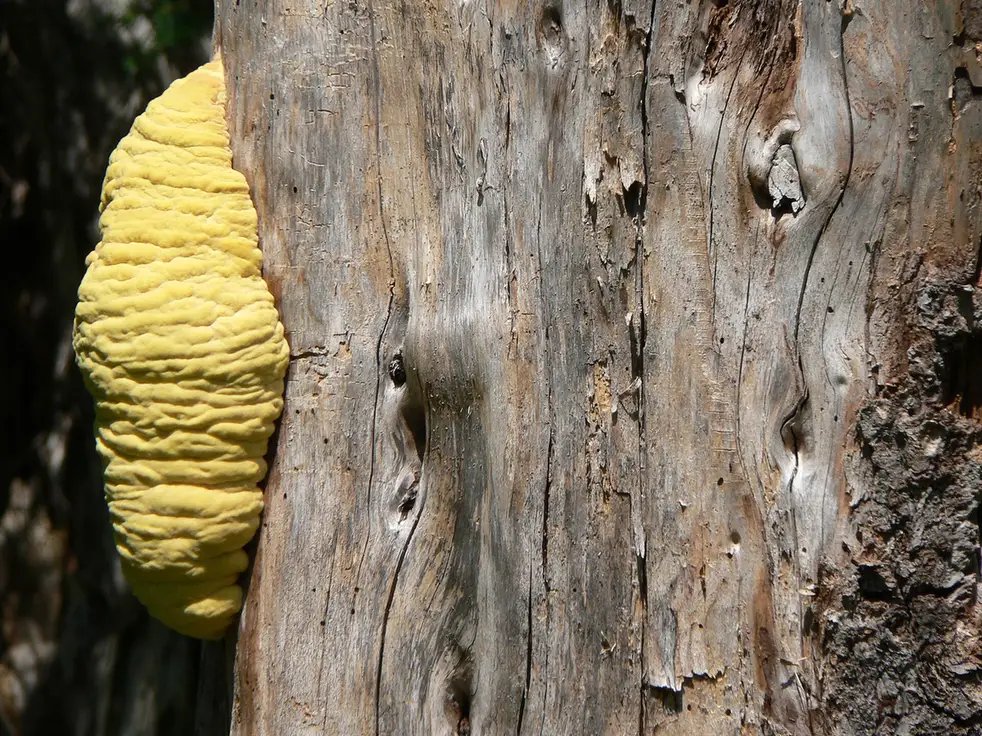
- Mushrooms or conks growing from the trunk or root flare
- Premature leaf drop in summer
- Dieback that progresses from the branch tips inward
- A tree near another that was recently diagnosed with a transmissible disease (oak wilt, laurel wilt)
Time matters with vascular wilts like laurel wilt — once symptoms appear, the tree may be unsavable within 6-12 weeks. Early identification opens treatment options that don’t exist later.
What the Disease Identification Process Typically Covers
- History interview — when did symptoms start, recent construction, irrigation changes, fertilizer or herbicide applications, nearby tree losses.
- Visual inspection — full canopy from multiple angles, trunk and branch assessment, root flare excavation if needed.
- Soil evaluation — drainage, compaction, pH, and depth of mulch around the trunk.
- Sample collection — when warranted, the arborist takes leaf, branch, or root samples for the UF plant disease diagnostic lab or a private mycology partner.
- Diagnosis and prognosis — written report with the identified disease (or rule-outs), treatment options, and survival odds.
- Treatment plan — fungicide injection, cultural changes, structural pruning, removal recommendation, or quarantine of adjacent trees.
Tallahassee-Specific Tree Diseases
Leon County’s climate creates a specific disease load. The most common diagnoses local arborists make include:
- Laurel wilt — fatal vascular disease spread by the redbay ambrosia beetle, devastating to redbay, swampbay, sassafras, and avocado. Now confirmed in Tallahassee.
- Oak wilt — vascular wilt fatal to red-oak group (water oak, laurel oak, Shumard oak). Live oaks are more resistant but not immune.
- Hypoxylon canker — opportunistic fungus that finishes off drought- or construction-stressed oaks. Common after the 2018 and 2024 hurricane seasons.
- Brown root rot (Phellinus noxius) — soil-borne root pathogen attacking oaks and magnolias; common in Tallahassee landscapes.
- Anthracnose — leaf-spotting fungus on dogwood, sycamore, and hickory; usually cosmetic but can cause defoliation in wet springs.
- Sooty mold on crepe myrtle — secondary to crepe myrtle bark scale infestation; cosmetic but indicates an insect problem to treat.
- Ganoderma butt rot — common in sabal palms and oaks; the white-shelf conk at the base is a removal trigger.
Climate change is shifting disease pressure in our area — laurel wilt and crepe myrtle bark scale were not on the radar in Tallahassee a decade ago, and both are now routine diagnoses.
What Drives Tree Disease Diagnosis Cost in Tallahassee
- On-site disease inspection (1-3 trees) — a site visit plus the arborist’s diagnostic time; most of the cost is the trip, so additional trees on the same visit cost far less each
- Detailed report with treatment plan — written report time on top of the inspection; longer if it has to stand up to an insurer or an HOA
- Lab sample collection and submission — sterile sampling and shipping time, plus whatever the diagnostic lab charges for the assay
- Resistograph (internal decay testing) — instrument time, and how many drill paths are needed to map the decay column
- Annual monitoring program (legacy specimens) — number of trees on the schedule and how many visits a year; shared mobilization keeps the per-tree cost down
- Fungicide injection (oak wilt prevention) — product volume scales with trunk diameter, and injection points scale with it too
Investing in a correct diagnosis often saves significant cost in unnecessary removal or wasted treatment.
Frequently Asked Questions
What’s the deadliest tree disease in Tallahassee?
Laurel wilt is fatal to redbay, swampbay, and sassafras within weeks of symptom onset. Oak wilt is the highest-impact disease for our urban canopy because of how easily it spreads through root grafts.
Can a sick tree be saved?
Often yes — if caught early. Late-stage vascular wilts, advanced root rot, and trees with 50%+ canopy loss are rarely savable.
Are tree diseases contagious to other trees?
Some are. Oak wilt spreads through interconnected root systems and by sap beetles. Laurel wilt is spread by ambrosia beetles. Hypoxylon canker is opportunistic and not contagious in the traditional sense.
Should I treat with fungicide?
Only after diagnosis. Fungicide applied to the wrong disease is wasted money and can harm beneficial soil biology.
Will pruning sick branches help?
Sometimes yes, often no. With oak wilt and other vascular pathogens, pruning during the wrong season actually spreads the disease. Always ask before cutting.
Do the arborists you connect me with treat sabal palm diseases?
Yes — the arborists in our network diagnose ganoderma butt rot, lethal bronzing (16SrIV-D phytoplasma), and bud rot in Tallahassee palms.
What if my neighbor’s tree has a contagious disease?
The arborist you’re matched with can inspect your trees for root-graft transmission and recommend trenching or systemic protective injections.
How do I prevent tree diseases?
Proper planting depth, avoiding root-zone compaction, correct mulching, and not pruning oaks April through July (oak wilt vector season) are the four highest-impact preventive measures.
Concerned about a tree on your property? Call now on our homepage for a same-week inspection with a licensed, insured local pro.