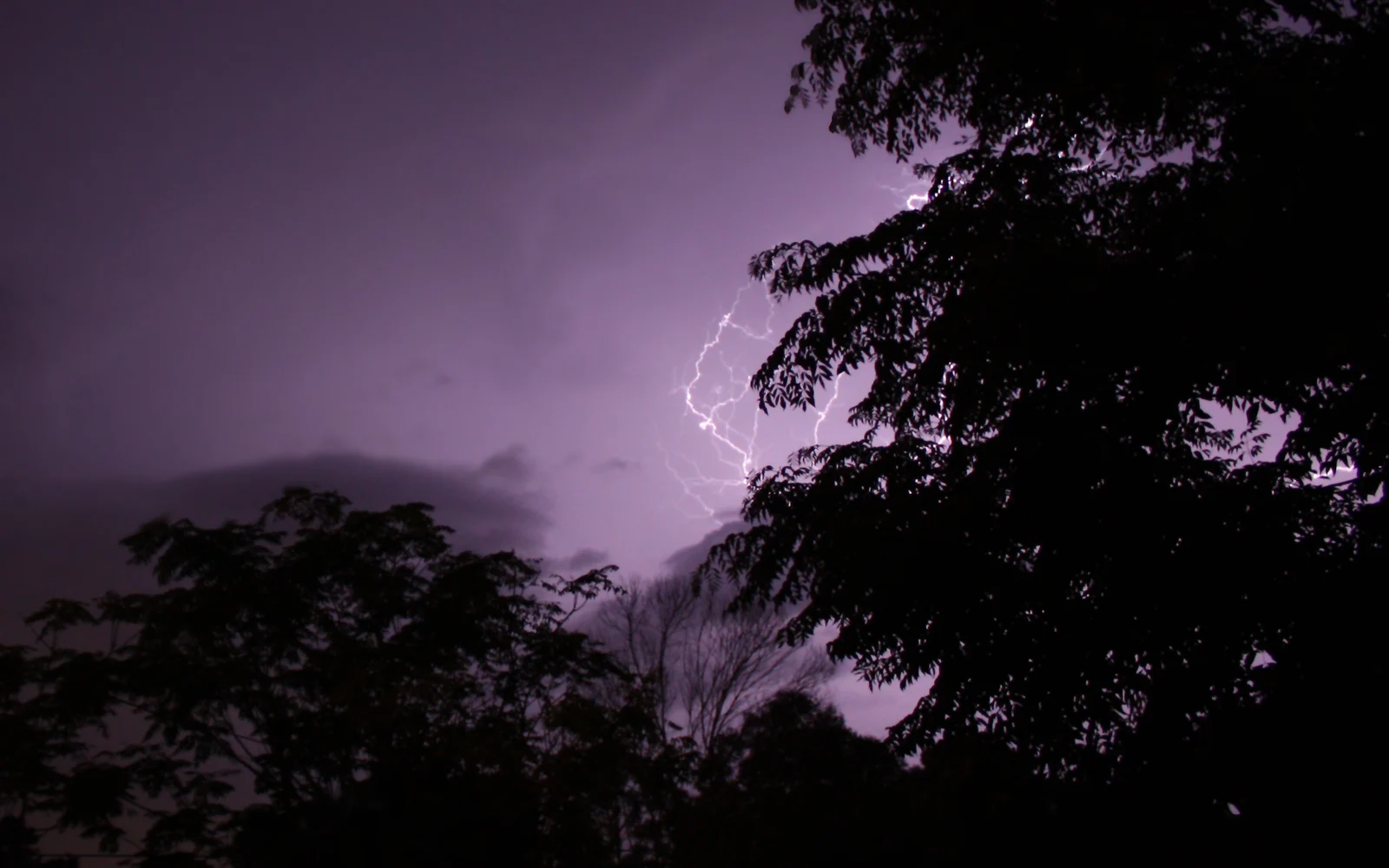
A lightning strike on a Tallahassee tree creates an immediate hazard and a longer-term structural unknown. Call now and we’ll connect you with an ISA-certified local arborist who can assess strike damage, document it for insurance, and safely remove trees that can’t be saved. Dispatch coordination across Leon County.
What Lightning Damaged Tree Removal Involves
Lightning damaged tree removal is the staged process of evaluating a strike-affected tree and either removing it whole, removing portions, or stabilizing it with bracing. A direct strike can vaporize sap inside the cambium, blow off bark in vertical strips, fracture the trunk internally, and kill the root system without obvious surface signs. The visible damage often understates the actual structural compromise.
The North Florida storm corridor produces a steady stream of lightning-strike trees every summer. Pine, oak, and tall isolated hardwoods are the most commonly struck. A thorough strike inspection typically includes bark-loss mapping, sounding the trunk for hollows, evaluating root flare for splits, and — when warranted — resistograph testing to measure internal decay or fracture.
Storm damage or a tree on your house? Call now.
Stay out of rooms under the tree and keep clear of downed lines — report those to the power company first. Then call and we’ll connect you with a local tree crew that handles storm work.
📞 Call (858) 319-0022Free 24/7 dispatch line · availability varies by storm volume
When You Need Lightning Tree Removal
Get an inspection any time a tree on your property has been struck, even if it appears outwardly intact. Specific signs that removal (rather than monitoring) is likely needed include:
- A spiral or vertical bark strip running more than 30% of the trunk circumference
- Visible trunk fracture or “explosion” damage at the strike point
- Sudden canopy wilt or leaf-drop within 7-14 days of the strike
- Root flare splitting or upheaval
- A strike on a tree already leaning toward a structure
- Tall isolated pines, which rarely survive direct strikes
Trees that survive a strike still die at a notably higher rate within the following two years, so even surviving specimens often warrant a tree health inspection within the first growing season. For a broader look at strike signs and the delayed-death timeline, see our guide on telling if a tree was struck by lightning.
How a Lightning Tree Removal Typically Proceeds
- Strike assessment — the arborist inspects the entire tree and photographs the damage, often producing a written report for your insurance file.
- Insurance documentation — damage angles, measurements, and a removal estimate formatted for adjuster review. See our insurance and tree damage guide for what carriers typically require.
- Hazard staging — if the tree poses an immediate threat to a structure, the most dangerous portions are stabilized or section-removed first.
- Removal — climbing, crane-assist, or rope-and-rigging depending on lean, target proximity, and damage location.
- Stump grinding — often available as a follow-up, quoted separately — see stump grinding vs. removal.
- Site cleanup — debris haul-off, ground rake, and replacement-planting consultation on request.
Tallahassee-Specific Lightning Factors
Leon County sits in one of the most lightning-active corridors in North America — the Central Florida lightning belt extends well into our region during the May-September thunderstorm season, with strike clusters during isolated afternoon cells and during the leading edge of tropical systems.
Local species respond to strikes differently. Longleaf pine — Tallahassee’s signature upland tree — is highly vulnerable; even glancing strikes often kill it within a season. Live oak is the most strike-resistant of the common local species, frequently surviving direct hits with localized bark damage that can heal. Laurel oak and water oak fall between, and both are prone to post-strike fungal invasion through the wound.
Properties with metal roofs, lightning rods, or tall radio antennas can see “side flash” damage where current arcs from the protected structure to a nearby tree. These cases are particularly hard to read because the damage may run underground through the root system rather than down the trunk.
What Lightning Tree Removal Costs
There’s no flat rate. A strike inspection with written report, small/medium/large tree removal, and stump grinding all scope differently by size, access, and equipment needed — the arborist you’re matched with provides a written quote before work begins. See our emergency tree removal cost guide for the factors that typically drive price.
Insurance often covers lightning tree removal under “Other Structures” or “Trees & Shrubs” rider coverage. The pro you’re matched with can provide documentation for your adjuster.
Frequently Asked Questions
How can I tell if my tree was struck by lightning?
Look for a vertical bark strip torn off the trunk, scorched bark, fresh splits, fragments of bark or wood thrown 20-50 feet, or sudden wilt of the upper canopy within two weeks of a storm.
Will a lightning-struck tree survive?
Some do. Pines rarely survive a direct strike. Live oaks survive at high rates when the bark damage is limited to one strip and the root flare is intact. A written assessment from the arborist you’re matched with can give you survival odds in plain language.
Is lightning tree damage covered by homeowners insurance?
Usually yes when the tree falls on a covered structure, and often yes when the tree itself is destroyed under a “Trees, Shrubs & Other Plants” provision. The pro you’re matched with can document strikes specifically for insurance use.
How soon after a strike should the tree be removed?
If the tree is leaning toward a house or a roadway, get it looked at right away. Otherwise, arborists often recommend a 14-30 day observation window to see whether the tree is going to die or stabilize before committing to removal.
Is emergency lightning tree response available?
Dispatch coordination is available around the clock across Leon County; actual on-site response depends on the independent provider’s schedule and demand, especially during active storm season.
Can a lightning-struck tree be saved with cabling?
Sometimes. If the strike fractured a single major limb but the trunk is intact, cabling and bracing can extend the tree’s safe life by years. This is only recommended when the trunk is sound.
How dangerous is a struck tree left standing?
Potentially very. Internal fracture and root death can cause sudden failure with no warning, often months after the strike. Hidden damage is the most dangerous kind.
Can lightning-damaged trees be replaced?
Yes — many arborists in our network also handle replanting with a species better suited to your site, including strike-resistant options if your property is in a high-risk corridor. See tree planting service.
Strike on your property? Call now on our homepage and we’ll connect you with a licensed local arborist for a priority inspection.
Tallahassee Tree Service Co. is a free dispatch and referral service. We are not a tree-service contractor and do not perform tree work ourselves. When you call, we connect you with an independent, licensed and insured local tree-care professional who carries their own license and insurance and provides any binding quote. Dispatch coordination is available around the clock; actual on-site response depends on the independent professional’s schedule, crew availability, and demand, and is not guaranteed.