Tallahassee sits inside one of the most lightning-active corridors in the entire United States. Between June and September, the Big Bend’s afternoon thunderstorm pattern rolls in almost on schedule — hot, humid air builds through the morning, and by mid-afternoon it collapses into fast-moving cells that throw more lightning per square mile than almost anywhere else in the country. With that much lightning overhead, it’s not unusual for a homeowner to step outside after a storm and wonder whether the oak or pine in the yard just took a direct hit.
The tricky part is that lightning damage doesn’t always look dramatic. Sometimes a tree is obviously blown apart. More often, the signs are subtle, and the real danger — a structural failure that shows up weeks later — is invisible on the day of the storm. Here’s what to look for, why some trees pull through and others don’t, and what to check before deciding whether a tree needs a professional look.
How to Tell If a Tree Was Struck by Lightning
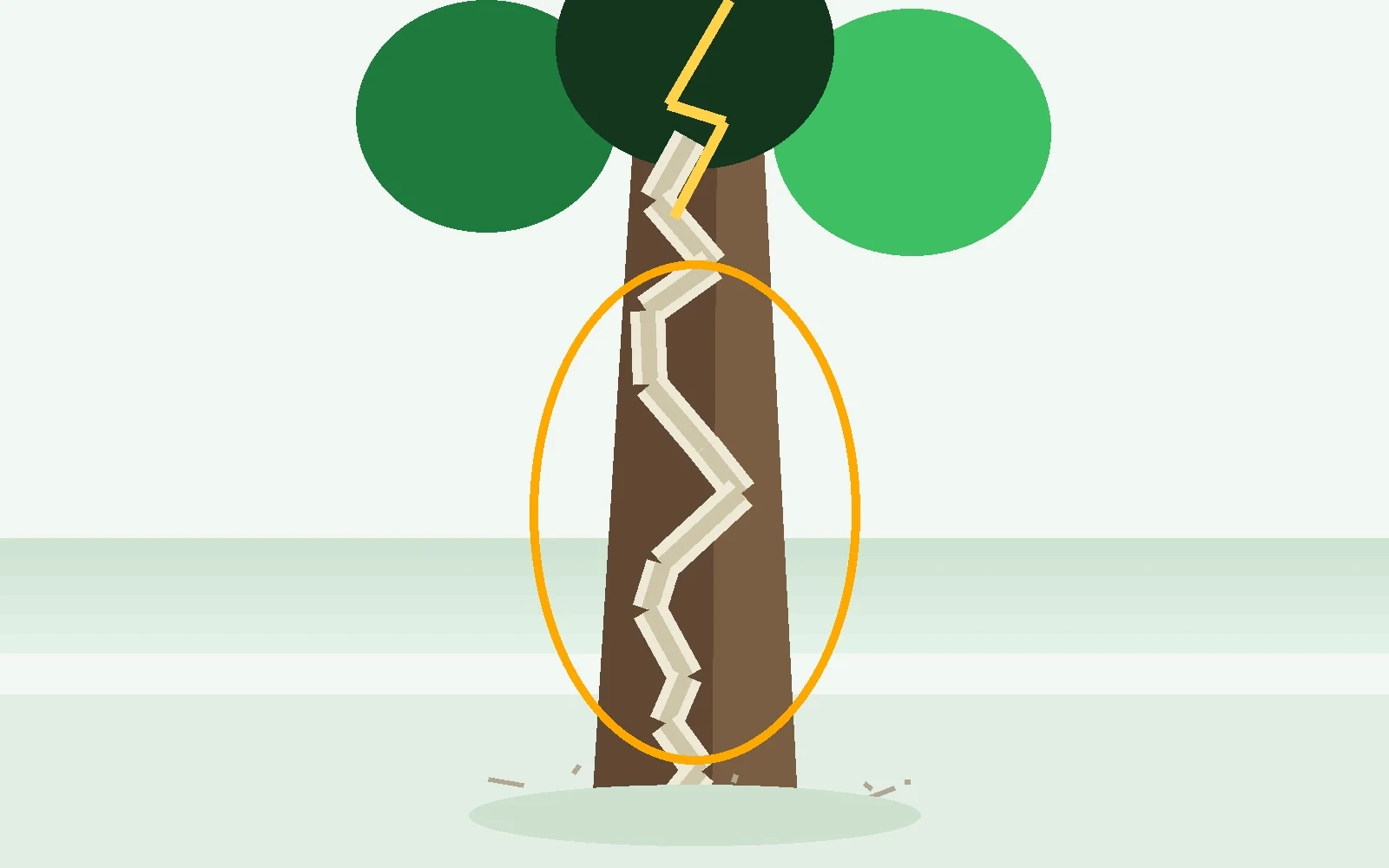
A direct or near-direct strike sends an enormous electrical current through the wettest, most conductive path in the tree — usually the layer just under the bark. That current can boil the sap almost instantly, and the resulting steam pressure is what causes most of the visible damage. Signs to check for include:
- A vertical groove or crack running down the trunk. This is the most recognizable strike signature — a strip of bark blown off or split open in a line from the canopy toward the ground, sometimes spiraling around the trunk rather than running straight.
- Bark blown off in patches or long strips, sometimes with wood fragments scattered on the ground nearby, occasionally 20 feet or more from the base.
- A scorched or blackened streak on the bark, though this is less common in humid climates than in dry ones.
- A split or “exploded” section of trunk, where steam pressure fractured the wood outward rather than just stripping bark.
- Browning or wilting canopy that shows up days to weeks later rather than immediately — this is one of the most important signs to watch for, because a tree can look completely normal on the day of the strike.
- Soil disturbance or cracking at the base, which can indicate the current traveled down through the root system.
If you saw or heard a strike hit close to your property, or you find any combination of these signs after a storm, it’s worth documenting with photos and keeping an eye on the tree over the following weeks. For a broader rundown of trunk cracks, canopy thinning, and other red flags that apply beyond lightning specifically, our guide to the signs of a hazardous or dying tree in a Tallahassee yard covers the full list.
Storm damage or a tree on your house? Call now.
Stay out of rooms under the tree and keep clear of downed lines — report those to the power company first. Then call and we’ll connect you with a local tree crew that handles storm work.
📞 Call (858) 319-0022Free 24/7 dispatch line · availability varies by storm volume
Why Some Trees Survive a Strike and Others Don’t
Not every struck tree dies, and species plays a big role in the outcome. In the Tallahassee area, pines and oaks are the two most common lightning targets simply because they tend to be the tallest trees on a property, and height is the single biggest factor in which tree in a yard gets hit.
Pines tend to fare worse. Their resin-rich wood and single central trunk mean a strike often runs the full height of the tree with less opportunity to dissipate, and the vascular damage can be severe enough that the tree can’t move water and nutrients normally afterward. A pine that takes a serious hit frequently declines within a season.
Live oaks and other broad-canopied hardwoods sometimes handle a strike better, particularly if the tree is large, healthy, and the current has multiple trunk and root pathways to spread through. That said, “handles it better” doesn’t mean “unaffected” — a strike can still kill significant portions of the cambium layer (the thin growing tissue just under the bark) even when the tree ultimately survives, and any tree with a compromised cambium layer around a large percentage of its circumference is at serious risk regardless of species.
Overall tree health before the strike matters too. A tree that was already stressed, drought-weakened, or fighting root rot has far less reserve capacity to recover from the added trauma of a strike than a vigorous, well-established tree.
The Delayed-Death Risk — Why “It Looks Fine” Isn’t the Final Answer
This is the detail most homeowners don’t expect: a lightning-struck tree can look essentially normal for two to six weeks and then decline rapidly, or in some cases take a full growing season or longer to show the damage was fatal.
The reason is that a strike often kills tissue gradually rather than all at once. If the current damaged the phloem and cambium (the tissue layers responsible for moving sugars and supporting new growth) without immediately destroying them, the tree can continue pulling water up through whatever vascular tissue survived for a while — sometimes long enough to leaf out normally that spring — before the damaged tissue finally dies back and the canopy starts browning from the top down or in patches.
This delayed timeline is exactly why a single glance right after a storm isn’t enough. A tree can pass a same-day visual check and still be a tree that’s going to fail structurally, or die outright, months later. Watching the canopy through at least one full growing season after a suspected strike is the only reliable way to know where a tree actually landed.
Why a Lightning-Damaged Tree Near a House Is a Real Safety Concern
The danger with a struck tree isn’t just that it might eventually die — it’s that the internal damage can create a structural weak point long before the tree looks obviously dead. A trunk with a vertical crack or a section of dead cambium is weaker than an intact trunk, and that weakness doesn’t announce itself. Wind load, added rain-soaked weight, or simple time can be enough to bring down a large limb or the entire tree with very little additional warning.
That risk is obviously higher when the tree is close enough to reach a roof, a driveway, a fence line, or anywhere people or cars regularly are. A pine or oak that took a hit and sits within falling distance of a structure is a different situation than the same tree standing alone in an open field — the physical damage might be identical, but the consequences of a later failure are not.
If a struck tree is leaning, if the crack runs deep enough that you can see into the trunk, or if large limbs came down during the same storm that likely caused the strike, that’s a tree worth having looked at sooner rather than waiting out the full observation period. Our guide on the broader category of what tree removal actually costs in Tallahassee walks through how proximity to a structure and tree condition affect that kind of job, in case a struck tree ultimately needs to come down.
What to Check Right After a Storm
Before deciding whether a tree needs a professional assessment, a basic walk-around can tell you a lot:
1. Look for the obvious signs first — a vertical crack, missing bark, wood debris on the ground, or a section of trunk that looks split open. 2. Check the base and surrounding soil for cracking, heaving, or a ring of disturbed ground, which can suggest the current traveled through the root system. 3. Note the tree’s position relative to your house, driveway, or anywhere people spend time. Distance changes how urgently it’s worth acting. 4. Take dated photos so you have a reference point to compare the canopy against in a few weeks. 5. Watch the canopy over the following weeks, not just the day after the storm — early wilting, patchy browning, or leaf drop out of season are the signs that show up late. 6. Don’t assume “no visible damage” means “no damage.” Side-flash and root-path strikes can leave the trunk looking completely normal while doing real internal harm.
A tree that shows a deep crack, sits within striking distance of a structure, or starts browning in the weeks after a storm is a reasonable candidate for a professional look before you decide what to do next — availability for that kind of visit depends on the individual provider’s schedule and current storm-season demand, so it’s worth calling as soon as you notice a concern rather than waiting.
FAQ
How can I tell if my tree was struck by lightning? Look for a vertical crack or groove running down the trunk, bark blown off in strips or patches, wood fragments on the ground nearby, or canopy browning that shows up days to weeks after a storm rather than immediately.
Will a tree struck by lightning always die? No. Some trees, especially large, healthy hardwoods with multiple root and trunk pathways, survive with localized damage. Pines and already-stressed trees have a harder time recovering. Species, overall health, and how much of the trunk’s cambium layer was affected all play a role.
How long after a lightning strike can a tree die? Anywhere from a couple of weeks to more than a year. Because a strike can damage tissue gradually rather than all at once, a tree can look normal through one growing season and then decline in the next.
Is a lightning-struck tree dangerous even if it looks fine? Yes, potentially. Internal cracking and dead cambium tissue can weaken a trunk’s structural integrity well before the canopy shows any visible decline, which is part of why proximity to a house or driveway matters so much in deciding how quickly to have it checked.
What’s the difference between a lightning strike and normal storm damage? Storm wind and rain typically cause broken limbs, uprooting, or leaning from mechanical stress. A lightning strike leaves a more specific signature — a vertical trunk groove, blown bark, or scorching — along with potential internal damage that isn’t caused by wind alone.
Should I call someone right after a storm or wait to see what happens? If the tree is leaning, has a deep trunk crack, or sits close enough to reach your house or driveway, it’s worth getting a professional opinion sooner rather than later. If the damage looks minor and the tree is well away from anything it could hit, watching the canopy over the following weeks is a reasonable approach before deciding whether an assessment is needed.
—
If a tree on your property took a hit this storm season, call now on our homepage to get connected to a licensed Tallahassee tree service provider who can assess strike damage and talk through next steps.