In Wakulla County, pruning is mostly about wind and lightning. Crawfordville’s pines and sandy soil make for shallow-rooted, top-heavy trees that throw or snap in summer storms unless the canopy is thinned and the deadwood is gone. Here’s how storm-smart pruning works along the 319 corridor and how to get matched with a licensed Crawfordville crew.
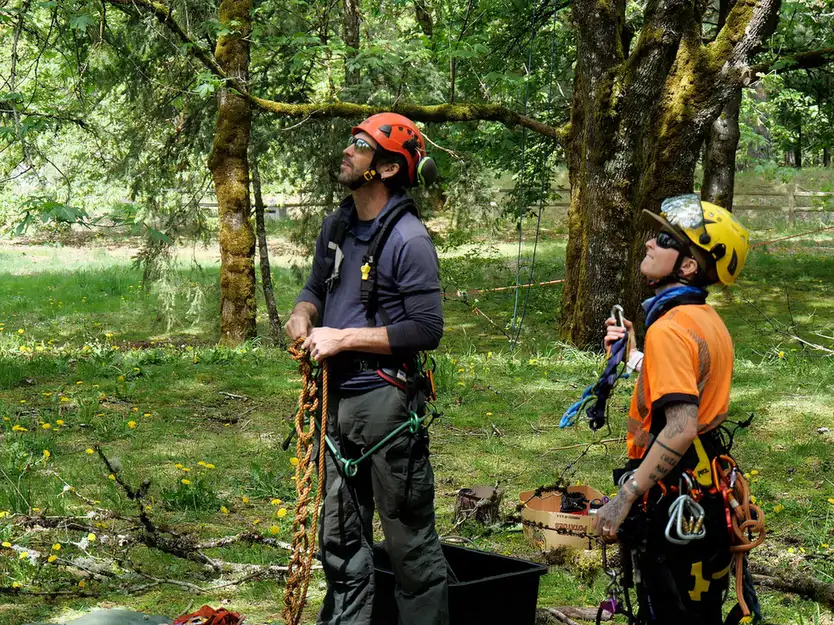
What does storm-smart pruning mean in Crawfordville?
On Wakulla County’s flat, sandy terrain the priority is thinning dense canopy and stripping deadwood out of the tall, lightning-prone pines before wind season. Call now to get matched with a licensed local crew, or see how professional tree trimming is scoped across the region.
Storm damage or a tree on your house? Call now.
Stay out of rooms under the tree and keep clear of downed lines — report those to the power company first. Then call and we’ll connect you with a local tree crew that handles storm work.
📞 Call (858) 319-0022Free 24/7 dispatch line · availability varies by storm volume
Get matched with a Crawfordville pruning crew
Call now and we’ll connect you with a licensed, insured Wakulla County crew for a no-obligation pruning quote.
Why Wakulla pruning is storm pruning
Crawfordville’s tree problem is leverage. Tall slash and longleaf pines grow in sandy soil that gives roots little to grip, so a dense crown acts as a sail and either snaps the trunk or levers the whole tree over in a thunderstorm or tropical system. The fix isn’t topping — it’s selective thinning that lets wind pass through the canopy, plus removing deadwood and the cracked or hanging limbs that come down first. On live oaks, end-weight reduction on long laterals keeps them from splitting over the house. Pruned early, a tree rides out the storm; pruned wrong or not at all, it becomes the limb on your roof. This is pruning tuned for the coast’s wind exposure.
The Crawfordville pruning list
- Slash & longleaf pine — thin and deadwood before storm season; pines rarely need much else but are the trees most likely to fail.
- Live oak — structural reduction on heavy laterals; the keeper trees worth investing in.
- Cabbage palm — remove only dead, hanging fronds and seed stalks; over-pruned ‘hurricane cuts’ weaken palms, contrary to the myth.
- Laurel & water oak — fast and failure-prone; aggressive deadwooding and honest watch for removal.
- Sweetgum — end-weight reduction and deadwood to cut down on dropped limbs and gumballs.
Lightning, not just wind
The Big Bend is one of the most lightning-struck regions in the country, and Crawfordville’s tall isolated pines are frequent targets. Pruning won’t stop a strike, but a thinned, deadwood-free pine is less likely to drop a heavy dead limb between storms, and a crew can spot a previously struck or beetle-stressed pine that’s quietly become a hazard. If a tree is already failing, that’s a removal conversation, and a fallen or split tree after hours is an emergency.
When to prune on the coast
Do the storm-readiness pass before hurricane season ramps — late spring into early summer — so the canopy is thinned before the systems arrive. Structural oak work is best in the cooler dormant months. Palms get a light, conservative cleanup, not a buzz cut. A local crew sequences it so you’re not paying to remove healthy green fronds or live oak wood that the tree needs.
Crawfordville-area FAQs
Does thinning a pine really help it survive a storm?
Yes, within reason. Selective thinning lets wind pass through the canopy instead of pushing the whole crown like a sail, which lowers the chance of trunk snap or uprooting in sandy soil. It’s not a guarantee, but a thinned, deadwood-free pine fails far less often than a dense, neglected one.
Should I get a ‘hurricane cut’ on my cabbage palms?
No. Stripping a palm back to a few fronds, sometimes sold as a hurricane cut, actually weakens it and slows recovery. Healthy palms need their green fronds. A proper cleanup removes only dead and hanging fronds and seed stalks.
When should I prune before hurricane season in Wakulla?
Do the storm-readiness thinning and deadwood pass in late spring into early summer, before the active systems arrive. Structural oak pruning is better in the cooler dormant months, and any clearly hazardous limb can come out any time.
One of my pines was struck by lightning. Can it be pruned and saved?
Sometimes. A single strike doesn’t always kill a pine, but it can open the tree to beetles and decline. A crew can assess whether deadwood removal and monitoring is reasonable or whether the pine has become a hazard that should come down.
Do I need a permit to prune my own trees in Crawfordville?
Routine pruning of your own trees generally doesn’t require a permit. Permitting applies mainly to removing protected or large standing trees, and Wakulla County’s rules differ from the City of Tallahassee’s, so confirm locally before any removal.
Get storm-ready before the next system
Call now and tell us which trees concern you. We’ll match you with a licensed, insured Crawfordville crew for a no-obligation quote.
Serving Crawfordville, Medart, and Wakulla County, FL. Content reviewed June 2026. Tallahassee Tree Service connects homeowners with independent licensed tree professionals and does not perform tree work directly.