Tallahassee trees don’t fail randomly. Seven species do most of the falling. Call to be connected with a local arborist for a property walkthrough.
After twelve months of post-storm response across Leon, Wakulla, Gadsden, and Jefferson counties, the same species show up over and over on the call list. If you own one of the seven trees below, knowing what you own — and what to do about it — is the difference between a by quote pre-season tune-up and a by quote insurance claim.
1. Laurel oak (Quercus laurifolia) — by a wide margin
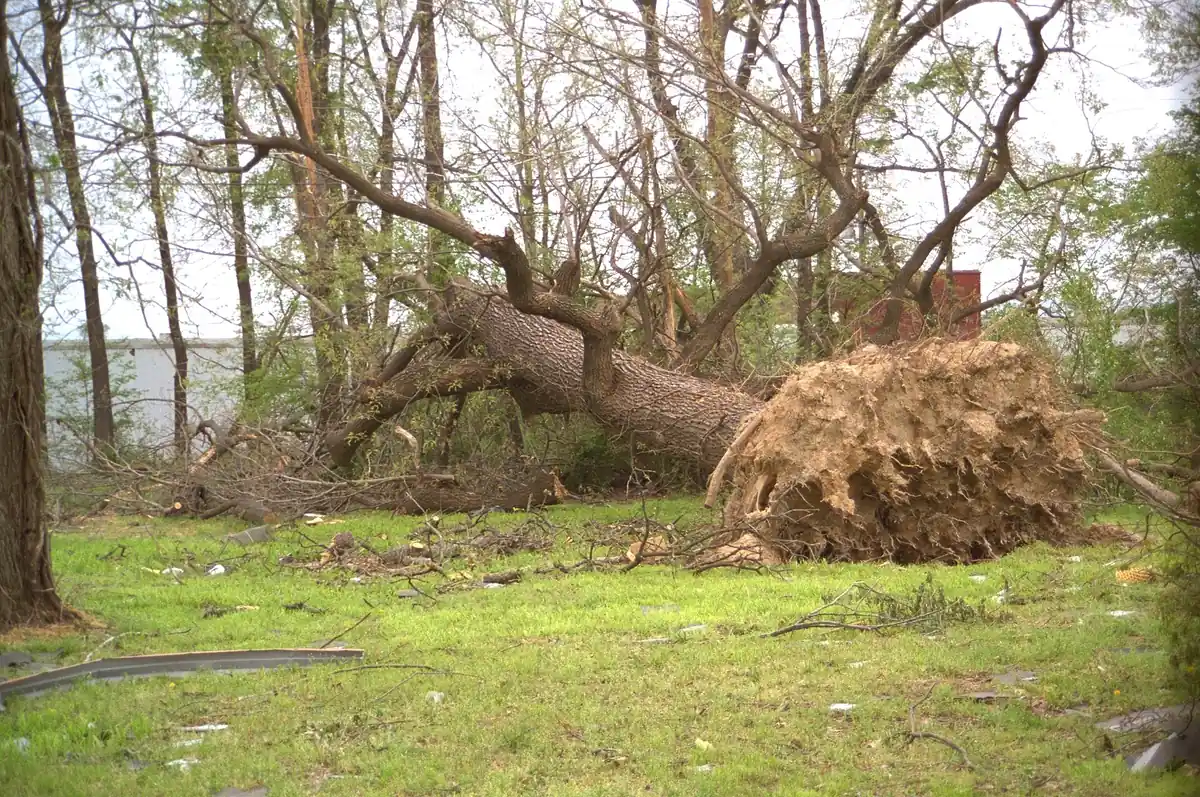
Laurel oaks were the suburban planting darling of the 1960s–80s. Fast-growing, attractive, cheap. They were planted by the thousands across Killearn, Betton Hills, Indianhead Acres, Lafayette Park, and most older Tallahassee subdivisions. The problem: their structural life expectancy is 60–80 years, and Tallahassee is now squarely inside that failure window. Hollow trunks, mushroom fruiting bodies at root flare, shallow root systems that lose grip in saturated soil, and codominant leaders splitting in high wind. See why Tallahassee laurel oaks are failing now.
Storm damage or a tree on your house? Call now.
Stay out of rooms under the tree and keep clear of downed lines — report those to the power company first. Then call and we’ll connect you with a local tree crew that handles storm work.
📞 Call (858) 319-0022Free 24/7 dispatch line · availability varies by storm volume
2. Water oak (Quercus nigra)
A close cousin to laurel oak with similar failure characteristics. Internal decay starting around year 35–40, less drought-tolerant than live oak, heavy spring leafing creates large wind sail, brittle wood compared to live oak. See water oak vs live oak.
3. Sand pine (Pinus clausa) — the lightning magnet
Native to the sandy uplands of Killearn Lakes, Bull Run, and the unincorporated northeast Tallahassee corridor. Brittle wood, lightning strike rate 3–5x higher than hardwoods, beetle vulnerability after lightning damage. See lightning-damaged tree recovery.
4. Loblolly and slash pine — the storm-day toppers
Tall, narrow crowns catch high wind. Long codominant trunks split under torque. Annosus root rot common on lakefront sites. Pre-season crown reduction can reduce wind load 15–25%.
5. Sweetgum (Liquidambar styraciflua) — limb-drop specialist
Sweetgums don’t usually fall whole, but they drop limbs faster and more often than any other Tallahassee species. Weak branch attachments (included bark), heavy seed-ball ornamentation, sap pockets causing sudden failure of healthy-looking limbs.
6. Bradford pear and ornamental pear — the wedding-day disaster
Universally regretted. Structural design flaw: tight-angle codominant leaders that split predictably around year 15–20. If you have one over 20 feet, remove proactively.
7. Mature pecan (Carya illinoinensis) — the heavy hitter
Beautiful, shade-giving, drops massive limbs without warning. Strict 3-year dead-wooding cycle. Crown balancing every 5–7 years. Pre-season walks every spring.
The pattern
Six of the seven are either past their structural life expectancy, planted in unsuitable conditions, or have known design flaws. The good news: a good arborist walk identifies which of yours is in which category, and the work to mitigate is always cheaper than the failure. Pre-season crown reduction on a marginal water oak is a scheduled half-day job you plan and budget for. The cleanup after the same tree falls on the house is an emergency call at storm-surge rates, plus an insurance claim, plus a deductible, plus weeks of disruption. If one of these species already came down on a parked vehicle, see what to do first when a tree falls on your car for the immediate steps and what your insurance actually covers.
Property walk — call to be connected with an ISA-certified local arborist
Related TTS Resources
This page is part of the TTS hurricane-season playbook. For the full season hub (30/14/3/1-day countdown, post-storm triage, and insurance claim mechanics) see the Tallahassee Hurricane Tree Prep Hub. For pricing on every Tallahassee tree service (removal, trimming, stump, emergency, arborist, crane, cabling), see the Tallahassee Tree Service Cost Guide.