A lightning strike can kill a tree outright, or leave it looking fine for weeks before it fails. In Tallahassee — one of the most lightning-prone regions in the country — knowing what to do in the first hours after a strike, and watching for the delayed-failure pattern, can protect both the tree and everything under it. Here’s what to do first.
What Lightning Actually Does to a Tree
Lightning superheats the moisture under the bark, which can blow off strips of bark, split the trunk, and cook the cambium — the living layer the tree needs to move water and nutrients. Damage can run the full length of the trunk and down into the roots, and much of it is internal and not visible from the ground.
Storm damage or a tree on your house? Call now.
Stay out of rooms under the tree and keep clear of downed lines — report those to the power company first. Then call and we’ll connect you with a local tree crew that handles storm work.
📞 Call (858) 319-0022Free 24/7 dispatch line · availability varies by storm volume
Tallahassee’s Lightning Frequency
North Florida sees frequent summer thunderstorms, and tall pines and the largest canopy oaks are the most common targets. If you have a dominant, isolated tall tree near the house, it is statistically more likely to take a strike — worth keeping in mind during the storm season.
What to Do in the First 48 Hours
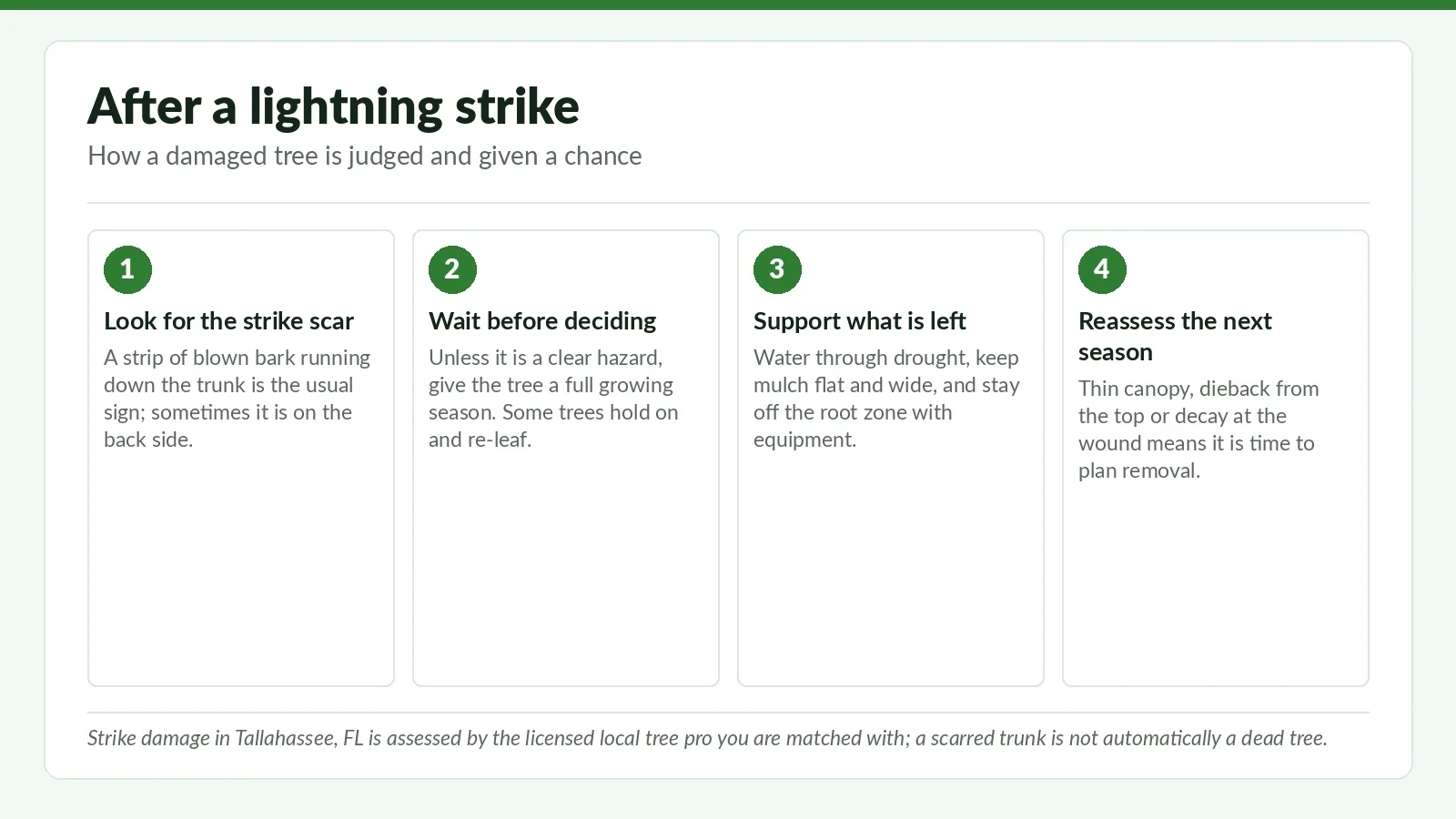
Keep people and vehicles away from the tree until it’s assessed — damaged limbs can drop without warning. Don’t prune or cut yet. Photograph the damage for insurance, note any bark blown off or cracks in the trunk, and get an ISA-certified arborist to evaluate it. Some lightning-struck trees recover; others are quietly failing, and only a trained assessment can tell the difference early.
The Delayed-Failure Pattern
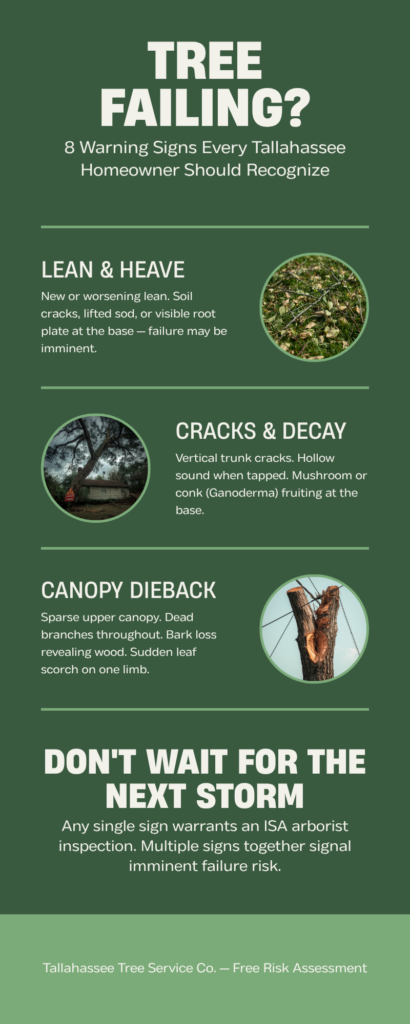
The dangerous trees are the ones that look survivable. Internal damage to the cambium and roots can take weeks to show as thinning canopy, dieback, or sudden limb drop. This is why a struck tree near a structure should be monitored by a professional even if it appears intact at first.
Save or Remove?
Whether a struck tree can be saved depends on how much of the cambium and root system survived, the species, and the tree’s position relative to targets. An arborist weighs the recovery odds against the risk and recommends monitoring, supportive care, or removal. For a hazardous or failing tree near the house, see dangerous tree removal and emergency tree service.
Tree struck by lightning? Get matched with a licensed Tallahassee arborist Call now code and our 24/7 dispatch line connects you with an ISA-certified, insured arborist in our network serving Tallahassee and Leon County. A real person answers — describe the tree and the damage and you’ll be routed to the right pro. Your quote is between you and the arborist. → Call now to get connected
Related TTS Resources
See lightning-damaged tree removal and the Tallahassee Hurricane Tree Prep Hub.
TallahasseeTreeService.co is a dispatch service. We connect callers with licensed Florida arborists. We are not a licensed tree service company. The disclaimer in our site footer and our 24/7 dispatch caveat apply to this page.