Have a dangerous tree on your property in Tallahassee? Leaning toward the house, dead, decayed at the base, or hung up after a storm — these are the trees that need a specialist, not a general handyman crew. Call now and we’ll connect you with an ISA-certified, insured local arborist who takes on hazardous removals that some general tree services decline.
What Is Dangerous Tree Removal?
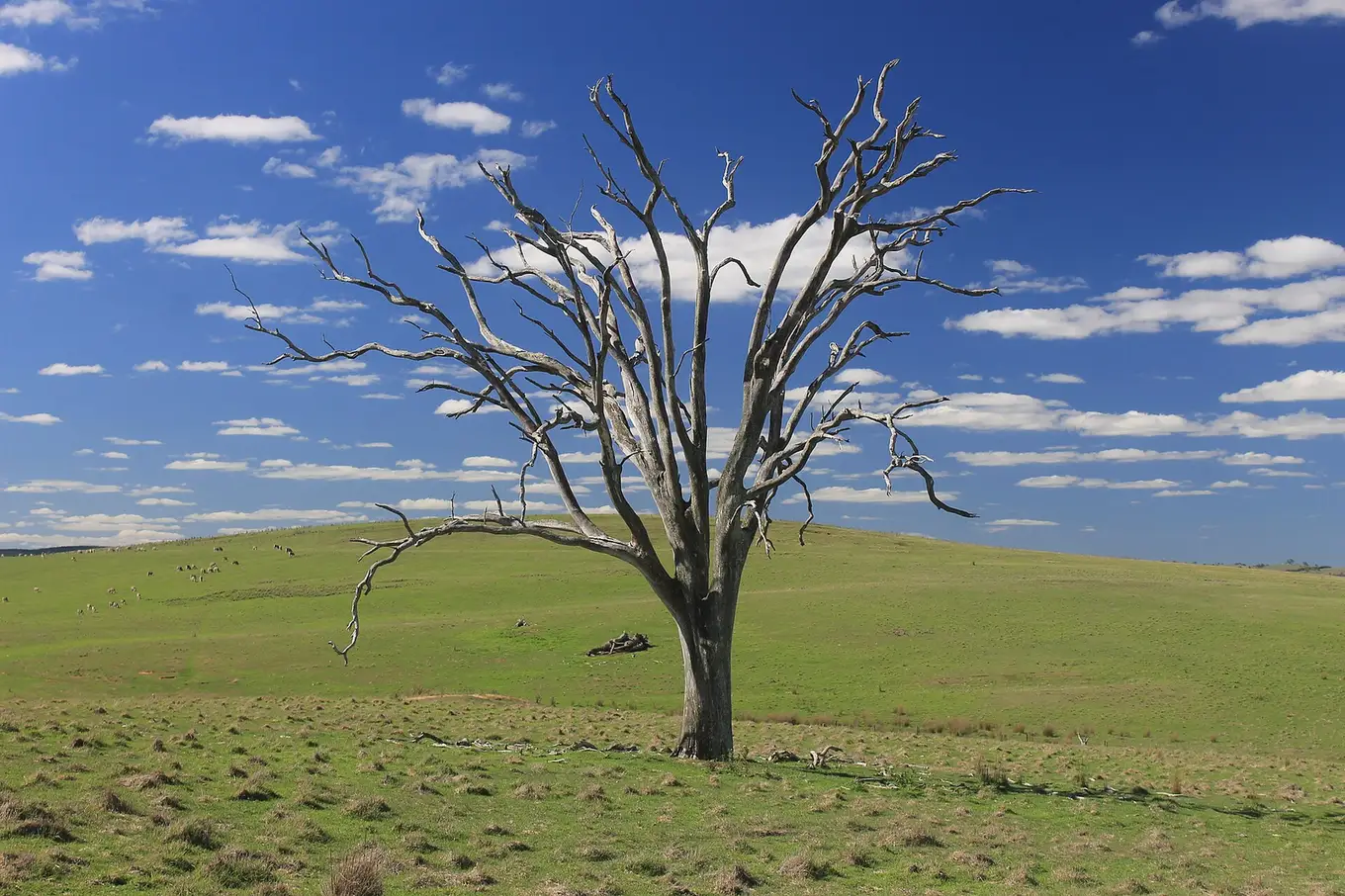
Dangerous tree removal is the controlled takedown of trees that present elevated failure risk — to people, structures, vehicles, or utilities. The “dangerous” category covers trees that are dead, dying, internally decayed, fractured, severely leaning, root-compromised, or hung up after storm damage. These removals are not routine — they require advanced rigging, sometimes crane assistance, and always a written plan from the licensed pro who takes on the job.
The risk in a dangerous tree removal is not just to the structure below the tree — it’s to the crew above it. A tree with significant trunk decay can fail under climbing load with no warning. A tree leaning over a roof can drop the wrong direction during the takedown. Reading those failure modes accurately and choosing the right method before any saw touches wood is exactly why this work calls for a specialist, not a general crew.
Storm damage or a tree on your house? Call now.
Stay out of rooms under the tree and keep clear of downed lines — report those to the power company first. Then call and we’ll connect you with a local tree crew that handles storm work.
📞 Call (858) 319-0022Free 24/7 dispatch line · availability varies by storm volume
When You Need Dangerous Tree Removal
Call now for the trees some general tree services don’t want to touch:
- Trees leaning more than 15 degrees toward a target
- Dead standing trees (snags) over walkways, driveways, or structures
- Trees with visible trunk decay, hollow cavities, or large old wounds
- Trees with conks or fungal fruiting bodies at the base
- Hurricane-damaged trees that are partially uprooted or fractured — see our post-storm damage assessment guide
- Trees with codominant stems showing bark inclusion and recent splitting
- Trees that have been lightning-struck with structural compromise
- Trees where a previous arborist or tree company declined the work
These trees need the right equipment and a certified, insured crew — and the alternative for the homeowner is usually “wait until it falls,” which is not a safe answer. That’s exactly why we exist: to connect you with a local pro who is set up to handle it correctly.
How a Dangerous Tree Removal Typically Proceeds
- Site assessment — the arborist reads the tree’s failure mode before deciding the takedown method.
- Method selection — climbing with rigging, crane-assist, sectional dismantling, or whole-tree felling depending on lean, target, and structural condition.
- Target protection — tarping, boarding, or moving whatever’s below the tree before any cutting starts.
- Crew briefing — every crew member reviews failure modes, escape routes, and signal calls before climbing.
- Sectional removal — typically top-down, with each section rigged to a controlled landing zone.
- Trunk takedown — the trunk comes down last, often with crane lift to eliminate the unpredictable hinge cut.
- Cleanup and stump — debris removal and stump grinding, quoted as part of the scope — see stump grinding vs. removal.
Dangerous tree removals routinely take several hours to a full day on a single tree. A pro who does this work right will not rush it.
Tallahassee-Specific Dangerous Tree Factors
Leon County has several common dangerous-tree presentations. The first is the heavily leaning laurel oak — a species particularly prone to root rot and trunk decay, often presenting as a 30-50 year old tree with significant canopy loss and a deepening lean toward a structure. Arborists in our network handle a steady stream of these every storm season.
The second is the post-hurricane partial windthrow — a tree pushed well off vertical with root flare upheaval on one side. These trees are often unsafe to climb because the root plate can release suddenly, so crane lift or directional felling is typically used instead.
The third is the hollow live oak with a healthy-looking canopy — a deceiving combination. Resistograph testing during a health inspection reveals the hidden cavity, and the removal plan is scoped around the residual wall strength rather than the leaf-out appearance.
The fourth is the codominant pine with splitting at the union — common in longleaf and slash pines that grew in cleared lots. The split is a propagating failure that will worsen with every storm, which is why these are often sectioned down before the first major wind event of the season.
Many dangerous tree removals in Tallahassee also require city permit approval. For protected trees, the arborist you’re matched with can file the permit and document the hazard condition with photographs and an arborist letter — the City of Tallahassee generally approves dangerous-tree removal when the documentation supports it.
What Dangerous Tree Removal Costs
There’s no flat rate — small dangerous trees, medium trees, large crane-assist removals, extreme leaning trees on a structure, a written hazard assessment, and stump-grinding follow-up all scope differently based on size, access, and equipment needed. The arborist you’re matched with provides a written quote before any work begins. See our broader tree removal cost breakdown for the factors that typically drive price.
Dangerous tree removal frequently qualifies for homeowners insurance coverage when the tree’s failure is imminent and a covered structure is threatened — see when tree removal is covered by insurance. The pro you’re matched with can document the job accordingly.
Frequently Asked Questions
How do I know if a tree is dangerous?
Visible lean toward a target, dead branches in the upper canopy, mushrooms or conks at the base, cracks in major limbs or trunk unions, recent root upheaval, or hollow areas you can hear when tapping the trunk — any of these means it’s worth getting a professional assessment.
Why do some tree companies refuse certain removals?
Lack of rigging experience, no crane access, or inadequate insurance. Dangerous tree work requires specific gear and an underwriter willing to cover the work — many smaller companies don’t have either, which is why matching with the right specialist matters.
Can a dangerous tree be saved instead of removed?
Sometimes. If the danger is localized to one branch or limb, cabling and bracing plus targeted pruning may resolve it. Trunk decay and root failure are usually not reversible.
Does the city require a permit to remove a dangerous tree?
Yes, if the tree is protected under the Tallahassee tree ordinance. The permit process accommodates dangerous trees and is usually approved quickly with arborist documentation.
Will insurance pay for dangerous tree removal?
Sometimes. If the tree has already fallen on a covered structure, usually yes. If it’s still standing but imminently hazardous, coverage depends on the policy — the pro you’re matched with can provide documentation either way.
How fast can a dangerous tree be removed?
Routine dangerous-tree removals are typically scheduled within about a week. Imminent-failure situations are prioritized, though actual timing depends on the independent provider’s schedule, crew availability, and current demand.
Can a tree leaning on my house be removed without further damage?
Yes — that’s the core of this specialty. Crane lift and sectional rigging let a qualified arborist remove the tree without putting additional load on the structure.
Are dangerous trees on commercial properties handled too?
Yes — see our commercial tree service page for HOA and property management accounts.
Have a dangerous tree? Don’t wait. Call now on our homepage and we’ll connect you with a licensed, insured local arborist for an assessment.
Tallahassee Tree Service Co. is a free dispatch and referral service. We are not a tree-service contractor and do not perform tree work ourselves. When you call, we connect you with an independent, licensed and insured local tree-care professional who carries their own license and insurance and provides any binding quote. Dispatch coordination is available around the clock; actual on-site response and scheduling depend on the independent professional’s schedule, crew availability, and demand, and are not guaranteed.