Tallahassee Live Oak Care — What a Heritage Tree Actually Needs
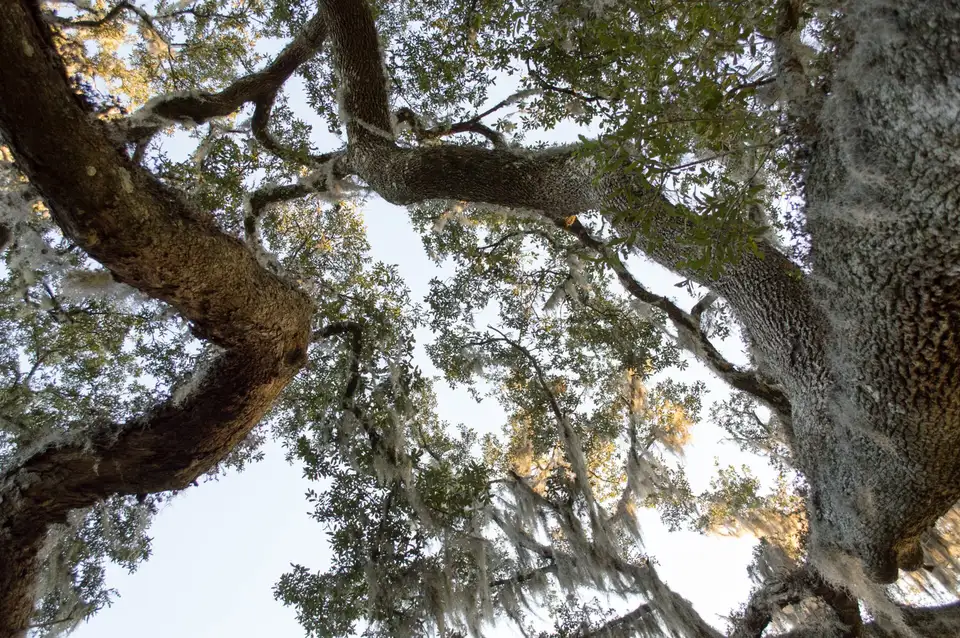
The live oak (Quercus virginiana) is the signature canopy tree of Tallahassee. Properly maintained, a live oak in this climate can live 200-300+ years and contribute substantially to property value. Improperly maintained, the same tree can be killed in a decade by avoidable mistakes — root damage during construction, over-pruning, topping, mulch volcanos, or untreated structural defects that progress to failure.
This guide covers the four areas that matter most for Tallahassee live oak health: watering, pruning, mulching, and disease awareness. Each is straightforward when you know what to do. Each is commonly done wrong.
Call now on our homepage to be connected with an ISA-certified local arborist for a live oak assessment.
Storm damage or a tree on your house? Call now.
Stay out of rooms under the tree and keep clear of downed lines — report those to the power company first. Then call and we’ll connect you with a local tree crew that handles storm work.
📞 Call (858) 319-0022Free 24/7 dispatch line · availability varies by storm volume
Watering Tallahassee Live Oaks
Established live oaks (5+ years in the ground) generally don’t need supplemental watering in Tallahassee. The species evolved in north Florida and Gulf Coast climates and is drought-tolerant once established.
Exceptions where supplemental watering helps:
- Extreme drought summers (multi-month dry periods, unusual heat). A deep soak every 2-3 weeks during severe drought helps mature trees. See summer drought watering Tallahassee trees for the framework.
- Newly planted trees (first 3 years). Weekly deep watering through the establishment period.
- Construction-stressed trees. Trees affected by recent grading, trenching, or root-zone disturbance benefit from supplemental water during the recovery window.
- Post-storm recovery. Trees that survived significant wind or root damage benefit from supplemental water during the next several months.
How to water properly: slow soak at the dripline (not at the trunk), deeply enough to wet the top 12-18 inches of soil. Sprinklers don’t accomplish this. A soaker hose left on for several hours, or repeated bucket pours moved around the dripline, both work.
Pruning Tallahassee Live Oaks
Most established Tallahassee live oaks benefit from professional pruning every 3-7 years. The goals are deadwood removal, water sprout suppression, structural correction where needed, and hazard reduction.
The standards are ANSI A300. The work should be done by an ISA-certified arborist. The window is late winter through early spring (January through early March) for routine pruning. Hazard pruning can happen any time. See oak tree trimming Tallahassee for the standards detail.
What to avoid: topping (heading cuts that leave no terminal branch), lion-tailing (stripping interior foliage), over-thinning (more than 25% of live foliage in a season), spike-climbing on live trees, and over-pruning of mature trees that haven’t been touched in years.
Mulching Tallahassee Live Oaks
Proper mulching helps. Improper mulching (“mulch volcanos”) kills trees over years.
Right way: 2-4 inches of organic mulch (pine straw, hardwood chips) extending from a few inches off the trunk out to the dripline. The trunk flare and root collar stay exposed. Refresh annually.
Wrong way: piled against the trunk, covering the root collar, several inches deep right at the base. Produces root collar decay, encourages adventitious roots that girdle the trunk, holds moisture against the bark, creates entry points for pathogens. Common error and one of the most damaging.
Diseases and Pests That Matter for Tallahassee Live Oaks
Hypoxylon canker mostly affects water oak, not live oak. If you see hypoxylon-like symptoms on a live oak, get a diagnostic — could be something else. See water oak removal Tallahassee for the species comparison.
Oak wilt is more of a concern in some parts of the South than in north Florida, but the precaution applies: avoid pruning oaks during the active spring growing window if oak wilt has been documented in the area. Late winter pruning sidesteps the risk.
Root rot from construction damage is the single most common slow-killer of mature Tallahassee live oaks. Soil grading, trenching, and root-zone compaction during home renovation produce decline that shows up 3-7 years later. Pre-construction tree protection is the prevention, and a soil-tested tree fertilization program can help a construction-stressed live oak rebuild vigor once the compaction issue itself is addressed.
Mistletoe is widespread on Tallahassee live oaks but generally not a structural problem. Heavy mistletoe load on a stressed tree is worth addressing during routine pruning.
Lichen on the bark is harmless and not an indicator of tree health.
Borer activity — flat-headed apple tree borer, ambrosia beetles — can affect stressed live oaks. ISA-certified diagnostic if you see exit holes, frass, or sap weeping.
Why Get an Annual Assessment
An ISA-certified annual or biennial walk-through of your mature Tallahassee live oak picks up structural issues early — codominant leaders with included bark, hazard limbs, signs of decay, root collar problems — when they can be addressed with pruning or cabling instead of removal. See cabling and bracing mature oaks.
Pre-hurricane assessment in May-June is the right cadence in Tallahassee. See June pre-hurricane tree walk.
Why Call Us
We’re a dispatch line for Tallahassee tree service — connecting you with an ISA-certified local arborist who follows ANSI A300 standards and does not top trees. The arborists we connect you with work on Tallahassee live oaks because they’re worth working on.
Call now on our homepage.
Tallahassee Live Oak Care — FAQ
How often should I water my live oak?
Established live oaks usually don’t need supplemental water. Drought, newly-planted, and construction-stressed trees benefit from deep periodic watering.
When should I prune my live oak?
Late winter through early spring for routine work. Hazard pruning any time.
How deep should mulch be?
2-4 inches, kept off the trunk. Never pile mulch against the bark or over the root collar.
What disease should I watch for?
Construction-damage-related root decay is the most common slow-killer. Borers and oak wilt in specific conditions.
How long do Tallahassee live oaks live?
Properly maintained, 200-300+ years.
Can I prune my live oak myself?
Small deadwood removal on accessible branches is reasonable. Anything involving climbing, large cuts, or structural pruning calls for an ISA-certified arborist.