June is the ideal month to walk your Tallahassee property and check every tree before hurricane season peaks. You don’t need to be an arborist to spot the warning signs — this 12-point walk tells you what to look for, and when to call in a pro.
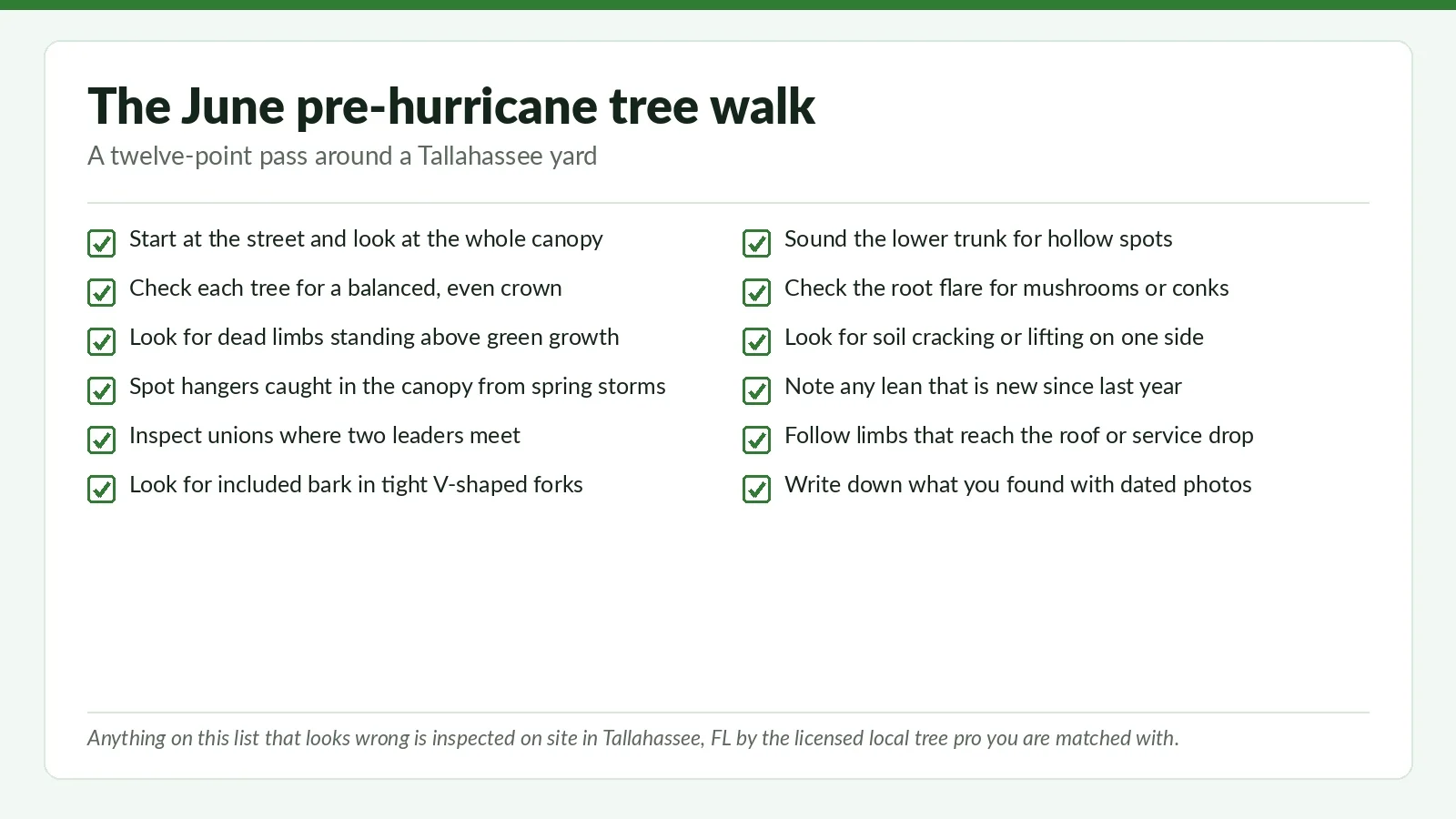
The 12 Points
- Lean. Note any tree leaning toward the house, especially a new or worsening lean.
- Root plate. Look for soil heaving, cracking, or lifting on one side of the base — a serious red flag.
- Base and trunk decay. Mushrooms or conks at the base, soft or hollow-sounding wood, or cavities.
- Cracks and splits. Vertical cracks, splits at branch unions, or included bark where limbs meet the trunk.
- Deadwood. Bare, brittle limbs with no leaves, especially large ones over the house or driveway.
- Canopy thinning. Sparse or yellowing foliage compared with healthy trees of the same species.
- Hanging limbs. Broken branches caught in the canopy that could drop.
- Proximity to structures. Limbs touching the roof or growing into the house or lines.
- Power lines. Any tree or limb near a utility line — never touch these; report to the utility or an arborist.
- Co-dominant stems. Two competing main trunks with a tight V-union, a common failure point.
- Species risk. Note laurel oaks, water oaks, tall pines, and Bradford pears — the usual storm-day failures.
- Prior damage. Old wounds, lightning scars, or limbs lost in past storms that may have weakened the tree.
Storm damage or a tree on your house? Call now.
Stay out of rooms under the tree and keep clear of downed lines — report those to the power company first. Then call and we’ll connect you with a local tree crew that handles storm work.
📞 Call (858) 319-0022Free 24/7 dispatch line · availability varies by storm volume
What to Do With the Findings
Anything in the first few points — a worsening lean, heaving roots, base decay, or major cracks — warrants a prompt professional assessment. Deadwood and overhanging limbs can usually be scheduled at standard timing. Photograph everything and date the photos for your records and any future insurance claim. Then book any recommended work now, while crews still have open schedules.
Found something concerning on your walk? Get matched with a licensed Tallahassee arborist Call now code and our 24/7 dispatch line connects you with an ISA-certified, insured arborist in our network serving Tallahassee and Leon County. A real person answers — describe what you found and you’ll be routed to the right pro. Your quote is between you and the arborist. → Call now to get connected
Tree Species & Care Guides
See the Tallahassee Hurricane Tree Prep Hub and the 7 trees most likely to fall in a Tallahassee storm.
TallahasseeTreeService.co is a dispatch service. We connect callers with licensed Florida arborists. We are not a licensed tree service company. The disclaimer in our site footer and our 24/7 dispatch caveat apply to this page.