Species Guide — Tallahassee, FL
Cherry laurel is Tallahassee’s stealth takeover tree. Birds plant it along every fence, under every oak, and in every unmowed corner; it grows to thirty feet before you’ve decided whether you wanted it; and by the time the question is asked, it’s a leaning, multi-trunked thicket shading out everything you did plant. It’s native — this isn’t a Chinese tallow situation — but in yards it behaves like a weed with a trunk, and its brittle, decay-prone wood makes mature specimens near houses worth a hard look. Here’s the cherry laurel playbook for Tallahassee lots.
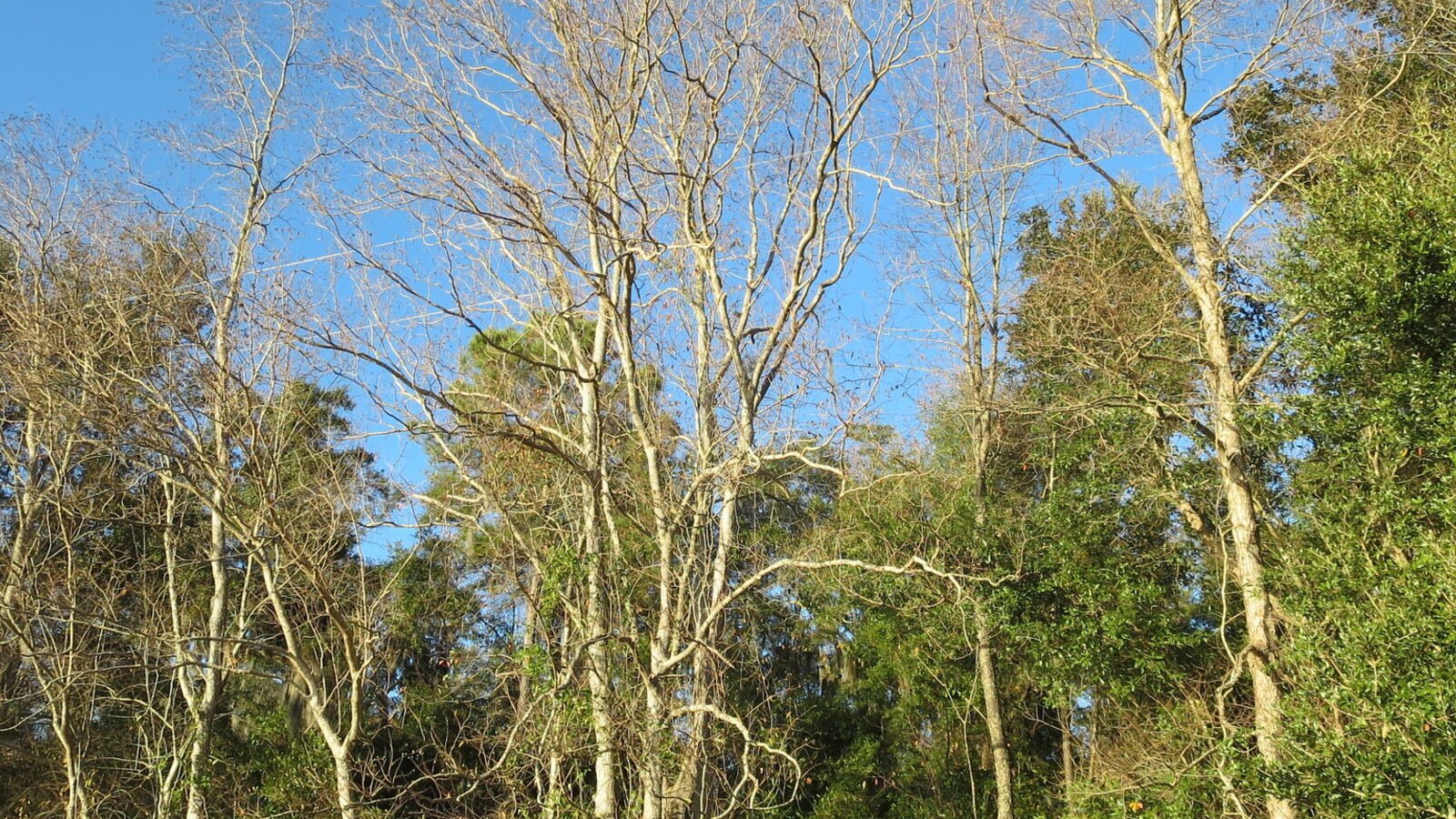
Should cherry laurels be removed from Tallahassee yards?
Volunteers in fence lines, under power drops, and crowding better trees: yes, and the younger the cheaper. Mature multi-trunk specimens near structures: assess — the species’ weak unions and fast decay make big ones unreliable neighbors. Intentional, maintained specimens with room: fine to keep.
If a fence-line thicket has turned into thirty-foot trees, call (858) 319-0022 to reach the licensed local arborist you’re matched with — thicket clearing prices by the day, and one visit beats five years of regrowth fights.
Storm damage or a tree on your house? Call now.
Stay out of rooms under the tree and keep clear of downed lines — report those to the power company first. Then call and we’ll connect you with a local tree crew that handles storm work.
📞 Call (858) 319-0022Free 24/7 dispatch line · availability varies by storm volume
Why does cherry laurel take over Tallahassee yards?
The species (Prunus caroliniana) is built for it. Mockingbirds and cedar waxwings strip its black winter cherries and deposit the seeds along every perch line — which is why volunteers erupt exactly under fences, power drops, and oak limbs. The seedlings tolerate deep shade, grow several feet a year, and resprout from the stump when cut, so casual lopping just converts one stem into five. In Tallahassee’s older neighborhoods the result is a recognizable pattern: a glossy evergreen understory thickening beneath the oak canopy, fence lines swallowed, and formerly sunny beds gone dark. Left a decade, volunteers become trees — and cherry laurel makes a poor tree: multiple trunks from ground level with included-bark unions, wood that snaps in storms, and heartwood that decays within a few years of any big wound.
The three cherry laurel jobs
- Thicket clearing — fence lines and understory: cut, haul, and treat the stumps (untreated stumps resprout within the season — this is the step DIY skips and regrets). Pairs naturally with brush removal and general lot cleanup.
- Mature-tree removal — the 30-40 foot multi-trunk specimens against houses and over driveways: each stem worked separately, unions never trusted with a climber’s full weight, decay pockets expected at every old wound. Modest-sized jobs, but rigged with more caution than the tree’s size suggests.
- Keep-and-maintain — intentional specimens and clipped hedges: cherry laurel shears well and makes a fine evergreen screen when it’s managed from youth; annual shaping keeps it a shrub instead of a liability.
The livestock and kids caveat
Cherry laurel foliage and seeds contain cyanogenic compounds — it’s the classic “don’t let horses eat the wilted trimmings” species, and the reason clearing crews haul or chip rather than leaving wilted branches where animals graze. On residential lots it’s a modest concern (the leaves taste bitter enough that kids and dogs rarely persist), but it’s worth knowing if your lot backs onto pasture anywhere in Leon, Jefferson, or Gadsden counties — tell the crew and the debris plan changes accordingly.
Why act early instead of waiting?
Cherry laurel is the clearest early-action economics on this site. A year-one seedling is a hand-pull; a year-five sapling is loppers and stump paint; a year-fifteen multi-trunk against the fence is a crew, a day, and disposal fees; and a mature specimen leaning over the roof is rigging work at real prices — often complicated by the decayed unions that made it urgent. Meanwhile the seed rain continues: every mature female tree on the block plants next year’s crop. The practical rhythm for an oak-canopy lot is a walk of the fence lines each winter (the evergreens stand out when the hardwoods are bare) and a purge every few years. The broader invasive-and-volunteer picture — including the genuinely invasive tallow and camphor — is covered in Chinese tallow removal and camphor removal.
Cherry laurel FAQs
How do I tell cherry laurel from a real cherry or a holly?
Crush a leaf — cherry laurel smells like maraschino/almond (that’s the cyanide chemistry). Glossy evergreen leaves, smooth gray bark, white spring flower spikes, and black winter berries complete the ID. Hollies have spined or toothed leaves and red berries.
If we cut the thicket, will it just grow back?
Yes, unless the stumps are treated immediately after cutting or ground out. Resprouting is the species’ whole strategy — insist on the stump-treatment step or budget for grinding.
Is a big cherry laurel over my roof actually dangerous?
Treat it skeptically — the species’ multi-trunk unions and fast decay mean a 35-footer over a structure carries more risk per foot than an oak the same size. An assessment settles whether yours has the classic included-bark splits.
Do I need a permit to remove cherry laurels?
Almost never — most are well under Tallahassee’s protected-size thresholds, and thicket clearing is routine yard maintenance. A rare mature specimen might reach ordinance size; the permit guide has thresholds.
What should I let grow instead?
If you want the native evergreen understory without the takeover: yaupon holly, wax myrtle, or American beautyberry for the birds. The best trees guide covers the upgrade paths.
Serving Tallahassee, Leon County, and the Big Bend. Content reviewed August 2026. Tallahassee Tree Service connects homeowners with independent licensed tree professionals and does not perform tree work directly.
Tallahassee Tree Service is a free referral service. Tallahassee Tree Service is not a licensed tree service provider and does not directly provide tree care services. All work is performed by independent, licensed and insured third-party providers in your area. Calls and form submissions placed through this site may be connected with a participating provider, and you may be contacted by that provider regarding your request. Same-day, emergency, and 24/7 availability are not guaranteed and depend on provider schedules, location, and demand. Service availability, pricing, licensing, and final response times are determined solely by the providers. It is the responsibility of the homeowner to verify that the hired contractor furnishes the necessary license and insurance required for the work being performed. All persons depicted in a photo or video are actors or models and not contractors listed on Tallahassee Tree Service.