Every hurricane season, somebody in Tallahassee “storm-proofs” a tree by topping it — hacking the canopy down to stubs so it looks smaller and, in theory, catches less wind. It’s one of the most common tree myths in the Southeast, and it’s almost always the wrong move. The pruning technique that actually reduces storm risk is crown thinning, and it looks nothing like topping. Here’s the difference, why it matters before the next storm rolls through, and what Tallahassee’s live oaks and pines each need.
Why topping backfires
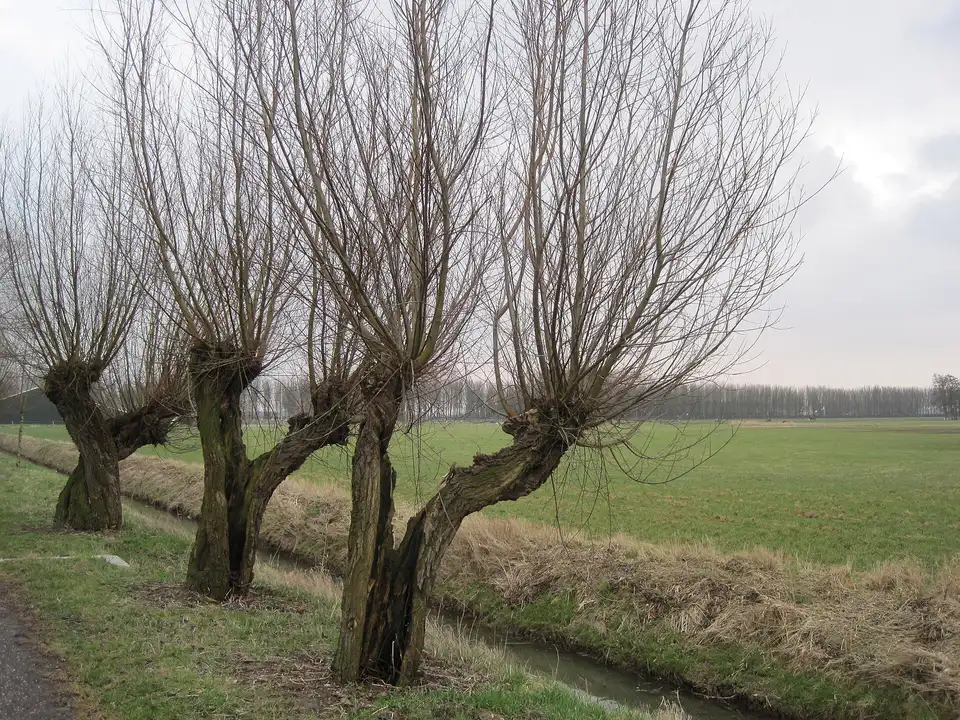
Topping removes large sections of a tree’s upper canopy by cutting through limbs at arbitrary points instead of at a natural branch collar. The tree responds by throwing out a mass of fast, weakly-attached shoots called water sprouts, all trying to rebuild the lost canopy at once. Within a couple of growing seasons, a topped tree often has more total foliage than before, except now it’s carried on dozens of thin, poorly-anchored branches instead of a handful of strong, structurally sound limbs. That’s a worse setup for a hurricane, not a better one. The cuts themselves also open large wounds that decay fungi can enter, which weakens the tree from the inside over the following years.
A related mistake is “lion’s tailing” — stripping all the inner and lower branches off a limb and leaving foliage only at the very tip. It looks tidy, but it shifts all the weight and wind resistance to the end of a long lever arm, which is exactly the wrong physics for a tree that needs to flex and shed wind load in a storm.
Storm damage or a tree on your house? Call now.
Stay out of rooms under the tree and keep clear of downed lines — report those to the power company first. Then call and we’ll connect you with a local tree crew that handles storm work.
📞 Call (858) 319-0022Free 24/7 dispatch line · availability varies by storm volume
What crown thinning actually does
Crown thinning is selective. A trained eye identifies crossing branches, weak co-dominant stems, and dense interior growth, then removes a modest percentage of that material at proper branch collars, spread evenly through the canopy. The goal isn’t to make the tree smaller — it’s to let wind pass through the canopy instead of loading up against a dense wall of leaves. Done correctly, the tree keeps its natural shape and its strongest structural limbs, and the crown as a whole moves and flexes the way it evolved to.
Crown reduction is a related, more targeted technique used on specific overextended limbs — cutting back to a lateral branch large enough to take over, rather than leaving a stub. It’s used for a limb that’s grown too long and heavy for its attachment point, not as a whole-tree treatment.
Live oaks: slow to heal, worth doing right
Tallahassee’s live oaks are the reason this city has a canopy worth protecting, and they’re also unusually slow to compartmentalize wounds compared to faster-growing species. A bad topping cut on a mature live oak can leave a decay pocket that’s still a structural problem a decade later. The upside is that a properly thinned live oak handles wind well — the wide, low branch structure that makes them iconic also distributes load across many strong attachment points instead of concentrating it at the top. Timing matters too: major structural pruning on live oaks is best done in the dormant cooler months, but a lighter thinning pass to remove obviously weak or crossing growth can still be done in summer if a storm is approaching and the canopy hasn’t been touched yet this year.
Pines: different failure mode, different approach
Southern pines common around Tallahassee — loblolly and slash pine especially — don’t fail the same way oaks do. Oaks tend to lose limbs or crack at weak unions. Pines more often snap partway up the trunk or blow over entirely, because they carry their weight higher and their root systems are comparatively shallow and wide rather than deep. Thinning helps less on a mature pine than it does on an oak, which is why an arborist’s read on an older pine close to a house often leans toward monitoring for the specific hazard signs — resin bleeding, exposed roots, a lean — rather than assuming pruning alone solves the wind risk. That’s a case-by-case call a licensed arborist makes standing in your yard, not a rule that applies to every pine on the street.
Signs a previous pruning job was done wrong
If you’re not sure whether a tree on your property has already been topped or lion’s tailed by a previous owner or a discount crew, look for these signs: flat-cut stubs instead of tapered natural branch ends, a cluster of thin upright shoots sprouting from the same point on a limb, and foliage that’s concentrated at branch tips with bare wood underneath. Any of these mean the tree’s structure is already compromised, and a licensed arborist can tell you whether corrective pruning over a few seasons can restore some structural integrity or whether the tree needs to be watched more closely heading into peak storm months.
When to get this looked at
Hurricane season in Tallahassee runs through November, so there’s still a window to get a canopy assessed and thinned before the next system spins up in the Gulf. If a tree on your property hasn’t been pruned in the last few years, or you’re not sure whether it’s been topped in the past, that’s worth a look now rather than after the next named storm.
Get matched with a local tree pro
Call now to get matched with a licensed arborist in Tallahassee who can assess your canopy and tell you whether thinning, reduction, or just monitoring is the right call before the next storm. Free to call, free to get matched — the arborist handles the assessment and the work from there.