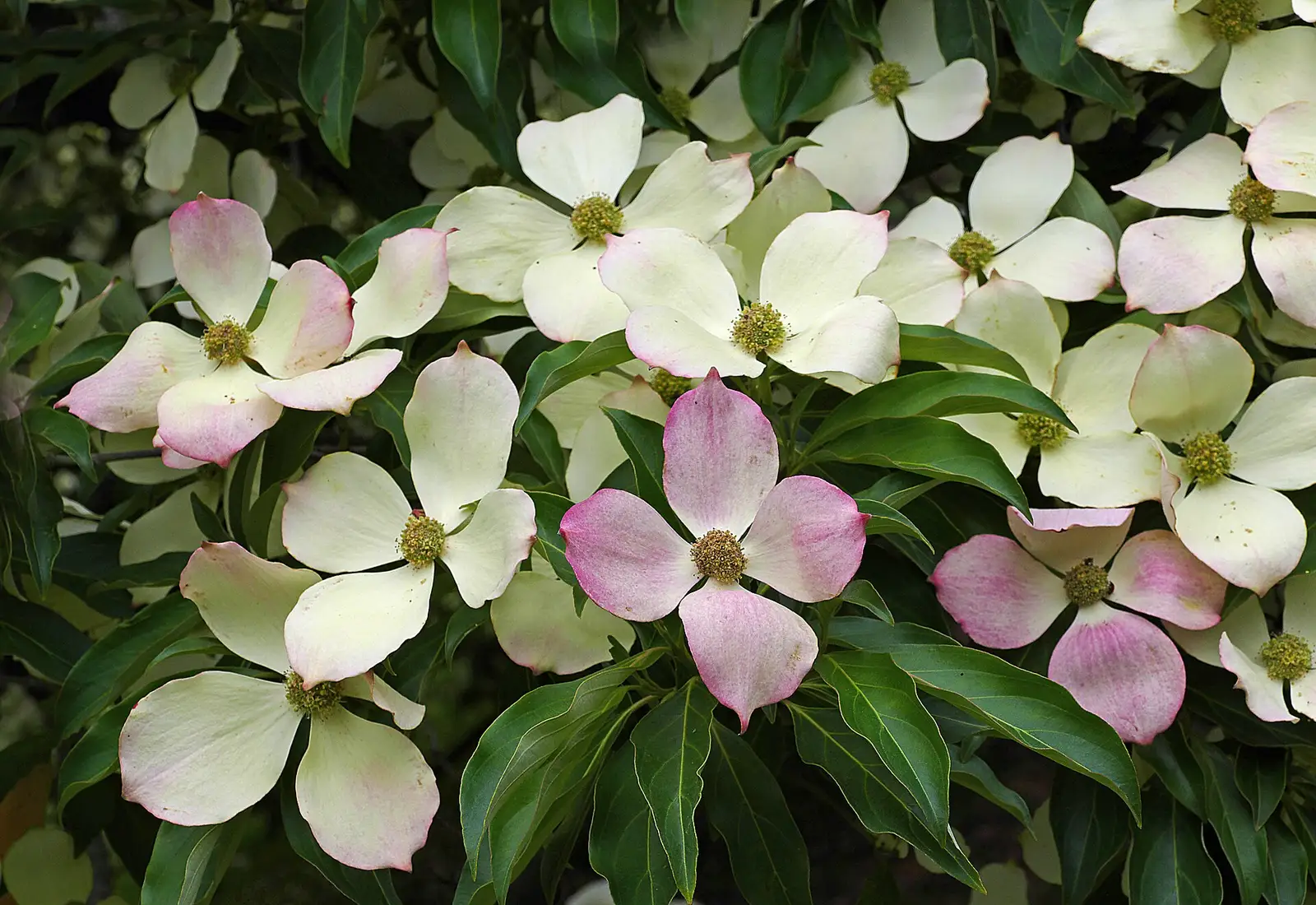
Dogwood care in Tallahassee is one of the most delicate seasonal challenges for north Florida tree owners. The flowering dogwood (Cornus florida) is the centerpiece of countless Tallahassee front yards — particularly in older Midtown, Myers Park, and Betton Hills neighborhoods where they’ve been planted under the live oak canopy for generations. But dogwoods are also one of the most stress-sensitive native trees in the region, and three issues consistently bring Tallahassee homeowners to the arborists in our network: dogwood anthracnose, structural pruning timing, and recovery of bloom after a difficult year. This guide walks through each.
Why Tallahassee Dogwoods Need More Attention Than Most Trees
Flowering dogwoods are understory trees by nature — designed for partial shade, moist but well-drained soil, and consistent soil temperatures buffered by the larger canopy above. Three things in a typical Tallahassee yard work against them:
- Full sun exposure: dogwoods planted in front yards without overstory shade overheat in July and August
- Soil compaction: shallow root systems mean compaction effects are felt more quickly than in deeper-rooted species
- Drought sensitivity: they don’t tolerate the late-summer dry periods that Tallahassee’s unpredictable weather regularly produces
For full background on local dogwood biology and recommended planting practices, see our dogwood tree care page and UF/IFAS Extension’s published guidance on Cornus florida in north Florida.
Storm damage or a tree on your house? Call now.
Stay out of rooms under the tree and keep clear of downed lines — report those to the power company first. Then call and we’ll connect you with a local tree crew that handles storm work.
📞 Call (858) 319-0022Free 24/7 dispatch line · availability varies by storm volume
Dogwood Anthracnose: What It Looks Like and What to Do
Dogwood anthracnose, caused by the fungus Discula destructiva, is the most consequential disease threat to Tallahassee dogwoods. Signs progress through the season:
- Early spring: tan or purplish leaf spots with darker margins, often starting on lower-canopy leaves
- Mid-spring: blotchy dead areas spreading from leaf margins; flower bract spotting
- Summer: twig cankers, sometimes visible as sunken dark lesions; dieback of small branches
- Late summer/fall: trunk canker development on severely affected trees, with characteristic vertical splits
Anthracnose progresses most aggressively in years with wet springs and cool, humid summers — conditions Tallahassee sees regularly. Heavily shaded, poorly air-circulated trees are most vulnerable. If you are unsure whether the spotting on your tree is anthracnose or another issue, professional diagnosis can distinguish it from spot anthracnose or ordinary leaf scorch before you commit to a treatment plan.
Management is integrated rather than curative:
- Cultural: remove fallen leaves promptly; prune for air circulation; avoid wetting foliage during irrigation
- Pruning: remove infected twigs and small branches during dormancy, with tools sanitized between cuts
- Fungicide (when warranted): protective applications timed to bud break and continuing through early summer can suppress new infection — most useful on younger trees or high-value specimens
- Site improvement: reducing irrigation frequency, improving drainage, and addressing soil compaction all reduce disease pressure
Dogwood Pruning Timing in Tallahassee
Dogwoods follow a different pruning calendar than most landscape trees in north Florida:
- Best window: after spring bloom has finished but before summer heat arrives — typically late May into early June
- Why not winter: dogwoods are highly susceptible to disease entry through pruning wounds when the tree is dormant and the soil is wet
- Why not late summer: wounds made in August/September don’t seal effectively before fall’s cooler humid weather invites fungal entry
- Light hand only: dogwoods can’t tolerate heavy reduction — limit pruning to dead, diseased, or rubbing branches in any given year
For broader pruning context across Tallahassee species, see our tree pruning page.
Bloom Recovery After a Difficult Year
Tallahassee dogwoods regularly produce reduced bloom after stressful years — late freezes, summer drought, anthracnose flare-ups, or construction disturbance can all push a tree to skip a year. Recovery typically follows a predictable path if site conditions are corrected:
- Year of stress: reduced or no bloom; some twig dieback
- Year +1: partial bloom return; tree puts energy into root and canopy recovery
- Year +2: typically full bloom return if root system has rebuilt
Helping the recovery: mulch the root zone (3 inches of pine straw, kept off the trunk), avoid lawn fertilizer applications within the drip line, deep-water during sustained dry periods, and consider deep-root fertilization in early spring to replace what soil organic matter isn’t providing.
When to Call an ISA-Certified Arborist for Dogwood Concerns
Several situations justify professional assessment rather than DIY care:
- Visible trunk cankers or vertical bark splits
- More than 30 percent canopy showing dieback
- Multiple major branches with anthracnose lesions
- Tree planted within the last 2 years and failing to establish
- Construction or driveway work within the root zone
- Heritage dogwoods on permit-sensitive sites — see our tree risk assessment page
For full-canopy assessment beyond a single dogwood, our ISA-certified arborist services page covers the full range of diagnostic and treatment options the arborists in our network provide across Tallahassee.
Schedule Dogwood Care in Tallahassee
To schedule a dogwood assessment for anthracnose evaluation, structural pruning, or bloom-recovery planning in Tallahassee, call Tallahassee Tree Service Co. at (858) 319-0022. The ISA-certified arborists in our network will assess disease pressure, site conditions, and structural needs, then recommend the right combination of cultural and treatment steps for your specific tree.
Frequently Asked Questions
Can I save a dogwood with significant anthracnose damage?
Trees with less than 50 percent canopy loss and sound trunks can typically recover with combined cultural, pruning, and fungicide management over 2 to 3 seasons. Trees with trunk cankers or extensive dieback have a poorer prognosis.
Are Kousa dogwoods more disease-resistant than flowering dogwoods?
Yes, generally — Cornus kousa shows better resistance to dogwood anthracnose, though it’s less heat-tolerant than Cornus florida in north Florida sun exposure. Hybrid varieties combine some traits of both.
Should I fertilize my dogwood every year?
Dogwoods respond well to modest annual feeding — typically a slow-release low-nitrogen application in early spring. Over-fertilization (especially with high-nitrogen lawn products) can drive disease pressure.
Is dogwood blight the same as anthracnose?
“Dogwood blight” is sometimes used as a general term for severe anthracnose. The species Discula destructiva is the primary pathogen in north Florida; spot anthracnose (Elsinoe corni) is a milder, separate disease.
How do I tell a stressed dogwood from a dying one?
Stressed dogwoods produce smaller leaves, reduced bloom, and limited dieback but maintain sound trunks and healthy buds for the following year. Dying trees show extensive canopy loss, trunk cankers, and failure to break dormancy in spring. An arborist assessment can confirm which.