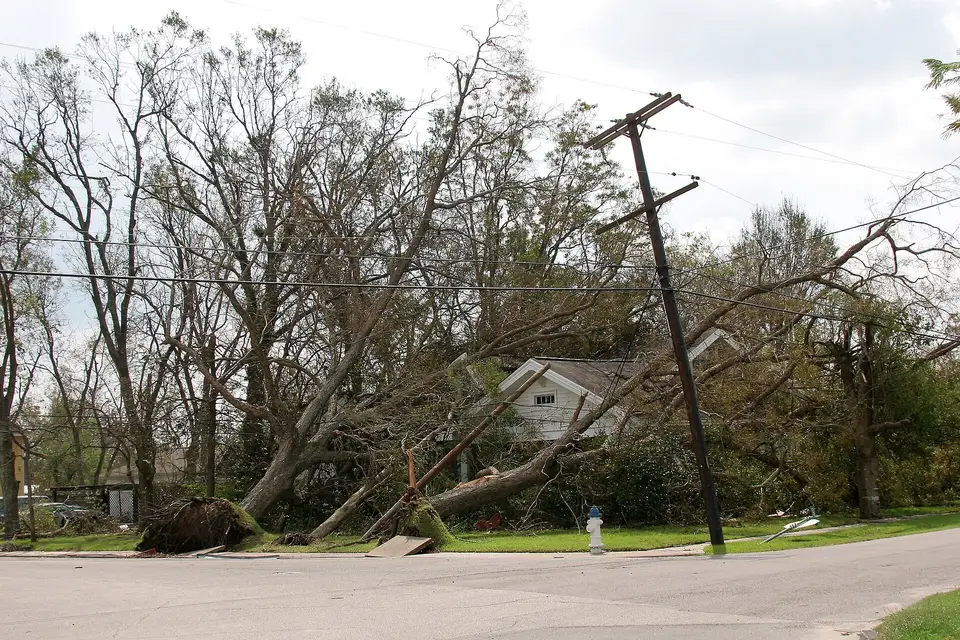
Two houses, a mile apart, ride out the same hurricane. One loses a 60-foot water oak straight through the roof. The other doesn’t lose a limb. Wind speed was identical. The difference, more often than not, is what’s under the ground — not what’s standing on top of it.
Tallahassee homeowners spend a lot of energy worrying about tree species before a storm, and species does matter. But after a season of post-storm calls across Leon and Wakulla counties, soil type is just as often the deciding factor in which trees go down and which ones don’t — and Tallahassee sits on three genuinely different soil systems inside one metro area.
Tallahassee’s Red Hills clay: strong until it’s wet
Much of the historic core — Midtown, Betton Hills, Myers Park, the Frenchtown and Levy Park corridor — sits on the clay-rich soils of the Tallahassee Red Hills, a physiographic region recognized by the Florida Geological Survey and USDA’s Natural Resources Conservation Service (NRCS) for its dense, red clay subsoil. That clay is a mixed blessing for tree stability. Dry, it holds a root plate tightly. Saturated after 6–10 inches of hurricane rain, clay loses much of its shear strength and turns slick, and a mature canopy acting as a sail can lever the whole root plate out of the ground as one unit — the classic hurricane “windthrow” failure. This is why so many Red Hills-area storm calls involve a tree that looks completely healthy, lying on its side with an intact, shallow root plate rather than a snapped trunk.
Storm damage or a tree on your house? Call now.
Stay out of rooms under the tree and keep clear of downed lines — report those to the power company first. Then call and we’ll connect you with a local tree crew that handles storm work.
📞 Call (858) 319-0022Free 24/7 dispatch line · availability varies by storm volume
Sandy ridges: less flooding risk, less anchorage
Head northeast into Killearn Lakes, Bull Run, and the sand-pine uplands, and the soil changes completely. These well-drained, sandy soils don’t saturate the way Red Hills clay does, so waterlogged root plates are less of an issue. But sand offers less inherent anchorage to begin with, and it’s exactly where Tallahassee’s sand pine and slash pine stands concentrate — species that are already shallow-rooted and brittle-wooded by nature. In these neighborhoods, failures skew toward trunk snap in high wind rather than whole-tree uprooting, and lightning strikes (which favor tall, isolated pines on open sandy ground) add a second failure mode clay-soil neighborhoods see far less of.
Karst ground: thin soil over limestone
Parts of northeast Leon County, including the Apalachee Ridge corridor, sit over karst topography — a thin soil layer over porous limestone bedrock, the same geology responsible for North Florida’s sinkholes. Roots here often can’t penetrate deep before hitting rock, so trees rely almost entirely on lateral root spread for anchorage. A heavy, fast rain event can perch water in that thin soil layer temporarily, and a tree with a naturally shallow root system has very little reserve capacity to resist wind load once that layer saturates, even briefly. Our Apalachee Ridge karst soil coverage goes into more depth on what this means for tree selection and care in that corridor specifically.
Lakefront and low-lying clay-muck transition zones
Around Lake Jackson, Lake Hall, and the Piney Z corridor, transitional soils combine poor drainage with organic muck layers that stay saturated for days after a storm passes. This is where Tallahassee arborists see delayed failures — trees that survive the hurricane itself, then come down two or three weeks later once continuously soggy ground finally lets go of a root system that’s been slowly losing grip the whole time. It’s a major reason a single post-storm walk isn’t enough in these areas; a second look two to three weeks out matters just as much.
What this means for your property
Knowing your neighborhood’s dominant soil type changes what you should actually watch for:
- Red Hills clay neighborhoods: Watch for root-plate heaving or soil cracking at the base of large trees after heavy rain, even before wind arrives — it’s an early windthrow warning sign.
- Sandy ridge neighborhoods: Prioritize crown reduction on tall pines before hurricane season, and treat any lightning strike as an inspection trigger, not just a cosmetic issue.
- Karst corridors: Lateral root protection matters more than depth here — avoid soil compaction or grade changes near mature trees, since they depend entirely on that shallow root spread.
- Lakefront and low-lying areas: Schedule a follow-up visual check two to three weeks after any named storm, not just an immediate post-storm pass.
A tree risk assessment that accounts for your specific soil conditions — not a generic species checklist — is the most useful pre-season step a Tallahassee homeowner can take. For trees already showing lean, co-dominant stems, or root-plate movement, cabling and bracing can buy meaningful time without removing a mature tree outright. If you’re building your pre-season plan, our hurricane season tree prep checklist and the post-storm damage assessment guide walk through both ends of the timeline.
Frequently asked questions
Does soil type matter more than tree species for hurricane risk?
They work together. Species determines wood strength and root architecture; soil determines how much anchorage that root architecture actually gets in your specific yard. The same laurel oak planted in saturated Red Hills clay and in well-drained sandy soil carries meaningfully different windthrow risk.
How do I find out what soil type is under my property?
The USDA NRCS Web Soil Survey is free and searchable by address, and it will identify the dominant soil series for your parcel — useful context to bring to an arborist visit.
Should I be more worried after the storm or during it?
Both, but differently. During the storm, watch for sudden lean or root-plate heaving. In the two to three weeks after, especially in lakefront or low-lying clay-muck areas, watch for gradual lean or soil cracking as saturated ground continues to lose its grip on root systems that were stressed but didn’t fail outright.
Get a soil-aware property walkthrough
Every yard in Tallahassee sits on one of these soil systems, and a generic hurricane checklist doesn’t account for the difference. Call (858) 319-0022 or request a property walkthrough to get matched with a local ISA-certified arborist who can assess your trees against your specific ground conditions before the next storm, not after.
Tallahassee Tree Service Co. is a free referral service connecting Leon County homeowners with independent, licensed and insured local tree care providers. We do not perform tree work ourselves; service terms, scheduling, and pricing are set by the dispatched provider.