Storm-Damaged Tree Insurance Documentation Helper for Tallahassee Homeowners
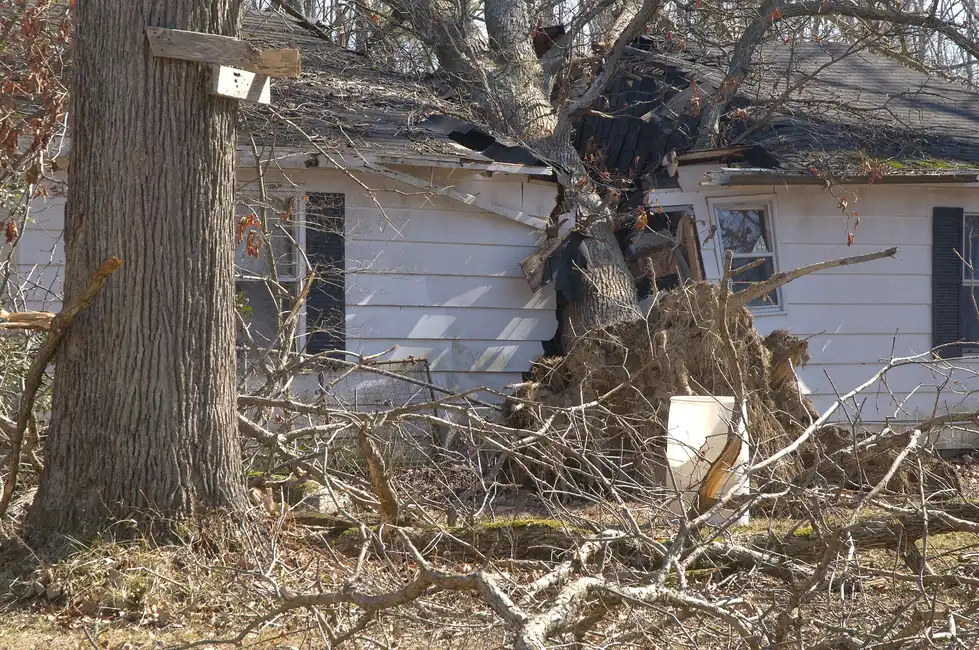
A tree came down on your Tallahassee property during a storm and now you’re trying to figure out what to photograph, what to tell the adjuster, and whether removal is even covered. This interactive helper walks you through it step by step — safety first, then documentation, then the one insurance question that decides almost everything: did the tree hit a structure, or did it just fall in the yard?
Before you start: This tool provides general guidance only — it is not legal or insurance advice. Tallahassee Tree Service is a 24/7 tree-care dispatch and referral service. We connect Tallahassee-area callers with the licensed, insured local tree services we connect you with, and we do not perform tree work or adjust insurance claims ourselves.
Storm damage or a tree on your house? Call now.
Stay out of rooms under the tree and keep clear of downed lines — report those to the power company first. Then call and we’ll connect you with a local tree crew that handles storm work.
📞 Call (858) 319-0022Free 24/7 dispatch line · availability varies by storm volume
Why Storm-Damaged Trees Behave Differently in Leon County
North of the Cody Scarp — Killearn Estates, Betton Hills, Midtown, Myers Park, Ox Bottom, Bradfordville — the soil is red Orangeburg clay that holds water and swells during a multi-day tropical system. Root plates can lift even on trees that looked perfectly healthy going into the storm, and the failure is often a clean uprooting rather than a snapped trunk. South of the scarp — Woodville, Crawfordville, Apalachee Ridge — the thin, sandy soil over limestone karst tends to produce sudden plate failure with far less visible warning beforehand.
Species matter too. Water oak and laurel oak are the two species that fail most often in Leon County storms — both are fast-growing, shorter-lived oaks prone to interior decay by maturity, and they are frequently the trees that come down on a house during a named storm. Pines — loblolly and longleaf — tend to snap mid-trunk rather than uproot, especially in saturated ground under sustained wind, so pine failure often looks different in photos than an oak’s root-plate lift.
If the fallen tree sits inside a Canopy Road Protection Zone (100 feet of one of Leon County’s nine designated Canopy Roads), removing storm debris is not usually restricted, but any follow-up removal of additional trees in that zone can trigger review by the Canopy Roads Citizens Committee — worth mentioning to whichever local tree service you’re matched with.
For the storm history and species wind-failure data behind this guidance, see the Tallahassee & Leon County Tree Storm-Risk Report. Getting ready before the next system? The free Hurricane & Storm Tree-Prep Guide covers which species fail first and a printable prep checklist. If a tree is still standing but looks compromised, try the Tree Risk & Storm Damage Assessment Tool for an instant risk read, or the Save It or Remove It? Tree Decision Helper for a keep-or-evaluate read on a leaning or damaged tree.
Frequently Asked Questions
Does homeowners insurance cover fallen tree removal in Florida?
Generally, only when the fallen tree damaged a covered structure such as a house, garage, fence, or shed. Removal of the tree causing that damage is typically covered up to your policy’s debris-removal sublimit, subject to your deductible. If the same tree simply fell in the yard without hitting anything, standard policies usually treat removal as the homeowner’s cost. Always confirm with your carrier — this is general guidance, not a coverage determination.
What if the tree didn’t hit anything?
If a tree falls in the yard without touching a house, fence, shed, or vehicle, most standard Florida homeowners policies do not cover removal or haul-away costs. Some policies include a small debris-removal endorsement, particularly if the tree blocks a driveway or the only access to the home — check your policy or ask your agent directly.
Who pays if my neighbor’s tree falls on my house?
In Florida, your own homeowners policy typically pays for the damage to your home regardless of whose tree caused it, since coverage generally follows the damaged property, not the tree’s owner. Your carrier may separately pursue reimbursement from the neighbor’s insurer, but that process happens between the carriers and should not delay your own claim.
Should I sign my claim over to the tree service or a public adjuster?
Read any assignment-of-benefits (AOB) form carefully before signing — it can transfer control of part of your claim to a third party. Many Florida policies now restrict or exclude AOB arrangements. When in doubt, ask your carrier or an attorney what a specific form actually transfers before you sign.
What’s the difference between make-safe work and full tree removal for insurance purposes?
Make-safe work is the emergency minimum needed to stop further damage — tarping a roof, getting a tree off a structure — and is usually treated as loss-mitigation. Full removal is hauling away the whole tree and grinding the stump, which is typically scheduled after the adjuster has assessed the damage and depends on whether the tree struck a covered structure.
Need the Tree Off the Structure First?
Call now and we’ll connect you with a licensed, insured local tree pro for emergency make-safe work — no obligation, no sign-up.
Tallahassee Tree Service is a 24/7 tree-care dispatch and referral service. We connect Tallahassee-area callers with independent, licensed and insured local tree-care professionals who carry their own license and insurance — we do not perform tree work ourselves and are not a licensed contractor, public adjuster, or insurance company. This tool provides general educational guidance only and is not legal or insurance advice; consult your policy, your agent, or an attorney for guidance specific to your claim. If a tree is touching or near a power line, contact the utility company first — do not approach the tree. In a life-threatening emergency, call 911.