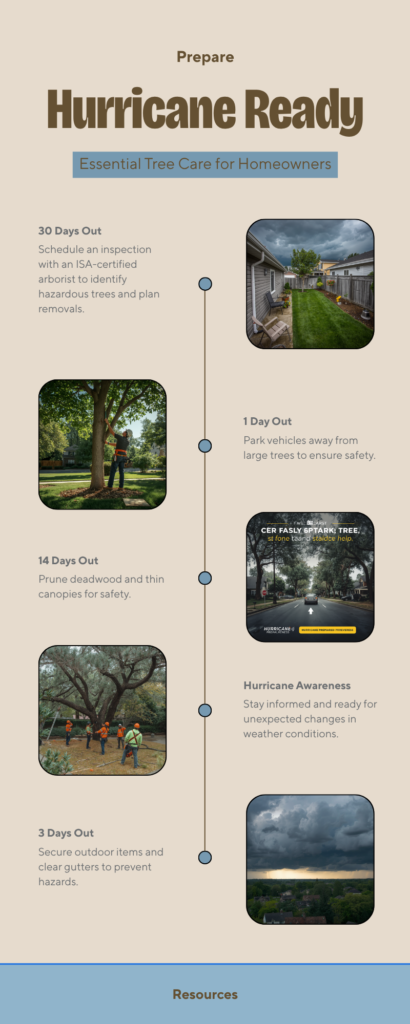
Hurricane season runs June through November, but tree prep in Tallahassee is a year-round rhythm with a clear monthly cadence. This checklist walks the season month by month so your trees are ready before a storm forms — not scrambled together once one is in the Gulf.
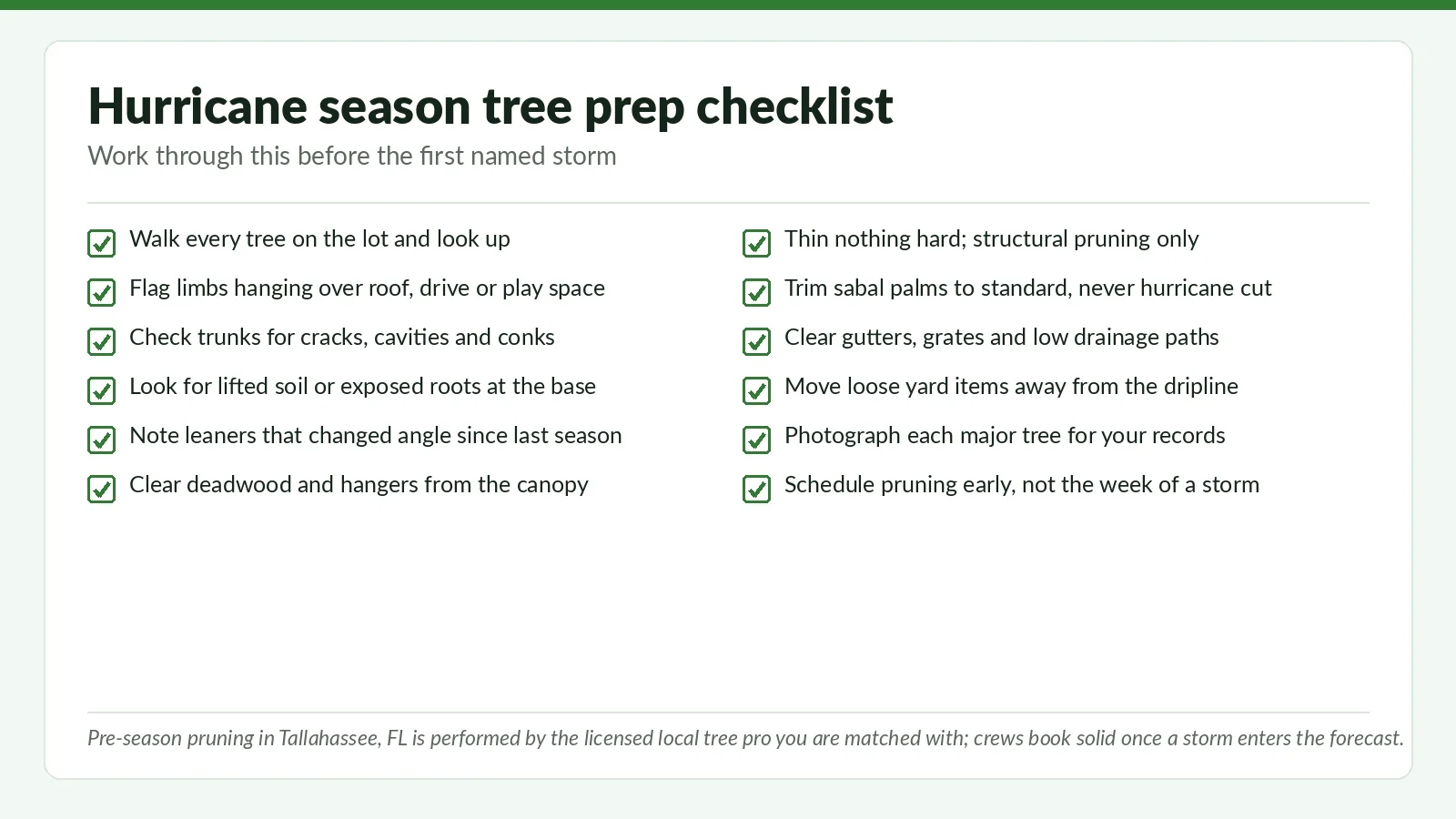
May: Inspection and Pruning (Before the Season Opens)
Get a pre-season inspection while the canopy is fully leafed out and crews have open schedules. Address structural defects, deadwood, and any hazardous trees now, at standard timing, rather than under storm-season pressure. See our pre-hurricane inspection guide.
Storm damage or a tree on your house? Call now.
Stay out of rooms under the tree and keep clear of downed lines — report those to the power company first. Then call and we’ll connect you with a local tree crew that handles storm work.
📞 Call (858) 319-0022Free 24/7 dispatch line · availability varies by storm volume
June: Documentation and Property Audit
Photograph every mature tree from several angles and date the photos. This documentation is your strongest defense against a later “pre-existing condition” denial if a tree damages a structure. Walk the property and note anything leaning, dead, or overhanging the roof.
July–August: Mid-Season Monitoring
Watch for new lean after heavy rain, soil heaving at the root plate, mushrooms at the base (a decay signal), and fresh deadwood. Summer storms can weaken trees ahead of a major system, so re-check after each significant blow.
September–October: Peak Risk Window
This is the most active stretch for the Gulf. Keep gutters and drains clear, secure loose yard items before any approaching system, and have your arborist’s contact and your insurance details ready. If a tree was flagged in May and still hasn’t been addressed, prioritize it now.
Landfall and Immediate Post-Storm
After a storm, stay clear of any tree touching a power line and assume downed lines are live. Photograph all damage before cleanup for your claim, and get a hazardous or structure-contact tree assessed promptly. See storm damage tree removal and emergency tree service.
The Trees Most Likely to Fail
In Tallahassee, watch decay-prone laurel and water oaks, tall pines near the house, anything with a heavy one-sided lean, and trees with prior root or trunk damage. These are the candidates worth a professional look before the season peaks.
Want your trees storm-ready? Get matched with a licensed Tallahassee arborist Call now code and our 24/7 dispatch line connects you with an ISA-certified, insured arborist in our network serving Tallahassee and Leon County. A real person answers — describe your property and you’ll be routed to the right pro. Your quote is between you and the arborist. → Call now to get connected
Related TTS Resources
See the Tallahassee Hurricane Tree Prep Hub for the full playbook and how insurance claims work after a storm.
TallahasseeTreeService.co is a dispatch service. We connect callers with licensed Florida arborists. We are not a licensed tree service company. The disclaimer in our site footer and our 24/7 dispatch caveat apply to this page.