Southern magnolia (Magnolia grandiflora) is Tallahassee’s most iconic flowering tree — the white-bloom canopy you see in Myers Park courtyards, around the Capitol, and lining the streets of Los Robles. It’s also one of the most-misunderstood species in North Florida residential tree care. Here’s the species biology, the Tallahassee-specific care calendar, and what arborists actually do on a magnolia visit.
Magnolia Biology in Tallahassee’s Zone 8b
Southern magnolia thrives in Tallahassee’s USDA Zone 8b climate. Mature trees reach 60–80 feet tall and 30–40 feet wide, with leathery evergreen leaves and the species’ signature 8–12 inch white flowers in late spring through early summer. The tree is technically evergreen but sheds the previous year’s leaves over a long window — late winter through summer rather than a single dump.
Storm damage or a tree on your house? Call now.
Stay out of rooms under the tree and keep clear of downed lines — report those to the power company first. Then call and we’ll connect you with a local tree crew that handles storm work.
📞 Call (858) 319-0022Free 24/7 dispatch line · availability varies by storm volume
The Right Pruning Window
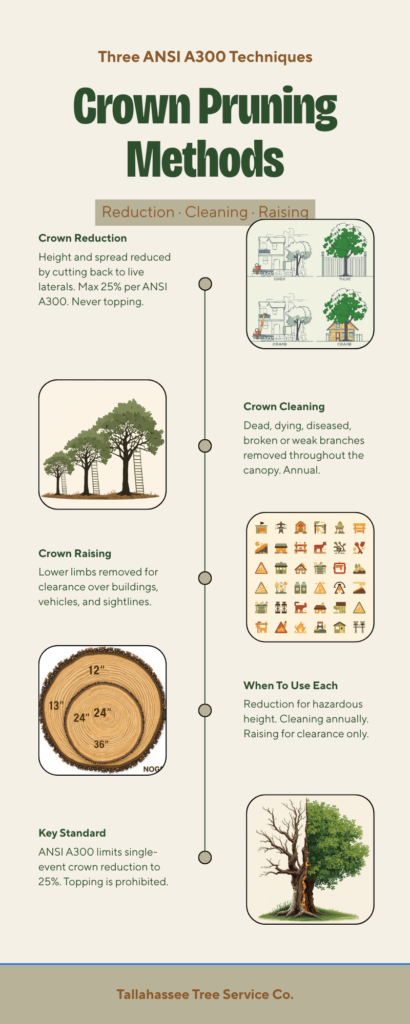
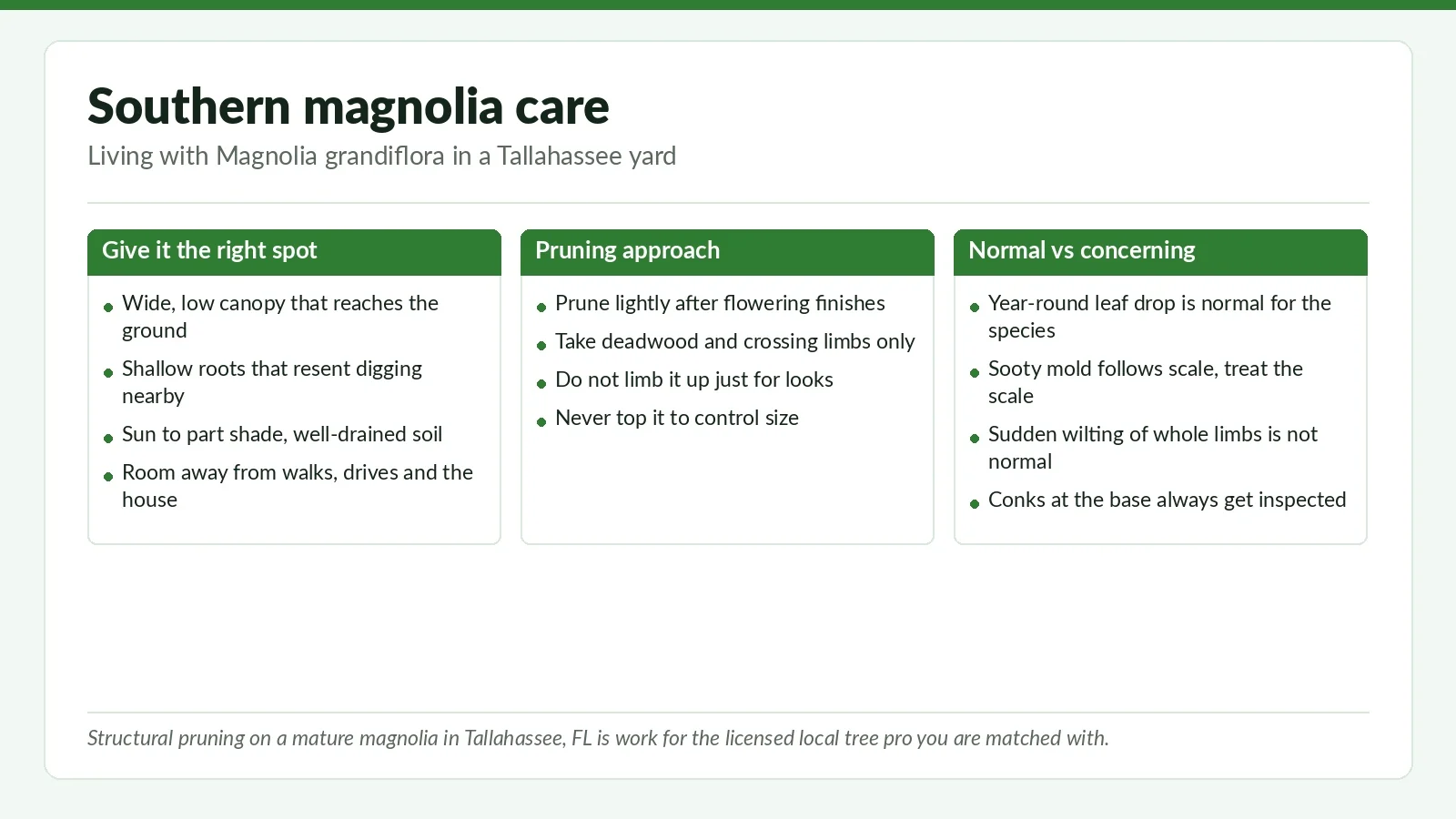
Magnolia pruning timing is different from oak timing. The best window is late spring after flowering — typically late May through June. Avoid heavy pruning in winter; magnolia wounds heal slowly and winter cuts can invite decay fungi. Limit crown reduction to no more than 25% per event. Topping is never appropriate.
Root Zone Protection — The Quiet Killer
Magnolia has a relatively shallow, wide root system that extends well beyond the dripline. Soil compaction, fill, and grade changes within the critical root zone cause multi-year decline that often shows up 2–4 years after the damage — too late to remediate. Construction projects within that zone are the most common cause of magnolia decline in Tallahassee’s established neighborhoods.
Hurricane Tolerance and Storm Risk
Southern magnolia performs surprisingly well in hurricane-force winds. The dense, flexible wood and broad canopy disperse wind load. The species’ weakness is shallow rooting under saturated soil. Pre-hurricane work for magnolia is dead-wood removal and crown-cleaning rather than aggressive structural pruning.
Pest and Disease Pressure
Magnolia scale is the most common — large brown scales on twigs, often with sooty mold. Treat with horticultural oil during late-summer crawler stage. Phytophthora root rot is the more serious disease, associated with poor drainage and root damage.
Call now on our homepage to be connected with an ISA-certified local arborist for a magnolia assessment.
Related TTS Resources
This page is part of the TTS hurricane-season playbook. For the full season hub (30/14/3/1-day countdown, post-storm triage, and insurance claim mechanics) see the Tallahassee Hurricane Tree Prep Hub. For pricing on every Tallahassee tree service, see the Tallahassee Tree Service Cost Guide.