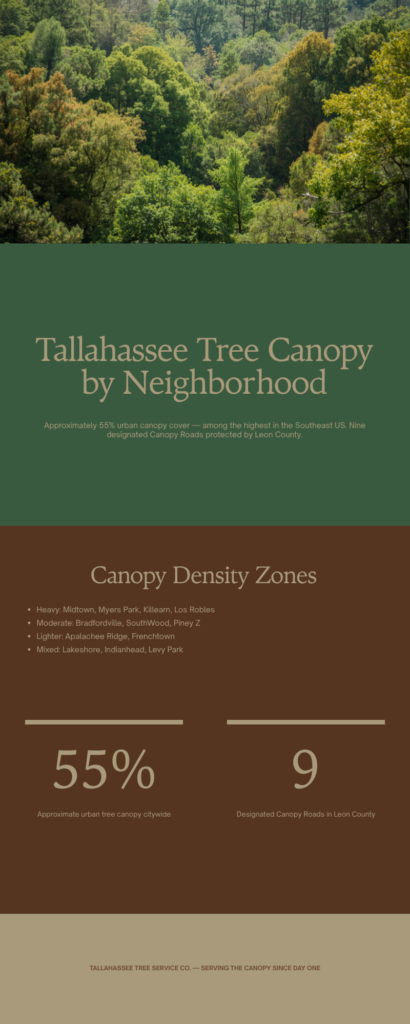
Killearn Estates is one of Tallahassee’s most heavily canopied neighborhoods — mature live oaks, pines, and laurel oaks shading nearly every lot — which makes tree work here a matter of both city permits and HOA rules. This guide covers what’s growing in Killearn, the permit and covenant steps, and the species risks worth knowing before you call a crew.
The Killearn Canopy: What’s Actually Out There
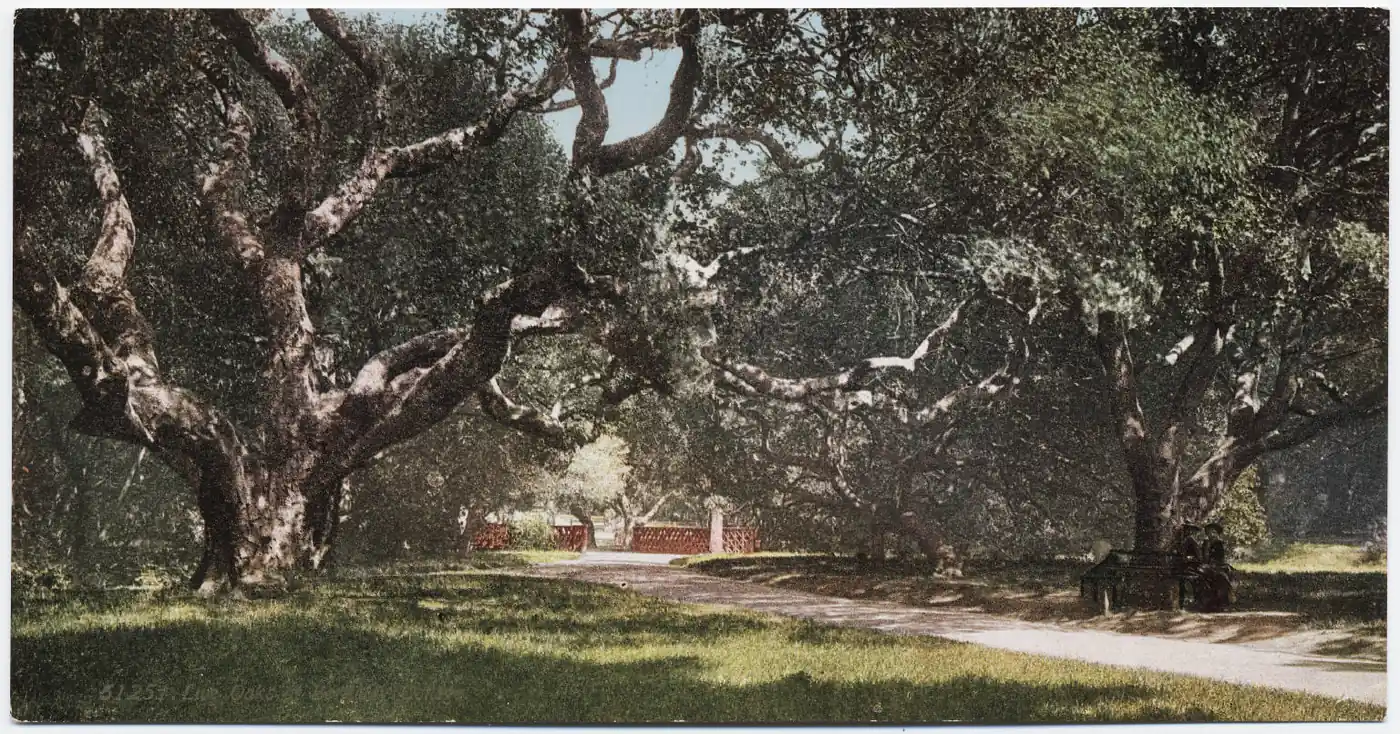
Killearn lots tend to carry large heritage live oaks, tall pines close to homes, and a significant population of aging laurel oaks. That mix means high canopy value, real storm exposure, and a good chance any major work touches a protected or regulated tree.
Storm damage or a tree on your house? Call now.
Stay out of rooms under the tree and keep clear of downed lines — report those to the power company first. Then call and we’ll connect you with a local tree crew that handles storm work.
📞 Call (858) 319-0022Free 24/7 dispatch line · availability varies by storm volume
City §5-83 Permits for Killearn Lots
Killearn is inside the City of Tallahassee, so the §5-83 tree ordinance applies. Protected trees and larger oaks can require a permit to remove, sometimes with a showing that the tree is dead, dying, or hazardous. A local arborist can tell you whether your specific tree triggers a permit — see the Tallahassee tree permit guide and City of Tallahassee tree removal rules.
HOA Covenants: What Killearn Adds on Top
Beyond the city rules, the Killearn homeowners association can have its own covenants on tree removal and landscaping. It’s worth confirming any HOA approval step before scheduling work, so you’re not caught between a city permit and a covenant requirement. A crew familiar with the neighborhood will know to ask.
Heritage Live Oaks: The Killearn Specialty
The big spreading live oaks are the neighborhood’s signature — and the most demanding to work on. Their heavy horizontal limbs need careful structural pruning, and removal (when truly necessary) is upper-tier work that should only be done by an ISA-certified, insured crew. Preserving these trees with proper care is almost always the better path.
Laurel Oak Risk Across the Neighborhood
Many of Killearn’s laurel oaks were planted around the same era and are now reaching the age where decay and failure become common. A leaning laurel oak, one with mushrooms at the base, or one dropping limbs deserves a prompt assessment — see why Tallahassee laurel oaks are failing now.
Pine, Magnolia, and Other Species Notes
Tall pines near the house are the classic storm-day concern; southern magnolias and other ornamentals are generally lower-risk but still benefit from routine care. A whole-property look catches the few high-risk trees among the many healthy ones.
What to Expect for a Killearn Lot
Because Killearn trees are often large, close to homes, and sometimes protected, jobs here tend toward the more involved end — careful rigging, possible permitting, and HOA coordination. The arborist gives you the specific scope and number after assessing your trees and confirming the permit and covenant picture.
Tree work in Killearn Estates? Get matched with a licensed Tallahassee arborist Call now code and our 24/7 dispatch line connects you with an ISA-certified, insured arborist in our network serving Tallahassee and Leon County. A real person answers — describe the tree and your lot, and you’ll be routed to a pro who knows the neighborhood’s permits and HOA rules. Your quote is between you and the arborist. → Call now to get connected
Frequently Asked Questions
Do I need a permit to remove a tree in Killearn Estates? Possibly — Killearn is inside the City of Tallahassee, so protected trees and larger oaks can require a §5-83 permit. A local arborist will confirm whether your specific tree does.
Does the Killearn HOA have its own tree rules? It can. Confirm any HOA approval step before scheduling, in addition to the city permit, so both bases are covered.
Why are so many Killearn laurel oaks failing? Many were planted around the same time and are now reaching the age where decay and failure rise sharply. Any leaning or declining laurel oak is worth a prompt look.
Tree Species & Care Guides
Related: tree removal, tree trimming, and the permit guide.
TallahasseeTreeService.co is a dispatch service. We connect callers with licensed Florida arborists. We are not a licensed tree service company. The disclaimer in our site footer and our 24/7 dispatch caveat apply to this page.