The wind dies down, you step outside to check the yard, and one of your trees is leaning in a way it was not yesterday. Maybe the soil at its base looks pushed up, maybe a few roots are showing, maybe it is just tilted toward the house in a way that makes your stomach drop. After a Tallahassee storm, this is one of the most common and most nerve-wracking things a homeowner finds — and the hard part is that some leaning trees are an immediate danger while others have been leaning harmlessly for years.
Knowing which situation you are in matters, because the response is completely different. This guide walks through the single most important distinction — a new lean versus an old one — the danger signs that point to imminent failure, why the direction of the lean changes the urgency, and exactly what to do right now if you are worried. The aim is to help you read your tree clearly and act appropriately without either panicking over a harmless tilt or ignoring a genuine hazard.
A New Lean vs. a Tree That Always Leaned
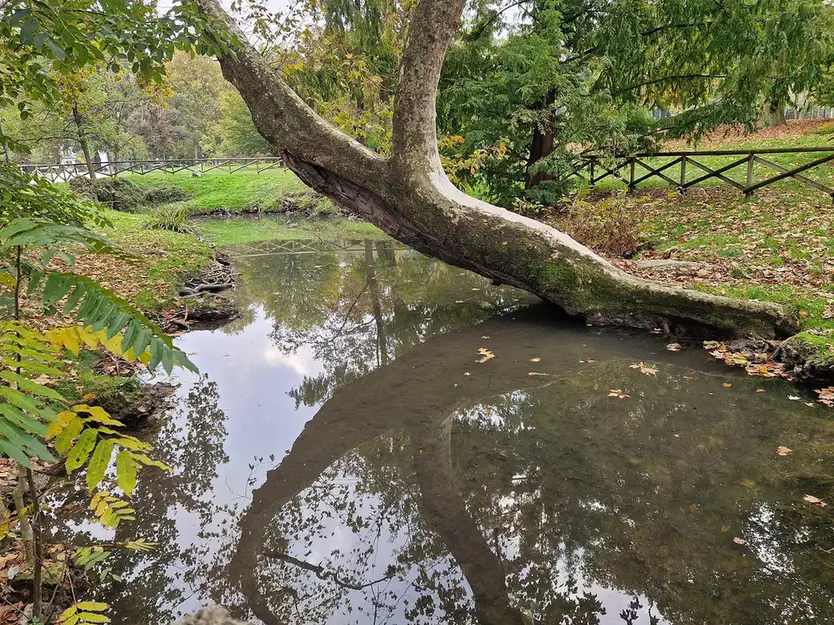
This is the key distinction, and it drives everything else. A tree that has grown at an angle over many years is usually stable. Trees are remarkably good at adapting to a persistent lean — they lay down extra “reaction wood” to support themselves and grow their root systems to compensate, which is why you see plenty of long-leaning trees standing perfectly fine for decades. A gradual, long-standing lean, with no other warning signs, is generally not an emergency.
A sudden, new lean is a different animal entirely. When a tree that stood upright yesterday is leaning now, it means something failed — most often the root system or the soil holding it. The tree did not have time to adapt, because the change happened all at once. A new lean after a storm is the scenario that warrants real concern and, frequently, urgent attention, because it can signal that the tree’s anchorage has partially given way and the rest may follow.
So the first question to ask yourself is not “how far is it leaning?” but “was it leaning like this before the storm?” If you are not sure, look for clues: a fresh lean is often accompanied by disturbed soil, lifted turf, or exposed roots on one side, whereas a long-standing lean has settled, undisturbed ground and established growth all around the base. Old photos of your yard can settle the question fast. A new lean changes a leaning tree from a curiosity into a potential hazard.
Storm damage or a tree on your house? Call now.
Stay out of rooms under the tree and keep clear of downed lines — report those to the power company first. Then call and we’ll connect you with a local tree crew that handles storm work.
📞 Call (858) 319-0022Free 24/7 dispatch line · availability varies by storm volume
The Danger Signs
Beyond the new-versus-old question, a set of physical signs point to a tree that may be in the process of failing. Any one of these alongside a new lean raises the urgency considerably.
Soil heaving or a raised root plate. This is the most serious sign. If the ground on one side of the trunk is mounded, cracked, or lifted — or you can see the root plate (the mass of roots and soil) starting to pull up out of the ground — the tree’s anchorage is failing. This is root failure in progress, and a tree in this state can come down with little additional warning.
Exposed, cracked, or broken roots. Roots that have torn or surfaced on the side opposite the lean indicate the tree is pulling its anchor out of the ground. Healthy, intact roots are what hold a tree up; visibly damaged ones mean that hold is compromised.
Fresh cracks in the trunk or major limbs. New splits in the bark or wood, especially vertical cracks or cracks at the base, signal structural failure under load. A trunk that is cracking is a trunk that may give way.
A gap opening at the base, or movement. If you can see a gap forming between the trunk’s base and the soil on the lean side, or the root plate visibly shifts when the wind blows, the tree is actively losing its grip.
If you see soil heaving, a lifting root plate, exposed torn roots, or fresh trunk cracks after a storm, treat the tree as a serious hazard. These are not “watch and wait” signs.
Direction Matters — What the Tree Is Leaning Toward
The risk a leaning tree poses is not just about whether it might fail, but about what it would hit if it did. The same lean can be a minor concern or a genuine emergency depending entirely on direction.
A tree leaning toward an open part of the yard, away from any structure, walkway, or power line, is a lower-stakes situation even if it does eventually fail — the worst case is a tree on the ground in an empty area. A tree leaning toward your house, a neighbor’s house, a driveway where cars park, a walkway, a play area, or any spot where people spend time is a far more serious matter, because a failure there puts people and property directly in harm’s way. And a tree leaning toward or into power lines is its own category of danger — never approach a tree contacting or near power lines, and treat that as a hazard requiring the utility and professionals, not something to assess up close.
When you weigh the urgency of a leaning tree, hold the two questions together: how likely is it to fail (new lean plus danger signs) and what would it hit (direction and targets). A new lean with root heave pointed straight at a bedroom is an emergency. A long-standing lean over open lawn is something to monitor and address on a normal schedule.
Tree leaning toward the house? Get matched with a licensed Tallahassee arborist Call now code and our 24/7 dispatch line connects you with an ISA-certified, insured arborist in our network who serves Tallahassee and Leon County. A real person answers — describe the lean, the danger signs, and what’s underneath it, and you’ll be routed to the right pro. → Call now to get connected
What to Do Right Now
If you have found a newly leaning tree with any of the danger signs, here is the practical sequence.
Keep people and pets clear. Establish distance from the tree, especially on the side it is leaning toward and the side where the roots may be failing. A failing tree can come down suddenly, and the root plate can lift violently. Keep everyone out of the potential fall zone — a good rule of thumb is to stay back at least the height of the tree. If the tree threatens your house, avoid the rooms beneath the lean.
Do not try to prop it, pull it, or cut it yourself. A tree under load is storing enormous energy, and amateur attempts to stabilize or remove a leaning, partially failed tree are extremely dangerous — this is how serious injuries happen after storms. Leave the physical work to professionals with the right equipment and training.
If power lines are involved, stay away and contact the utility. A tree on or near lines is a live electrical hazard. Keep clear and let the utility and professionals handle anything involving lines.
Document it. From a safe distance, take photos of the lean, the base, any root heave, and what the tree is threatening. These help an arborist assess urgency and are useful for any insurance claim.
Reach the dispatch line. Get connected to a licensed arborist who can assess the tree. Our dispatch line answers 24/7 and a real person picks up — describe what you are seeing so the right pro can be routed to you. The licensed pros in our network handle exactly this kind of situation through emergency tree service in Tallahassee and the 24/7 emergency line.
Why a Leaning Tree Often Can’t Be “Straightened”
A natural hope is that a leaning tree can simply be pushed back upright and staked. For a small, newly planted tree, that is sometimes possible. For an established tree that has shifted in a storm, it usually is not, and it is worth understanding why so you are not chasing a fix that does not exist.
Once a mature tree’s root plate has lifted or its anchoring roots have torn, the structural connection that held it upright is broken. Even if the tree could be mechanically forced back to vertical, the damaged roots cannot simply re-grip the soil and restore the original anchorage — the tree would remain unstable and prone to failing in the next storm. Mature trees also carry far too much weight for staking to hold against wind. For these reasons, a mature tree that has leaned due to root failure is typically a removal rather than a rescue. An arborist’s assessment will determine whether a particular tree is stable enough to keep and monitor or compromised enough that removal is the safe choice; if it is the latter, the licensed pros in our network handle tree removal in Tallahassee.
What to Tell the Arborist
A clear description helps the arborist gauge urgency before anyone is on site. Say whether the lean is new since the storm or long-standing, since that is the first thing they will want to know. Describe the danger signs you can see from a safe distance — soil heaving, a lifting root plate, exposed or torn roots, fresh trunk cracks, or a gap at the base. State what the tree is leaning toward — house, power lines, driveway, walkway, or open yard — because the target drives the priority. Note the tree’s rough size and type if you know it, since a large pine or oak near a structure is a bigger undertaking than a small tree over the lawn. And mention any active hazard, like the tree contacting a power line or already partly on a structure. The more precisely you describe it, the better the dispatch can match you to the right pro for the situation.
New lean with roots lifting? Get matched with a licensed Tallahassee arborist Call now code and our 24/7 dispatch line connects you with an ISA-certified, insured arborist in our network serving Tallahassee and Leon County. A real person answers — describe the lean, what you can see at the base, and what’s underneath the tree, and you’ll be routed to the right pro. → Call now to get connected
Frequently Asked Questions
Is a leaning tree always dangerous? No. A tree that has grown at an angle over many years is usually stable, because it adapts with extra support wood and roots over time. The dangerous situation is a sudden, new lean — a tree that was upright before a storm and is leaning afterward — which often signals that the roots or soil anchoring it have failed. The first thing to determine is whether the lean is new or long-standing.
What are the signs a leaning tree is about to fall? The most serious signs are soil heaving or a raised, lifting root plate on one side; exposed, cracked, or torn roots; fresh cracks in the trunk or major limbs; and a gap opening between the trunk base and the soil, especially if the tree visibly moves in the wind. Any of these alongside a new lean indicates the tree’s anchorage is failing and it should be treated as a serious hazard.
My tree is leaning toward my house after a storm — what should I do? Keep people and pets out of the potential fall zone, including the rooms beneath the lean, and stay back at least the height of the tree. Do not try to prop, pull, or cut it yourself. Document it with photos from a safe distance, and get connected to a licensed arborist for assessment. A new lean toward a house is among the higher-priority situations because both failure likelihood and the target are serious.
Can a leaning tree be straightened and saved? For a small, newly planted tree, sometimes. For an established tree that has shifted in a storm due to root failure, usually not — once the root plate has lifted or anchoring roots have torn, the structural hold cannot be reliably restored, and the tree would remain unstable. Mature trees are also too heavy for staking to hold. An arborist’s assessment determines whether the tree can be kept and monitored or should be removed.
Should I reach out about a leaning tree at night, or wait until morning? If the tree is newly leaning with danger signs and threatens a house, power lines, or an area where people are, it is worth reaching the dispatch line right away — our line answers 24/7 and a real person picks up. A long-standing lean over open yard with no new warning signs can generally wait for a normal scheduled assessment. The combination of a new lean and a serious target is what makes it urgent.
Why is a tree leaning after heavy rain in Tallahassee? Saturated soil is a major factor. When heavy Tallahassee rain soaks the ground, the soil loses its grip on the roots, and wind can then push the tree over far more easily than it could in dry ground — the root plate lifts out of the softened soil. This is why pines and shallow-rooted trees often lean or uproot after the heavy rain that comes with North Florida storms.
Is it safe to go near a leaning tree to inspect it? Only from a safe distance, and never if power lines are involved. A failing tree can come down suddenly and the root plate can lift with force, so keep back at least the tree’s height and observe rather than approach. Do not stand on the side it is leaning toward or where the roots are failing. Leave any close inspection and all physical work to professionals with the right training and equipment.
TallahasseeTreeService.co is a dispatch service. We connect callers with licensed Florida arborists. We are not a licensed tree service company. The disclaimer in our site footer and our 24/7 dispatch caveat apply to this page.