A tree leaning toward your house is one of those problems that goes from “I’ll deal with it later” to a 2 a.m. emergency in a single thunderstorm. This guide walks through how to assess a leaning tree in Tallahassee from the ground, the warning signs that turn a slow lean into a high-risk failure, and where the homeowner decision splits between mitigation and removal. priority dispatch ISA-certified arborist assessment — call now.
First: is the lean old or new?
The single most important question is whether the lean has been there for years or appeared recently. A mature live oak that has leaned the same direction for decades, with a normal canopy and an intact root flare, is usually adapting to wind and light — not failing. A tree that leaned after a storm, after construction near its root zone, or after heavy rain saturated the soil is a different category entirely. Sudden or accelerating lean is the red flag.
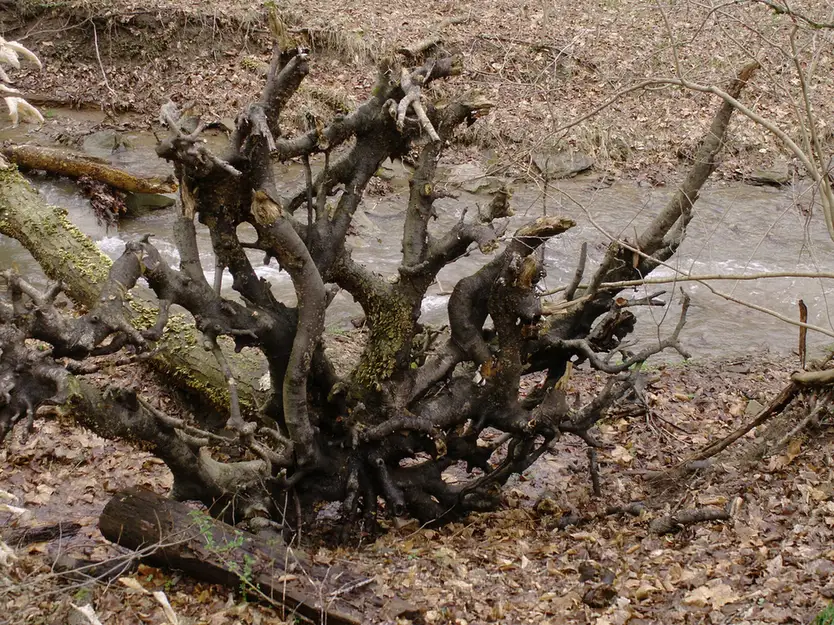
The simplest field check: look for a fresh crescent of lifted soil or cracked turf on the high side of the trunk, opposite the direction of lean. That is root-plate lift. It means the root system is rotating out of the ground. Any visible heaving means stop using the area under the canopy and call.
How to assess a leaning tree from the ground
The ISA Tree Risk Assessment Qualification (TRAQ) framework is what arborists use; homeowners can apply a simplified version of the same checks:
- Lean angle. Roughly estimate the angle from vertical. Most healthy trees lean less than about 15°. Beyond that, the load on the windward root plate is significant.
- Root plate. Walk around the base. Look for lifted soil, cracked grass, exposed roots that used to be buried, or a “mushrooming” buttress on the lean side. Any of those is serious.
- Trunk condition. Bark cracks running vertically, conks (shelf fungi) at the base, hollow sound on tapping, sap ooze, or carpenter ant trails point to internal decay.
- Canopy balance. A heavily one-sided canopy in the direction of lean is acting like a sail in storm winds.
- Target. What is in the fall zone? A house, driveway, power line, or play area changes the risk math even if the tree itself is borderline.
- Species and age. Laurel oaks, water oaks, and pines in their last decade fail more often than mature live oaks. See Why Tallahassee Laurel Oaks Are Failing Now.
When to evacuate the fall zone
Move people, vehicles, and pets out of the fall zone right now if you see any of these:
- Fresh soil heaving or cracked turf on the high side of the trunk
- Audible cracking, popping, or creaking in the trunk or root zone
- The lean is visibly changing day to day
- A major limb has already failed in the same tree
- Roots are visibly torn or exposed where they were buried before
Then call for emergency assessment — do not wait out a forecasted storm. See Emergency Tree Service Tallahassee and Emergency Tree Removal Cost for what the urgent call looks like.
Mitigation vs removal: where the line falls
Not every leaning tree comes down. Where the cut line falls depends on the assessment.
- Crown reduction or thinning can rebalance a one-sided canopy and reduce wind load — useful when the trunk and roots are sound but the canopy has gotten lopsided.
- Cabling and bracing (ANSI A300 Part 3) is a structural-hardware option for high-value heritage trees with co-dominant stems or specific weak points — not a fix for root failure.
- Removal is the call when there is root-plate lift, decay at the base, hollow trunk, fresh acceleration in lean, or the fall zone contains the house and the tree cannot be reliably saved.
An arborist with TRAQ credentials can quantify the risk and document the recommendation — which matters both for the right decision and for insurance.
Insurance and Florida law
If the tree is on your property and you have documented evidence (photos, an arborist report) that it was a hazard before it fell, homeowners insurance and the legal calculus look very different than if it failed unannounced. Florida statute §163.045 limits municipal tree-removal permitting on residential property when a documented hazard is involved — a written arborist assessment is the document that triggers that pathway. See Insurance Tree Removal Tallahassee and Tallahassee Tree Permit Guide.
Two practical points: insurance carriers ask if you had prior notice of the hazard; that is usually a positive when you can show you acted promptly on an arborist report. And if the tree falls on a neighbor’s property, the rules of liability turn on whether the tree was a known hazard — Tallahassee Tree Law & Neighbors covers that ground.
Frequently asked questions
Is my tree going to fall?
The strongest predictors of imminent failure are fresh root-plate lift (cracked turf on the high side of the trunk), audible creaking, a lean that is visibly changing, or recent loss of a major limb. Any of those means evacuate the fall zone and call for an ISA-certified TRAQ assessment.
How much lean is too much?
There is no single safe angle, but most healthy trees lean less than about 15 degrees from vertical. Beyond that, the load on the windward roots becomes significant, and the rest of the assessment (root plate, trunk decay, canopy balance, target) decides whether it is safe.
Should I evacuate before the storm?
If you have visible root-plate lift, fresh trunk cracks, creaking, or a recently accelerated lean toward the house, do not occupy the fall zone during a forecasted storm. Move people and vehicles, and arrange an emergency assessment.
Can a leaning tree be saved instead of removed?
Sometimes. If the trunk and roots are sound and the lean is canopy-driven, crown reduction or cabling under ANSI A300 Part 3 can reduce risk. Root-plate failure, base decay, or accelerating lean usually push the decision to removal.
Does Florida law allow me to remove a hazardous leaning tree without a permit?
Florida statute §163.045 limits local government permitting when a written assessment from an ISA-certified arborist documents a hazard on residential property. The arborist report is the document that triggers that pathway — get the assessment in writing.
What does an emergency assessment cost?
Assessment pricing through this network varies by provider. Emergency priority dispatch pricing depends on access, equipment (crane vs climber), and target proximity — see Emergency Tree Removal Cost.
priority dispatch leaning-tree assessment
ISA-certified arborists, TRAQ-qualified inspections, and 24-hour dispatch for trees that have begun to lift or crack. Availability is not guaranteed and depends on provider schedules, location, and demand. Call now to get matched.
Related resources
Emergency Tree Service · Storm Damage Tree Removal · Tree Health Assessment · Insurance Tree Removal · 7 Trees Most Likely to Fall