Tallahassee’s pine canopy takes a beating some summers, and one of the least obvious threats isn’t a storm at all — it’s bark beetle activity working through a loblolly, longleaf, or sand pine over a matter of weeks. Southern pine beetle and Ips engraver beetle activity both show up in Leon County most years, especially after drought stress or a hurricane season that leaves pines weakened. The tricky part is that by the time the crown fully fades to rust-orange, the tree has often already lost the structural integrity that made it safe to have near a driveway, fence line, or roof.
If you’re standing in your yard right now looking at a pine that doesn’t look right, here’s what to check before you decide whether this is a “keep an eye on it” situation or a “get someone out here soon” situation.
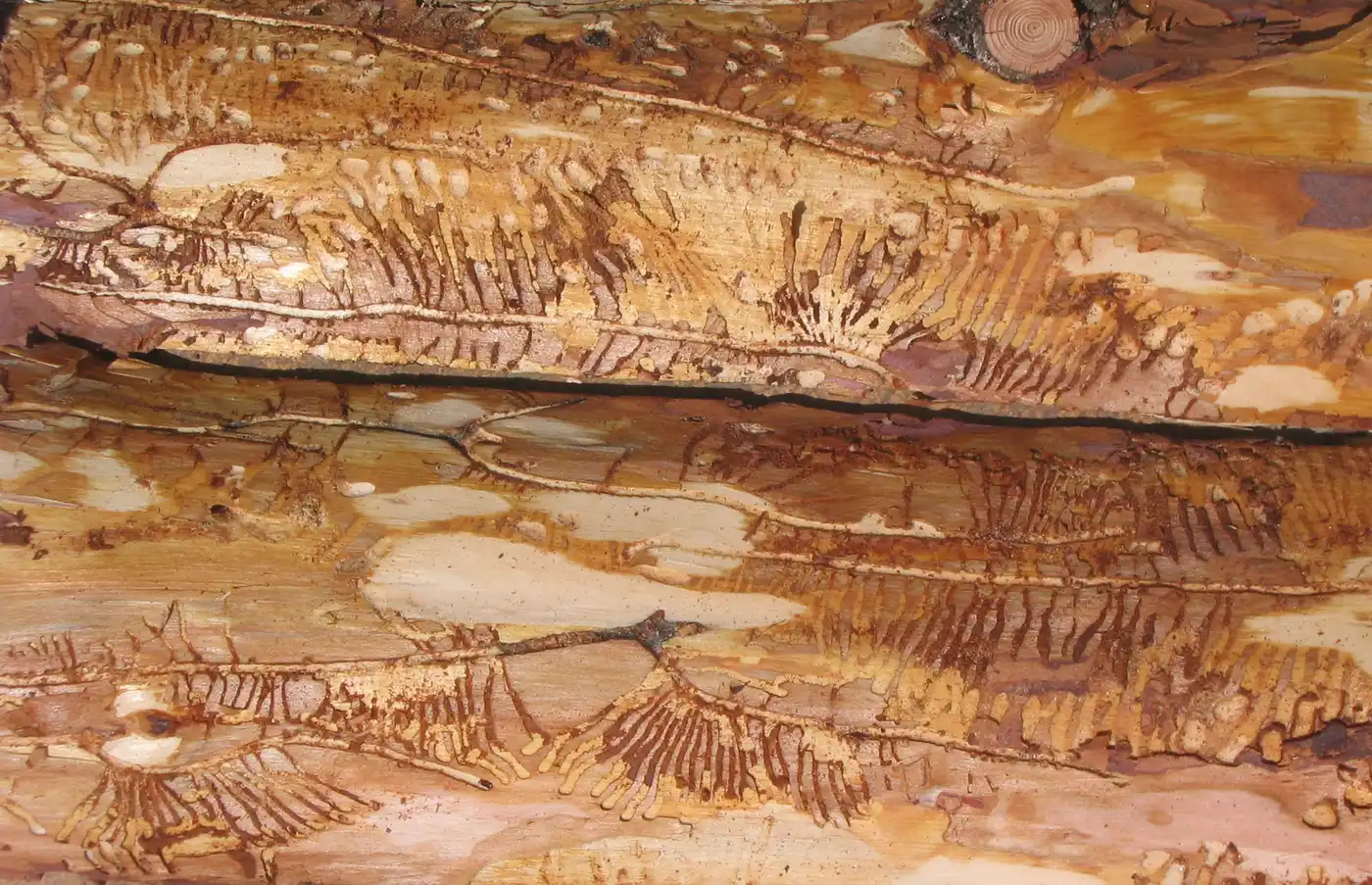
What Pine Bark Beetle Damage Actually Looks Like
A few signs tend to show up together on a beetle-infested pine, and no single one is proof on its own — a licensed tree pro will want to see the combination before confirming anything:
- Pitch tubes. Small popcorn-shaped globs of resin, often reddish-brown to white, dotting the trunk where the tree tried to push beetles back out.
- Boring dust. Fine reddish sawdust collecting in bark crevices or around the base — check spiderwebs low on the trunk, they tend to catch it well.
- Crown fade. Southern pine beetle tends to fade needles top-down; Ips engraver beetles more often show fading in a single branch or the lower crown first. Either pattern usually moves from green to yellow to rust-red faster than ordinary drought stress would explain.
- Woodpecker activity. Increased woodpecker feeding — they’re after beetle larvae under the bark — is often one of the earliest visible clues, sometimes before the needles change color at all.
- Bark sloughing. On a pine that’s been dead a while, bark starts separating from the trunk in chunks, which is also about when the wood underneath gets brittle and unpredictable.
Tap to call (858) 319-0022 — get connected to a licensed Tallahassee tree pro
Storm damage or a tree on your house? Call now.
Stay out of rooms under the tree and keep clear of downed lines — report those to the power company first. Then call and we’ll connect you with a local tree crew that handles storm work.
📞 Call (858) 319-0022Free 24/7 dispatch line · availability varies by storm volume
Why a Beetle-Killed Pine Is a Different Kind of Removal Job
A live, healthy pine and a beetle-killed pine aren’t the same removal job, even at the same species and size. Once beetles have been working through the cambium layer for a few weeks, the wood starts losing the strength that lets a crew control how and where a section comes down. Bark that’s ready to slough off can hide sections that are far more rotten or hollow than they look from the ground. That’s part of why beetle-aware pine removal in Tallahassee usually calls for a more careful, sectioned approach — sometimes with rigging, especially on tighter lots where a straight drop isn’t an option because of a fence, a shed, or a neighbor’s yard.
Pines also tend to fail differently than hardwoods like live oak. Instead of one big trunk failure, a beetle-killed pine can drop large limbs with very little warning as the wood dries out and gets brittle, even before the whole tree comes down. That detail is worth mentioning when you call — whether limbs have already started dropping changes how a crew plans the job.
What to Do If You Spot Pine Bark Beetles in Your Yard
A few practical steps while you get a professional opinion:
- Keep people and vehicles away from the drip line of a suspected beetle-killed pine, especially during wind.
- Don’t stack firewood from a beetle-infested pine near other healthy pines on the property — it can help the infestation spread locally.
- Skip the DIY chainsaw approach on anything over a few inches in diameter that’s showing crown fade. Brittle, beetle-damaged wood behaves unpredictably under a saw.
- Note how fast the color change happened. A pine that faded in two or three weeks is a different urgency level than one that’s been slowly declining over a year from something else, like root damage or a lightning strike.
When you call, the licensed tree pro you get connected with will usually ask what species of pine it is if you know, how close it is to a structure, and whether you’ve seen pitch tubes or just crown fade. Having that ready speeds up the assessment.
Quick Answers
Can a pine bark beetle infestation spread to my other trees?
Bark beetles can move between stressed pines that are close together, which is one reason arborists often recommend removing a clearly infested pine sooner rather than later if there are other pines nearby.
Is it ever okay to wait a season before removing a beetle-killed pine?
Every yard is different, and a licensed arborist can give you a read on how much time a specific tree realistically has left. As a general rule, dead pines lose structural integrity faster than most hardwoods, so this usually isn’t a “get to it next spring” kind of tree.
Will removing a beetle-killed pine also mean grinding the stump?
Stump grinding is a separate step from removal, and whether it makes sense depends on what you’re planning for that spot in the yard. It’s worth asking about when you call so the pro can look at both pieces of the job at once.
Tallahassee Tree Service is a 24/7 dispatch line that connects Leon County homeowners with licensed local tree pros. We don’t send our own crew — we get you on the phone with one fast so someone experienced can look at what’s actually happening in your yard.