After a Tallahassee storm, tree debris has to go curbside for pickup — it can’t be piled against fences, mailboxes, utility boxes, or storm drains, and burning yard debris requires authorization from the Florida Forest Service. The City of Tallahassee and Leon County run separate storm-debris programs with their own schedules and separation rules (vegetative debris apart from construction debris, apart from household trash), so checking the right agency’s current guidance before you drag branches to the curb saves a second trip.
Getting a downed limb or a whole tree off the ground is usually the easy part after a storm. What trips people up in Tallahassee is everything that happens after — where the debris is supposed to go, how it has to be separated, and why a pile that looked fine on day one gets left behind on collection day three. Storm debris pickup runs on rules set by the City of Tallahassee or Leon County depending on where the address sits, and those rules change during an active storm-recovery period compared to normal yard-waste weeks — inside City limits, the regular size limits are temporarily lifted while storm recovery is underway.
Where Does Storm Debris Actually Go in Tallahassee?
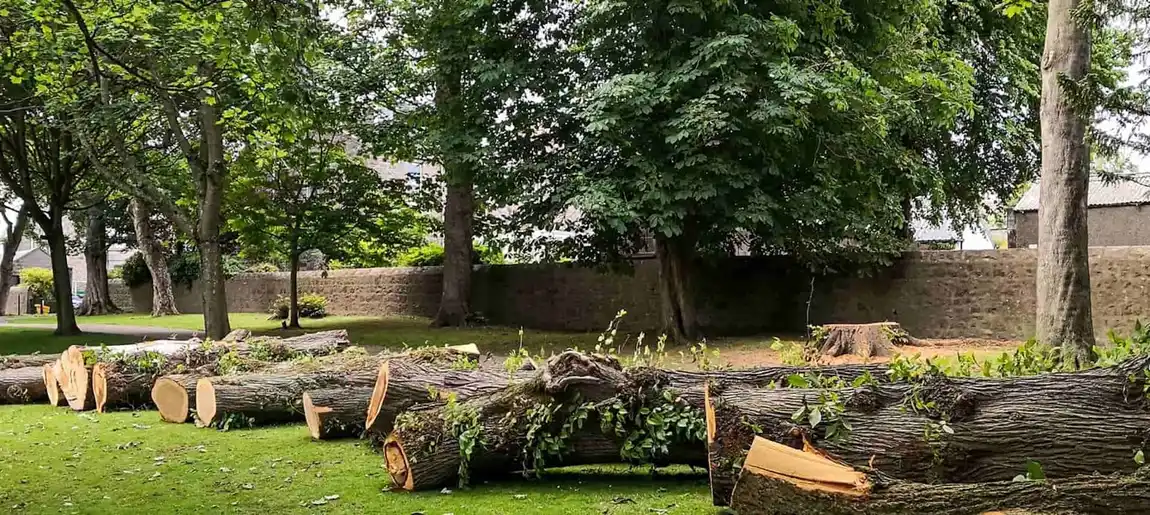
Vegetative storm debris — limbs, branches, whole trees, palm fronds — goes to the curb, not the alley, not the side yard, and not stacked against a fence line. Curbside placement matters because after a major storm, the city and county typically bring in grapple trucks and claw equipment built to work the public right-of-way from the street; a pile tucked behind a fence or under a carport often gets skipped on the first several passes because the equipment can’t reach it safely.
The City of Tallahassee and Leon County each publish their own current storm-debris collection schedule and placement rules through their solid waste divisions, and those rules can change storm to storm depending on the size of the event and how many contracted haul crews are working the area. Checking the City of Tallahassee’s Solid Waste page or Leon County Public Works’ Solid Waste page before you start piling is worth the five minutes, especially since city and county collection zones don’t always follow the boundary you’d expect.
Storm damage or a tree on your house? Call now.
Stay out of rooms under the tree and keep clear of downed lines — report those to the power company first. Then call and we’ll connect you with a local tree crew that handles storm work.
📞 Call (858) 319-0022Free 24/7 dispatch line · availability varies by storm volume
Do You Have to Separate Debris Types?
Yes, and this is the step that gets skipped most. Vegetative debris (tree limbs, brush, leaves) is typically collected separately from construction and demolition debris (fence panels, damaged decking, roofing material) and separately again from bagged household garbage. Mixing a fence panel into a brush pile, or bagging leaves in with roof shingles, is a common reason a pile gets passed over rather than picked up on the next pass. Keeping three distinct piles — vegetative, construction/demolition, and household trash — is the simplest way to avoid a delay.
Is There a Size Limit on Branches and Logs?
- Inside City of Tallahassee limits — there’s no set length during storm recovery. The City’s storm-debris guidance says regular size limits are temporarily lifted, and piles with tree trunks or big limbs are picked up by separate heavy-duty crews, so you may see more than one crew on your street. Outside a storm-recovery period, the City’s regular yard-waste rule applies: small limbs no longer than six feet and no thicker than four inches, in piles no higher than four feet.
- Unincorporated Leon County — the County sets its own storm-debris rules for each event, so check Leon County’s current guidance before cutting anything down to a particular size.
- Placement — piles need to stay clear of fire hydrants, storm drains, utility boxes, and mailboxes, shouldn’t be leaned against trees or poles or placed under low-hanging wires or limbs, and shouldn’t block a sidewalk or sit in the roadway.
A local arborist doing storm cleanup work will typically buck debris down to the size the current collection program wants, which is one more reason it’s worth having someone who does this regularly handle a large storm-damaged tree rather than piling whatever comes off in whatever shape it lands.
Tree still down or hanging after the storm? Get matched with a licensed, insured local Tallahassee arborist who can remove it and stage the debris the way current collection rules require.
Can You Just Burn Storm Debris Instead?
Not without authorization. Open burning of yard and storm debris in Florida generally requires an authorization from the Florida Forest Service, and burn bans are common during and after storm events when conditions are dry or when local fire officials restrict outdoor burning for safety reasons. Piling storm debris and burning it in a backyard without checking current burn authorization status is both a code issue and, depending on conditions, a real fire risk to neighboring structures. The Florida Forest Service publishes current authorized-burning guidance that covers when a permit is required and when burning is restricted altogether.
What Happens to Debris That Doesn’t Get Picked Up?
After a major storm, collection schedules often run in passes across the whole service area rather than a single one-time sweep, which means a pile that isn’t ready or isn’t compliant on the first pass may sit for days waiting on the next one. Piles that mix debris types, sit under low-hanging wires, or sit somewhere equipment can’t reach are the most common reason for a missed pickup. If storm-related debris sits too long, it can also become a mosquito-breeding and pest concern in Tallahassee’s humid late-summer conditions, which is its own reason to get it staged correctly the first time.
What About Debris From a Removal an Arborist Just Did?
When a licensed local arborist removes a hazardous or storm-damaged tree, hauling the resulting debris is usually part of the job scope, which sidesteps the curbside-and-wait process entirely for anything the crew generates. For debris from a tree that came down on its own before anyone arrived to work it, though, homeowners are often the ones staging it — and getting that staged correctly the first time is what keeps it from sitting at the curb through multiple missed collection passes.
For homeowners still assessing what to do with a downed or storm-damaged tree before debris is even the question, the storm damage tree removal page covers documentation and removal sequencing, and the land clearing page covers larger-scale debris and lot cleanup after significant storm damage.
FAQ
Does the City of Tallahassee or Leon County collect my storm debris?
It depends on the address — the City of Tallahassee’s Solid Waste division and Leon County Public Works run separate programs with their own zones and schedules, so checking the current guidance from whichever agency serves your street is the fastest way to confirm.
Can I burn storm debris in my backyard in Tallahassee?
Only with authorization from the Florida Forest Service, and burn conditions or bans can restrict it entirely during and after a storm event. Check current authorized-burning status before burning any yard or storm debris.
Do I need to separate tree limbs from construction debris?
Yes. Vegetative debris, construction/demolition debris, and household trash are typically collected separately, and mixing them is one of the most common reasons a pile gets passed over on collection day.
How long do branches need to be for pickup?
Inside City of Tallahassee limits, there’s no set length during storm recovery — the City temporarily lifts its regular size limits and sends separate heavy-duty crews for trunks and big limbs. Outside storm recovery, the City’s regular yard-waste rule is small limbs no longer than six feet and no thicker than four inches, in piles no higher than four feet. Unincorporated Leon County sets its own rules, so check the County’s current guidance.
Tallahassee Tree Service is a free referral and dispatch service. We are not a licensed tree service provider and do not perform tree work ourselves. All work is performed by independent, licensed and insured third-party arborists in our network. Availability, pricing, and response times are determined solely by the dispatched provider and are not guaranteed. Municipal collection rules and schedules are set by the City of Tallahassee and Leon County and are subject to change; always confirm current requirements with the applicable agency.