Tallahassee Tree Service Co. connects Leon County and Big Bend homeowners with vetted, local tree care crews. Trees are one of the biggest storm-risk factors around a home, and a lot of the highest-risk problems are things a homeowner can actually spot ahead of time. We put together this free checklist to help residents get a head start before storm season arrives. Want an instant read on a specific tree instead of a walk-around? Try our free Tree Risk & Storm Damage Assessment Tool.
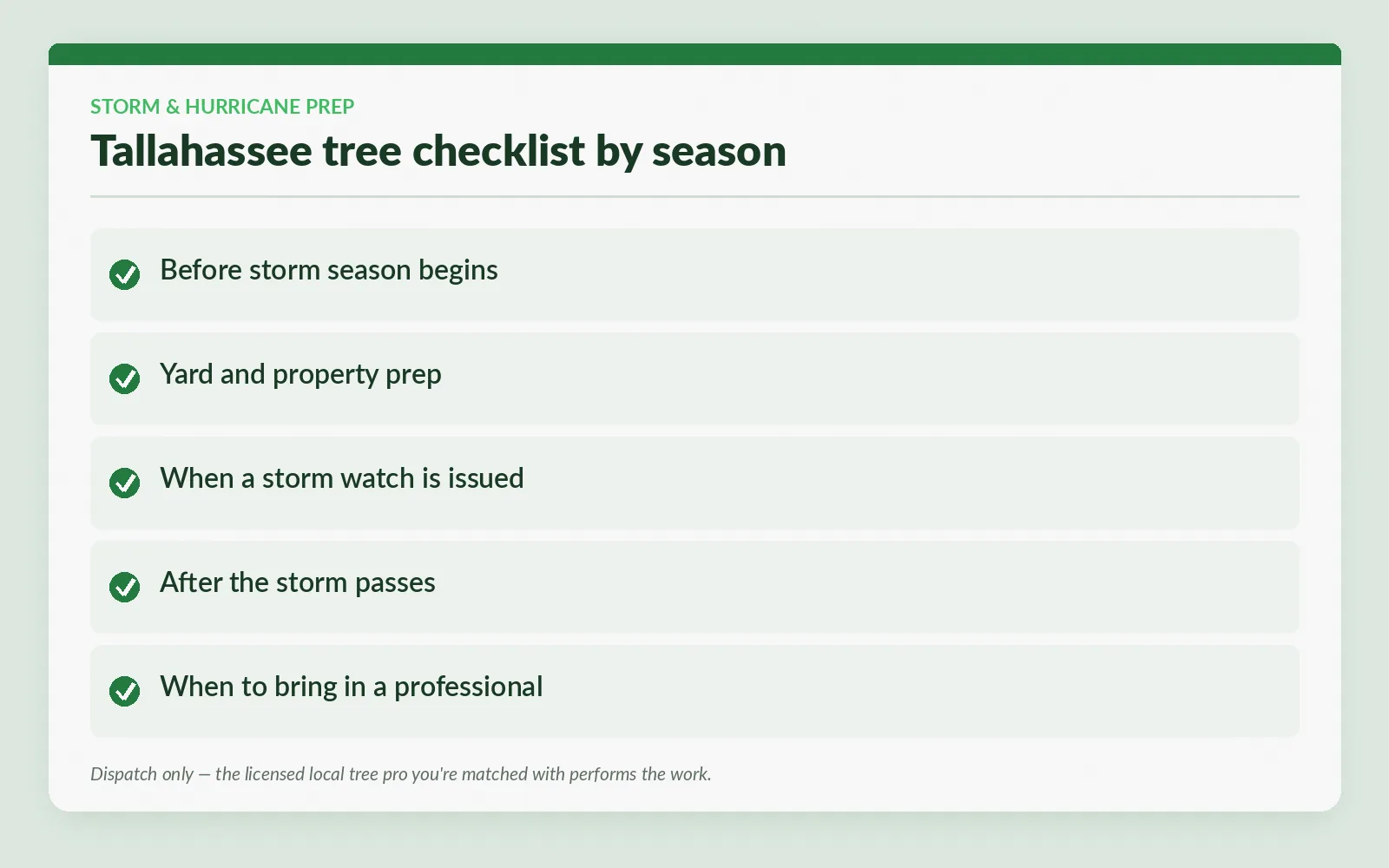
Before Storm Season Begins
- Walk the property and look up into the canopy of every tree near the house, driveway, or power lines — note any dead, cracked, or hanging limbs.
- Check for large limbs that overhang the roof, chimney, or an entry path to the house.
- Look at the base of each tree for leaning, exposed roots, or soil that has recently lifted or cracked — signs a tree may be losing its root hold.
- Check the trunk for large cavities, deep cracks, peeling bark, or fungal growth (mushrooms or shelf-like growths at the base are a common warning sign).
- Note any trees with a heavy lean toward the house, a driveway, or a neighbor’s property.
- Identify any dead trees entirely — a dead tree is a much greater storm risk than a healthy one and should be prioritized.
- Check that trees are clear of power lines; do not attempt to trim anything near a line yourself.
Yard & Property Prep
- Clear loose branches, yard debris, and dead limbs already on the ground — they become projectiles in high wind.
- Secure or store anything that could blow into a tree or be thrown by falling limbs.
- Note the location of any trees close enough to fencing, sheds, or vehicles that a falling limb could reach them, and consider relocating vehicles during a storm watch if needed.
- Check young or newly planted trees for stability; loose stakes or ties should be adjusted well before a storm, not during one.
When a Storm Watch Is Issued
- Do a final visual check of trees you’ve already flagged as a concern — don’t attempt new trimming or climbing once winds are picking up.
- Move vehicles and outdoor equipment away from trees with known lean, dead limbs, or root issues.
- Keep an eye on any tree you noted as high-risk earlier in the season; if conditions have worsened, it may need attention before the storm arrives, not after.
After the Storm
- Stay clear of any tree or limb in contact with a downed power line and report it rather than approaching.
- Photograph any damage before clearing debris, in case it’s needed for insurance.
- Look for new leans, cracked trunks, or exposed roots that weren’t there before — storm stress can leave a tree unstable even if it’s still standing.
- Avoid climbing or cutting large storm-damaged limbs yourself, especially anything under tension or hung up in the canopy.
When to Bring in a Professional
This checklist is meant to help homeowners spot risk early — it isn’t a substitute for a hands-on inspection of a tree that looks unstable, storm-damaged, or too large to safely assess from the ground. If a tree still needs saving versus removing, our free Save It or Remove It? Tree Decision Helper walks through that call. If you’ve flagged a tree as a concern using this list, Tallahassee Tree Service Co. can connect you with a vetted, local, insured tree care crew serving Leon County and the Big Bend.
For a deeper look at hurricane-specific tree prep, see our full Hurricane Tree Prep Guide, or check the Tallahassee & Leon County Tree Storm-Risk Report for the area data behind this checklist. Feel free to share this checklist with neighbors or through a community newsletter — it’s free to use, no strings attached.