Quincy’s stumps come out of red Gadsden clay, not the sand you find south of Tallahassee — and that changes everything about how a stump grinds and backfills. Whether it’s a pecan left from an old grove, an oak by a historic-district sidewalk, or a yard full of cut tobacco-shade hardwoods, here’s how grinding works on Gadsden clay and how to get matched with a licensed Quincy crew.
Who grinds stumps in Quincy, FL?
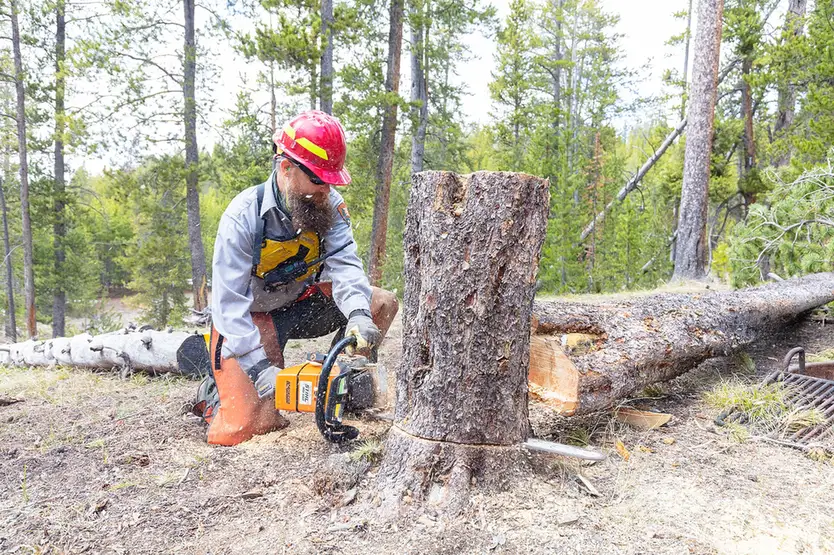
Gadsden County operators running grinders that can chew pecan and live oak stumps below grade in heavy red clay. Call now to get matched, or see how stump grinding in Tallahassee is scoped by diameter and access.
Storm damage or a tree on your house? Call now.
Stay out of rooms under the tree and keep clear of downed lines — report those to the power company first. Then call and we’ll connect you with a local tree crew that handles storm work.
📞 Call (858) 319-0022Free 24/7 dispatch line · availability varies by storm volume
Get matched with a Quincy stump grinder
Call now and we’ll connect you with a licensed, insured Gadsden County crew for a no-obligation stump-grinding quote.
Why Gadsden clay changes the grind
Quincy sits on the rolling red clay of the Tallahassee Hills, not the flatwoods sand of Wakulla. Clay holds water, so the ground wood and mulch a grinder produces comes out heavier and wetter, and the hole backfills denser. Clay also grips roots hard, which means surface roots break rather than slide — so a thorough grind chases the flare wider than it would in sand. The upside: clay settles less than sand once tamped, so a ground stump under a future patio or walkway stays put. It’s why grinding, not excavation, is the cleaner finish on most Quincy lots after a removal.
The stumps Quincy leaves behind
- Pecan — Gadsden’s grove heritage means big, old pecan stumps with sprawling roots; dense wood, slow grind, wide flare.
- Live oak & water oak — the canopy over Quincy’s older streets; live oak is the hardest stump in the county.
- Crepe myrtle clumps — multi-stem bases that grind as several small stumps in one footprint.
- Sweetgum & hackberry — aggressive re-sprouters that need a wide grind to kill the root crown.
- Pine — on the sandier ridges; faster than the hardwoods but resinous.
Historic district & sidewalk roots
Quincy’s National Register historic district has mature trees crowded against brick walks, curbs, and century-old foundations. Grinding a stump there means working close to hardscape and sometimes to a neighbor’s line. A crew should hand-locate utilities, protect the walk, and grind in controlled passes rather than muscling the machine. If the tree was a protected or street tree, confirm with the City of Quincy before cutting — grinding the leftover stump is separate from removing a standing tree.
What it costs and what affects it
No honest crew quotes a stump sight-unseen. Price tracks diameter at the flare, root spread (wider in clay), access to the backyard, grind depth, stump count, and haul-away versus leaving mulch as backfill. Pecan and live-oak stumps sit at the top of the range; crepe myrtle and pine at the bottom. See the area-wide cost guide for the full picture, then get a firm on-site number at no obligation. For broader work, browse all tree services in Quincy.
Quincy-area FAQs
Does red clay make stump grinding harder or more expensive?
It can. Clay grips roots so they break rather than pull, which means a thorough grind chases the flare wider than in sand, and the ground wood comes out heavier. The trade-off is that a clay backfill settles less than sand, so the spot stays level under future sod or hardscape.
Can you grind a pecan stump from an old grove?
Yes, though pecans are among the larger, denser stumps in Gadsden County with wide root systems, so they take longer and sit higher in the price range. A crew will grind the visible stump plus the major surface roots to keep the area usable.
My stump is right next to a historic-district sidewalk. Is that a problem?
It’s workable but calls for care. A crew should locate utilities, protect the brick or concrete walk, and grind in controlled passes close to the hardscape rather than forcing the machine. Tight, structure-adjacent stumps are exactly where a vetted operator earns the difference.
Do I need City of Quincy approval to grind a stump?
Grinding an existing stump on your property generally doesn’t require approval. Permitting questions apply to removing a standing protected tree or a street tree, so if the stump is from a tree you still need to cut, check with the City of Quincy first.
Will a crepe myrtle or sweetgum grow back after grinding?
Both re-sprout from roots if the grind is too narrow. Grinding wide enough to take the whole root crown, and doing it promptly, is what stops a crepe myrtle clump or sweetgum from sending up new shoots.
Clear that stump for good
Call now and tell us what you’re grinding. We’ll match you with a licensed, insured Quincy crew for a no-obligation quote.
Serving Quincy, Havana, and Gadsden County, FL. Content reviewed June 2026. Tallahassee Tree Service connects homeowners with independent licensed tree professionals and does not perform tree work directly.