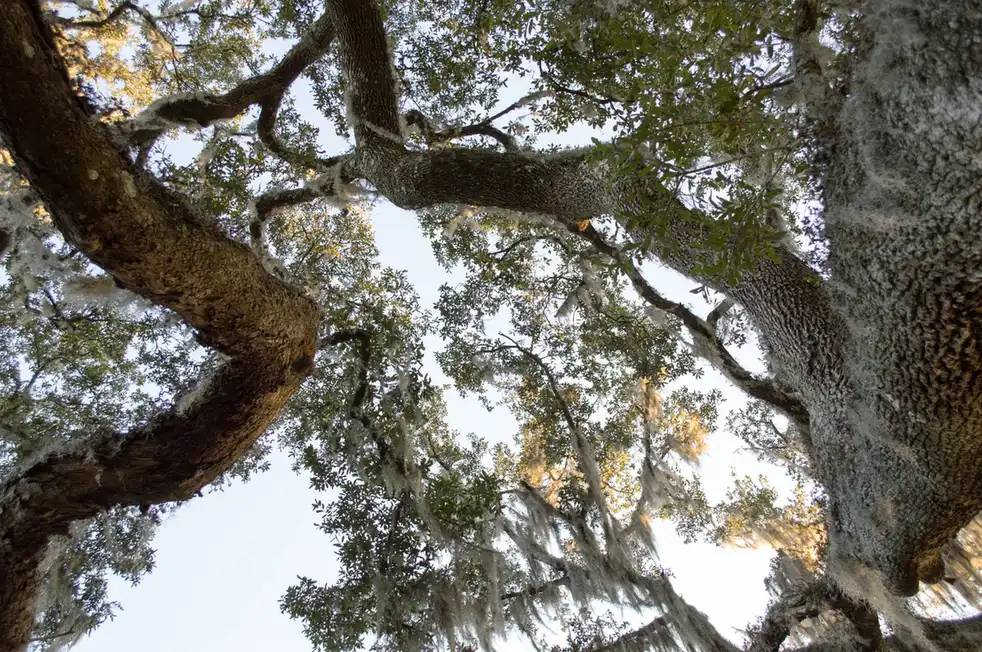
The live oak is the signature tree of Tallahassee — arching over the canopy roads, shading the older neighborhoods, and giving the capital its unmistakable character. If you own one, you already know it is the backbone of your yard, which is exactly why the question of when to trim it deserves more thought than most homeowners give it. Prune a live oak at the right time and you improve its health, its structure, and its odds of riding out a hurricane. Prune it at the wrong time — or take off too much — and you can stress the tree, invite disease, or leave it more vulnerable to storms, not less.
This guide lays out the window arborists aim for in North Florida, the months to be cautious about because of oak wilt, the rule that keeps a pruning job from going too far, and the safety exception that applies year-round. The goal is to help you plan the work and know what to ask the arborist so your oak comes out of it stronger.
The Window to Aim For — Late December Through February
For routine pruning of a healthy live oak in the Tallahassee area, the window arborists favor is the dormant season — roughly late December through February. There are several reasons this stretch is preferred.
The tree is dormant, so its energy is conserved rather than spent on active growth, and pruning cuts made now heal as the tree wakes up in spring. Cooler winter temperatures mean the insects that spread tree diseases are far less active, which matters a great deal for oaks specifically. And pruning in late winter lets you set the tree’s structure ahead of the growing season, so it puts its spring energy into the form you want.
There is also a Tallahassee-specific reason to favor this window: timing pruning for late winter means heavier structural work, thinning, and any cabling can be completed and the tree settled well before hurricane season ramps up in summer and fall. Arborists generally want significant pruning and storm-prep work wrapped up by March through May so the tree is structurally sound heading into the season when North Florida’s wind and rain put it to the test. Pruning right before or during storm season is poor timing — fresh, heavy cuts going into the most stressful months of the year is the opposite of what you want.
Storm damage or a tree on your house? Call now.
Stay out of rooms under the tree and keep clear of downed lines — report those to the power company first. Then call and we’ll connect you with a local tree crew that handles storm work.
📞 Call (858) 319-0022Free 24/7 dispatch line · availability varies by storm volume
The Months to Be Cautious About — Oak Wilt Risk
The single biggest reason timing matters for oaks, as opposed to other trees, is oak wilt — a serious fungal disease that can kill an oak and spread to neighboring oaks. Understanding how it spreads is what makes the timing rule click.
Oak wilt is moved from tree to tree in part by sap-feeding beetles that are attracted to fresh pruning wounds. When you cut an oak during the warmer months when these beetles are active, the open wound essentially advertises itself to them, and a beetle carrying spores from an infected tree can introduce the fungus right into the fresh cut. For that reason, the cautious approach is to avoid non-emergency oak pruning during the warm, beetle-active stretch — roughly spring into mid-summer. Cutting in the dormant winter window, when the beetles are dormant too and wounds seal faster, sharply reduces that risk.
This is why a live oak should be on a different pruning calendar than, say, a crape myrtle. With most ornamentals, off-timing mostly costs you some bloom or growth. With an oak, off-timing during beetle season carries a genuine disease risk to the tree and to the oaks around it — a real consideration in a city as oak-dense as Tallahassee, where one infected tree has many neighbors. If pruning becomes unavoidable during the risky months for a safety reason, that is a conversation to have with a certified arborist, who can take precautions like promptly sealing wounds.
The 25% Rule — Never Over-Thin a Canopy
Timing is half the equation; the other half is how much. The guideline arborists hold to is straightforward: never remove more than about 25% of a tree’s living canopy in a single pruning cycle, and for a mature oak, considerably less is often wiser.
The reason is that the canopy is the tree’s food factory. Leaves produce the energy the tree lives on, and stripping too much foliage at once starves the tree, stresses it, and can trigger a flush of weak, poorly attached new growth as the oak scrambles to replace what it lost — growth that is actually more prone to breaking in a storm. Over-thinning also exposes bark that was previously shaded to sudden sun, which can scald it.
This is the rule behind the warning against “lion-tailing” and over-lifting — the practice of stripping out a tree’s interior growth and leaving foliage only at the branch ends. It looks tidy to some, but it moves weight to the ends of long branches, removes the interior growth that gives a limb strength, and leaves the tree weaker and more storm-prone. A properly pruned live oak should still look full and natural, with its weight distributed along its limbs. If a quote or a crew proposes taking off far more than a quarter of the canopy on a healthy tree, that is a reason to pause and ask why.
Planning a trim? Get matched with a licensed Tallahassee arborist Call now code and our 24/7 dispatch line connects you with an ISA-certified, insured arborist in our network who serves Tallahassee and Leon County. A real person answers — describe the tree and you’ll be routed to the right pro. Your quote is between you and the arborist. → Call now to get connected
Deadwooding Can Happen Year-Round — the Safety Exception
The timing guidance above applies to routine, elective pruning meant to shape and thin a healthy tree. There is an important exception: removing dead, dying, broken, or hazardous limbs — deadwooding — can and should be done whenever it is needed, regardless of the season.
The reasoning is simple. A dead or cracked limb hanging over your roof, driveway, or a walkway is a safety hazard now, not in December, and waiting months for the “ideal” pruning window to remove it makes no sense. Dead wood also carries no living tissue and no fresh sap, so removing it does not create the kind of wound that draws disease-spreading beetles the way cutting into live wood does. If a storm cracks a major limb in July, or you spot a large dead branch poised over the kids’ play area, that is a year-round job and often an urgent one.
So the practical rule for a Tallahassee oak owner is two-track: schedule elective shaping and thinning for the late-winter dormant window, but address genuine hazards — dead limbs, storm damage, cracked branches over targets — as soon as you find them. A certified arborist can tell the difference between work that should wait for the right season and work that should not wait at all.
Why Timing Protects Both Tree Value and Storm Resilience
It is worth stepping back to see why all of this matters beyond the health of one tree. A mature live oak is a significant asset — it adds value and character to a Tallahassee property that no newly planted tree can replace for decades. Pruning it on the right schedule, in the right amount, protects that asset: the tree stays healthy, keeps its natural structure, and resists disease.
The storm angle is just as important here. Tallahassee sits squarely in hurricane country, and a well-structured oak — pruned to remove dead and weak limbs, with its weight properly distributed and its canopy not over-thinned — is far more likely to come through a storm intact than one that has been neglected or, worse, badly over-pruned. Proper pruning done well ahead of the season reduces the wind-catching dead and crossing limbs that fail first, without the over-thinning that backfires. Timing the work for late winter means the tree is settled and sound before the first named storm forms. In short, good timing is not just tree-care nicety — it is an inexpensive form of storm insurance you have for your property, which is why it ties directly into broader hurricane tree prep.
What to Ask the Arborist
When you reach out to plan a trim, a few questions help you confirm you are getting sound work tied to your tree’s health rather than a generic cut. Ask how much of the canopy they plan to remove and why, listening for an answer in line with the 25% guideline rather than a heavy reduction. Ask whether the work is structural pruning, thinning, deadwooding, or storm prep, since the goal shapes the cuts. Ask about timing — whether your job is elective work that fits the dormant window or a hazard that should be handled now — and how they account for oak wilt risk if any live cutting is proposed in the warmer months. And ask whether they are ISA-certified and insured, since structural work in a large oak over a house is not a job for an uninsured crew. The arborists in our network are ISA-certified and insured, and a good one will be glad to walk you through the plan before any cut is made. For routine shaping and thinning, the licensed pros in our network handle tree trimming in Tallahassee and finer tree pruning tuned to the tree’s health and the season.
Want the timing and the cuts done right? Get matched with a licensed Tallahassee arborist Call now code and our 24/7 dispatch line connects you with an ISA-certified, insured arborist in our network serving Tallahassee and Leon County. A real person answers — describe the tree, what you’re hoping to accomplish, and any limbs over the house, and you’ll be routed to the right pro. Your quote is between you and the arborist. → Call now to get connected
Frequently Asked Questions
When is the right time to trim oak trees in Florida? For routine pruning of a healthy oak in North Florida, the dormant season — roughly late December through February — is the window arborists aim for. The tree is dormant, cuts heal as it wakes in spring, and the beetles that spread oak wilt are inactive. Heavier structural and storm-prep work is generally wrapped up by March through May, well before hurricane season.
Why should I avoid pruning oaks in spring and summer? Spring into mid-summer is when sap-feeding beetles that spread oak wilt are most active, and they are attracted to fresh pruning wounds. Cutting into live oak wood during this stretch can open the door to oak wilt, a serious fungal disease that can kill the tree and spread to nearby oaks. In oak-dense Tallahassee, that risk is worth taking seriously, so non-emergency cuts should wait for the dormant window.
How much of an oak’s canopy can be safely removed at once? The general guideline is to remove no more than about 25% of a tree’s living canopy in a single pruning cycle, and often less for a mature oak. The canopy produces the tree’s energy, so taking too much at once stresses the tree and can trigger weak, storm-prone regrowth. A properly pruned live oak should still look full and natural with its weight distributed along the limbs.
Can I remove dead branches from my oak any time of year? Yes. Removing dead, dying, broken, or hazardous limbs — deadwooding — can be done year-round and should be addressed as soon as you find it. Dead wood carries no fresh sap, so removing it does not create the kind of wound that attracts disease-spreading beetles, and a hazardous limb over a roof or walkway is a safety issue that should not wait for the dormant season.
Does proper pruning really help an oak survive a hurricane? Yes. A well-structured oak — with dead and weak limbs removed, weight properly distributed, and the canopy not over-thinned — is far more likely to come through a storm intact than a neglected or badly over-pruned tree. Timing the work for late winter means the tree is sound before hurricane season. The key is proper pruning, not aggressive thinning, which can actually make a tree more storm-prone.
What is lion-tailing and why is it bad for oaks? Lion-tailing is the practice of stripping out a tree’s interior growth and leaving foliage only at the branch ends. It looks tidy but moves weight to the ends of long limbs, removes the interior growth that gives branches strength, and leaves the tree weaker and more likely to fail in a storm. It is considered poor practice, and a quote proposing heavy interior stripping is a reason to ask questions.
Should I trim my own live oak or hire an arborist? Small, reachable deadwood is something many homeowners handle, but structural pruning, thinning, and any work in a large oak over a house is a job for an ISA-certified, insured arborist. Big oaks involve heavy limbs, height, and the disease-timing and 25%-rule considerations that affect tree health, and the work near structures carries real risk. A certified arborist brings the training, timing knowledge, and insurance the job demands.
TallahasseeTreeService.co is a dispatch service. We connect callers with licensed Florida arborists. We are not a licensed tree service company. The disclaimer in our site footer and our 24/7 dispatch caveat apply to this page.