Tallahassee Tree Replanting Guide — Best Replacement Species After Removal
The single best time to choose your next tree is the day you removed the last one. The site is fresh, the gap is obvious, and the homeowner is still thinking about canopy. After that, the lot moves on without you. This guide is the Tallahassee-specific shortlist of native and native-friendly replacement species — what to plant where, what to avoid, and what timeline to expect for your replanted canopy to come back.
For tree removal and planting consultation in Tallahassee, call now and our 24/7 dispatch line will connect you with a vetted local arborist.
Storm damage or a tree on your house? Call now.
Stay out of rooms under the tree and keep clear of downed lines — report those to the power company first. Then call and we’ll connect you with a local tree crew that handles storm work.
📞 Call (858) 319-0022Free 24/7 dispatch line · availability varies by storm volume
The Tallahassee Canopy Context
Tallahassee sits at the northern edge of USDA hardiness zone 8b/9a, with humid subtropical climate, sandy loam soils, summer thunderstorms, hurricane exposure, and one of the densest urban canopies of any city in north Florida. The City has an aggressive urban-forestry policy and protected-tree rules under §5-83 of the Code of Ordinances. Native species are strongly preferred for replanting — they perform better here than imported varieties and they qualify for city tree-replacement credit in most cases.
Top 5 Replacement Species for Tallahassee Yards
1. Live Oak (Quercus virginiana)
The default and best long-term answer for most large-tree replacement in Tallahassee.
- Mature size: 60–80 feet tall, 80–100+ feet spread.
- Lifespan: 150+ years on a good site.
- Growth rate: Moderate. Two to three feet per year in the establishment phase, slower at maturity.
- Best for: Anywhere you have room. Heritage canopy choice.
- Planting notes: Needs 30+ feet from the house and from neighboring property lines because of mature spread. Stake for the first year, water weekly in dry weather for the first two years.
- City credit: Yes — counts as canopy replacement under §5-83.
2. Southern Magnolia (Magnolia grandiflora)
The Florida state tree. Excellent yard specimen.
- Mature size: 60–80 feet tall, 30–50 feet spread.
- Lifespan: 80–120 years.
- Growth rate: Moderate.
- Best for: Front-yard anchor, partial-shade tolerant, evergreen privacy.
- Planting notes: Prefers slightly acidic soil, mulch the drip line, do not plant in compacted clay.
- City credit: Yes.
See the magnolia tree care page for ongoing maintenance.
3. American Hornbeam (Carpinus caroliniana) — Ironwood
The under-appreciated mid-size native.
- Mature size: 20–35 feet tall, 20–25 feet spread.
- Lifespan: 60–80 years.
- Growth rate: Slow to moderate.
- Best for: Smaller yards, understory spots, locations where a 60-foot oak does not fit.
- Planting notes: Tolerates shade, prefers moist soil, fall color is a bonus.
- City credit: Yes.
4. Bald Cypress (Taxodium distichum)
The deciduous conifer with surprising storm resilience.
- Mature size: 50–70 feet tall, 25–35 feet spread.
- Lifespan: 100+ years.
- Growth rate: Moderate to fast.
- Best for: Wet spots, low areas, near retention ponds. Surprisingly drought-tolerant once established.
- Planting notes: Will develop “knees” (woody projections) in wet soils. Avoid planting right next to driveways or septic for that reason.
- City credit: Yes.
5. Dogwood (Cornus florida)
Spring flowering ornamental for the right site.
- Mature size: 15–25 feet tall, 15–25 feet spread.
- Lifespan: 40–60 years.
- Growth rate: Slow.
- Best for: Understory, partial shade, ornamental feature.
- Planting notes: Will struggle in full hot afternoon sun. Plant on east-facing side, with morning sun and afternoon shade. Dogwood anthracnose is a real disease threat — plant in airy locations, not crowded.
- City credit: Yes (varies by ordinance interpretation, confirm with city forester).
Species to Think Twice About
Water Oak
Fast-growing and easy to find at the nursery, but shorter-lived than live oak (60–80 years vs. 150+) and more prone to interior decay. If you have decades of plans for the property, live oak is the better long-term choice. See water oak trimming for the maintenance reality.
Sweetgum
Mentioned for the gumballs reason — homeowners commonly remove sweetgums to escape the seed-pod cleanup. Replanting a sweetgum near a driveway or play area is replanting the problem. See sweetgum tree removal.
Bradford Pear
Beautiful when blooming. Structurally weak in storms because of the included-bark unions in the upright form. Tallahassee storms find these reliably. Skip.
Chinese Tallow Tree
Invasive in Florida. Do not plant. If you have one and want it out, removal is straightforward.
Loblolly Pine on a Small Lot
Loblolly pines reach 80–100+ feet and are lightning targets in summer storms. On a small lot near the house they are a long-term risk. On a larger lot with space they are fine.
Where to Plant
Three planting-location rules that save you from removing the new tree in 20 years:
- Distance from the house. Half the mature canopy spread is the absolute minimum. So a live oak with 80-foot mature spread needs 40 feet from the house.
- Distance from underground utilities. Sewer lines, septic, water mains, and gas lines all hate large tree roots. Locate before you dig. Call 811.
- Distance from power lines. Anything that will mature above 25 feet should not be planted under an overhead line.
When to Plant
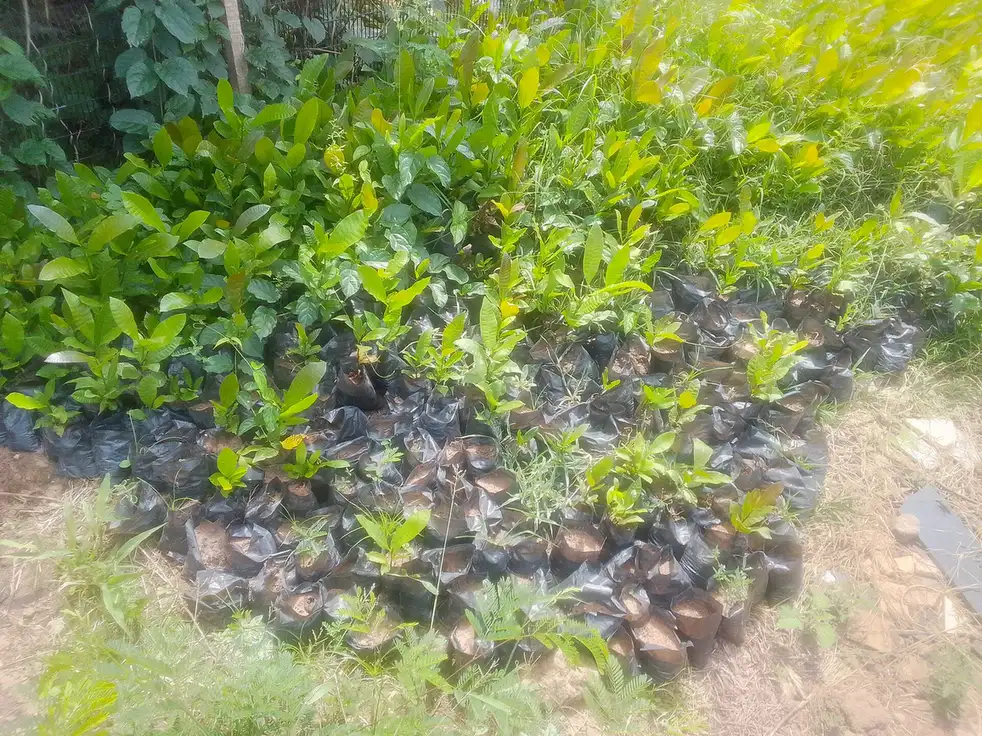
In Tallahassee, the planting window is roughly October through March — dormant season for most species, before the summer heat. November through January is the sweet spot. Avoid planting in June through September unless you can commit to twice-weekly deep watering for the first three months.
Watering and Establishment
- First year: Weekly deep watering during dry weeks (no rain in 7+ days).
- Second year: Every two weeks during dry weather.
- Third year and beyond: Established. Rainfall is usually sufficient.
- Mulch ring: 3 inches deep, 3 feet diameter, NOT touching the trunk. Refresh annually.
What “Mulch Volcanoes” Do to Replanted Trees
Avoid the cone-shaped pile of mulch against the trunk that landscape crews sometimes leave. Mulch volcanoes hold moisture against the bark, encourage root rot, and create the kind of damaged trunk wood that becomes a decay column for the next forty years. Mulch should be donut-shaped, not volcano-shaped. We have written about this in the upcoming mulch volcanoes post.
Related Pages
- Tree service warranty
- Tree service cost per tree
- Stump removal cost
- Magnolia tree care
- Oak tree trimming
Get Matched for Removal and Planting Consultation
Landscape planting is not the primary scope of the arborists in our network, but the local pro you’re matched with can help you plan the replanting layout when you get a removal quote. Call now and our 24/7 dispatch line will connect you with a vetted local arborist.
Frequently Asked Questions
What’s the fastest-growing replacement tree for Tallahassee? Bald cypress is the fastest of the recommended natives. Loblolly pine is faster but carries storm risk on small lots.
Do I need a permit to plant a new tree? Generally no, planting is unregulated. Removal of larger trees may require a permit under §5-83, and the city may credit a replacement planting toward the removal mitigation. Confirm with the city forester.
Should I replant in the same hole the old tree came out of? Not directly in the same hole — the old root system is decomposing and the soil chemistry is off. Plant adjacent, ideally a few feet away.
What’s the best month to plant in Tallahassee? November through January is the sweet spot. Dormant season, cooler temperatures, time to establish before summer heat.
How long until the replanted canopy is back? For a fast-growing native like bald cypress or live oak in the establishment phase, you get meaningful canopy in 5–7 years and substantial canopy in 15–20 years. The mature canopy you replaced took 50+ years to grow. Plant now anyway.
Will the pro you’re matched with remove a tree you then want to replant in a different spot? In most cases, yes. The local arborist removes the old tree and can consult on the planting location. Actual planting is typically handled by a landscape crew, which the pro you’re matched with may be able to coordinate.