Buying a home in Tallahassee means buying the trees that come with it. Live oaks arch over half the streets in Leon County, longleaf and loblolly pines tower behind back fences, and a mature canopy is one of the reasons people fall in love with neighborhoods like Killearn, Piney Z, Betton Hills, and Southwood. That same canopy is also part of the property you take responsibility for the day you sign — and it is worth understanding before you close, not after.
Here is the part that catches a lot of buyers off guard: a home inspection and a tree-health assessment are two different jobs, done by two different professionals, looking at two different sets of risks. Knowing where one ends and the other begins helps you walk into a purchase with a clear picture of the whole property — roof to root.
What a home inspection actually covers
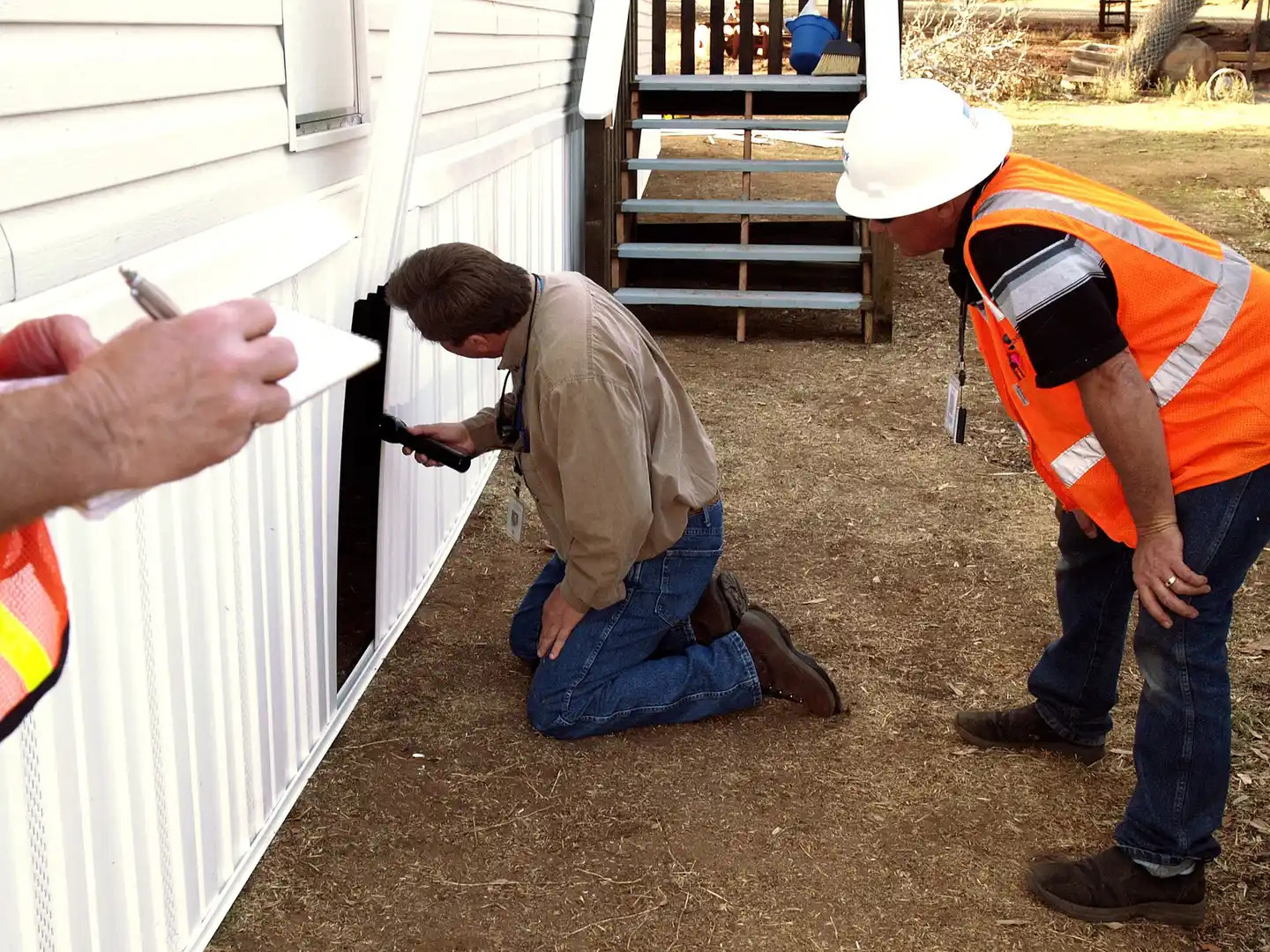
A licensed home inspector evaluates the built structure and its systems: the roof covering and framing, the foundation and grading, plumbing and electrical, HVAC, attic and insulation, windows and doors, and visible signs of water intrusion or wood-destroying organisms. The output is a written report that tells you the condition of the house you are about to own and flags issues that may need repair, monitoring, or a specialist’s second look.
In the Tallahassee area, Watchmen Property Inspection is one local, InterNACHI-certified option that homeowners and buyers turn to for this work — see our full Watchmen Property Inspection feature for what they cover and how to reach them. Owner Ryan Fessler is a Certified Professional Inspector who covers Leon, Jefferson, and Wakulla counties and neighborhoods across the Big Bend — from Bradfordville and Killearn down to Crawfordville and Monticello. Beyond a standard buyer’s inspection, Watchmen handles four-point and new-construction inspections, wind mitigation, infrared/thermal imaging, and radon testing, which is useful when you want a thorough read on the systems hidden behind walls and up in the attic.
A good inspection answers the question, “What condition is this house in, and what will I be dealing with as the owner?”
Storm damage or a tree on your house? Call now.
Stay out of rooms under the tree and keep clear of downed lines — report those to the power company first. Then call and we’ll connect you with a local tree crew that handles storm work.
📞 Call (858) 319-0022Free 24/7 dispatch line · availability varies by storm volume
Where a home inspection stops: the trees themselves
Most home-inspection standards of practice specifically exclude trees, shrubs, and landscaping as a system to be evaluated. An inspector will absolutely note the obvious — a limb resting on the roofline, visible impact damage, or a trunk pressed against the foundation — because those things affect the structure. But a full evaluation of a tree’s health, its internal structural defects, its root condition, and its likelihood of failing in a storm sits outside the scope of a home inspection.
That is not a gap in the inspector’s work; it is simply a different discipline. Reading a tree the way an inspector reads a roof takes a separate set of eyes — or a fast first read from our free Tree Risk & Storm Damage Assessment Tool before you call anyone.
What a tree-health and hazard assessment looks at
An assessment by a qualified arborist focuses on the living part of the property. It typically considers:
- Structural defects — co-dominant stems, included bark, large cavities, cracks, and heavy deadwood that can drop without warning.
- Lean and load — whether a tree’s lean is natural or newly developing, and how its weight is distributed over the house, driveway, or power lines.
- Root and base condition — signs of root-plate lifting, soil heaving, girdling roots, or fungal conks that hint at internal decay.
- Species and site — Tallahassee’s fast-growing water oaks and laurel oaks, for example, tend to decline and shed limbs earlier than a long-lived live oak, and pines behave differently again under wind.
- Target and proximity — what would actually be hit if a limb or the whole tree failed: the bedroom roof, the neighbor’s fence, the service line.
The output is a picture of which trees are healthy assets, which need pruning or cabling, and which represent a genuine hazard worth addressing before hurricane season.
Storm season is where the two overlap
The Big Bend’s exposure to summer and fall storms is exactly where these two evaluations meet. When Idalia came ashore in the region in 2023, much of the residential damage in North Florida was not the wind alone — it was trees and limbs meeting roofs, cars, and power lines.
A home inspection tells you whether a roof and its connections are in condition to take a load. A tree assessment tells you whether the 70-foot pine standing fifteen feet from that roof is likely to become the load. Neither answer is complete on its own. Read together, they tell a Tallahassee homeowner what is likely to happen to the whole property when the next August system rolls up from the Gulf — and what can be handled now, while the sky is clear. See the Tallahassee & Leon County Tree Storm-Risk Report for the area-wide data behind that seasonal exposure.
A simple pre-closing timeline
If you are under contract on a Tallahassee-area home, a practical sequence looks like this:
- Early in your due-diligence window, schedule the home inspection so you have time to act on the report.
- In that same window, have the trees within striking distance of the house and driveway looked at, so tree risk is part of the same decision.
- Review both together. A cracked pine leaning over the primary bedroom is negotiating leverage in the same way a worn roof is — and it is far easier to plan for on paper than to clean up after a storm.
Bottom line
A home inspection and a tree assessment are not competing services; they are two halves of understanding a Tallahassee property. The inspector reads the house. The arborist reads the canopy. Buyers who use both walk into closing knowing the condition of the structure and what is standing over it. If you are buying — or you already own a place under a heavy North Florida canopy — it is worth getting both perspectives before the next storm season, not during it.
Want a tree-health and hazard look at a Tallahassee-area property you are buying or already own? Call now code to check availability in your neighborhood and we will coordinate a licensed, insured local tree care professional to take a look.
Tallahassee Tree Service is a marketing and referral service that connects local homeowners with independent, licensed and insured tree care contractors. We do not perform tree work ourselves, and we do not own, control, or guarantee the services provided by the independent professionals in our network. Dispatch coordination is available 24/7; actual response, scheduling, and arrival times vary by contractor availability, weather, and seasonal demand.