Tallahassee Storm Season — Tree Damage Insurance Claim Checklist
July through November is when Tallahassee homeowners file the most tree-damage insurance claims. By the time a tree is on the roof, the homeowner has minutes-to-hours to make a series of decisions that materially change how much the carrier pays. This checklist is the practitioner’s version, written for Tallahassee specifically. Print it before the season. Save this page.
Need a licensed local tree pro dispatched for storm damage? Call now on our homepage. Dispatch coordination is available around the clock; actual on-site response depends on the independent provider’s schedule, crew availability, and storm-season demand.
Storm damage or a tree on your house? Call now.
Stay out of rooms under the tree and keep clear of downed lines — report those to the power company first. Then call and we’ll connect you with a local tree crew that handles storm work.
📞 Call (858) 319-0022Free 24/7 dispatch line · availability varies by storm volume
Hour Zero — Right After the Tree Falls
- Safety check. If anyone is hurt, 911 first. Then stop and look at what’s down.
- Power lines down? Stay back. Do not approach. Call the utility (City of Tallahassee Utilities or Talquin Electric depending on your service area). Do not touch the tree, the wires, or anything they are touching.
- Active fire risk? If a downed line is sparking, call 911. Tree-on-line fires happen.
- Get people and pets clear of the structure. Even if it looks stable, settling and aftershocks can shift the weight.
First 30 Minutes — Document Everything
Before any chainsaw runs, before any mitigation, before you call anyone except utility/911 for active hazards:
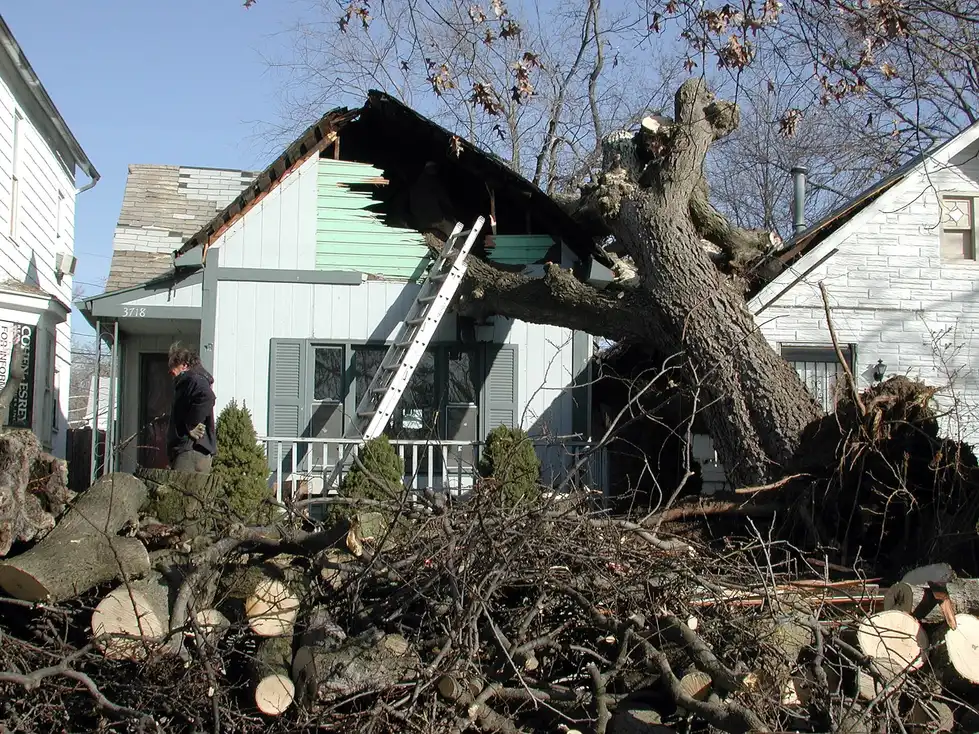
- Photos from multiple angles. Full structure with tree in frame, close-up of impact point, surrounding context. Get the same shots from all four sides if you can do it safely.
- Video walkthrough. Phone video of the scene, narrating what you see, with the date and time visible on your phone or stated out loud.
- Note the weather. Time of fall (if known), wind conditions, whether you were home.
- Save these to cloud immediately. Email yourself the photos. If your phone gets damaged later you do not want to lose the documentation.
This is the single most important step in the entire claim process. Carriers can dispute a lot, but they cannot dispute a clearly-dated photograph of the tree on the roof.
First Hour — Make the Calls
- Call your insurance carrier. File the claim. Get the claim number. Ask explicitly: “Should I wait for an adjuster before mitigation, or can I proceed with mitigation under preserve-from-further-damage coverage?” Note the answer and the name of the person who gave it.
- Call now on our homepage to get connected with a licensed, insured local tree service for emergency mitigation. Tell the dispatcher: tree species if known, what it hit, whether utilities are involved, whether the carrier has cleared mitigation.
- Call your roofer if you have one. They will want to know they may be needed.
- Notify your neighbors if the tree came from their yard or fell into theirs. Courtesy and legal both.
First 24 Hours — Mitigation Sequence
Under standard Florida homeowner’s insurance policies, the homeowner has a duty to mitigate further damage. This typically allows mitigation expenses to be reimbursed as part of the claim. The standard sequence:
- Tarp the roof opening. Stop the rain from making the inside damage worse. A roofer or the tree service can do this; some carriers send a mitigation contractor.
- Get the tree off the structure. This is the independent tree crew’s job. They section the tree from the top down, rig the pieces away from the damaged area, and avoid adding load to the already-stressed roof.
- Move the car / valuables out of the impact zone. If a tree is on a car, do not move it until the carrier (or the auto carrier if separate) has documented.
- Save every receipt. Tree service invoice, roofer invoice, hotel if you displaced, ServPro or similar if water mitigation. Every receipt is potential reimbursement.
First Week — Continue Documentation
- Inside-damage photos. Ceiling, walls, attic, anything wet. Before any drying or repair.
- Itemized list of damaged personal property. Furniture, electronics, anything destroyed. Photos of each.
- Cause-of-failure note from the tree service. Was the tree obviously diseased? Did the root plate uplift cleanly? Was the trunk decayed? This becomes critical if the carrier later argues the tree was a known hazard.
- Adjuster appointment. Most carriers send an adjuster within a few days. Have all your documentation ready. Walk them through it.
What to Avoid During the Claim
- Do not throw away the damaged property before the adjuster sees it (or before you have explicit written permission).
- Do not hire an unlicensed, uninsured tree service. If their crew is hurt on your property and they have no workers’ comp, your homeowner’s insurance is on the hook.
- Do not accept the first settlement offer without reading. Especially under the post-2022/2023 Florida market, first offers can be low.
- Do not sign an assignment-of-benefits (AOB) without understanding what it transfers. Some contractors push AOB heavily. Many policies now restrict AOB. Read carefully.
Special Tallahassee Considerations
- City of Tallahassee Utilities vs. Talquin Electric vs. Duke Energy — different parts of Leon County have different providers. Know yours before the storm so you can call the right number for downed lines.
- City §5-83 protected-tree rules still apply to fallen heritage trees you need to remove. Mitigation removal is generally permitted, but the cleanup beyond mitigation may need permitting — see our Tallahassee tree permit guide for the specifics.
- Hurricane evacuation orders can delay tree service response. If a county evacuation is active, dispatch to your address may not be possible until the order lifts.
Documentation That Wins Claims
The strongest documentation a Tallahassee homeowner can hand to a carrier:
- Dated photos and video before any cutting.
- Itemized tree-service invoice with the address, date, scope, and cause-of-failure note.
- The tree service’s insurance certificate naming your address.
- Cleaner itemized list of damaged personal property with receipts where available.
- If the carrier disputes — a separate Certified Arborist’s written assessment of the failure, or for a high-value legacy tree, a full tree appraisal establishing the dollar value the carrier’s sublimit should be measured against.
See the tree service insurance coverage page for the deeper guide on what’s covered and what isn’t, the storm damage tree removal page for the operational removal workflow, and tree insurance claims after Tallahassee storms for a broader homeowner’s guide to the claims process. For a guided, step-by-step version of the checklist above, try our interactive storm-damage documentation helper.
Get Connected With Storm Damage Response
Call now on our homepage and we’ll connect you with a licensed, insured local tree pro who prioritizes hazard-over-property calls and can provide documentation and an insurance certificate before work starts.
Frequently Asked Questions
Can I cut up the tree myself before the adjuster sees it? Risky. Some carriers want photos before any cutting. Document thoroughly first, then call the carrier and ask explicitly whether you can proceed.
Will my insurance pay for the tree service? For mitigation (getting the tree off the structure), usually yes, up to your per-tree and per-event caps. For lawn cleanup that is not protecting the structure, often not.
What if the tree came from my neighbor’s yard? In Florida, usually your insurance pays anyway. Your carrier may subrogate against the neighbor’s carrier later. That is the carriers’ problem.
Should I file the claim even for small damage? Get a tree-service quote first. If the damage and removal are below your deductible plus you do not need carrier sign-off, filing the claim does not help and may affect future rates.
What if my tree fell during a power outage and I cannot reach the carrier? Document first, mitigate as soon as practical, save receipts. Most carriers honor reasonable mitigation done before claim filing during widespread events.
Will the tree crew wait for the adjuster before removing the tree? Independent providers can if the carrier requires it — tell the dispatcher on the call. If the tree is creating active risk to safety, the pro you’re matched with will typically prioritize making the scene safe and document the urgency for the carrier.
Tallahassee Tree Service Co. is a free dispatch and referral service. We are not a tree-service contractor and do not perform tree work ourselves. When you call, we connect you with an independent, licensed and insured local tree-care professional who carries their own license and insurance and provides any binding quote or invoice. Dispatch coordination is available around the clock; actual on-site response time depends on the independent professional’s schedule, crew availability, and storm-season demand, and is not guaranteed.