Spanish Moss on Tallahassee Oaks: Harmless, Harmful, or Something In Between?
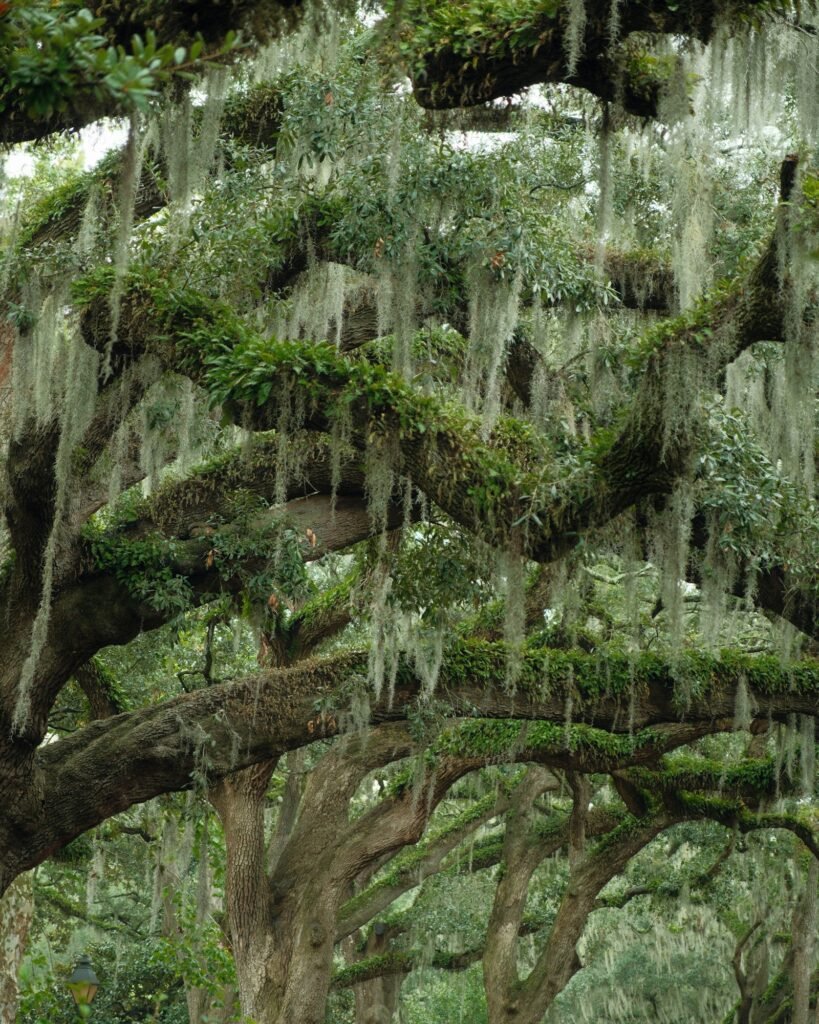
Drive Miccosukee Road, Meridian Road, or Old St. Augustine in mid-July and you’re driving through tunnels of live oak hung with Spanish moss — it’s the single most recognizable feature of Tallahassee’s canopy. But every summer, as the daily thunderstorms fatten the moss and the gray curtains get heavier, homeowners ask the same question: is this stuff killing my oak? The short answer is almost never — but the longer answer matters, because heavy moss is often a symptom of a tree problem even when it isn’t the cause.
If a moss-draped oak in your yard is also showing thinning, dieback, or dropped limbs, call now on our homepage to get matched with a licensed, insured local tree professional for a written assessment. We’re a dispatch service that connects you with vetted, independent crews — we don’t perform the work ourselves.
Storm damage or a tree on your house? Call now.
Stay out of rooms under the tree and keep clear of downed lines — report those to the power company first. Then call and we’ll connect you with a local tree crew that handles storm work.
📞 Call (858) 319-0022Free 24/7 dispatch line · availability varies by storm volume
What Spanish Moss Actually Is (Hint: Not a Moss, Not a Parasite)
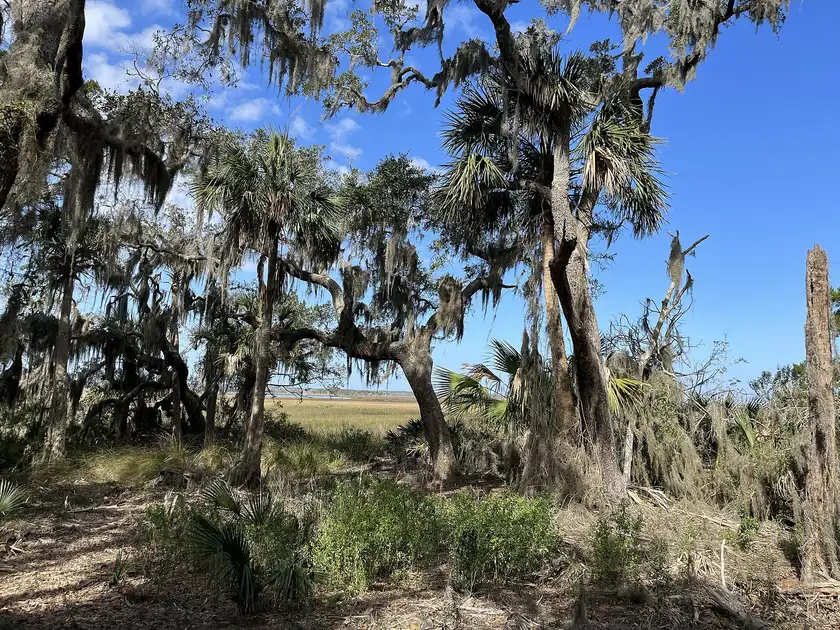
Spanish moss (Tillandsia usneoides) is an epiphyte — an air plant in the bromeliad family, a cousin of the pineapple. It uses the tree purely as scaffolding. It has no roots in the bark, takes no water or nutrients from the tree’s tissue, and doesn’t inject anything into the wood. It feeds itself by pulling moisture and airborne nutrients straight out of the humid air through tiny scales on its strands — which is exactly why it thrives in Tallahassee, where summer humidity sits above 90% most mornings and afternoon storms recharge it daily.
Compare that with mistletoe, which is a true parasite that taps into a branch’s vascular system. Moss and mistletoe often get lumped together by worried homeowners, but they are completely different problems.
Why Heavy Moss Is Usually a Symptom, Not a Cause
Spanish moss needs light to photosynthesize. A healthy live oak with a full, dense canopy shades its own interior so well that moss stays sparse and mostly decorates the outer, older limbs. When a tree’s canopy thins — from age, root damage, soil compaction, drought stress, or disease — sunlight floods the interior branches and the moss fills in fast.
That’s why so many of the declining laurel oaks and water oaks around Betton Hills, Midtown, and Indianhead Acres look like they’re being smothered in gray. The moss didn’t cause the decline; the decline made room for the moss. If your oak suddenly looks far mossier than it did two summers ago, the right question isn’t “how do I remove the moss?” — it’s “why is my canopy thinning?” Our guide to Tallahassee live oak care and the diseases that matter covers the usual suspects.
When Spanish Moss Does Cause Real Problems
There are three situations where the moss itself becomes part of the problem, and all three peak in a Tallahassee summer:
1. Waterlogged Weight
Dry moss is featherlight, but Spanish moss can hold many times its own weight in water. After a typical July afternoon downpour, a heavily draped limb may be carrying a substantial extra load — right when summer thunderstorm downdrafts are hitting the canopy. On a vigorous live oak that’s a non-issue; on a weakly attached limb, a water oak with internal decay, or an over-extended lateral branch, saturated moss can be the last straw.
2. Wind Sail Effect
Thick moss curtains catch wind. During hurricane season, densely draped dead or dying branches present more surface area to gusts than bare wood would. This matters most on trees that already have deadwood that should come out anyway.
3. Shading an Already-Stressed Tree
On a healthy tree, moss never outcompetes foliage. But on a tree that’s already lost much of its canopy, extremely dense moss can shade the remaining interior shoots the tree is using to recover. Again — the underlying stress is the real problem.
Live Oaks vs. Laurel and Water Oaks
Species context matters in Tallahassee. Live oaks are long-lived, decay-resistant, and rarely bothered by even dramatic moss loads — the iconic draped look is generally safe on a sound live oak. Laurel oaks and water oaks, which make up a huge share of the yard trees planted across town in the 1960s–80s, decline much earlier and often carry internal decay you can’t see. A moss-heavy laurel oak in its 40s or 50s deserves a professional look — not because of the moss, but because of what the moss is telling you. A tree health assessment can separate cosmetic moss from a genuine structural concern.
Should You Remove Spanish Moss?
Usually no — it’s harmless, it’s habitat for warblers, bats, and beneficial insects, and stripping it doesn’t fix whatever let it flourish. When removal makes sense, it’s done selectively: thinning the heaviest curtains off structurally suspect limbs while pruning, typically as part of a broader oak trimming visit that also addresses deadwood and end-weight. What you should not do is climb a ladder and pull moss out of a mature canopy by hand — falls and unseen weak limbs make that one of the more dangerous DIY jobs a homeowner can attempt.
Frequently Asked Questions
Does Spanish moss kill oak trees? No. It’s an epiphytic air plant, not a parasite — it takes nothing from the tree’s tissue. Heavy moss on a declining oak is almost always a symptom of canopy thinning from another cause, not the reason for it.
Why does my oak suddenly have so much more moss? Because more light is reaching the interior branches. Canopy thinning from age, root stress, compaction, or disease lets moss photosynthesize where it previously couldn’t. A rapid increase in moss is a good reason to have the tree’s health evaluated.
Does Spanish moss have chiggers in it? Moss hanging in the tree is generally chigger-free. Chiggers show up in moss that has fallen and sits in contact with the ground. Handle fallen moss with gloves if you’re collecting it.
Does rain make Spanish moss heavier? Substantially. The plant absorbs and holds water throughout its strands, so a soaked canopy of moss adds real load during exactly the kind of storm that stresses limbs. On sound limbs this is fine; on decayed or over-extended limbs it adds risk.
Can I remove Spanish moss myself? From a small ornamental you can reach from the ground, yes. From a mature oak, no — working at height in a canopy with possible hidden deadwood is a job for an insured professional, and wholesale removal usually isn’t needed anyway.
Is Spanish moss protected in Florida? It isn’t a protected species, but the trees it hangs on may be — Tallahassee’s tree ordinance and canopy road protections govern significant pruning or removal on many lots, so check permit rules before major work.
Tallahassee Tree Service Co. is a dispatch and matching service. We connect homeowners with independent, licensed and insured tree professionals — we do not perform tree work ourselves. The independent operator who takes on the job provides the written estimate after seeing the tree.