Diseased Tree Removal in Tallahassee, FL
Silver-gray patches under peeling bark, mushrooms at the base, a crown thinning year over year — different signs, different diseases, very different decisions. Call now and we’ll connect you with a vetted, ISA-certified local arborist who names the pathogen before anyone names a price.
📞 Call Now — (858) 319-0022Not sure if it is dying or just thirsty? Call now and we’ll connect you any hour.A diseased tree is on a clock, and the clock speed depends entirely on which disease it has. Hypoxylon on a water oak is a countdown measured in months. Bacterial leaf scorch is a slow fade measured in years. Ganoderma at the root flare means the part you cannot see is already gone. Treating them as one category — “sick tree, cut it down” — is how homeowners in Leon County both remove trees that could have been kept and keep trees that should have come down.
The order of operations matters. Diagnose, then decide, then cut — not the reverse.
The pathologies actually showing up in Leon County
| Disease | What you see | Usual read |
|---|---|---|
| Hypoxylon canker (Biscogniauxia) | Outer bark sloughing off in sheets, silver-gray to brown crust underneath, sometimes a fine tan dust | By the time it is visible, the sapwood beneath is dead. No field treatment. The tree is structurally on borrowed time — the classic water oak killer here. |
| Ips engraver & southern pine beetle | Popcorn pitch tubes, reddish boring dust, crown fading green to yellow to rust | Once the crown fades, the pine is finished. Removal, and the wood should leave the property. See pine beetle in North Florida. |
| Laurel oak decline | Thin crown, big deadwood, hollow trunk, cavities at old pruning wounds | The mid-century planting cohort aging out all at once. Structure, not just health — see laurel oak problems. |
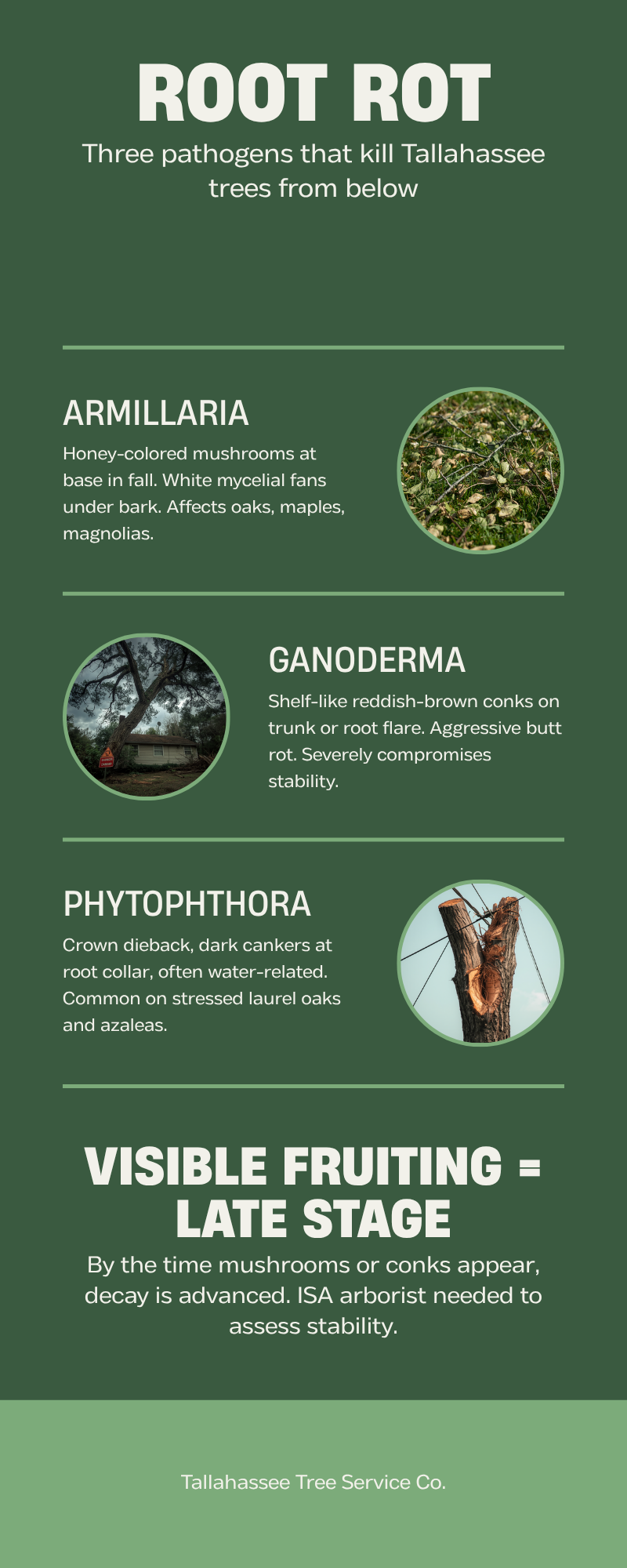
| Ganoderma butt rot | Varnished reddish-brown shelf conks at the base of a mature hardwood | The conk is the late symptom. Root and butt wood is already compromised. Usually removal, especially with a target underneath. |
| Armillaria root rot | Honey-colored mushrooms in a cluster; white mycelial fans under the bark at the flare | Serious. Often follows drought or root damage on a stressed hardwood. |
| Cytospora and other stress cankers | Sunken bark patches, bleeding sap or resin | An opportunist. Points at an underlying stressor — compaction, grade change, drought — that may be fixable. |
| Bacterial leaf scorch | Leaf margins browning along the veins, worse each year | Chronic decline rather than sudden failure. Manage stress, monitor structure. |
Why our climate makes it worse
USDA Zone 8b hands pathogens an easy year. Warm wet summers keep fungal spores moving, the late-spring dry window stresses trees right before that, and our soils cut both ways — the heavy Orangeburg clay north of the Cody Scarp compacts and holds water around root collars, while the sandier ground to the south dries hard and fast in a drought. Stress is the doorway. Nearly every pathology on the list above walks through a tree that was already struggling.
Add the storm history — Hermine, Michael, Idalia, Helene — and you get root damage and torn limbs across whole neighborhoods, which is exactly the wound-plus-stress combination that canker fungi and bark beetles wait for. The disease you are looking at today often traces to a storm two years ago.
How a real diagnosis works
A photo texted to a stranger is not a diagnosis. Neither is a guy in a truck saying “that one’s dying.” If you need documentation for an insurer, an HOA, or a neighbor dispute, ask up front what a written tree health assessment costs — and expect to pay for it, because that is professional work.
Conks at the base of a big tree standing over the house? Do not wait for the next storm to settle the question — that is a priority-dispatch situation.
📞 Call Now — (858) 319-0022Vetted local pros — availability depends on independent provider schedules and demand.*Remove, treat, or watch?
Not every sick tree comes down. The decision usually turns on four questions:
- Is the structure compromised? If decay has hollowed the trunk or taken the root plate, it does not matter whether the pathogen is treatable — the tree is a failure risk. Removal.
- Is there a treatment that actually works? Some pests and pathogens respond to treatment; hypoxylon, once visible, does not. Beware anyone selling injections for a disease with no field cure. Treatment options are real, but they are specific.
- What is under the tree? A declining laurel oak at the back fence is a different urgency from the same tree over a child’s bedroom.
- How much runway is left? Five good years is worth managing. Six months is worth scheduling a removal now, on a calm week, rather than paying emergency rates after it comes down in a squall.
That last point is the whole economic argument of this page. A scheduled removal is a planned expense. The same tree failing onto a roof is a claim, a repair, and a much larger bill — and homeowners insurance generally will not pay to take down a sick tree preventively.
Disposal is part of the job
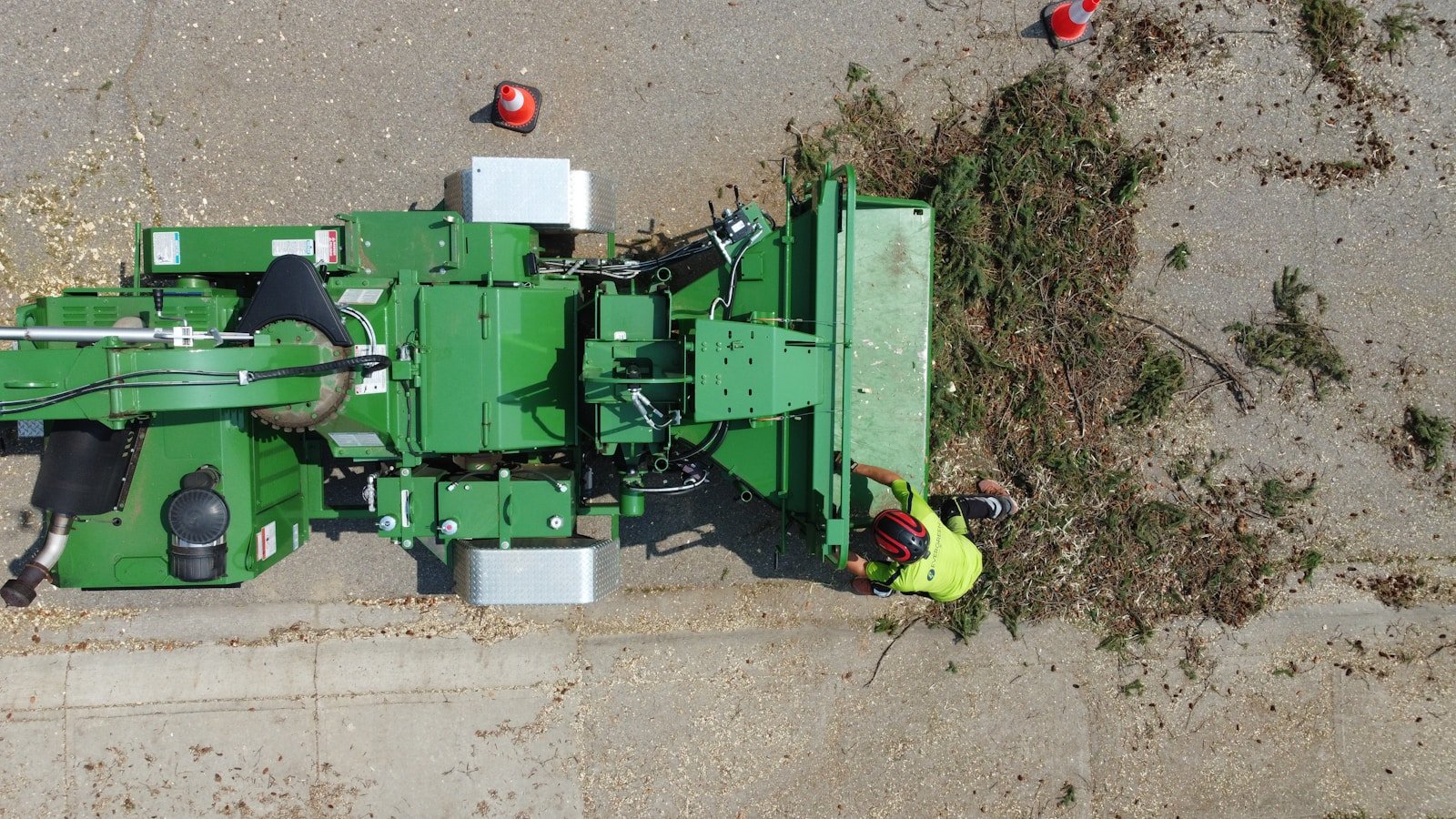
Most fungal pathologies — hypoxylon included — do not spread through chipped mulch, so normal disposal is fine. Bark beetles are the exception that matters in Leon County: fresh-cut infested pine left stacked in the yard is brood material for the next generation, and the pines you were hoping to keep are next in line. Infested wood should be chipped and hauled promptly rather than seasoned on site.
A handful of regulated pathogens carry state protocols, and those are the arborist’s responsibility to follow. Also worth knowing: tree pros are not pesticide-license holders. Preventive trunk sprays on neighboring pines are a licensed-applicator job — ask for a referral rather than assuming the tree crew can do it.
Permits still apply to a sick tree
Disease does not automatically exempt a protected tree. City of Tallahassee §5-83, Canopy Road Protection Zones, and Leon County Chapter 10 all still govern what can come down — though documented disease or hazard is a recognized justification, and Florida Statute 163.045 provides a hazard-tree pathway when the documentation supports it. Get the paperwork question answered before the saw runs; the permit guide lays it out.
What to plant in its place
- Live oak — slow, strong, and the closest thing to a permanent tree in this climate.
- Southern magnolia — native, wind-tolerant, low disease pressure.
- Bald cypress — excellent in the wet, low corners that kill oaks.
- Crape myrtle for a small ornamental — just do not let anyone top it.
Do not replant the same species in the same hole. Soil-borne pathogens persist, and a water oak planted where a water oak died of hypoxylon is a slow-motion repeat.
Frequently asked questions
How do I know if my tree is diseased or just stressed?
The symptoms overlap badly — drought, root damage from construction, and an active pathogen all produce a thinning crown. What separates them is where the signs appear and what the wood and root flare look like up close. That is what the site inspection is for.
Can a tree with hypoxylon canker be saved?
Once the canker is visible, no. There is no field-effective treatment, and the sapwood under those patches is already dead. The useful decision is timing: schedule the removal while it is still a routine job rather than waiting for it to become an emergency.
Can a pine with beetles be treated?
A very early, limited infestation can sometimes be managed, but once the crown is fading the tree is finished and removal is the honest answer. Neighboring healthy pines are what preventive treatment protects, and that requires a licensed pesticide applicator, not a tree crew.
Do I need a permit to remove a diseased tree?
Possibly. Protected and patriarch trees, Canopy Road frontage, and county parcels all have rules that apply regardless of the tree’s health, though documented disease and hazard are recognized justifications. Florida Statute 163.045 provides a hazard-tree pathway with proper arborist documentation.
Will insurance pay to remove a diseased tree?
Generally not, if the tree is still standing. Most Florida policies cover removal only after a covered peril drops the tree on a covered structure, and a tree known to be dying can even complicate that claim. This is usually out-of-pocket work — which is another argument for doing it on your schedule.
Are the mushrooms at the base a bad sign?
Usually yes, and worse than they look. Fruiting bodies at the root flare mean the fungus has been working the roots and butt wood for years already. A tree with conks and a house in its fall zone deserves a formal inspection, not a wait-and-see.
Related Tallahassee tree services
Tree Disease Treatment
Water Oak Removal
Laurel Oak Problems
Southern Pine Beetle
Dead Tree Removal
Tree Health Assessment
Tree Inspection
Tree Removal Cost
Name the disease before you name a price
Call now and we’ll connect you with a vetted, ISA-certified Tallahassee arborist. Free to use, no obligation, no sign-up.
📞 Call Now — (858) 319-0022Tallahassee Tree Service is a free referral service. Tallahassee Tree Service is not a licensed tree service provider and does not directly provide tree care services. All work is performed by independent, licensed and insured third-party providers in your area. Calls and form submissions placed through this site may be connected with a participating provider, and you may be contacted by that provider regarding your request. Same-day, emergency, and 24/7 availability are not guaranteed and depend on provider schedules, location, and demand. Service availability, pricing, licensing, and final response times are determined solely by the providers. It is the responsibility of the homeowner to verify that the hired contractor furnishes the necessary license and insurance required for the work being performed. All persons depicted in a photo or video are actors or models and not contractors listed on Tallahassee Tree Service.