In Florida, if a neighbor’s healthy tree falls onto your property in a storm, it’s generally treated as an “act of God” — your own homeowners insurance typically covers the damage, not your neighbor’s, and you’re usually responsible for removing what landed on your side of the line. That changes if the tree was visibly dead, diseased, or already flagged as hazardous beforehand: a known, ignored risk can shift liability to the tree’s owner. This is general information, not legal advice — a property attorney or your insurance adjuster gives the answer for your specific situation.
It’s one of the most common questions Leon County homeowners have after a storm: a neighbor’s oak comes down across the fence line, and nobody’s sure who’s actually on the hook — the tree’s owner, the property it landed on, or an insurance company somewhere in between. The short version is that Florida generally follows the same “healthy tree, act of God” rule most states use, but there’s a real exception that changes everything once negligence enters the picture.
Who Pays When a Healthy Tree Falls in a Storm?
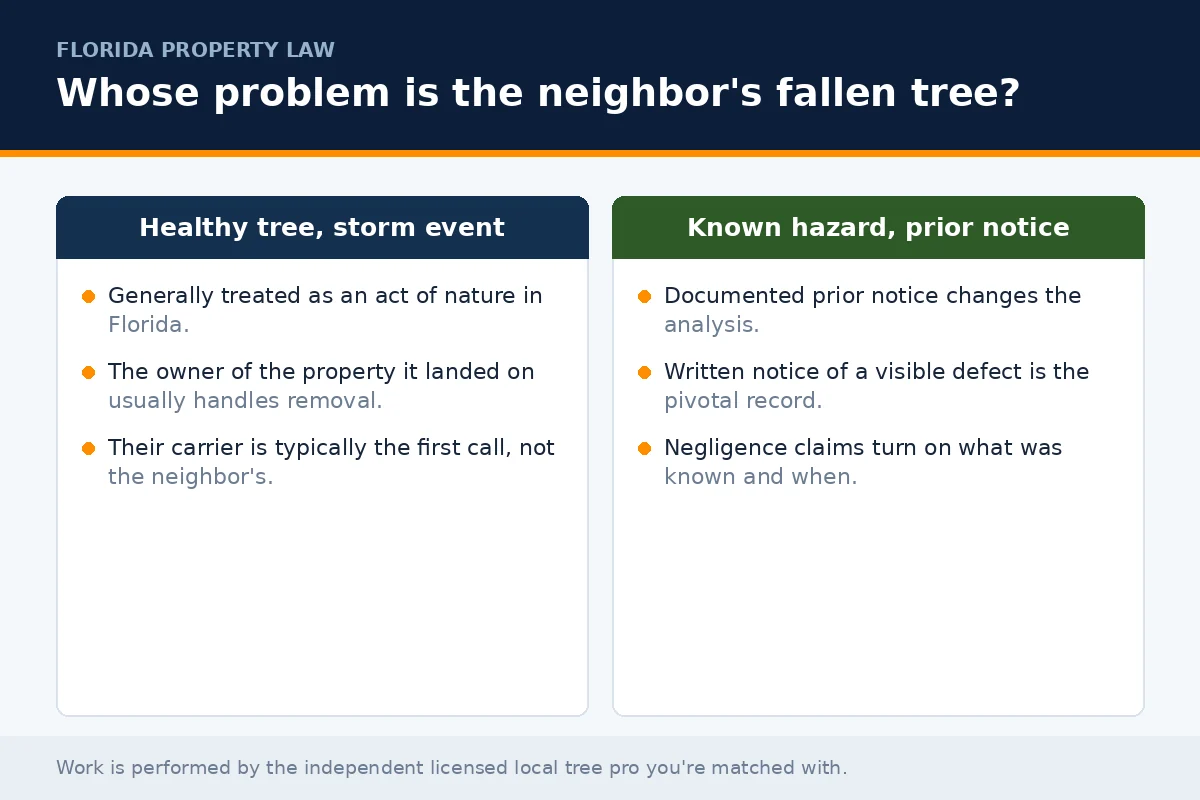
If the tree was healthy and it came down because of wind, lightning, or another storm event, Florida generally treats it as an act of God rather than anyone’s fault. Under that framework, the property owner where the tree lands is typically responsible for removal and repair, and that cost is covered through their own homeowners insurance policy — not filed against the neighbor whose tree it technically was. This surprises a lot of people, but it’s consistent with how most states, not just Florida, handle storm-driven tree failures between neighbors.
Storm damage or a tree on your house? Call now.
Stay out of rooms under the tree and keep clear of downed lines — report those to the power company first. Then call and we’ll connect you with a local tree crew that handles storm work.
📞 Call (858) 319-0022Free 24/7 dispatch line · availability varies by storm volume
When Does the Tree Owner Actually Become Liable?
The exception is negligence, and it’s a meaningful one. If the tree was visibly dead, hollow, leaning, or had been flagged as hazardous, and the owner knew or reasonably should have known about it and did nothing, that can shift liability to the tree’s owner even though a storm was the immediate trigger. University of Florida’s IFAS Extension, which publishes homeowner-facing guidance on trees and Florida law, frames this as the core distinction: an “act of God” defense generally protects against liability for a healthy tree, but it doesn’t protect an owner who ignored a known hazard.
In practice, that means documentation matters. Photos of visible decay, prior complaints to the owner, or an arborist’s written hazard assessment from before the storm can all become relevant if a dispute over a specific tree ends up being contested.
Who’s Responsible for Removing the Tree?
Regardless of fault, the general rule in Florida is that whoever’s property the tree (or the part of it) lands on is responsible for having it removed from their side of the line. If a trunk straddles a property line, both owners typically handle their own portion of the debris. That removal responsibility is separate from the insurance question — it’s about clearing the property, not about who ultimately pays for it.
Tree down on your property right now? Get matched with a licensed, insured local Tallahassee arborist who documents the scene for your insurer and clears it safely.
Does Homeowners Insurance Cover a Neighbor’s Fallen Tree?
Generally, yes, when it damages a covered structure like a house, garage, or fence, regardless of whose tree it originally was. Most policies treat wind-driven tree failure as a covered peril. Coverage tends to be thinner or nonexistent when the tree fell in the yard and didn’t hit a structure, which is why documentation — before any cutting starts — matters as much for a neighbor’s tree as it does for your own.
What Should I Document Before the Tree Gets Removed?
- Wide photos of the whole scene and close-ups of the fracture point, before anything is cut or moved
- Which side of the property line the trunk originated from and where the canopy landed
- Any prior awareness of the tree’s condition — email or text records if you’d previously raised a concern with the neighbor
- A written, itemized scope from whoever performs the removal, for your insurance claim
What If the Tree Was Already Known to Be a Hazard?
This is where the negligence exception has teeth. A leaning tree with an obvious lean that’s worsened over time, a trunk with a visible cavity, or a tree a neighbor was already told about by a previous storm or a city notice puts the owner on much shakier ground if it fails and causes damage. If there’s a genuine dispute over a specific tree, a documented pre-failure assessment from a licensed arborist and, where the disagreement is significant, a property attorney are the right resources — this article is general information, not a substitute for either.
If a currently leaning or visibly hazardous tree is threatening a property line before it falls, a leaning tree assessment from a licensed local arborist creates exactly the kind of documentation that matters if the situation ever needs to be sorted out.
Does Florida Law Limit How Cities Regulate Tree Removal?
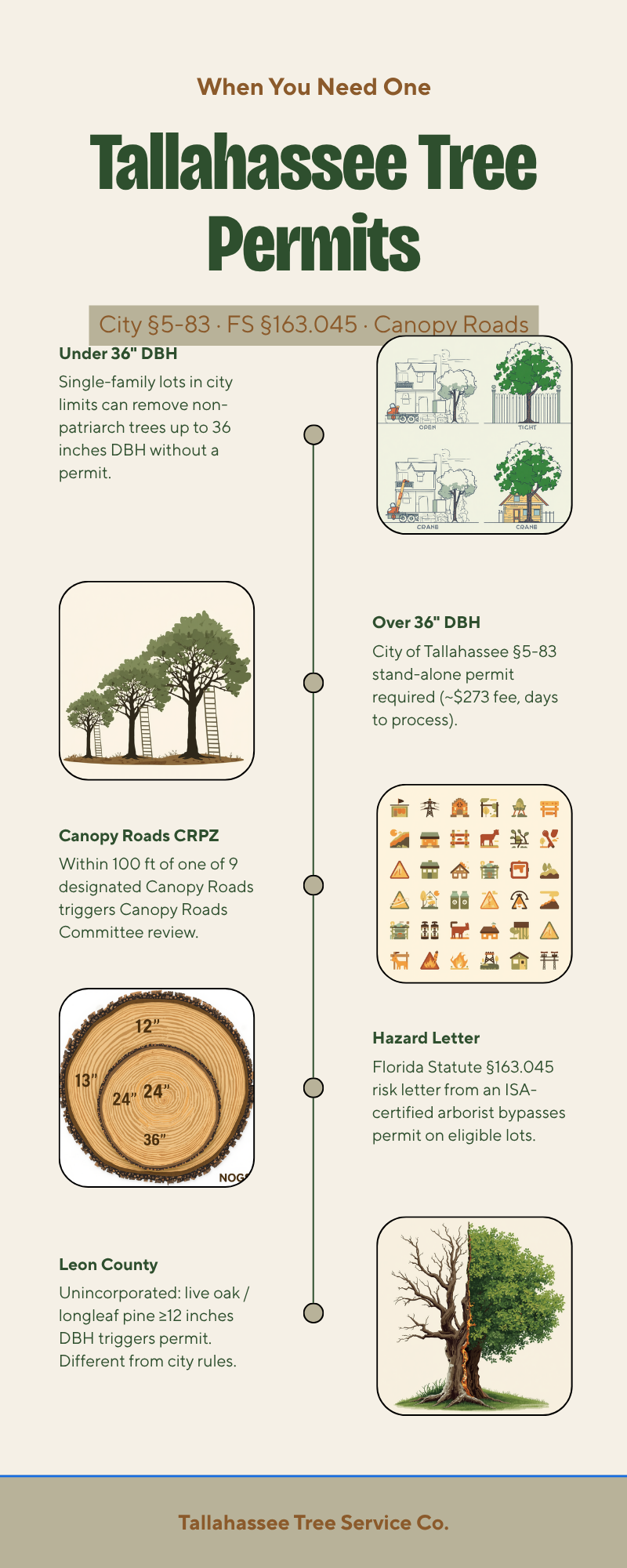
Yes, and it’s relevant context for boundary disputes. Florida Statute 163.045 limits how much local governments can require permits or mitigation for removing a tree that poses a danger to people or property, when a certified arborist or licensed landscape architect has documented the hazard. It doesn’t settle who pays for storm damage between neighbors, but it does mean a homeowner with a documented hazardous tree generally isn’t stuck waiting on a city permit process to have it addressed.
Storm just took a tree down on your property? Get matched with a licensed, insured local arborist for cleanup and insurance-ready documentation — life-safety situations triaged first.
FAQ
Does my neighbor have to pay if their tree falls on my house in Florida?
Usually not, if the tree was healthy and it fell because of a storm — that’s typically treated as an act of God, and your own homeowners insurance covers the damage. If the tree was a known, ignored hazard beforehand, liability can shift to the owner.
Am I responsible for removing my neighbor’s tree if it falls on my property?
Generally, yes — the property owner where the debris lands is typically responsible for removal from their side of the line, separate from whatever insurance ultimately covers the repair cost.
What if the tree was already dead or leaning before it fell?
That’s the key exception. A tree the owner knew or should have known was hazardous can shift liability to them, especially with prior documentation like complaints, photos, or an arborist assessment.
Should I talk to a lawyer about a fallen-tree dispute with a neighbor?
For anything beyond a routine, clearly storm-driven failure, yes — a property attorney can weigh the specific facts. This article covers general Florida principles, not advice for a specific dispute.
This article is general information about Florida property law and is not legal advice. Tallahassee Tree Service is a free referral and dispatch service; we are not a licensed tree service provider, law firm, or insurance company, and do not perform tree work ourselves. All work is performed by independent, licensed and insured third-party arborists in our network.