Almost every mature-tree call in Tallahassee starts with the same question: what is wrong with my oak, and is it dangerous? This guide covers the oak diseases most commonly diagnosed in Leon County by UF/IFAS Extension and FDACS, how to ID each from the ground, and where the treat-vs-remove line falls. arborist walkthrough from ISA-certified arborists in the network — call now.
The 5 oak problems most often diagnosed in Tallahassee
Tallahassee has live oaks, laurel oaks, water oaks, and a scattering of post and turkey oaks. The diseases they get are not interchangeable — laurel and water oaks fail in ways live oaks rarely do, and the response is different.
1. Hypoxylon canker (Biscogniauxia atropunctata)
Hypoxylon is the most common decline-and-death pathogen on Tallahassee oaks. UF/IFAS publication PP-219 describes it as an opportunistic fungus already present in nearly every oak — latent until the tree is stressed by drought, soil compaction, root damage, or construction injury, then it explodes through the sapwood.
What you see from the ground:
- Bark sloughing off in sheets, especially on the upper trunk and large limbs
- A silver-gray-to-tan crusty fungal mat (the stroma) underneath the shed bark, often with a metallic sheen
- Dieback in the upper canopy that came on fast — weeks, not seasons
- Sawdust-like spore powder on the trunk after wind
Decision: Once stroma is visible on the trunk or scaffold limbs, the tree is structurally compromised and there is no fungicide cure. It is a removal candidate, and the urgency is real — hypoxylon-killed oaks turn brittle quickly and are a top cause of failure-onto-house calls in summer storms. Limbs that have shed bark should not be climbed; this is a crane or full-removal job.
2. Laurel oak heart rot and rapid decline
Laurel oaks (Quercus laurifolia, Q. hemisphaerica) are short-lived — UF/IFAS cites 50–70 years in urban settings — and Tallahassee planted heavily in the 1960s and 70s. Many are now hitting end-of-life with internal heart rot (commonly Ganoderma or Inonotus species) hollowing the trunk while the canopy still looks reasonable.
What you see:
- Conks (woody bracket fungi) at the base of the trunk — most often shelf-shaped Ganoderma with a varnished red-brown top
- Hollow sound when the trunk is tapped low
- Mushrooming buttress roots, or one side of the buttress visibly sinking
- Dead twigs scattered through an otherwise leafed-out canopy (“flagging”)
Decision: Conks at the base of a mature laurel oak are a removal flag — the load-bearing wood is already gone. There is no chemical reversal. A Tree Risk Assessment Qualification (TRAQ) inspection from an ISA-certified arborist quantifies the risk; in practice, hollow laurel oaks within striking distance of a house or driveway are removed. See Why Tallahassee Laurel Oaks Are Failing Now for the broader picture.
3. Ambrosia beetles and associated fungi
Ambrosia beetles attack stressed oaks in spring, drilling into the sapwood and introducing fungal symbionts that block water transport. FDACS tracks elevated activity across the Big Bend in storm-recovery seasons — storm-stressed and recently-transplanted oaks are the prime targets.
What you see:
- Pencil-lead-thin “toothpicks” of compacted sawdust protruding from the trunk (the most diagnostic sign)
- Small entry holes about 1 mm across
- Sudden wilting of a single limb or the whole canopy
Decision: Scattered toothpicks on an otherwise healthy tree can sometimes be managed with stress reduction (deep watering, mulch, no fertilization that pushes growth). Widespread attack usually means the tree is past saving. There is no effective curative spray once beetles are inside the wood.
4. Oak wilt (Bretziella fagacearum)
Oak wilt is included because homeowners search for it, but it is rare in Florida — it devastates red oaks in Texas and the upper South, with only sporadic confirmations here. What you see (when it does occur): rapid bronzing and dropping of leaves from the top of the crown downward, often green or bronze rather than fall color. In Tallahassee, oak-wilt-like symptoms on a red-oak-group tree are far more likely hypoxylon, ambrosia beetle, or drought decline. Confirmation requires a lab sample through the UF Plant Diagnostic Center.
5. Water oak decline
Water oaks (Quercus nigra) are even shorter-lived — UF/IFAS cites 30–50 years in urban settings. There is rarely one clean disease; it is usually a stack of borers, canker, root damage, and old age. What you see: chronic dead-twig flagging, bark cracks with ooze, woodpecker damage (a sign of borers underneath), and a thinning canopy that does not recover with watering. Decision: most declining mature water oaks here are removal candidates. See Water Oak Trimming Tallahassee for the trim-vs-remove cut line.
Treat-able vs removal-only
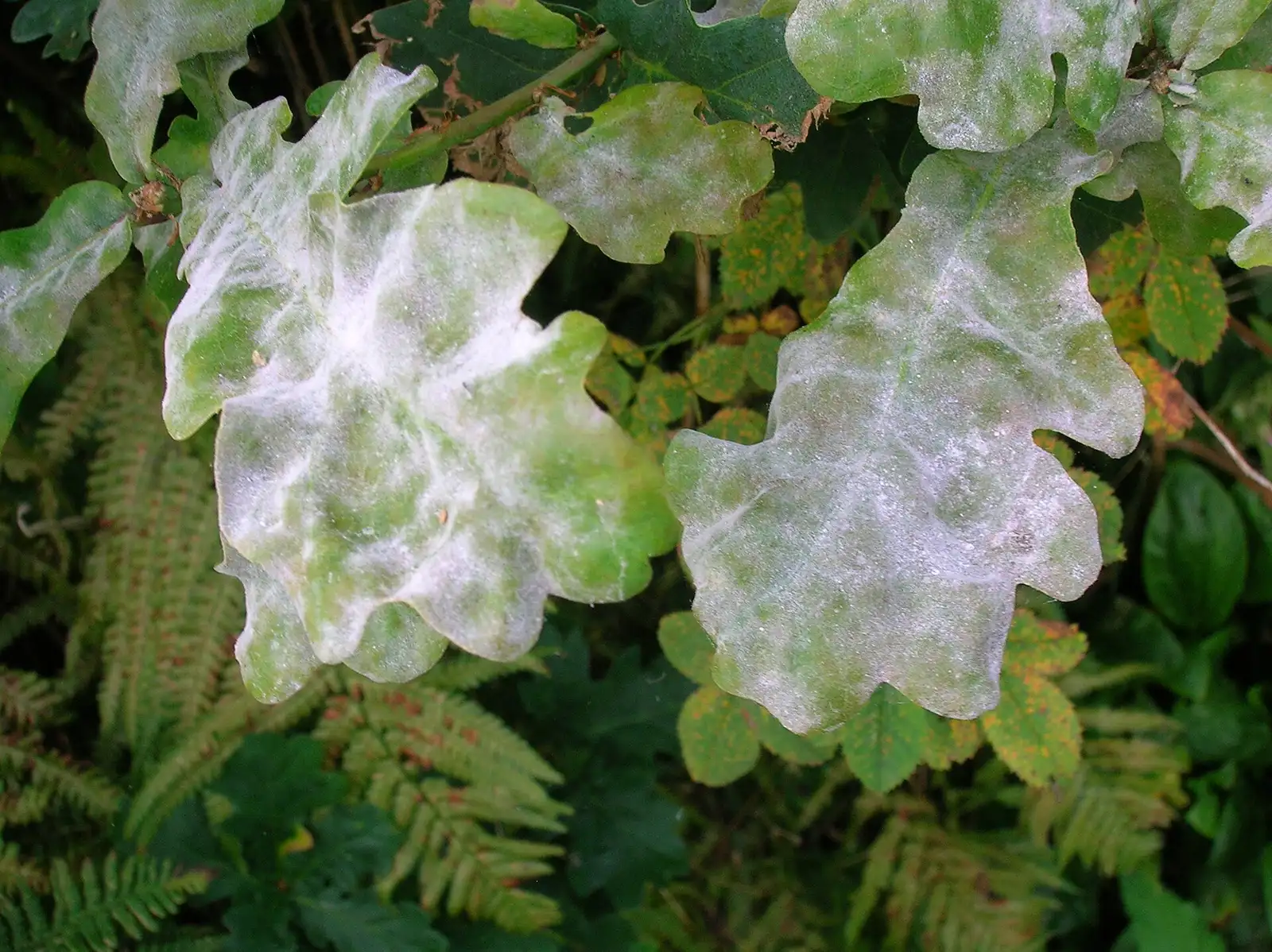
Useful rule: pathogens in the leaves (powdery mildew, oak leaf blister, anthracnose) are usually treatable or cosmetic. Pathogens and beetles in the structural wood (hypoxylon, heart rot, ambrosia beetle, advanced canker) are almost always removal calls — the load-bearing capacity is gone, and no spray restores wood. Conks at the base, sloughing bark with fungal mat, or toothpicks across the trunk warrant a TRAQ assessment and usually a removal recommendation.
When to call an ISA-certified arborist
- Bark sheeting off the upper trunk or major limbs
- Conks at the base of a mature oak
- Sawdust toothpicks on the trunk
- A limb over the house, driveway, or play area on a tree showing any of the above
- An oak within striking distance that has lost more than a third of its canopy in one season
Tree Risk Assessment Qualification (TRAQ) is the ISA credential specific to risk evaluation — the right ask when the question is “is this tree going to fail.”
Frequently asked questions
What is the most common oak disease in Tallahassee?
Hypoxylon canker (Biscogniauxia atropunctata) is the most frequently diagnosed oak decline pathogen in Leon County. It is an opportunistic fungus that attacks oaks stressed by drought, construction, soil compaction, or root damage, and it shows up as sloughing bark and a silver-tan fungal mat on the trunk.
Can hypoxylon canker be cured?
No. Once hypoxylon stroma is visible on the trunk or scaffold limbs, the structural wood is already compromised and there is no fungicide treatment that restores it. The tree is a removal candidate, and the urgency is real because hypoxylon-killed oaks become brittle quickly.
How do I tell if my oak has heart rot?
Look for conks (shelf-shaped bracket fungi) at the base, a hollow sound when the trunk is tapped low, and dead-twig flagging in the canopy. Ganoderma conks with a varnished red-brown top are the most common indicator on Tallahassee laurel oaks.
Is oak wilt a problem in Tallahassee?
Oak wilt is rare in Florida. Symptoms that look like it here are almost always hypoxylon canker, ambrosia beetle, or drought decline. A lab test through the UF Plant Diagnostic Center is the only way to confirm true oak wilt.
What are the sawdust “toothpicks” on my oak trunk?
Ambrosia beetle frass tubes — compacted sawdust pushed out as beetles drill into the sapwood. Heavy attack across the trunk usually means the tree is past saving.
When should I call an arborist instead of trying to treat it myself?
Call for a TRAQ inspection if you see conks at the base, bark sheeting off the trunk, toothpicks across the trunk, or a declining oak within striking distance of a house, driveway, or play area. Wood-decay and beetle problems are not DIY-treatable.
Oak assessment
ISA-certified arborists across the Tallahassee network — Killearn, Betton, Midtown, Myers Park, Buck Lake, and the canopy-road corridor. Call now to get matched.
Related resources
Tree Health Assessment · Diseased Tree Removal · Water Oak Trimming · Oak Tree Trimming · Tree Service Cost Guide