Species Guide — Tallahassee, FL
Every older Tallahassee neighborhood has one: a tall, straight hickory that predates the house, rains golf-ball nuts on the roof every fall, and stands dead center in the one spot a falling tree would hurt most. Pignut hickory is native, handsome, and genuinely strong wood — but as a yard tree in hurricane country it has specific failure modes and one of the toughest stumps in the region. Here’s the honest species guide: when a Tallahassee pignut hickory is worth keeping, when it should come down, and why hickory removals price differently.
Should a pignut hickory near a house be removed?
Not automatically — sound hickories are wind-firm. Removal is for hickories with trunk decay, major deadwood over targets, or lightning damage; the assessment is what separates the keeper from the hazard. Crews handle both the takedown and the notoriously deep taproot stump.
If your hickory is dropping dead limbs with the nuts this year, call (858) 319-0022 to reach the licensed local arborist you’re matched with for a species-literate assessment.
Storm damage or a tree on your house? Call now.
Stay out of rooms under the tree and keep clear of downed lines — report those to the power company first. Then call and we’ll connect you with a local tree crew that handles storm work.
📞 Call (858) 319-0022Free 24/7 dispatch line · availability varies by storm volume
How does pignut hickory behave in Tallahassee yards?
Pignut (Carya glabra) is a canopy tree of the Red Hills hardwood forests — the same slopes that hold Tallahassee’s older neighborhoods — commonly 70 to 90 feet here, taller than most oaks around it. Three species traits drive every decision. Its wood is the strongest of any common local tree (hickory is what tool handles are made of), so a healthy hickory withstands wind that snaps water oaks. It grows a deep central taproot with modest lateral spread, meaning windthrow is rare — but when hickories fail, they fail high: dead limbs and the upper crown, because the species deadwoods heavily with age and its high, narrow crown catches gusts above the neighborhood canopy line. And it’s a heavy caster — the fall nut drop is a genuine slip-and-dent hazard on drives and a mower problem for two months.
When does a hickory earn removal?
- Crown die-back — big dead scaffolds in the upper third; hickories shed exactly these in thunderstorms, from exactly the height that clears a roof from across the yard.
- Trunk decay — old pruning wounds and lightning scars let rot into the heart; a hollow-sounding trunk on a 90-footer over the house ends the debate.
- Lightning strikes — hickories are frequently the tallest tree on the lot, and takes strikes accordingly; a spiral scar with fading crown means the tree is finished. See the lightning damage guide.
- Mistletoe and age decline — heavy mistletoe load on a thinning hickory crown accelerates the end.
- Quality-of-life removals — sometimes the nut drop over a pool or the sap-drip aphid rain is genuinely the reason; that’s a legitimate call on a declining tree, less so on a vigorous one.
Why hickory removals price high
Two species-specific reasons. The wood: hickory is dramatically heavier and harder than oak — rigging picks are smaller, saw wear is real, and the tonnage adds up fast on a 90-foot tree. The stump: that taproot runs straight down, so grinding a hickory stump takes longer and goes deeper than an equivalent oak, and pulling one with an excavator is a serious dig. Neither is a reason to skip the work — just to expect the quote to read higher than the pine next door. Factor logic in the removal cost guide and stump grinding guide.
Can you keep a hickory safely instead?
Usually, yes — and Tallahassee’s canopy is better for every sound hickory that stays. The maintenance package that keeps one safe: deadwooding on a 2-to-3-year cycle (more often than oaks, because the species self-prunes constantly), clearance cuts over the roof, and a look at the trunk after every direct lightning-season summer. What hickories don’t tolerate is heavy live-crown reduction — the species compartmentalizes big pruning wounds poorly, so the right prune is conservative and the wrong prune creates the decay that forces removal a decade later. A health assessment plus disciplined pruning is the keep-it path.
Pignut hickory FAQs
How do I know my tall tree is a pignut hickory?
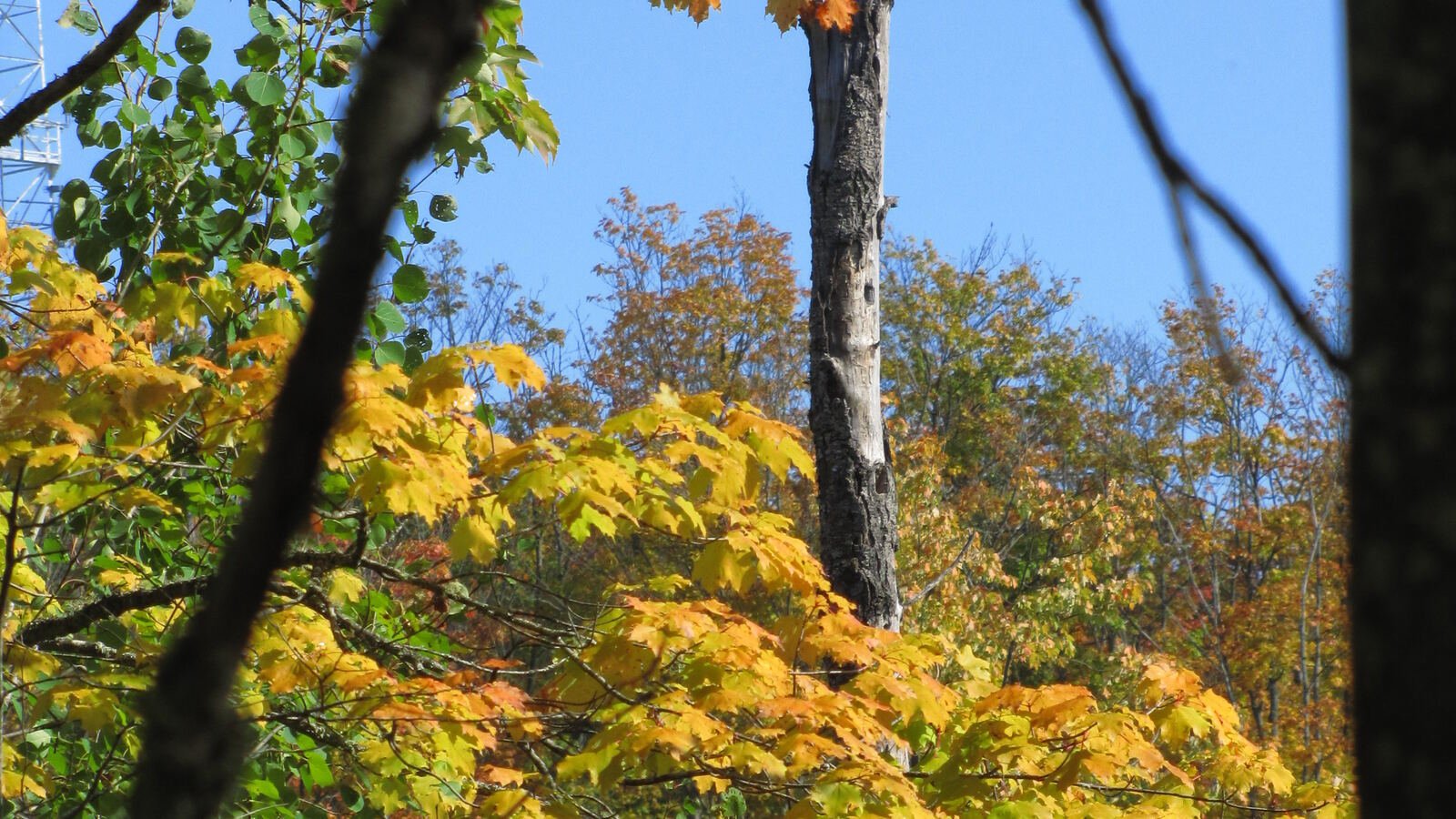
Compound leaves with five (sometimes seven) leaflets, smooth-ridged gray bark in a tight diamond pattern, and the pear-shaped nuts in thin husks that split partway — plus the fall gold color no oak matches. Mockernut hickory, its local cousin, has bigger nuts and hairier leaves; the care calculus is the same.
Are hickories safer than oaks in hurricanes?
A sound hickory is one of the safer big trees in wind — strong wood, deep taproot. The risk profile is dead limbs and struck-by-lightning decline, not whole-tree windthrow. Keep the deadwood cleared and a healthy hickory earns its spot.
Can the nut drop be stopped without removal?
Not meaningfully — growth-regulator sprays used on ornamentals aren’t practical at 80 feet. Managing drop means canopy reduction over the target area or living with the season; over pools and cars, that’s sometimes what tips a marginal tree to removal.
Is hickory wood worth keeping?
Absolutely — it’s the premium smoking and firewood species in the region. Have the crew buck it to length and leave it; seasoned hickory is the one removal byproduct neighbors ask for.
Does removing a big hickory need a permit in Tallahassee?
If it’s over the city or county ordinance threshold — and most mature hickories are — yes, the permit conversation applies, with documented hazards moving fastest. See the permit guide.
Serving Tallahassee, Leon County, and the Big Bend. Content reviewed August 2026. Tallahassee Tree Service connects homeowners with independent licensed tree professionals and does not perform tree work directly.
Tallahassee Tree Service is a free referral service. Tallahassee Tree Service is not a licensed tree service provider and does not directly provide tree care services. All work is performed by independent, licensed and insured third-party providers in your area. Calls and form submissions placed through this site may be connected with a participating provider, and you may be contacted by that provider regarding your request. Same-day, emergency, and 24/7 availability are not guaranteed and depend on provider schedules, location, and demand. Service availability, pricing, licensing, and final response times are determined solely by the providers. It is the responsibility of the homeowner to verify that the hired contractor furnishes the necessary license and insurance required for the work being performed. All persons depicted in a photo or video are actors or models and not contractors listed on Tallahassee Tree Service.