The sabal palm in your Tallahassee yard has a few brown, drooping fronds and maybe a heavy cluster of seed pods, and it is starting to look untidy. The temptation is to cut it back hard and tidy it up all at once — the way you see crews “hurricane cut” palms down to a few upright fronds. Before you do, it is worth knowing that the dramatic cut so many people ask for is one of the worst things you can do to a palm, and that “tidy” and “healthy” are not the same goal. Trimming a sabal palm well is mostly about restraint.
This guide covers what makes the sabal palm special in a Tallahassee landscape, the right way to trim one, why the “hurricane cut” hurts the tree and does not improve storm safety, how to handle seed pods and how often to trim, and the point where a tall palm near power lines becomes a job for a licensed arborist rather than a ladder and a pole saw.
Florida’s State Tree, in Your Yard
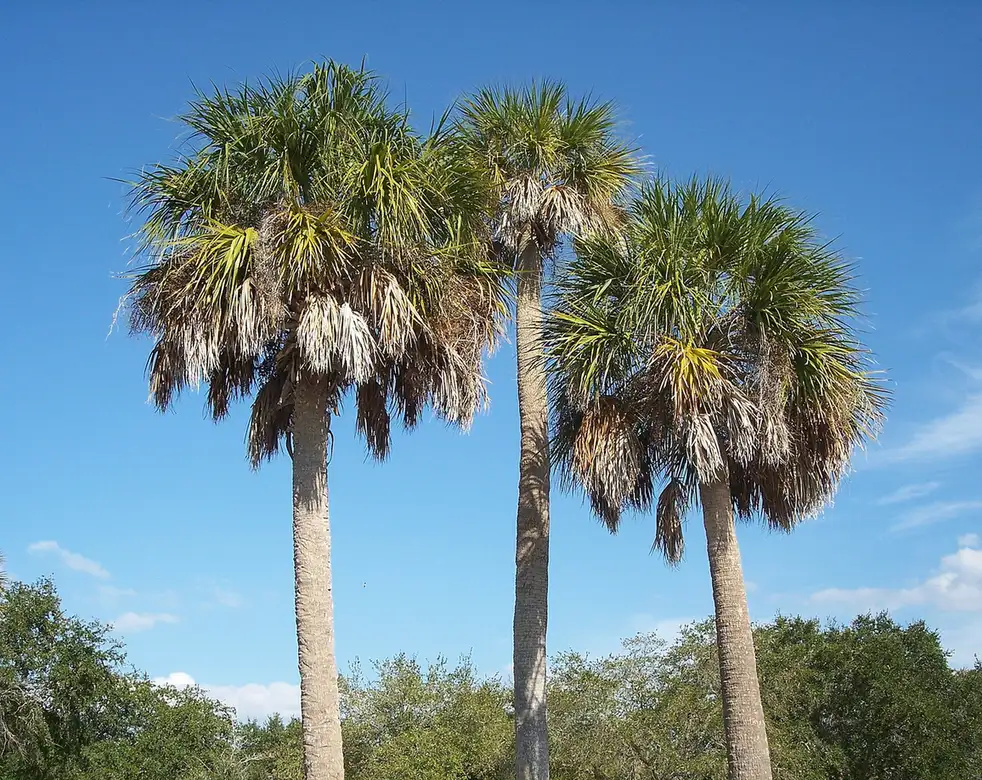
The sabal palm — also known as the cabbage palm — is the official state tree of Florida, and it is one of the most common and recognizable palms in the Tallahassee and Leon County landscape. It is a tough, native, slow-growing palm with a single unbranched trunk and a rounded crown of large, fan-shaped (palmate) fronds. Mature sabals can reach considerable height, and older trunks may be smooth where old frond bases have shed, or “booted” where the crisscrossed old leaf bases remain.
Two things about palm biology matter before you make a single cut. First, a palm is not a typical shade tree — it does not have a branching structure or the ability to seal over pruning wounds the way an oak does, and it grows entirely from a single growing point (the bud) at the top of the trunk. Damage that bud and the whole palm is lost. Second, palms move stored nutrients out of older fronds, and even a frond that has gone partly yellow or brown is often still feeding the tree. That biology is the reason the right approach to trimming a sabal is conservative: you are working around a plant that cannot heal cuts and that depends on its fronds more than its appearance suggests.
Storm damage or a tree on your house? Call now.
Stay out of rooms under the tree and keep clear of downed lines — report those to the power company first. Then call and we’ll connect you with a local tree crew that handles storm work.
📞 Call (858) 319-0022Free 24/7 dispatch line · availability varies by storm volume
The Right Way to Trim a Sabal Palm
The correct approach to trimming a sabal palm is simple and conservative: remove only fully dead, fully brown, or hanging fronds, and leave everything that is still green or partly green in place.
A healthy sabal carries a full, rounded canopy. Fronds naturally age from the bottom of the crown, turning yellow and then brown over time, and once a frond is completely dead and brown — or has broken and is hanging down against the trunk — it can be removed cleanly. Those are the fronds to take. Green and partially green fronds, including ones that point out horizontally or droop slightly below horizontal, are still photosynthesizing and feeding the palm, and they should stay. A useful mental picture some arborists describe is to avoid cutting any frond that sits above the horizontal “9-and-3 o’clock” line of the crown — though with sabals, the safest rule of thumb is even simpler: if it is not dead, do not cut it.
When you do remove a dead frond, cut it a few inches out from the trunk rather than flush, and never cut or damage the central spear and the bud at the top of the crown. Loose seed stalks and old fruit clusters can also be removed. Done this way, trimming keeps the palm tidy and reduces the loose, hanging material that can come down in wind — without taking anything the tree still needs.
Why “Hurricane Cuts” Hurt the Palm
The “hurricane cut” — stripping a palm down to just a few upright fronds in a tight vertical plume — is popular because it looks dramatically neat and because people believe it makes the palm safer in a storm. Both beliefs are mistaken, and the practice does real harm.
Over-pruning a palm this way removes the green fronds the tree relies on for food, forcing it to draw down stored energy to push out new growth. A repeatedly over-pruned palm becomes stressed, grows more slowly, and develops the narrowed, pinched “pencil-point” trunk just below the crown that signals chronic over-cutting. A stressed palm is also more vulnerable to nutrient deficiencies and to pests and disease, not less. And critically, the storm-safety logic is backwards: a fuller, healthy crown is more wind-resilient, and stripping fronds does not meaningfully reduce a palm’s wind load while it does weaken the tree. The fronds a hurricane cut removes are exactly the ones the palm needs to stay strong heading into storm season.
The takeaway for Tallahassee homeowners: resist the urge to ask for the aggressive cut. Removing dead fronds is good maintenance; stripping the green crown is harm dressed up as tidiness.
Get matched with a licensed Tallahassee arborist Call now code and our 24/7 dispatch line connects you with an ISA-certified, insured arborist in our network who serves Tallahassee and Leon County. A real person answers — describe your palm and how tall it is, and you’ll be routed to the right pro. → Call now to get connected
Seed Pods, Self-Cleaning, and How Often to Trim
Sabal palms produce tall stalks of small flowers in the warm months, which develop into heavy clusters of dark fruit and seed. Many homeowners dislike the litter and the seedlings these drop, and the flower or fruit stalks can be cut off if you would rather avoid the mess — removing the stalk does not harm the palm and can reduce volunteer seedlings sprouting in beds and lawn.
How often a sabal needs trimming depends on the palm and your tolerance for a few brown fronds. Because sabals are not fully “self-cleaning” — old fronds and boots often persist rather than dropping on their own — most landscape sabals benefit from a maintenance trim once a year or so, timed to remove the accumulated dead fronds and spent fruit stalks. There is rarely a reason to trim more often than that, and trimming on a tight cosmetic schedule tempts the over-cutting the previous section warned against. If a palm only has a frond or two of brown, it can simply wait. The goal is a light annual tidy, not frequent heavy cutting.
A note on timing: removing dead and broken fronds before the summer storm season reduces loose material that could come down in wind, which is a sensible reason to schedule the annual trim in late spring or early summer. That is different from a hurricane cut — you are taking only what is already dead, not stripping the live crown.
When to Bring in a Pro
Plenty of sabal trimming on a short palm is within reach of a careful homeowner with the right tool and good footing. The job crosses into professional territory for reasons that are mostly about height and hazard, not skill alone.
Reach for a licensed arborist when the palm is tall enough that you would need to work off a ladder or climb, when the crown is anywhere near power lines or service drops, when the fronds or fruit stalks overhang the roof, a fence, or a neighbor’s property, or when the palm shows signs of trouble beyond a few brown fronds — a collapsing or discolored central spear, oozing, or a thinning, off-color crown that could indicate disease or a nutrient problem worth a professional eye. Working at height with a saw, and anything involving lines, carries real danger and is not a DIY situation.
A qualified arborist trims to palm-care standards (taking only what should come off), works the height safely with the right equipment, and can flag health issues early. The arborists in our network handle this through tree trimming in Tallahassee and broader tree pruning; if a palm is failing or in the wrong spot entirely, they also handle tree removal in Tallahassee. Ask the arborist how they prune palms and confirm they avoid hurricane cuts before work begins.
Palms getting tall or close to the lines? Get matched with a licensed Tallahassee arborist Call now code and our 24/7 dispatch line connects you with an ISA-certified, insured arborist in our network who serves Tallahassee and Leon County. A real person answers — describe the palm, its height, and what’s near it, and you’ll be routed to the right pro. → Call now to get connected
Frequently Asked Questions
How much should you cut off a sabal palm? Only the fully dead, fully brown, or broken hanging fronds, plus spent flower and fruit stalks if you want to reduce litter. Leave every green and partially green frond in place — even drooping or yellowing ones are still feeding the palm. A palm cannot heal pruning wounds and grows from a single bud, so conservative trimming protects its health. If a frond is not dead, the safest choice is to leave it.
Is a “hurricane cut” bad for palm trees? Yes. Stripping a palm to a few upright fronds removes the green fronds it relies on for food, stresses the tree, slows its growth, and can produce a pinched “pencil-point” trunk and greater vulnerability to pests and disease. It also does not improve storm safety — a fuller, healthy crown is more wind-resilient. Removing only dead fronds is good maintenance; the aggressive hurricane cut is harmful.
When is the right time to trim palm trees in Florida? A light annual maintenance trim works well in late spring or early summer, which clears accumulated dead fronds and spent fruit stalks before the storm season. The key is that timing only governs when you remove already-dead material — it is never a reason to cut green fronds. Outside of removing dead or broken fronds and seed stalks, sabals rarely need cutting more than about once a year.
How often do sabal palms need trimming? For most landscape sabals, about once a year is enough to remove the brown fronds and spent fruit stalks that accumulate, since sabals are not fully self-cleaning and tend to hold old fronds and boots. If a palm only has a frond or two of brown, it can wait. Trimming on a tight cosmetic schedule tends to encourage over-cutting, which harms the tree.
Should I remove the seed pods and flower stalks? You can. The tall flower and fruit stalks drop heavy clusters of fruit and seed that create litter and sprout volunteer seedlings, and cutting the stalk off does not harm the palm. Removing it can reduce the mess and the seedlings popping up in beds and lawn. It is an optional cosmetic choice rather than a health requirement.
When should I hire an arborist instead of trimming the palm myself? Bring in a licensed arborist whenever the palm is tall enough to require a ladder or climbing, when the crown is near power lines, when fronds overhang the roof or a fence, or when the palm shows signs of disease or a failing central spear. Working at height with a saw and anything near lines is genuinely dangerous. A pro trims to proper standards, works the height safely, and can catch health problems early.
TallahasseeTreeService.co is a dispatch service. We connect callers with licensed Florida arborists. We are not a licensed tree service company. The disclaimer in our site footer and our 24/7 dispatch caveat apply to this page.