Palm Tree Disease in Tallahassee: Lethal Bronzing & Ganoderma Butt Rot
Tallahassee sits right at the northern edge of sabal palm and cabbage palm range, and in the last several years two diseases have become the main threats to palms across North Florida: lethal bronzing and Ganoderma butt rot. Neither is treatable once symptoms are advanced, and both are easy to mistake for ordinary drought stress or nutrient deficiency until it’s too late. This post covers how to tell them apart, what can (and can’t) be done, and when removal is the responsible call for your neighbors’ palms too.
To get matched with a licensed local tree service for a same-day written assessment of a declining palm, call now on our homepage. We’re a dispatch service that connects you with vetted, independent, licensed and insured crews — we don’t perform the work ourselves.
Storm damage or a tree on your house? Call now.
Stay out of rooms under the tree and keep clear of downed lines — report those to the power company first. Then call and we’ll connect you with a local tree crew that handles storm work.
📞 Call (858) 319-0022Free 24/7 dispatch line · availability varies by storm volume
Lethal Bronzing: What It Is and How It Spreads
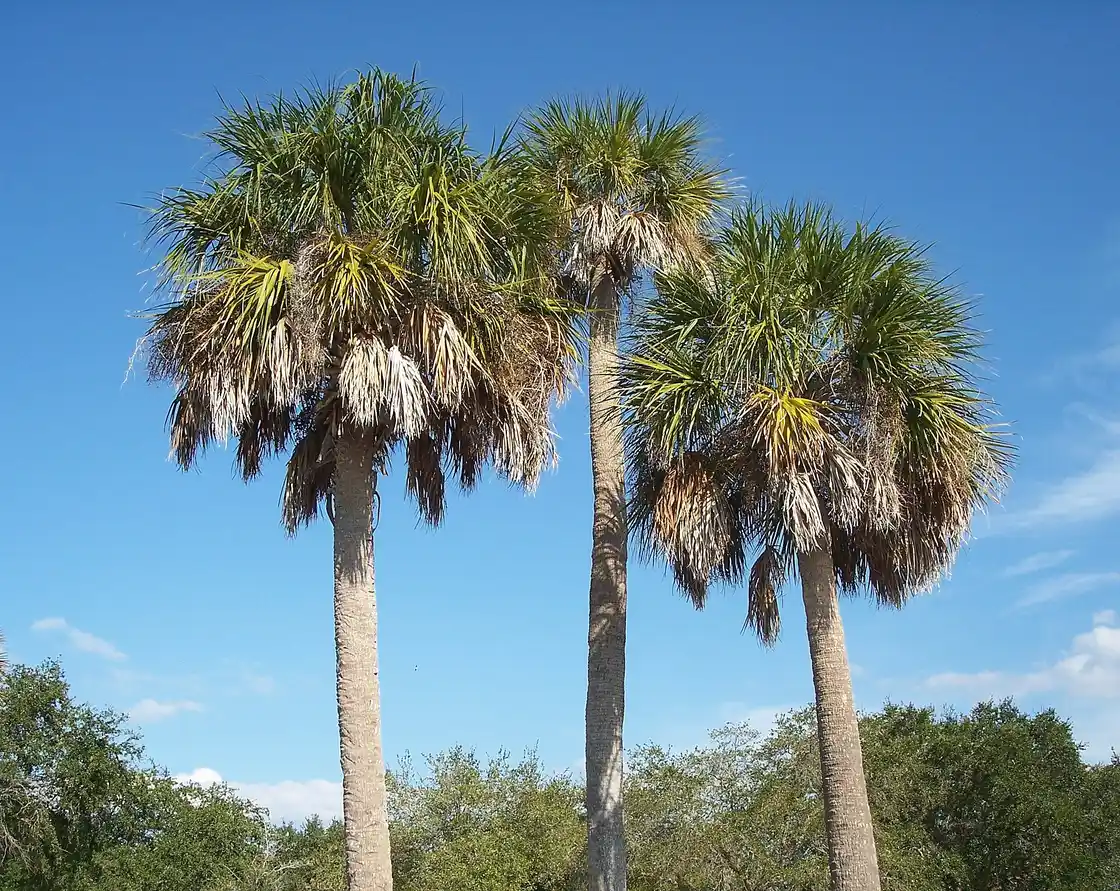
Lethal bronzing (formerly called Texas Phoenix palm decline) is a phytoplasma disease — a bacteria-like pathogen with no cell wall — spread by a planthopper insect (Haplaxius crudus) that feeds on palm sap. It affects a wide range of palms grown in Florida landscapes, including queen palms, Christmas palms, Bismarck palms, and Canary Island date palms. Sabal palms (Florida’s state tree, and the most common palm in Tallahassee yards) can get it too, though they tend to show it a bit differently than the ornamental species.
Symptoms, in Order
- Premature fruit drop. If the palm is fruiting, unripe fruit dropping early is often the very first sign, before any leaf symptoms show.
- Discoloration starting in the oldest (lowest) fronds. Bronzing or reddish-brown discoloration begins at the bottom of the canopy and works upward, frond by frond.
- Spear leaf collapse. The newest, unopened frond (the “spear”) browns and can be pulled out with little resistance — this is the point of no return for most cases.
- Total canopy collapse. Once the spear is gone, the entire canopy typically dies within weeks to a few months.
From first symptom to total canopy loss can be as fast as 3–6 months, which is why palms that “seemed fine last spring” can be dead by hurricane season.
Ganoderma Butt Rot: The Other Major Threat
Ganoderma zonatum is a fungus that rots the lower trunk (the “butt” of the palm) from the inside out. Unlike lethal bronzing, it isn’t spread by an insect vector — it’s a soil fungus that infects through root contact or wounds near the base, and it can persist in the soil for years after an infected palm is removed, which matters if you’re deciding what to replant in the same spot.
Symptoms
- General decline that doesn’t localize to one side. Unlike nutrient deficiencies, which often show up asymmetrically or in a specific frond pattern, Ganoderma decline tends to be a generalized wilting and yellowing.
- A conk (mushroom-like fruiting body) at the base of the trunk. This is the definitive sign. It’s a shelf-like, often reddish-brown-and-white structure that grows directly out of the trunk near soil level. By the time a conk appears, the internal rot is already advanced.
- Trunk that feels hollow or hazardous when tapped. Structural failure — the palm snapping at the base — can happen with no external warning beyond the conk.
Because Ganoderma attacks the structural integrity of the trunk itself, a palm with confirmed butt rot is a fall hazard, not just a cosmetic problem — this is a case where removal timing matters for safety, not just appearance.
Lethal Bronzing vs. Ganoderma vs. Ordinary Nutrient Deficiency
Homeowners often assume any yellowing or browning palm has a nutrient problem, since potassium and magnesium deficiency are extremely common in Florida palms and cause similar-looking discoloration. The key differences:
- Nutrient deficiency usually shows a specific, recognizable pattern (orange-yellow spotting on older fronds for potassium deficiency, for example), progresses slowly, and responds to a proper palm fertilizer regimen over a growing season.
- Lethal bronzing starts with fruit drop and moves bottom-to-top through the canopy fast, and does not respond to fertilization.
- Ganoderma shows a conk at the trunk base and is a structural, not nutritional, problem.
If you’re not sure which you’re looking at, that’s reasonable — even experienced landscapers sometimes need a professional assessment to tell early-stage lethal bronzing from a nutrient issue, since both start subtly.
Is There Any Treatment?
For lethal bronzing, preventive antibiotic (oxytetracycline) trunk injections exist and are used on high-value ornamental palms in some parts of Florida, repeated every few months, but they are prevention for palms not yet infected — not a cure once spear-leaf collapse has begun. For a homeowner with one or two sabal palms in the yard, injection programs are usually not cost-effective compared to monitoring and timely removal if infection occurs.
For Ganoderma butt rot, there is no treatment. Once the fungus has colonized the trunk tissue, the outcome is removal — the only real decision is timing it before structural failure becomes a safety issue.
Why Removal Timing Matters for Your Neighbors, Too
Lethal bronzing’s insect vector doesn’t respect property lines, and a heavily infected palm can be a source of continued spread to neighboring palms in tight-lot neighborhoods like Midtown or SouthWood. Removing an infected palm promptly is a reasonable courtesy to neighbors with their own palms, in addition to being the safe call for a structurally compromised Ganoderma-infected trunk.
What to Do If You Suspect Either Disease
- Photograph the symptom pattern (fruit drop, frond discoloration order, any conk at the base) with a date.
- Avoid pruning green fronds off a suspect palm — over-pruning stresses the palm further and doesn’t stop either disease.
- Get a professional assessment before assuming the worst or assuming it’s “just” a nutrient issue — the cost of being wrong either direction (over-treating a dying palm or under-reacting to a hazard) is real.
For general guidance on identifying a hazardous or declining tree of any species before it becomes a bigger problem, see our post on signs of a hazardous or dying tree. If removal turns out to be the right call, our Tallahassee tree removal cost breakdown covers what drives pricing by tree type, and our post on whether you need a permit to remove a tree in Tallahassee is worth checking before scheduling.
Get Matched With a Local Crew
Get a same-day written assessment of a declining or symptomatic palm. Call now on our homepage any day to get connected with a licensed, insured local tree service serving Tallahassee and Leon County.
Frequently Asked Questions
Can lethal bronzing be cured once symptoms appear? No. Once spear-leaf collapse has begun, the palm will not recover. Antibiotic injections are a preventive measure for palms not yet infected, not a treatment for advanced cases.
What is the conk I’m seeing at the base of my palm trunk? That is very likely a Ganoderma fruiting body (conk), which confirms advanced internal trunk rot. It’s considered a structural hazard sign and warrants a professional assessment promptly.
Are sabal palms at risk, or just ornamental palms? Both lethal bronzing and Ganoderma can affect sabal palms, though ornamental species like queen palm and Canary Island date palm tend to show lethal bronzing symptoms most visibly and quickly.
Will fertilizing my palm fix the yellowing? Only if the cause is a nutrient deficiency, not a disease. Potassium and magnesium deficiencies are common in Florida palms and do respond to a proper fertilization program — but lethal bronzing and Ganoderma do not respond to fertilizer at all.
Can I replant a palm in the same spot after removing one with Ganoderma? The fungus can persist in the soil and roots for years, so replanting a susceptible palm species in the exact same spot carries meaningfully elevated risk. A different species, or relocating the planting spot, is generally the safer choice.
Is lethal bronzing contagious to other trees, like oaks? No — it’s palm-specific and spread by a planthopper insect that feeds on palms. It does not affect oaks or other hardwood species.
How fast should I act once I suspect a diseased palm? Availability for assessment and removal depends on the local crew’s current schedule and storm-season demand, so it’s worth calling promptly once you notice symptoms rather than waiting, especially for a suspected Ganoderma trunk hazard near a structure or walkway.